Uk politics

Osborne gets Britain’s £1.7bn bill halved—and no payments before the election

From our UK edition

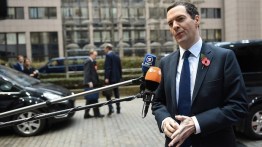
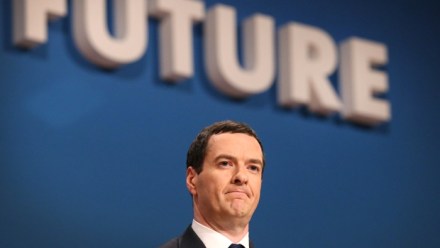
Update: In the last few hours, there has been huge confusion and heated debate over whether the British bill has actually been halved. Click here for the verdict of Open Europe which concludes that ‘ Osborne [is] right on the amount but may be exaggerated the extent of the concession.’ A deal has been reached over the supplementary £1.7 billion bill that Britain was handed by the European Commission a fortnight ago. Britain will now pay no more than £850 million, a halving of the bill. George Osborne insisted that the Commission apply the ‘British advantage’ element of the rebate to the bill which led to this 50% reduction.

Alex Salmond’s School of Denial

From our UK edition

Alex Salmond is on his way out. The First Minister gives every impression of enjoying - or at least making the most of - his farewell tour. And why not? Far from weakening the SNP, defeat in September's referendum has - at least for now - strengthened the party. Its supremacy is unchallenged and while recent polls putting the Nationalists on 50 percent of the vote are unlikely - surely! - to last forever this is the kind of problem worth having. Nevertheless, the First Minister's final days in office have also reminded us that policy and, indeed, philosophy are not necessarily Salmond's strengths. Unusually, First Minister's Questions proved a useful exercise this week. Both Jackie Baillie, Labour's temporary head at Holyrood, and Ruth Davidson pressed Salmond on education.

Why Labour unrest is getting so much attention

From our UK edition

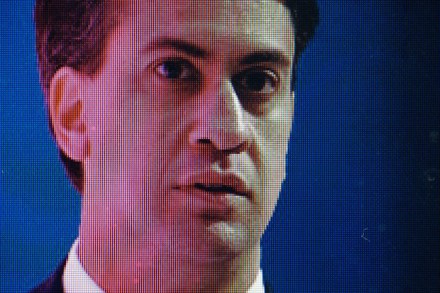
Labour types are in an aggressive mood this morning. Why are the newspapers and the BBC setting such store by just two MPs who apparently want their leader gone when the Tory party has around ten times that number of committed malcontents, they grumble? Peter Hain was particularly defensive this morning, suggesting that all Ed Miliband's supposed woes are actually part of a plot by the Daily Mail. First, here's an attempt to explain the media excitement about the threat to Miliband.

Are Zoe Williams and the fatuous Left mad or disingenuous?

From our UK edition

Today I went on the Daily Politics, presented by Andrew Neil. Talked about a bunch of stuff and then debated the issue of political correctness with Zoe Williams, from The Guardian. Look, I like Zoe. She’s ok. But she tried to argue that all the recent revelations about the sexual abuse of young white girls by Muslim men in places such as Rotherham (and about sixty other towns) went undiscovered for reasons which had nothing to do with political correctness. This is either mad, or disingenuous. Even the local Labour MPs who at the very least turned a blind eye to what was going on have admitted that a reluctance to stir up trouble with the local Pakistani or Bangladeshi community lay behind their lack of interest in the stories of sexual abuse.

There is no such thing as ‘immigrants’ – only Poles, Yanks, Somalis…

From our UK edition

There was much glee about yesterday’s publication of a report into the economic impact of immigration, which concluded eastern Europeans had provided a net benefit of £4.4 billion to the UK economy. There was far less mention of the fact that immigrants from outside Europe in the same period cost the taxpayers £118 billion. But as Christopher Caldwell observed in Reflections on the Revolution in Europe, the immigration debate is not about economics, for ‘the social, spiritual, and political effects of immigration are huge and enduring, while the economic effects are puny and transitory. If, like certain Europeans, you are infuriated by polyglot markets and street signs written in Polish, Urdu, and Arabic, sacrificing 0.

How serious is the threat to Ed Miliband?

From our UK edition

There are apparently two Labour MPs who have called for Ed Miliband to step aside. That just two from Ed Miliband's party are openly moving against him while some estimates put the number of letters calling for a vote of no confidence in David Cameron at 22 shows the difference in personality and practice between the two parties. Labour is markedly unhappier than the Tories (who don't resemble sunbeams themselves at present), and Ed Miliband polls below his party, while the opposite is true for David Cameron. Labour is not a party that manages to pull off pre-election regicide that effectively. For the past few years in opposition, it hasn't even been a party where open dissent is that common.

European Arrest Warrant rebels predict only 30 will defy government

From our UK edition

In the Commons this morning, William Hague confirmed Coffee House's story that the government will hold its vote on opting back into the European Arrest Warrant on Monday. He said the joint committee working on the relevant statutory instrument hadn't finished working, but that the House of Commons would vote on it on Monday. But the troublesome pre-Rochester rebellion is apparently shrinking, MPs tell me. Those on both sides expect only around 30 rebels against the government now, where previously up to 100 had been expected. There are a number of reasons for the fall in numbers.

Old, vulnerable and hungry – the shocking view from inside the NHS

From our UK edition

I am leaving London soon, coming to the end of my time as a voluntary hospital visitor working from a chaplaincy in a London teaching hospital. I have been roaming around a variety of wards for the last three years, only one day a week, but in those few hours I have seen quite a lot. The most disturbing things have been the poor quality food, which cannot aid anyone’s recovery, and the neglect of the very old and vulnerable, the patients rather ominously labelled ‘bed blockers’. On my last visit, the Anglican chaplain was not in the hospital, so instead of attending a morning service with him in the hospital chapel, I went up onto the wards early, at breakfast time. In one ward there is a neighbour of mine, an old man I’ve known for years.

What Angela Merkel really wants (it’s not good news for Dave)

From our UK edition

Angela Merkel is misunderstood. Last winter, when Russia moved to annex Crimea after the overthrow of Ukraine’s government, American officials put it about that the German Chancellor had described Russia’s leader Vladimir Putin as ‘living in another world’ and ‘out of touch with reality’. No evidence has emerged that she ever said any such thing. Europhiles in the press and in Westminster have now pulled the same trick on David Cameron. The Prime Minister has lately been ruminating about quotas for migrants from certain European Union countries. He complained last month when an unannounced £1.7 billion upward adjustment in Britain’s EU payment turned out to be triple the levy on anyone else.

Miliband promotes allies in post-Murphy Shadow Cabinet reshuffle

From our UK edition

The post-Jim Murphy Labour reshuffle has arrived, and while it's not particularly seismic, it still tells us some interesting things about Ed Miliband's thinking. The Labour leader has replaced the former Shadow International Development Secretary with Mary Creagh, which means it can't be described as a consolation prize (something development campaigners were wary of as they'd rather someone who wanted the job, thank you). Creagh has a reputation in her party for being formidably well-briefed (although she managed to disappoint regional newspapers recently), and was particularly impressive in her last role but one as Shadow Environment Secretary when the horse meat scandal broke.

The cruel kernel of truth in Jean-Claude Juncker’s huffing and puffing

From our UK edition

David Cameron's desire to renegotiate Britain's relationship with Europe means we'll hear plenty of huffing and puffing from various bigwigs on the continent over the next few years. The trick for Cameron, as James said on Monday, is to work out when this huffing is just bluffing and when it's actually an expression of a serious intention. Today's grouching from Jean-Claude Juncker, in which the new president of the European Commission complained about 'certain Prime Ministers' objecting to the extra bills foisted upon them two weeks ago, probably doesn't tell us a great deal about the outcome of the Prime Minister's renegotiation.

PMQs sketch: No poppy for Harman, Miliband on the attack, Cameron in transcendental-parrot mode

From our UK edition

Was that a pop at Hattie? Ed Miliband began PMQs by evoking the centenary of the Great War. ‘We will all be wearing our poppies with particular pride this year,’ he said. And every eye ran along Labour’s front bench to count off the crimson blooms. Balls, poppy. Miliband poppy. Harman, poppy. No, wait. As you were. Harman, no poppy! Her chic, double-breasted grey jacket bore no tribute to the fallen. But I expect it’s a CND thing. All the same, Miliband should send her out to buy one. Tuppence ought to do it. The Labour leader needed a win today. Badly. His poll ratings have dipped to the same level as Gordon Brown’s in 2010, but at least Brown had the excuse of being in a fag-end administration led by a scowling narcissistic tax-junkie.

Miliband corners Cameron on immigration at listless PMQs

From our UK edition

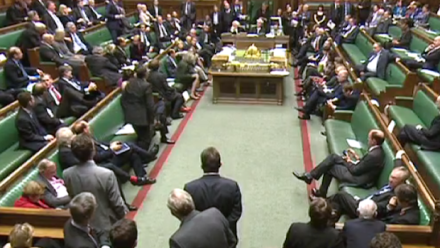
The Commons has a rather listless feel to it at the moment. Today’s PMQs will not live long in the memory. Ed Miliband’s strategy was to get David Cameron to say as often as possible that he wants to stay in the EU, with the hope that this would drive a wedge between Cameron and his backbenchers. This tactic was, as far as it went, quite effective. Cameron repeatedly said that he wanted to stay in a reformed EU, and wasn’t prepared to say explicitly that he would be prepared to campaign for an exit if he didn’t get what he wanted out of the renegotiation.

Sajid Javid tries to cool mobile phone row with Theresa May

From our UK edition

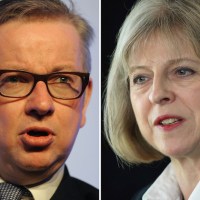
If Theresa May wants to have a public row with Sajid Javid, the Culture Secretary doesn't seem particularly keen on continuing it. He tried his best to avoid jumping into a war of words with the Home Secretary, whose leaked correspondence warning that his plan to make mobile phone companies fill in 'not-spots' (areas with no coverage) could make it more difficult for intelligence agencies to thwart terrorist attacks are splashed over the front of the Times. Javid said: 'The Home Secretary, like every other member of the Government, fully supports this strategy that we’re setting out today. Well, the reason this is a consultation is because this stage we want to look carefully at each solution.

In the court of King Dave, can Cameron phone home?

From our UK edition

An absolute gem in the Telegraph's morning memo today by Stephen Bush, who claims that the Prime Minister has more than a passing interest in today's government announcement that mobile phone companies shall be forced to cooperated in order to boost service for the consumer. Per the memo, 'when the PM travels, his aides will stop and note areas where he drops out of signal'. The PM is known on occasion to express his displeasure in a rather forthright manner, so the mind boggles at just how Dave might enunciate these particular concerns. It must be rather dramatic for aides to be so worried as to pop black marks next to whole swathes of the country. Barren north, indeed. What is it with world leaders and mobile phones, anyway?

Overpaid, underworked, ineffectual – the myth of the NHS doctor

From our UK edition

[audioplayer src="http://traffic.libsyn.com/spectator/TheViewFrom22_15082013.m4a" title="Andrew Haldenby and Sean Worth join Sebastian Payne to discuss NHS reforms."] Listen [/audioplayer] GPs enjoy the salary of bankers, regularly pulling in £100,000 for a five-day week, with no on-call or weekend duties and a lovely taxpayer-funded holiday every year. I know this because it says so in the papers, so it must be true. Stories of GP largesse are far from accurate, and bear testament only to the media’s desire for sensationalism. GPs are the true medical heroes of the NHS, the soldiers in the trenches, too loyal to the metaphorical army to revolt, protest or express opinions, lest such opinions serve as an indirect abrogation of their oath to heal and comfort the sick.

Educational apartheid is Scotland’s greatest national disgrace

From our UK edition

A while back I was speaking at one of those How did it all go so wrong? post-referendum discussions and, as expected, the air was thick with recrimination. The good people of Glasgow - rebranded as Yes City - were unhappy and indignant. Eventually, however, talk turned to what might be done next. I made the suggestion that, just perhaps, Scotland's political and blethering classes might pay some attention to the powers the Scottish parliament currently enjoys. I mean, I said, it is not as though there are no big arguments to be had within the confines of Holyrood's truncated responsibilities. Not as though there are no large problems that needed fixing long ago. We were way past the point, I said, at which we could ignore the appalling reality of Scotland's apartheid education system.