Uk politics

Will Cameron’s new benefits policy ever take off?

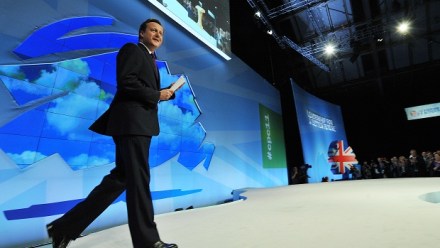
Will the Tories really dock benefits from obese people and those with drug or alcohol addictions if they refuse treatment? Even though David Cameron reaffirmed his commitment to the policy in his speech in Hove yesterday, anyone who is getting rather over-excited about it could probably expend their energy on something else as this looks suspiciously like one of those policy kites that gets flown from time to time. In the Times today, I point out that the idea cropped up several times under Labour as well as the Tories. The reason that this latest incarnation of the ‘sick people, get treatment or lose benefits’ policy might not ever become

Tories try to derail plain packaging vote

Opponents of plain packaging for cigarettes are trying to work out how to derail the vote in the Commons introducing the law, Coffee House has learned. There is considerable frustration in the party that plain packaging is being introduced so close to the election, as MPs feel it is a distraction from the campaign. Other Tories still think it betrays their values as a party. I understand that MPs are considering tabling a motion that calls for the packaging policy to be extended to anything that is vaguely bad for health, including alcohol and sugar-rich food such as Frosties. This is of course to make a point rather than because

Record employment figures create more problems for Labour

Britain has reached its highest ever level of employment. According to new figures from the ONS, the employment rate has risen to 73.2 per cent — or close to 31 million people in work. This stands as the joint highest rate since records began in 1971. Unemployment is down to 1.86 million. The short-term jobless rate is also at its lowest rate since 1992. Pay is also increasing, with private sector earnings (excluding bonuses) up 2.1 per cent year-on-year at the end of 2014. Youth unemployment has increased slightly, something Esther McVey has described as a ‘tiny blip.’ But never in British history have there been so many job vacancies. Never

Tories and the Church: the 30-year war continues

Here are some observations from the ‘incendiary’ letter from the House of Bishops that has upset the Tories so much. ‘Our electoral system often means that the outcomes turn on a very small group of people within the overall electorate. Greater social mobility and the erosion of old loyalties to place or class mean that all the parties struggle to maintain their loyal core of voters whilst reaching out to those who might yet be swayed their way. The result is that any capacious political vision is stifled.’ ‘Instead, parties generate policies targeted at specific demographic groupings, fashioned by expediency rather than vision or even consistency. The art, or science,

Peter Oborne has performed a great public service today

Well, this is awkward. Peter Oborne is a friend and The Spectator shares a proprietor with The Daily Telegraph. So there is a danger that anything written in this space will seem craven or kowtowing. Nevertheless, Peter, late of this parish and now late of the Telegraph too, has performed a public service today by resigning his post as the Telegraph’s Chief Political Commentator. He is a man of great conviction and deep principle. Often mistaken, perhaps, but always magnificently worthwhile. His suggestion that the Telegraph has, shall we say, a rather too cosy relationship with some of its advertisers – and especially with HSBC – is not the kind of allegation made

Inflation sinks to a record low — and is set to fall even further

Inflation fell to 0.3 per cent in January, the lowest level since records began in 1989. As the above chart shows, the government’s target of two per cent CPI inflation is now a long way off. The ONS has attributed the slow down to falling fuel and food prices — the latter is thanks to the on-going supermarket price wars. As Citibank’s Michael Saunders explains in his invaluable economics briefing (pdf), the weakness is concentrated in food, fuel and energy. Excluding energy, tobacco and alcohol, the year-on-year inflation level was 1.4 per cent, up from 1.3 per cent a year ago: Although inflation year-on-year has already sunk to a record low,

Bold new Tory election strategy: Tax cuts for our chums; welfare cuts for you

“There’s a lot we need to do in this party of ours. Our base is too narrow and so, occasionally, are our sympathies. You know what some people call us – the nasty party.” Theresa May, October 8th 2002. February 17th 2015, David Cameron announces plans to make 50,000 youths spend 30 hours a week on community service schemes to keep their “Youth Allowance” benefits. The Youth Allowance, by the way, is £57 a week. And today’s announcement follows suggestions that fat people should lose access to benefits unless they lose weight. Look, it’s not the goal that’s the problem here. When Cameron says there is a moral quality to

Labour’s tax fight turns scrappy

Well, those tax attacks worked out well, didn’t they? Tax avoidance is on the front pages of the newspapers, but not in a way that benefits either main political party. Even though George Osborne’s guide to minimising your tax bill has gone viral, Labour isn’t benefitting because it has ended up talking about receipts for hedge trimmers, not the activities of hedge funds. It was a wrong turn easily taken by Labour but one that makes week three of its tax avoidance row messy. Week one was messy partly down to Balls, too, after his ‘Bill Somebody’ interview, which fed the narrative that Labour was ‘anti-business’. Week two was better

Has Labour finally found its campaign message?

As well as keeping the tax avoidance row going for as long as possible (something that is worrying Tories, who think their party needs to find a way of moving the conversation on from a toxic issue as quickly as possible), Ed Miliband also unveiled a potential new campaign message at his speech today. He talked about ‘a better plan for working people, a better plan for Britain’. The 79-page document that launched alongside it was entitled ‘Better Plan for Britain’s Prosperity’. So far the Labour party has struggled to find its equivalent of the ‘long-term economic plan’ – when I quizzed frontbenchers about this recently, none of them were

The danger for Miliband in his tax triumph

Last week was Labour’s best of the campaign so far and the Tories’ worst. The row over tax avoidance and Lord Fink’s comments reinforced the damaging perception that the Tories are the party of the rich. It also raised Labour morale, frontbenchers who used to be pessimistic about the party’s electoral prospects are now bullish. But there is a danger that this tactical victory could turn into a strategic defeat. For Miliband by denouncing tax avoidance—which is legal—and setting himself up as a moral arbiter on the issue, has made his tax affairs and those of his shadow Cabinet, MPs and donors a legitimate subject of public interest. They no

Mini Election: Tim Aker on Ukip’s election strategy and winning in Thurrock

Tim Aker is one of Ukip’s most recognisable figures. At just 29, he is already an MEP for the East of England, a local councillor in Aveley and, until recently, head of the party’s policy unit. He left the latter role earlier this year to focus on his battle to become the MP for Thurrock. I chatted with Aker in Canvey Island, Essex, where Ukip kicked off its general election campaign last week. He revealed the thinking behind the party’s ‘Believe in Britain’ campaign slogan, the ‘positive’ message Ukip hopes to put across over the next few months, his chances of beating Labour and the Conservatives in Thurrock and whether

An idiotic guide to politics

What’s wrong with our politics? Now that more and people are turning to ‘anti-politics’ parties, this question is becoming steadily more fashionable and urgent. It’s now even got its own BBC Three documentary (the ultimate sign that an issue is dead serious, natch), called An Idiot’s Guide to Politics, presented by Jolyon Rubinstein from the Revolution Will Be Televised. The idea behind the programme was that Rubinstein would examine why people, particularly young adults, are so disengaged from politics and don’t want to vote, and why politics is in such a mess. The picture Rubinstein presented was rather depressing for two reasons. The first was that politicians do break promises

Three reasons why Labour probably (just about) ‘won’ this week

Ed Miliband’s party has ended up having a reasonably good week, even though it’s been a pretty tough battle. Today’s front pages have not been good at all, something the party leader’s supporters are obviously disappointed by, but given the story about a comparison between the row about Lord Fink’s tax affairs and the hacking of Milly Dowler’s phone was made by an aide, not Miliband, and then reported in a way that was initially misinterpreted, the focus of the row is not Miliband himself. The line about Miliband’s own tax affairs was inevitable, too. But it depends whether anyone can find anything to continue the story. The Conservatives have

Why Boris Johnson doesn’t want a Tory leadership contest this year

Even though Boris is building up support for his leadership campaign, he doesn’t want to have to stand in one this year. He needs David Cameron to remain Prime Minister after the General Election, and, as James reported recently, then take over following an EU referendum. That’s perhaps why the Mayor seemed quite keen on an earlier vote than the 2017 one that Cameron has officially promised. But a 2015 leadership contest, which the Mayor would certainly participate in, would come too early, partly because Boris still needs to shore up his support from MPs, and partly because he would still be Mayor. In an interview with the Evening Standard,

Maybe HSBC was too big for even Stephen Green to manage

Stephen Green — the former trade minister Lord Green of Hurstpier-point, who became this week’s political punchbag— was always a rather Olympian, out-of-the-ordinary figure at HSBC. This was a bank that traditionally drew its top men from a corps of tough, non-intellectual, front-line overseas bankers typified by the chairmen before Green, Sir John Bond and Sir Willie Purves. As the dominant bank in Hong Kong and a market leader throughout Asia and the Middle East, it was habituated to dealing with customers who took big risks, hoarded cash when they had it, and did not necessarily regard paying tax as a civic duty. But if ethics were rarely discussed in

In this election, won’t someone please weaponise defence?

Britain is forfeiting its position on the world stage. With no national debate, we are surrendering our claim to be a major player in international affairs and undermining the Atlantic alliance that has kept Britain and Europe secure for 65 years. In these circumstances, it is easy to understand why Barack Obama has felt obliged to warn David Cameron of the damage he would be doing to the special relationship and to Nato if he failed to commit Britain to spending the bare minimum on defence. The Prime Minister has given several spending pledges — on education, health and overseas aid — so his silence on defence speaks volumes. It

Exclusive: Tories confront Lynton Crosby over ‘barnacles’ distracting from election message

Last night’s meeting of the 1922 Committee was, I hear, not a particularly well-attended affair. This is odd because the speaker was Lynton Crosby, whose confident briefings tend to cheer Tory MPs up no end. But sources who were there say there no more than about 30 MPs in attendance. Crosby gave a short presentation in which he urged backbenchers to return every discussion they had in broadcasts and on the doorstep to the economy, but was then confronted by John Redwood over what the senior backbencher felt was a failure of message discipline from the government. Redwood complained that ministers were repeatedly distracting from the economy at the same time

Is this back to basics for financial affairs?

This morning, there was much Westminster chatter about whether Ed Miliband would repeat his accusation made at PMQs yesterday about the ‘tax avoidance activities of Lord Fink’. But shortly before Miliband spoke, Fink himself gave an interview to The Standard in which he said, ‘I didn’t object to his use of the word “tax avoidance”. Because you are right: tax avoidance, everyone does it.’ Instead, Fink claimed that his objection was to the implication that he was one of the ‘dodgy donors’ that Miliband was talking about. Now, Fink’s letter of complaint to Miliband yesterday didn’t mention the word ‘dodgy’. After his speech today, Miliband tellingly refused to call Fink

Miliband: I stand by what I said about Lord Fink

Ed Miliband has now repeated what he said about Lord Fink in the Commons. At the end of his speech, he said: ‘Yesterday Conservative donor Lord Fink challenged me to stand by what I said in the House of Commons, that he was engaged in tax avoidance activities. I do. And believe it or not, now today he confirms it as well as he has just said, and I quote, I didn’t object to his use of the word tax avoidance, because you’re right, tax avoidance, everyone does it. ‘Now David Cameron must explain why he appointed a treasurer of the Conservative party who boasts about engaging in tax avoidance