Uk politics

Labour moderates launch fightback against deselection threats

From our UK edition

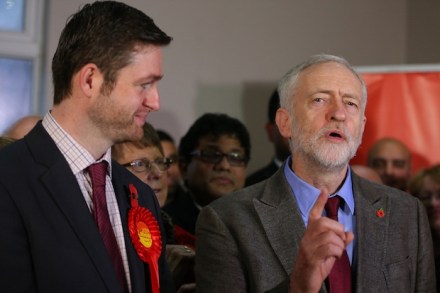
After Corbynite group Momentum allowed leaflets from other parties campaigning for the deselection of Labour MPs to be distributed at one of its events last week, those opposed to the new organisation are starting to hit back. Labour First, which represents the Old Right of the Labour party, is encouraging constituency Labour parties to vote on a motion calling for ‘tolerance and solidarity in the Labour Party’. This motion has been written by members of the Hampstead and Kilburn CLP, who have tabled it for their next meeting in the New Year. That motion condemns bullying of MPs over the Syria vote, and calls upon the party’s National Executive Committee to be swift and decisive in disciplining anyone engaging in bullying or intimidation.
The Tory leadership aren’t to blame for the death of Elliott Johnson

From our UK edition

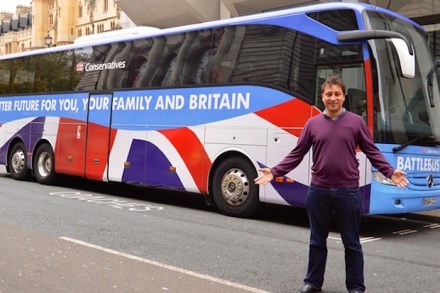
When someone commits suicide, those close to that person naturally reproach themselves. In politics, and similarly contested areas of life, people reproach others too. So it is not surprising that when a 21-year-old Conservative party worker, Elliott Johnson, killed himself in September, accusations about Tory bullying arose. Judging from what is reported about Mark Clarke, the leader of the party’s campaign RoadTrip group, he should never have been in charge of any youth wing. But there are couple of other things to bear in mind. For some reason, it has not been reported, though it is widely said, that Mr Johnson had been in a relationship with a party colleague and that he had felt betrayed when the relationship was broken off.

MPs try to get their heads around ‘rabble’ Momentum

From our UK edition

It’s not a great surprise that Ken Livingstone is a member of Momentum, the Corbynite grassroots organisation that is definitely not at all like Militant, and definitely not going to campaign for de-selections in constituencies. He revealed his membership on BBC News, saying ‘I mean, I’m a member of Momentum. Our task, the first thing we’re focusing on, is getting those two million voters who have been kicked off the voting register by the government’s new rules, getting out to them, getting them back on that register. It’s a campaigning organisation, not some nasty bit of work like the old Militant. Seb found the same when he spent an evening eating curry with Momentum in Oldham.

Labour’s Oldham hold is a boost to Jeremy Corbyn

From our UK edition

Whichever way you look at it, the Oldham West and Royton by-election result is a boost to Jeremy Corbyn. His opponents in the party might not quite have gone so far as to hope the seat would be lost to Ukip (though those around the leader think that some MPs would have found a loss less devastating than they probably should), but they certainly thought that Corbyn would play very badly indeed on the doorstep. Indeed, all the reports from those on the ground in the constituency and later from MPs returning from the campaign trail were that the white working class vote was not warming to Corbyn at all.

Number 10 admits defeat on EU renegotiation timetable

From our UK edition

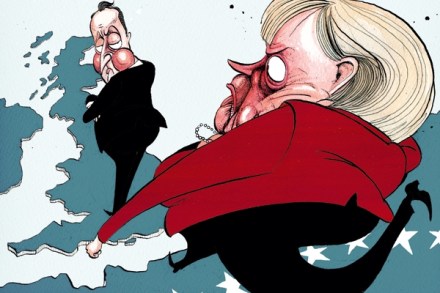
David Cameron has dropped his plans to sign off his renegotiation of Britain’s relationship with Europe at the December European Council summit, accepting that he’s not going to get the deal he wants within the next few weeks. In a call today with Angela Merkel, the Prime Minister ‘noted that the scale of what we are asking for means we will not resolve this in one go and consequently he did not expect to get agreement at the December European Council’, a Downing Street spokesperson said. The summit will instead involve a ‘substantive discussion of the proposed changes in each area’.

Could I have prevented a Kray murder?

From our UK edition

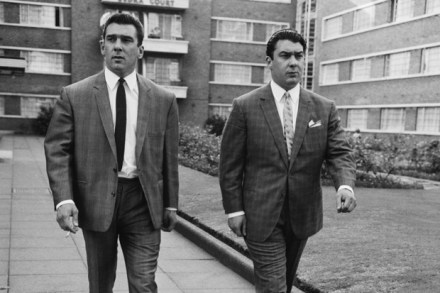
It was watching the latest film on the Krays (ludicrously called Legend) that brought it all back. I remembered not so much the deliberate and casual violence which underlay the swinging Sixties in Britain but something more personal. A recurrent question I have asked since those days is whether I personally could have prevented one of the Kray murders. Let me go back to 1966. I was a journalist on the Times commissioned to write two articles on British prisons. The Prison Department had directed me to the new secure prison of Albany on the Isle of Wight and to the psychiatric work being done at Grendon Underwood. But I wanted to contrast this with prison life in an older and more typical prison. What better place to go than Dartmoor?

Commons votes to bomb Islamic State in Syria

From our UK edition

British airstrikes against Islamic State will be extended to Syria after the House of Commons voted strongly in favour of the government ‘s motion tonight. The government had a majority of 174, enabling David Cameron to claim that he has the consensus backing for bombing IS in Syria that he has long craved. 67 Labour MPs voted in favour of strikes, which was higher than expected this morning. But Hilary Benn’s remarkable impassioned speech, the finest I’ve heard in the Commons, swayed at least one wavering Labour MP—Stella Creasy voting for, having previously been undecided and facing huge constituency pressure against action. Thought, it was worth noting that the government would have won even if no Labour MPs had voted with it.

Airstrike debate sketch: terrorist sympathisers, anti-Semitism and a basket of old ribbons

From our UK edition

Bomb Syria. That was Cameron’s priority today as PMQs was sidelined in favour of the debate on airstrikes. His opponents’ strategy was ‘Bomb Cameron.’ They demanded a withdrawal of his remark that any opponent of bombing must be a ‘terrorist sympathiser’. The snarliest words came from Alex Salmond whose grey jowls jiggled with rage as he shouted, ‘apologise for these deeply insulting remarks.’ Cameron offered a correction but no contrition: ‘There’s honour in voting for; honour in voting against.’ He didn’t hold back when describing Isil. ‘Women-raping, Muslim-murdering medieval monsters,’ he said. And he set out the case for extending the bombing from Iraq into Syria.

Jeremy Corbyn gives his half of the Labour response to Syria

From our UK edition

By the time Jeremy Corbyn got to his feet in today’s debate on action in Syria, the House of Commons was in a fractious mood, with interventions from MPs focusing as much on the Labour party as the issue up for debate. The Labour leader did not find much support from his own side, either, with a number of pro-intervention MPs frowning and muttering as he ploughed on with his speech. Hilary Benn appeared to be grinding his teeth during much of the response. It opened, inevitably, with a man who could quite reasonably be described as a ‘terrorist sympathiser’, given his dealings with the IRA and his ‘friends’ in Hamas, complaining about the Prime Minister’s comments last night.

Government publishes Syria motion

From our UK edition

In the past few minutes, the government has published the following motion on action in Syria, which you can read below. The Leader of the House Chris Grayling has announced a change to the Commons business which will see PMQs cancelled and this motion debated for 10 hours. The Cabinet today held what the Prime Minister's official spokeswoman described as a 'very serious' discussion, with 20 frontbenchers speaking in favour of the motion. Significantly, when asked whether those present had discussed the question of who the 70,000 moderate opposition forces are, the spokeswoman said 'that was not a focus of the discussion', adding 'it was not a point that was debated or discussed by the Cabinet'.

Tom Watson asks Cameron to delay Syria vote

From our UK edition

The biggest problem with Labour’s furious and seemingly endless infighting is that it is preventing the party from doing its job of scrutinising the government. The Shadow Cabinet are largely scrutinising their leader and one another, which makes it easier for David Cameron to be vague about certain aspects of his case for war. But today, Tom Watson has written to the Prime Minister demanding a delay in the vote and clarity on two key points. They are: 1. The detail behind Cameron’s claim that there are ‘approximately 70,000 opposition figures on the ground who do not belong to extremist groups’. 2. A timeline for peace and arrangements for a lasting political settlement, and an assessment of the Saudi initiative to draw together opposition groups in Syria.

Cameron says that the Commons will debate Syria strikes on Wednesday

From our UK edition

David Cameron has just said that the Commons will debate extending air strikes against Islamic State to Syria on Wednesday. Given that Cameron has repeatedly made clear that he wouldn’t bring the issue back to the Commons unless he was confident he could win a vote with a clear majority, this must mean that he calculates that Labour granting its MPs a free vote means that he now has the numbers he needs. Speaking from the Cabinet Room, Cameron argued that this ‘was the right thing to do’ as the UK’s allies had asked for this country’s help and because Islamic State does not respect the Iraqi / Syrian border, it makes little sense to attack it only on one side of this border.

Corbyn free vote decision calms Labour frontbench – for now

From our UK edition

Jeremy Corbyn seems to have left Shadow Cabinet meeting with a reasonable result, given the warfare in the Labour party over the past few days. It was what one frontbencher describes as ‘rather lively’ and others felt was ‘totally embarrassing’, but the agreed position is that there will be a free vote, a call for a two day debate and that official party policy will be that set out by the Labour party conference. This is the statement on the matter: ‘Today's Shadow Cabinet agreed to back Jeremy Corbyn's recommendation of a free vote on the Government's proposal to authorise UK bombing in Syria.

Jeremy Corbyn grants Labour MPs a free vote on Syria

From our UK edition

The Shadow Cabinet is now holding its (delayed) meeting on Labour’s stance on Syria, and members have been told that they will get a free vote on the matter. Sources say that Jeremy Corbyn will also ask David Cameron to delay the vote, which is expected on Wednesday, in order to respond to MPs’ concerns, and that the party will still take a position that frontbenchers won't necessarily have to follow. This is a way of avoiding the mass resignations and fury that Shadow Cabinet members were threatening. But it is also a sign that Labour as a party no longer falls within the accepted definition of a political party. Frontbenchers can now take a range of views on a matter of war. They might as well not bother holding Shadow Cabinet from now on. UPDATE, 2.

Feldman’s defenders weigh in

From our UK edition

Friends of Andrew Feldman have launched a vigorous defence of the party chairman ahead of this afternoon’s board meeting. A long-serving member of the party board, a Cabinet Minister and a senior Number 10 source have been phoning around offering their backing to him. They argue that when Shapps and Feldman were co-chairmen, there was a clear division of labour with Shapps involved in the ground campaign and Feldman taking charge of the money and administrative matters. So, it should be Shapps—not Feldman—who takes responsibility for what went wrong with Road Trip 2015.

Labour claims 75 per cent of members oppose air strikes in Syria

From our UK edition

Just minutes before the crunch Shadow Cabinet meeting about the Labour stance on air strikes in Syria, the party has released figures showing an overwhelming majority oppose UK bombing in Syria. This is the statement: 75 per cent of Labour Party members responding to weekend consultation oppose UK bombing in Syria A sample of this weekend's consultation of Labour Party members, carried out in response to an email from Jeremy Corbyn, issued Friday 27th November, has shown that 75 per cent of Labour party members who have responded oppose UK bombing in Syria. 107,875 responses were received of which 64,771 were confirmed as full individual Labour Party members. The remainder included affiliated supporters and registered supporters.

Mark Clarke and the safe seat myth

From our UK edition

How did those accused of bullying in the Conservative party’s youth wing get away with it? The central party, which appears to be slowly waking up to the fact that it can’t mark its own homework with an internal investigation into the events preceding Elliott Johnson’s death, may have been so desperate for help ferrying its limited number of young activists around the country that it jumped at the offer from Mark Clarke (who denies all the allegations put to him over the past few weeks). But those unhappy at the state of affairs seem to have been held back from complaining by something else: the threat to their careers. Account after account of the scandal includes references to the need to impress the powers that be enough to get a safe seat.

Tory bullying scandal: why Grant Shapps had to go

From our UK edition

After weeks of terrible stories about the bullying rife in the Tory youth wing, former party chairman Grant Shapps has resigned as a minister, with a formal statement expected later today. David Cameron was believed to be furious that Number 10 had been implicated in the stories about Mark Clarke and the death of Elliott Johnson, with the publication of letters of praise from the Prime Minister to Clarke about his RoadTrip initiative. It is unlikely that Shapps, who was demoted as party chairman to the role of international development minister in the summer, will have resigned voluntarily. For some months his allies had believed he was on his way back to the Cabinet. So why did he have to go?

The EU renegotiation is now the biggest obstacle to Osborne making it to Number 10

From our UK edition

At the start of this week, everyone was wondering how George Osborne was going to get out of trouble on tax credits, avoid a deeply damaging row over police cuts, all while still keeping to his surplus target. But thanks to the Office for Budget Responsibility upgrading its forecasts, Osborne was able to scrap the tax credit changes, protect the police budget and maintain his plan for a £10 billion surplus by the end of the parliament. But now, an even bigger challenge awaits Osborne: the EU renegotiation. I argue in my Sun column today that it is now the biggest threat to his chances of becoming Prime Minister.