Uk politics

David Cameron is plain wrong about Oxford and race. Here’s why

From our UK edition

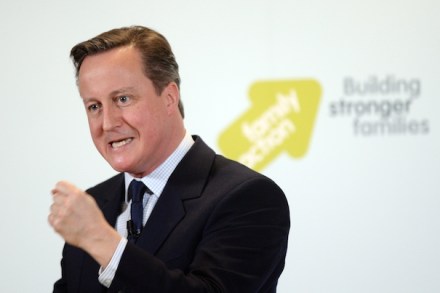
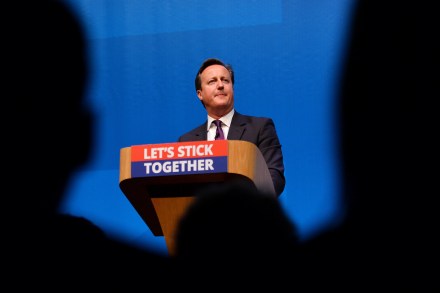
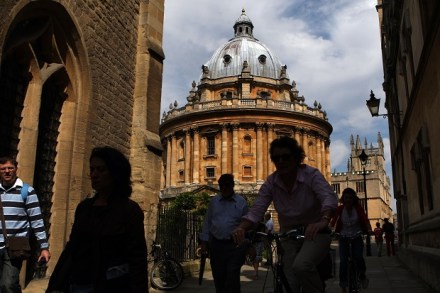
I applaud the Prime Minister for pointing out the scandalous lack of black students at Britain’s top universities, but he’s wrong about whose fault it is – at least when it comes to Oxford, his alma mater. Yes, it’s true that Oxford only admitted five black British Caribbean applicants in 2013, a disgracefully low number, as David Cameron points out, but there’s no evidence to suggest that the cause is 'ingrained, institutional and insidious' attitudes, i.e. racism, on the part of Oxford’s admission authorities. How do I know this?
Downing Street expects draft EU deal to disappoint

From our UK edition

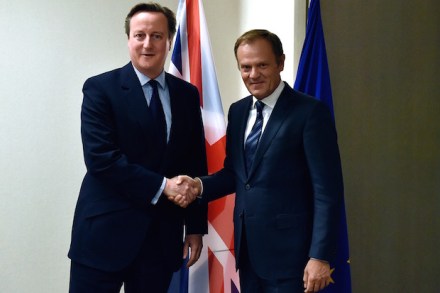
We are only days away from seeing Donald Tusk’s proposed text for the UK/EU deal. The President of the European Council is expected to circulate a draft early next week following his Sunday night supper with David Cameron. But, as I write in The Sun this morning, Downing Street is keen to stress that the publication of this draft doesn’t mean that the renegotiation is over. They are adamant that Cameron will have a chance to toughen up the terms at the European Council on February the 18th. Cameron’s problem is that he would like a deal at the February Council, so that he can have a referendum in June. But the more EU leaders think he wants a quick deal, the less they will be inclined to give him.

With an 18-point lead in the latest poll, momentum is with the EU ‘in’ campaign. 

From our UK edition

Why is David Cameron having such trouble persuading Jean-Claude Juncker to give in to his minimal demands for EU reform? The Prime Minister pledged, in a Tory manifesto, to restrict welfare for migrants for the first four years they're in Britain: not as an ‘emergency’, but as a matter of routine. He was returned with a majority, and under British democracy this means it ought to happen. If the Lords were to try to frustrate this, the PM would overrule them because it was a manifesto pledge, voted on by the public. Why accept a veto from the EU? But the polls show a clear lead for 'in' - a ComRes poll for the Daily Mail tomorrow shows in leading by 18 points (54pc to 36pc) with just 10pc as 'don't knows'.

England named worst in developed world for literacy. So yes, school reform is needed.

From our UK edition

Today’s OECD study of basic skills ranks England lowest in the developed world for literacy, and second lowest for numeracy. We knew that our schools might struggle to compete with the likes of Singapore and South Korea, but this puts the problem in a whole new perspective. It's the delayed results of a study taken four years ago where 5,000 in each country were sampled so, to some extent, it's a hangover from the days when a far greater share of children left school without five decent passes. But the report also found that England has three times more low-skilled people among those aged 16-19 than the best-performing countries like Finland, Japan, Korea and the Netherlands. One in ten of all English university graduates have low literacy and numeracy skills.

MPs plan to water down controversial ‘Saatchi Bill’ on medical treatments

From our UK edition

The latest incarnation of the Saatchi Bill - a piece of legislation properly known as the Access to Medical Treatments (Innovation) Bill - has its report stage in the Commons tomorrow. I’ve written before about the problems with this Bill, which is now being taken through Parliament by Tory MP Chris Heaton-Harris, and it now seems that a cross-party group of MPs will tomorrow succeed in making a well-meaning bill less dangerous. A series of amendments from Labour, Tory, SNP, SDLP and DUP members will remove the sections of the Bill that are aimed at preventing a doctor from being sued for negligence if they decide to use an ‘innovative’ treatment for an illness, which is what had worried clinicians so much.

Eurosceptics to push Cameron on EU renegotiation in Commons debate

From our UK edition

It’s fair to say that David Cameron’s answer to John Baron at last week’s Prime Minister’s Questions, in which the Tory leader basically confirmed to his backbench colleague that he was ignoring him, hasn’t exactly helped relations with the eurosceptics in the Tory party. The row was splashed across the front page of the Sunday Telegraph this weekend, and I now understand that Baron has secured a Commons debate that will take up the issue he has been trying to raise with the Prime Minister.

Google tax row is convenient for Labour

From our UK edition

In the Google tax story, which continues to run in the papers today, Labour has found a theme that it can exploit in the Commons and in speeches over the next few weeks. Given so many Tories were prepared to criticise the 'derisory' amount the tech giant has agreed to pay back when the Commons discussed the matter on Monday, Jeremy Corbyn will feel he is on reasonably safe ground raising the issue at PMQs today.  Tax is always a handy issue, not just because it allows oppositions to promise to spend more using only the fruit of the magic money tree of cracking down on tax avoidance, but also because it taps into that feeling of one rule for the big guys and another for the ordinary voter, which is why MPs across the house were annoyed earlier this week.

Top Tories form social justice caucus to plot ‘all-out assault on poverty’

From our UK edition

David Cameron has decided that social justice will be his key legacy theme as Prime Minister, with his autumn conference speech and most of the announcements so far this year focusing on an ‘all-out assault on poverty’. At times, this has appeared a little vague, while other announcements, like the plan for Muslim women to learn English, have been a little confused. But Cameron has clearly decided that the Conservatives must tackle injustices in society, not just because it is right for the country, but also because it is right for the party, which is still seen by too many voters as for the rich.

Memo to Outers: You Can’t Always Get What You Want

From our UK edition

Honesty and consistency; two qualities everyone agrees to value but that are easily jettisoned as soon as maintaining them proves too inconvenient. It turns out they're not so valuable as all that. So it is with all things Euro-referendum-related. If we are to believe the rival tribunes competing for your affections later this year, negotiating the terms of a British exit from the European Union will either be a doddle or a disaster, with little room for hope in between those twin imposters. Well, perhaps. Sometimes, however, it helps to imagine an alternative but comparable scenario in which, as it happens, you may be less invested. Doing so might make some things clear. Conveniently, we have just such an alternative but comparable example close to hand.

Ministers tease Labour frontbenchers about party’s predicament

From our UK edition

Ministers appear largely to have given up on taking scrutiny from the Labour party seriously, if today’s Education Questions was anything to go by. Both Nicky Morgan and Sam Gyimah had come armed with jokes and jibes about the Opposition’s predicament, which were designed to deflect from a rare co-ordinated Labour attack over the implementation - or lack of - of the Conservatives’ flagship manifesto promise to double free childcare for three and four-year-olds, and questions about the attainment gap. Jenny Chapman asked about that promise - and whether one in three families who were told they would get free childcare would in fact receive no additional care at all. Gyimah replied: ‘Well, I thank the honourable lady and welcome her to her post.

Cecil Parkinson: A man to remember

From our UK edition

Lord Cecil Parkinson, former Conservative Party chairman under Margaret Thatcher, has died at the age of 84. Parkinson was one of Thatcher's most trusted allies and served for 30 years in the Conservative front ranks. He was famously forced to resign in October 1983 when it emerged his secretary was pregnant with his child. Here, in an article written in August 1984 in the Spectator, Charles Moore pays tribute to Parkinson. Why not bring back Cecil Parkinson? it is asked. He may have been an erratic actor with a turbulent private life, but he brought a certain dash and glamour to the show which it now badly lacks. Constitutional experts point out that there are precedents for such a quick recovery from disgrace.

Did we really have to hear all about Crispin Blunt’s sex life?

From our UK edition

A year or so back my friend and colleague Hugo Rifkind wrote a very good piece in which he argued that the issues concerning gay rights should not be resolved simply by an elongated 'eeeeuw'. In other words, heterosexual distaste at the practices of homosexuals should not determine general policy towards this minority. A good point and well made and I agreed with much of it. But it shouldn’t stop the rest of us going 'eeeeuw' from time to time, nonetheless. So, Crispin Blunt MP feels hurt because laws proscribing amyl nitrate (or 'poppers') would criminalise the entire gay community. A jar of poppers and a tube of 'lube' are always found in the bedside drawer of a gay man, we are told.

Nicola Sturgeon ridicules Labour’s ‘tortured’ Trident debate

From our UK edition

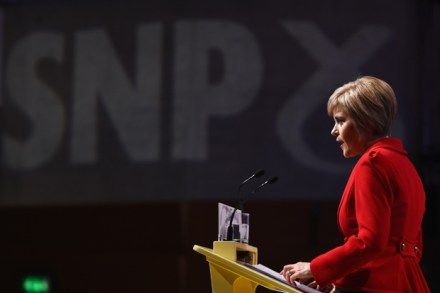
Given last year’s election was so much about the possibility of the SNP and Labour working together in government, Labour figures will be smiling ruefully at Nicola Sturgeon’s interview on the Andrew Marr Show today, in which she stuck the boot into the party she once suggested a ‘progressive alliance’ with. The Scottish First Minister is of course thinking more about fighting Labour in this year’s Holyrood elections than about the Westminster Parliament, and so she wanted to paint her main challengers as weak and confusing.

How many Tory MPs will back staying in the EU?

From our UK edition

With the government still convinced that there’s a better than 50:50 chance of a deal at the February EU Council which would pave the way for an EU referendum in June, the pressure on Tory backbenchers to back the Prime Minister is being stepped up. This week, saw the launch of the Cameron endorsed, pro-EU membership Conservatives for Reform in Europe group. Those involved in this group are confident, as I write in The Sun today, that they will get the support of a majority of Tory MPs. Tory MPs are being left in no doubt as to what side Cameron wants them on come the referendum. The message to them, as one of those close to Cameron puts it, is that a ‘free vote doesn’t mean a free pass’. But there are reasons to suspect that the referendum timetable might slip.

Corbyn didn’t consult Shadow Business Secretary over controversial business policy idea

From our UK edition

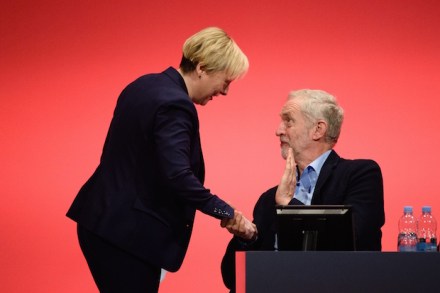
Angela Eagle wasn’t told about a controversial plan to ban companies who do not pay a living wage from paying out dividends to shareholders before Jeremy Corbyn floated it in a speech last week, Coffee House understands. I have learned that the Shadow Business Secretary was not consulted over the proposal, which is believed to have triggered the resignation of the Labour leader’s Head of Policy and Rebuttal, Neale Coleman. Corbyn floated the idea in his speech to the Fabian Society on Saturday, saying 'another proposal would be to bar or restrict companies from distributing dividends until they pay all their workers the living wage'.

Finally, the world has realised that George Osborne is a hottie

From our UK edition

‘It's hard to think of a time when we didn't all fancy the Chancellor of the Exchequer,' begins George Osborne’s entry in this year’s ‘The Tatler List’ – the society magazine’s annual compilation of ‘the people who really matter’. This year Osborne is placed at number 4, trumped only by Princess Charlotte, Ant and Dec, and Prince George, and a full 13 places higher than the next politician on the list, Mayoral hopeful Zac Goldsmith. But is it really all that hard to remember a time when ‘we didn’t all fancy the Chancellor’? The magazine puts his attraction down to his ‘big brain, sexy hair cut, and control of the biggest bank account in the country’.

Why it’s better to be poor in England than in Scotland

From our UK edition

Myths endure forever. Take, for instance, the myth that Scotland is a more equal, egalitarian, kind of place than England. It is an idea much-cherished north of the border and a stubbornly persistent one too. Helpfully, it's also resistant to evidence, allowing Scots to maintain the pretence that, as the late John Smith once (complacently) put it, 'The Scots are a more moral people'. Awkwardly, however, it's better to be poor in England than in Scotland. At least that's one conclusion to be drawn from today's Guardian report on the background of university medical students.

Is Cameron really happy to let his EU renegotiation timetable slip?

From our UK edition

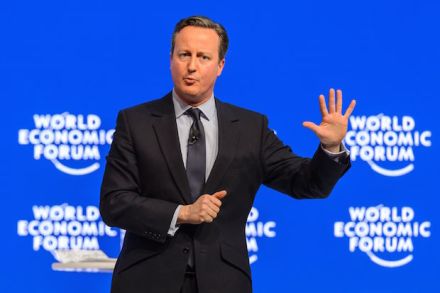
What does David Cameron mean when he says, as he did today, that he’s happy to wait a bit longer for a deal in his renegotiation of Britain’s relationship with the European Union? The Prime Minister told the Davos summit today that ‘if there isn’t the right deal, I’m not in a hurry’ and that ‘it’s much more important to get this right than to rush it’. The expectation in Westminster has been that Cameron would get a deal at the European Council summit in February, but the Prime Minister has been dropping hints that he is prepared to let the timetable slip at the same time that his colleagues are saying privately that they are confident of a deal.

Tories worry about plan to Short change opposition parties

From our UK edition

Labour is a very poor opposition at the moment, and no amount of money could fix that. But the government is currently pursuing a policy that seems intended to weaken even decent oppositions. In the Autumn Statement, George Osborne announced a 19 per cent cut to Short money, which is the state funding for political parties to be able to do their job of representing the millions of voters who want them in parliament. The 19 per cent cut is in line the reductions made to unprotected spending departments in the spending review, and is quite easy for ministers to defend, because they can talk about reducing the cost of politics, and voters like that idea. Naturally, the opposition parties involved don’t like the idea, and have been complaining about it.