Uk politics

George Osborne should have gone to the Foreign Office after the election

From our UK edition

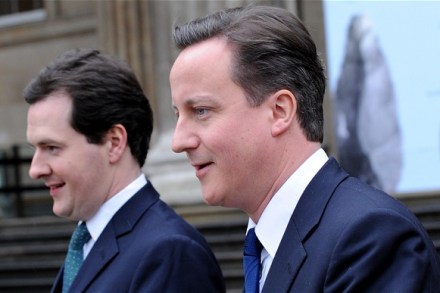
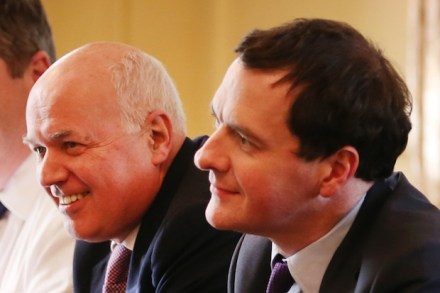
Imagine how different politics would be now if George Osborne had moved to the Foreign Office after the election. He would have left the Treasury with his economic and political strategy vindicated by the election result and wouldn’t be involved in this deeply damaging row with Iain Duncan Smith. For Osborne to have a former leader, and one of the most respected figures among the party activists, attacking his whole approach to deficit reduction and his conception of fairness is politically disastrous, to put it mildly. The problem for Osborne is that with no fiscal wriggle room and his opponents on the Tory benches determined to cause him trouble at every opportunity, there is no sign of the pressure on him letting up.

David Cameron suspends disability benefit reform, after IDS resignation

From our UK edition

Well, that was quick. In his letter responding to Iain Duncan Smith's resignation, the Prime Minister has this to say:- "We collectively agreed - you, No10 and the Treasury - proposals which you and your Department then announced a week ago. Today, we agreed not to proceed with the policies in their current form and instead to work together to get these policies right over the coming months." It was the disability benefit cuts that triggered the IDS resignation (or, rather, their being used in the Budget to help finance cuts to the higher rate of tax). The £1.3 billion cut was stated as a fact in the Budget, and the money banked. Then it was downgraded to a "suggestion" by Nicky Morgan on Question Time last night.

Iain Duncan Smith resigns in protest at the Budget

From our UK edition

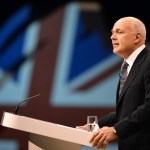
In the last few minutes, Iain Duncan Smith has released a letter of resignation from his post as Work & Pensions Secretary. The proximate cause is the Budget cuts to disability benefits. He knew about them, but had wanted a consultation paper to be published so the government could make the argument carefully, over many weeks, given that this is a hugely controversial topic. Instead, George Osborne presented the disability cuts as a £1.3 billion fait accompli in the Budget and these cuts to finance tax cuts for higher-rate earners and lowering capital gains tax. IDS said in his letter to David Cameron that this is ‘not defensible’. It was the juxtaposition, rather than the cuts on their own, that made him walk.

George Osborne is the most over-rated politician in Britain

From our UK edition

Many moons ago, Charles J Haughey, Taoiseach of the 26 free counties, bestowed a great compliment upon an up-and-coming young Fianna Fail politician. Bertie Ahern, Haughey observed, was the coming force: "He's the man. He's the best, the most skilful, the most devious, and the most cunning of them all." Now, granted, that kind of praise was akin to Jimmy Savile suggesting you have a great future in children's entertainment but the point, nonetheless, was made. Bertie Ahern was a cute hoor who could cute and hoor with the best of them. I often think of Haughey's praise for Ahern at this time of year. Because this is, invariably, the time of year when stocks in George Osborne soar to fresh and improbable heights.

Save council-run schools! It’s time for local authorities to open free schools

From our UK edition

In part of his Budget manspreading this week, George Osborne stole Nicky Morgan’s announcement that councils will be forced to relinquish control of all schools, so every single one is an Academy. As Philip Collins says in the Times today, this doesn’t mean they’ll all get better – he rather scorns the idea. But his old boss, Tony Blair, had precisely the same idea: to (in effect) privatise every single state school, so each one is independent of the council and has a direct financial relationship with Whitehall, cutting out local authorities entirely. Blair was vetoed by Brown and had to settle for a few hundred Academies. But in this, as with so much else, the Tories are finishing what Blair started. Councils must get out of education by 2020.

New YouGov poll puts Labour ahead

From our UK edition

When an ICM phone poll this week had Labour level with the Tories for the first time since Jeremy Corbyn became leader, even the pollster cast doubt on the finding. But today, YouGov has Labour ahead by a point—34% to 33%. YouGov’s Anthony Wells says that this suggests ‘something is genuinely afoot’. Now, as the election reminded us polls are not all seeing. It is also doubtful what the value of a poll is this far out from a general election: Ed Miliband was regularly ahead by large margins during the last parliament and still went on to lose the election.

How does George Osborne get away with missing his targets?

From our UK edition

How does George Osborne get away with it? The Chancellor was asked this on the Today programme this morning, with John Humphrys needling him on the economic targets on debt and deficit that he set himself and asking whether if he could miss two out of three of those targets and potentially be on course to miss a third, ‘what’s a bloke got to do in your job to get the sack?’ Osborne repeatedly argued that there was more to do, saying ‘by our own measurements and the tests we have set ourselves.. we have got more to do’. The picture he painted was of the government making progress towards meeting its targets.

Budget 2016: Osborne gets the front pages he wanted

From our UK edition

Normally, a set of newspaper splashes featuring a Chancellor's most controversial Budget policy would be judged a bad thing. But today's newspaper front pages are, by and large, just what George Osborne wanted. The sugar tax is just too irresistible to headline writers - and too controversial a policy not to grab attention and provoke endless debate. It is also much better a policy to grab attention and provoke endless debate than the awkward economic figures that the newspapers could have splashed on. Even front pages like the one published this morning by the Sun that criticise the sugar tax are better than ones criticising a £55bn black hole in the public finances.

The Spectator Podcast: Why political correctness is a good thing, George Osborne’s Budget, and the end of the rave

From our UK edition

Is political correctness a good thing or a bad thing? As Simon Barnes writes in this week's magazine, he used to think that people should be free to use whatever words they wanted to, in pursuit of truth and meaning. But having a son with Down’s syndrome has changed his mind. Now, he has seen the benefits that political correctness bring to society. On this week's podcast, he and Isabel Hardman discuss whether being PC is a good thing with Tom Slater, Deputy Editor of Spiked. Yesterday's Budget held a few surprises – but not that many. What it did do, as James Forsyth argues in his column this week, was bring the political focus back to the UK again.

If Wiltshire Tories regard George Osborne as a socialist, he has a problem

From our UK edition

BBC Newsnight sent a crew to North Wiltshire today, to interview voters about the budget. Gladys Pek Yue Macrae, a former Conservative Party branch chairman, said she is fed up because she expected Tory policies to be the result of a Tory majority. Instead, she said, “I find I have a socialist Chancellor. Conservatives are for small government and each individual being responsible for their own destiny. Why do we have a sugar tax? If people should not be eating sugar, then they should not eat sugar.” As her husband, Alan Macrae, put put it: “Surely Conservatism is all about freedom of choice? It’s not about the government telling you what you should and should not do.

The SNP’s ongoing war on football supporters would shame a better government

From our UK edition

Here we go, here we go, here we [expletive of your choice] go again. Our old friend, the Offensive Behaviour at Football Act is back in the news again courtesy of an article written by its sponsor, Kenny MacAskill MSP. Booting MacAskill from office was one of Nicola Sturgeon's first actions when she succeeded Alex Salmond as First Minister. It remains one of her best. MacAskill, you may recall, has form. It was he who cheerfully admitted that the government in which he served as Justice secretary was happy to 'do the wrong thing' - albeit for 'the right reasons' - since doing the right thing might have distracted attention from the struggle for independence. I wish this aspect of the SNP's record in office were more widely-appreciated but you can't, I suppose, have everything.

Budget 2016, in eight graphs

From our UK edition

Chart 1: Growth downgraded. Not by much, but Osborne sails so close to the wind that every negative revision tends to knock him off course. Chart 2: So Osborne's new debt target is missed already. He said the debt/GDP ratio would fall every year: a target he took right to the limit in his Autumn Statement. The ratio is rising this year - again, not by much, but this is rather embarrassing for him as made such a fuss about this target. Chart 3: Deficit picture worsens. Again. Which happens pretty much every time Osborne stands up to make a financial statement. Here's his latest plan, versus his original.

The OBR is relaxed about Brexit – contrary to what Osborne suggested

From our UK edition

In his Budget speech today, George Osborne made out as if the Office for Budget Responsibility was worried about Britain leaving the EU and quoted it saying "a vote to leave in the forthcoming referendum could usher in an extended period of uncertainty”. Listening, I was amazed: how could he enlist the independent OBR on either side of the UK referendum debate? But the document itself (Box 3.4, pdf) tells a very different story. Rather than take sides the OBR explicitly says "it is not for us to judge"  - and quotes a study by Open Europe, a think tank, which... ... modelled a scenario in which the UK leaves the EU in 2018 and found that GDP could be 2.2 per cent lower or 1.

Full text of Jeremy Corbyn’s Budget speech

From our UK edition

[audioplayer src="http://rss.acast.com/spectatorpolitics/georgeosbornesbudget-2016/media.mp3" title="Fraser Nelson, Isabel Hardman and James Forsyth discuss the Budget"] Listen [/audioplayer]Thank you Mr Deputy Speaker. The Budget the Chancellor has just delivered is actually a culmination of six years of failure. This is a recovery built on sand and a Budget built on failure. The Chancellor has failed on the budget deficit failed on debt, failed on investment, failed on productivity, failed on the trade deficit, failed on his own welfare cap and failed to tackle inequality in this country. And today Mr Deputy Speaker, he’s announced growth is revised down. Last year, this year, every year they forecast business investment revised down, government investment revised down.

George Osborne’s cautious, strikingly moral Budget

From our UK edition

[audioplayer src="http://rss.acast.com/spectatorpolitics/georgeosbornesbudget-2016/media.mp3" title="Fraser Nelson, Isabel Hardman and James Forsyth discuss today's Budget"] Listen [/audioplayer]There were two striking things about George Osborne’s Budget today. The first was that having made sure that the weekend papers carried reports of all the pain that he was going to have to inflict on the nation to help it weather the economic storm that is coming, the Chancellor then barely mentioned what that pain would entail. He built up the start of his speech by lecturing the Commons on the necessity of the pain, warning that ‘we have a choice: we can choose to add to the risk and uncertainty, or we can be a force for stability’.

Collapse in North Sea revenues destroys the SNP’s economic argument

From our UK edition

[audioplayer src="http://rss.acast.com/spectatorpolitics/georgeosbornesbudget-2016/media.mp3" title="Fraser Nelson, Isabel Hardman and James Forsyth discuss today's Budget"] Listen [/audioplayer]Alex Salmond had planned 24 March 2016 as his independence day and the budget he published during the Scottish independence referendum envisaged it having up to £7.5 billion of oil to spend. Today's Budget shows that the figure will, instead be zero: precisely 100 per cent less than what the SNP had told Scots. Without it, the Scottish budget simply would not stand up. The basic point - 'it's Scotland's oil!' - has been the SNP refrain for years. There's still oil in the North Sea but there's no profit.

Budget 2016: The biggest problem with Jeremy Corbyn’s response was that it was delivered by Jeremy Corbyn

From our UK edition

[audioplayer src="http://rss.acast.com/spectatorpolitics/georgeosbornesbudget-2016/media.mp3" title="Fraser Nelson, James Forsyth and Isabel Hardman discuss today's budget"] Listen [/audioplayer]Jeremy Corbyn’s response to today’s Budget was fine on paper. It included a proper response to the policies that were announced, rather than the Labour leader merely ranting about what he had thought might be in the Budget when he wrote the draft a few hours earlier. He did include the sorts of lines that every Budget response from an Opposition leader and campaigning organisation must include, such as ‘it doesn’t go far enough’. But he did also welcome policies such as the sugar tax, and managed a couple of decent jokes.

PMQs: A session soon to be lost in the Budget smog

From our UK edition

Normally when a Leader of the Opposition prepares for the Prime Minister's Questions before a Budget, it comes second to the prep for the difficult Budget response and focuses on a slightly random topic. The difference between this session and a normal PMQs is usually rather marked. But when Jeremy Corbyn rose today to ask his questions, his chosen topic of air pollution wasn't all that more eccentric than his usual range of subjects.  David Cameron's team does have to prepare a wider range of topics - albeit in less detail - for PMQs now that Corbyn is Labour leader. But even they hadn't thought of air pollution: Cameron had to answer his first question by saying he didn't have the figures that the Labour leader requested to hand.

What to expect from today’s Budget

From our UK edition

The art of delivering a good Budget - in a political sense at least - is to give everyone the impression that while you’ve had to do some really difficult things, you’ve miraculously managed to find some nice things to do too that will distract people for at least one round of newspaper front pages. George Osborne did manage that for his summer Budget after the election - only for the row about cuts to tax credits to blow up later. So we might expect a range of measures that generally make for good headlines, such as: Raising the threshold for higher-rate tax payers to help the 1.6 million people who have been pulled into the 40p rate since 2010.