Uk politics

A vote for Brexit is a vote against Toryism

From our UK edition

It's the rage I struggle to comprehend. There is, I am sure, an entirely reasonable case to be made for leaving the European Union, it's just that, for the most part, we've not heard it. Instead, the dominant feature of the Out campaign has been its anger. Many of these people really do seem to think this is some kind of struggle for national liberation. If they didn't they wouldn't talk about Britain regaining its 'independence'. Nor would they suggest that being a member of the EU is somehow incompatible with being a 'free' country.

Why Tory MPs are so worked up about forced academisation

From our UK edition

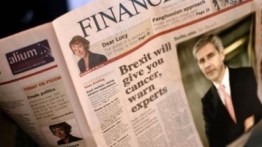
Tory MPs remain confident that they will force the government into a U-turn over forced academisation. Though departmental sources are pushing back against reports in today’s Financial Times that ministers are putting the brakes on the reforms, they cannot answer the question of how the changes would actually get through the House of Commons. And though David Cameron put up a spirited defence of the policy at Prime Minister’s Questions yesterday, Tory MPs have been saying that they have yet to see the evidence base for forcing schools that may be perfectly successful and stable into changing the way they are run.

Simon Danczuk’s ‘dark place’ excuse should be used more widely

From our UK edition

If you are caught doing something bad nowadays, what you are supposed to say (the latest exponent is Simon Danczuk MP, the anti-child abuse zealot, after ‘sexting’ a 17-year-old girl) is: ‘I was in a very dark place at the time.’ At present, the phrase is used to half-excuse sexual misbehaviour, drug-taking and the like. I hope it will extend more widely, as in ‘Mr Osborne, why did you create the Office of Budget Responsibility to make economic forecasting independent of the Treasury, and then use the Treasury to concoct an economic forecast to frighten people into voting to stay in the EU?’ A shamed Chancellor: ‘I was in a very dark place at the time.’ This is an extract from Charles Moore's Notes.

Why is Scottish Labour putting so much effort into its Trident policy?

From our UK edition

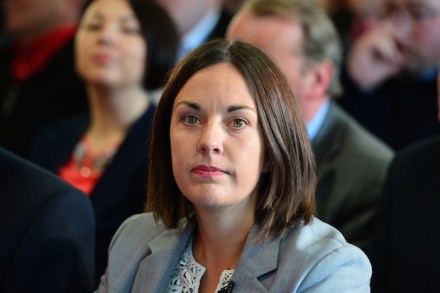
It’s perhaps not a surprise that Scottish Labour will oppose Trident renewal in the party’s manifesto for the Holyrood elections. The party did hold a symbolic vote on the matter at its conference last autumn, and delegates voted against renewal of the nuclear deterrent, despite Kezia Dugdale’s own preference for multilateral disarmament. And it’s not a surprise that this has enraged trade union GMB Scotland, which is pushing for a vote in favour of the Trident successor programme at today’s Scottish Trades Union Congress conference. SMB Scottish Secretary Gary Smith accused the Scottish Labour party of playing ‘fast and loose with thousands of livelihoods at Faslane, Coulport, Rosyth and across our wider defence-related industries’.

All shall have prizes: the SNP launch the most unnecessary manifesto in Scottish political history

From our UK edition

The SNP launched their manifesto for the forthcoming election to the Scottish parliament in Edinburgh today. 1,400 party members gathered for morning worship at the Edinburgh International conference Centre. Members of the media were forced to wear security bracelets emblazoned with the slogan "I'm with Nicola" which, given the contempt with which many nationalists view the press, was a nice touch. Your correspondent was not present, partly because he had forgotten the manifesto launch was taking place today but chiefly because none of it mattered in the slightest. The SNP don't need a manifesto to win this election. They are the masters now and there's nothing they or their opponents can do about it. Still, the SNP really is unlike other parties.

Leave campaigners brace themselves for ‘In’ onslaught

From our UK edition

If the number of foreign politicians and international organisations that the government is enlisting in the campaign to stay in the EU is anything to go by, David Cameron and George Osborne are a bit nervous about the outcome of the referendum. This week in particular has seen the Chancellor using not just the might of the Treasury to scare voters about Brexit, or just the might of the President of the United States, but also eight former US Treasury secretaries. In their letter today, the former ministers write that Britain leaving the EU would threaten the Special Relationship. They argue: ‘It would reduce Britain’s very positive influence as an ally of the United States and a strong participant in the G7 and in the G20.

Labour MPs fry Corbyn over McDonald’s ban

From our UK edition

Although the weekly meeting of the parliamentary Labour party is a private affair, Jeremy Corbyn’s spokesman offers journalists lurking in the committee corridor outside a briefing as soon as it has concluded. Today he had to take questions from hacks on whether or not his boss goes to McDonald’s - prompted by the news that the Labour party is banning the fast food outlet from having a stall at its party conference. Both the staff and the burger ban came up at the meeting. It started with an observation from Baroness Armstrong that the Labour leader now has a phalanx of staff with him when he attends these sessions, as opposed to just one or two advisers.

The deceptions behind George Osborne’s Brexit report

From our UK edition

Sometimes, George Osborne’s dishonesty is simply breathtaking. Let's set aside the way he has positioned himself over the years (if he believed that leaving the European Union ‘would be the most extraordinary self-inflicted wound’ he might have told us – and his constituents – earlier, rather than proceeding with the farce of renegotiation). But it’s his maths, today, which shames his office – and his use of this maths to make the entirely false suggestion that the Treasury thinks Brexit would make you £4,300 worse off. For anyone who cares about honesty in politics, and the abuse (and reporting) of statistics, this is an interesting case study. His chosen date is 2030.

How ministers had to change tack in the EU referendum campaign

From our UK edition

George Osborne harnesses the might of the Treasury machine today in the EU referendum campaign, publishing a weighty tome that tweaks 200 pages to warn of the consequences of Britain leaving the EU. He also warns of a ‘profound consequences for our economy, for the living standards of every family, and for Britain’s role in the world’. Those profound consequences include every family being £4,300 a year worse off as a result of Brexit, the Chancellor argues. John Redwood has already dismissed the document - which hasn’t yet been published - as ‘absurd’. But what it does tell us is that the government has accepted that the security argument alone won’t win the referendum.

Boris v Barack on Brexit

From our UK edition

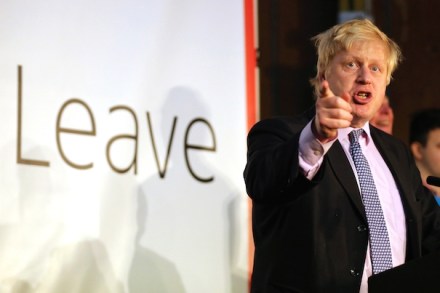
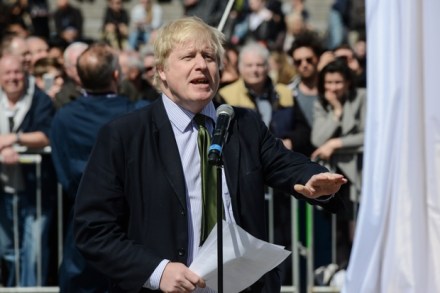
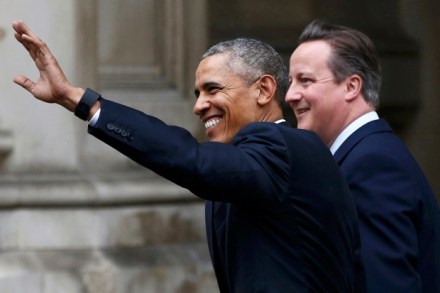
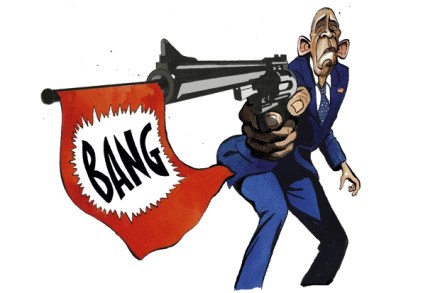
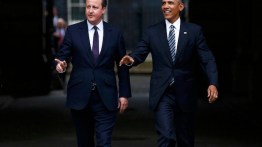
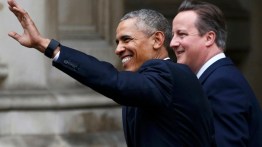
The US President flies into town next week to wish the Queen a happy 90th birthday and to encourage Britain to stay in the EU. Obama’s will be the most high profile, foreign intervention in this referendum yet. His message will be that it is in the interests of Britain, the US and the West for us to remain in the EU. But the Out campaign have their ‘Love Actually’ moment ready, as I say in my Sun column today. Boris Johnson will knock back Obama’s advice shortly after the president has spoken, pointing out—as he did in this BBC interview—that it is ‘nakedly hypocritical’ for the US to urge us to stay in an institution that erodes sovereignty in a way that they would find completely unacceptable.

The truth about black teenagers, prison and university

From our UK edition

A few months ago, David Cameron made an incendiary claim that splashed the Sunday Times and set the news agenda for days: black boys, he said, were more likely to go to prison than university. It was a shocking statement, that quite rightly sparked much discussion. But there was one flaw: his claim was nonsense. I had to submit a Freedom of Information request to find the real story: black men are twice as likely to go to a top (i.e., Russell Group) university than to prison. Include women, and it’s five times as likely. Include all universities, and there’s no comparison – black teenagers have a higher university entry rate than white teenagers.

Referendum camps try to enthuse voters as official campaign starts

From our UK edition

Rather like the 2015 General Election campaign, the EU referendum campaign feels as though it has been going on rather a long time. And yet today is in fact only the start of the official ten-week campaign. There may be some in Westminster who are filled with great excitement at the thought of another ten weeks of bickering about who has the most negative campaign. But the campaigns do have the difficult challenge of motivating those who back them to get out and vote on the day, and endless fighting and negativity about negativity won’t quite do the trick.

If you think this photograph is shameful you should probably be ashamed of yourself

From our UK edition

Today's starter for ten: how does this photograph make you feel? Does it make you angry? Does it do more than that? Perhaps your are the kind of person who feels this a truly shameful photograph. Perhaps, if this is the case, you need to get out more. Perhaps you also need a holiday from politics. Now, of course, a referendum - being a binary Yes/No question - is a divisive business. That does not require you to abandon all sense of perspective. If the sight of the Prime Minister in the company of Paddy Ashdown and Neil Kinnock leaves you frothing with disbelief you probably should, as the Irish put it, cop on to yourself. We have been here before, of course.

Tories expect academy policy U-turn

From our UK edition

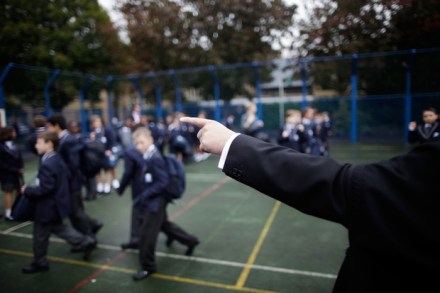
Tory MPs are increasingly convinced that the government may back down on some of its plans for forced academisation of all schools, I understand. The Commons is currently holding an Opposition Day debate on the plans, confirmed in last month’s Budget. They have upset a good number of Conservative MPs and councillors, not least because they appear to contradict the government’s commitment to localism. A large number of MPs are complaining in the debate about the dangers of imposing the academy model on all schools, and removing the requirement for academies to have parent governors.

Justin Welby could teach David Cameron a thing or two about PR

From our UK edition

I don’t think there is a Royal College of Public Relations, but if there were, it should teach a course based on a comparison between two stories last week. One concerned the Prime Minister and the other the Archbishop of Canterbury. Both arose from the paternity of the principals and, in both cases, the principals had not done anything wrong. Yet there the similarities end. David Cameron, and those working for him, spent the best part of a week fending off and then changing a story they found embarrassing. Justin Welby, and his much smaller staff, confirmed the truth of a potentially much more painful story in one go, bravely and clearly.

Vote Leave given designation as official Brexit campaign

From our UK edition

After months of waiting, the Electoral Commission has announced that Vote Leave has been given the official designation for the EU referendum. This means that MPs including Michael Gove, Boris Johnson and Frank Field will now become the official faces of the Leave campaign, while Nigel Farage and Ukip donor Arron Banks, who were behind the Grassroots Out campaign, will be sidelined. Britain Stronger in Europe will be the official Remain organisation. Explaining its decision, Claire Bassett, Chief Executive of the Electoral Commission said: 'Where there are competing applicants for a particular outcome the law is clear, we must designate the applicant which appears to us to represent those campaigning for that outcome to the greatest extent.

Culture Secretary John Whittingdale admits relationship with dominatrix

From our UK edition

If match.com is missing an advertising strap line, how about saying "Where lonely cabinet members can meet lonely dominatrices?". According to John Whittingdale, the Culture Secretary, this is precisely what happened to him - a relationship that the press knew about, but decided not to publish on the grounds that he's single, is richly entitled to date whoever he likes and updating the public on his progress on match.com was not in the public interest. Bizarrely, the press regulation advocates Hacked Off is accusing the press of being too prudish and thinks it's a scandal that Whitto was not humiliated and mocked. A cover-up, it says. We haven't quite had Hugh Grant demanding that the press expose single men's liaisons with call girls, but that can't be far away.

Our approach to the elderly is a national scandal

From our UK edition

Parents are so worried about the behaviour of nursery workers looking after their children that they are installing secret cameras to keep tabs on them. Can you imagine the outrage that would follow this story, if it were true? Yet when, as the Times reports today, the vulnerable people concerned are elderly, then the abuse attracts far less attention. The newspaper reported this morning that charity Action on Elder Abuse is encouraging people to install hidden cameras in the rooms of older relatives to monitor their carers. The charity’s helpline received 7,529 calls from people worried they were victims of financial abuse last year, up from 3,500 the previous year.

Parliament is becoming an easy place for ministers to calm rows

From our UK edition

The government has had a messy few weeks: that much is clear. And the latest mess, which is the row following the Panama Papers leaks, is still all over the press a week after the story broke. There are apparently more revelations to come. But the government has also settled into a pattern of having multiple damaging rows which are played out in the media over days, with a series of ill-judged responses making matters worse, followed by an attempt to calm things down in the House of Commons on a Monday afternoon.

Cameron’s handling of the tax row means it won’t go away any time soon

From our UK edition

David Cameron will give a statement in the Commons addressing the row about his tax arrangements, with George Osborne expected to publish his own tax return in the coming days too. That the Prime Minister has had to prepare a statement for MPs so that he can avoid being hauled to the Commons by Labour with an urgent question shows both how serious this row is for Cameron, but also how he is trying to compensate for being unprepared last week. He had clearly underestimated how potent the revelations in the Panama Papers would be, thinking that they could be dismissed with a mere line about this being a ‘private matter’. The bitty statements and changes of tack that came over the following days shows that no-one in Downing Street really thought Cameron was in any danger.