Uk politics

When our armed police open fire have we got their backs?

From our UK edition

I walked past Parliament, five days after Khalid Masood’s fatal attack. I looked at all the armed policemen on all the gates visible to the public. All were talking to one another rather than surveying the scene in front of them. As I write, the only person, so far as we know, being actively investigated by the authorities for his part in the events of last week is Sir Michael Fallon’s close protection officer, who shot Masood dead. Under our rules, it is automatic that the Independent Police Complaints Commission investigates any officer who shoots anyone. It is hard to know whether to admire this as a mark of civilisation or gasp in exasperation.

Let’s compare Sturgeon and May’s sure-footedness – not their legs

From our UK edition

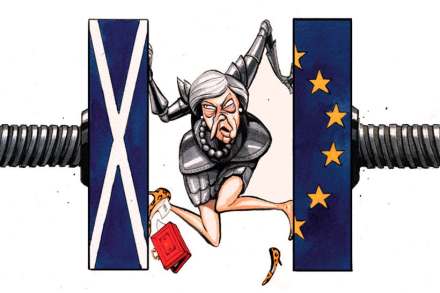
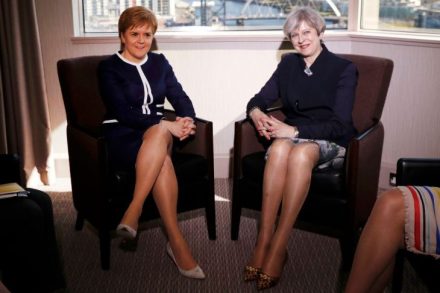
One must not make odious comparisons between Mrs May’s legs and those of Ms Sturgeon, but it is not sexist to ask which is the more sure-footed. So far, Ms Sturgeon has run much the faster, and by doing so has gained attention far in excess of the numbers she can command. Mrs May might look the more plodding. But as Ms Sturgeon charges forward yet again with a call for another referendum, I wonder if she is becoming like Bonnie Prince Charlie, who reached Derby, and then slipped.

Confirmed: UK economic growth accelerated after the Brexit vote

From our UK edition

All of the blank ink that the FT used on the day after the Brexit vote, all of those predictions of the job losses and recessions – and still, the economy still refuses to behave as those economists predicted. Not only did British economic growth actually accelerate after the Brexit vote (GDP now confirmed at 0.7pc up in the last three months of 2016) but the confidence continues. A Deloitte survey of chief financial officers finds their optimism at an 18-month high as they become more relaxed about Brexit. As has the Bank of England (see below).

Parliament must take back control of Brexit

From our UK edition

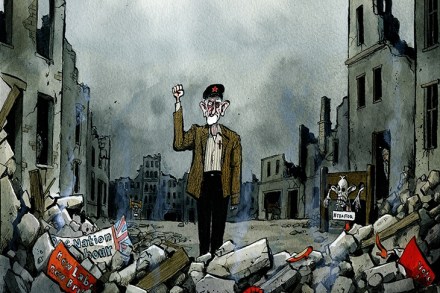
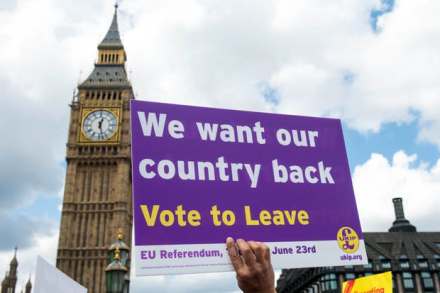
In the early, sunlit days of New Labour, the left-wing comedian John O’Farrell had a skit on how the Tories, after a generation of dominating British politics, found their party and its principles rejected by the electoral mainstream. ‘Now the Conservatives are like a lunatic fringe party,' he said. 'Soon we can expect to see them outside Woolworths next to the Socialist Workers on a Saturday afternoon shouting "Daily Telegraph! Get your Daily Telegraph! Britain out of Europe!"'  A generation on, the Tories are in power, Woolworths is gone, the Socialist Workers are running the Labour Party, and Britain is indeed coming out of Europe.

A great day for British democracy

From our UK edition

Today is a great day for British democracy. One of the greatest ever, in fact. Tune out Project Fear, with its overblown claims that Brexit will cause economic collapse and possibly revive fascism, and just think about what is happening today. The largest democratic mandate in the history of this nation, the loudest, clearest, most populous democratic cry Britons have ever made, is finally being acted upon. The political class is starting the process of severing Britain’s ties with the EU not because it wants to — it desperately doesn’t want to — but because a great swarm of its people have told it that it must. This is amazing. This is wonderful. This is democracy. This is what generations of Britons fought for.

Who has the better mandate: Theresa May or Nicola Sturgeon?

From our UK edition

For the last week, the Unionist opposition at the Scottish parliament has enjoyed observing that the Scottish government is happy to ignore non-binding votes at Holyrood when it suits them to do so but now expects the UK government to be bound by today's vote authorising the Scottish government to seek a Section 30 order that would begin the process by which a lawful second referendum on independence can be held. It is a neat line but an insufficient one, not least since this vote - unlike some of those on which the SNP government has been defeated - actually recommends a particular course of action that the government should follow.

Ed Miliband’s sassy Twitter reinvention is bad news for Labour

From our UK edition

I really liked Ed Miliband. I thought he would make a great Prime Minister. He was wide-eyed and striving, the less hip or handsome of the Miliband brothers, but undeniably a fine man. In recent months, however, he has tried to shed that image. He now wants to seem cool. This morning, for example, Miliband responded to the Daily Mail’s controversial ‘Legs-it’ cover by tweeting ‘The 1950s called and asked for their headline back’. He then proceeded to engage in a back-and-forth with James Blunt (another of Twitter’s surprise rehabilitations) who wrote ‘It's been such a pleasure guest-editing @Ed_Miliband's Twitter page these last couple of weeks.

Forget ‘virtue signalling’ – ‘empathy patrolling’ is the new moral phenomenon

From our UK edition

I’ve had just about enough of being told how to feel about what happened last Wednesday.  I feel angry. I still feel shock. I feel a keen ache for the families of those murdered, especially the loved-ones of PC Keith Palmer.  I feel that cold spite that works its way into your heart at times like these, vengeful cruelty passing itself off as hard-headedness. When I remember this, I feel ashamed to have given in to it.  I feel scared of an ideology that crashed into the 21st century in an outrageous spectacle but has now made its choreography more low-key.  I feel contempt for the demagogues who seek to exploit the raw emotions of After Wednesday. I feel disdain towards those rolling their eyes at the locution ‘After Wednesday’.

No, M Juncker, David Cameron did not “destroy” the United Kingdom.

From our UK edition

Jean-Claude Juncker could have been invented by Nigel Farage's spin doctors. He is sneering one-man advert for Brexit, Frexit and any other kind of EU-exit. As Hugo Rifkind argues in this week’s magazine, he is a caricature of the arrogant Eurocrat: “smug, lazy, unelected and utterly impervious to anything.” He is a notorious boozer, and managed ‘head of state’ by running Luxembourg, which a country with a population about the size of Sheffield. His ascension to President of the European Commission embodied everything that was wrong with the EU, a huge signal that it was time to abandon ship.

Why do so many right-wingers hate Britain so much?

From our UK edition

One of the curiosities of the past 72 hours has been the manner in which it has become possible to make a clear distinction between those people who like and admire this country and those who only say they love it. There are certain ways in which the latter may be identified. The presence of a Spitfire or a noble lion on their social media profiles is one all but unerring indicator that you're dealing with someone who deplores the realities of modern Britain. These stout-hearted, willy-waving yeomen cannot help wetting themselves. The Mooslims are coming! (From Kent, it seems.) They are the panicky ones, not the ordinary British people who, while horrified by this week's events, have quietly continued to go about their business. London is not under siege; it has not fallen.

Theresa May tells the country to go about its business normally tomorrow

From our UK edition

Speaking in Downing Street this evening, Theresa May has urged people to go about their business normally tomorrow. In a statement that struck an appropriately defiant tone, May said that the targeting of Westminster and the Houses of Parliament ‘was no accident’. But that that any attempt to defeat the values of ‘democracy, freedom, human rights, the rule of law’ through ‘violence and terror is doomed to fail’. Talking of the police officer who died in the attack, and the others who have been injured, she praised the ‘exceptional bravery of our police and security services who risk their lives to keep us safe’. This is the first terrorist attack that Theresa May has had to deal with as Prime Minister.

Martin McGuinness changed his ways – but he never changed his mind

From our UK edition

We keep being incited to find it heartwarming that Martin McGuinness and Ian Paisley were known as the Chuckle Brothers. But what were they chuckling about? Their shared success at outwitting the British state. Both, though for opposite reasons, had made their careers out of harassing Britain, and both, in their later years, had acquired money, power and status by doing so. In the case of McGuinness and his gang, Britain greatly underplayed its hand. Having militarily beaten the IRA, successive British governments could have marginalised them, but instead they accepted them as authentic representatives of the Irish people who had to be included in any settlement. The process for doing this systematically disadvantaged the moderates and bigged up the thugs.

Martin McGuinness – a man who put the ballot before bullets

From our UK edition

Ulster is where memory burns long and forgiveness comes slow. The death of Martin McGuinness will pass without the spilling of sorrow by many Unionists in Northern Ireland and here in mainland Britain, where the IRA’s terror campaign paid regular, outrageous visits, there will be those who mutter a cold ‘good riddance’.  Douglas Murray writes:  '[W]hile the eulogists lament the fact that McGuinness hasn’t enjoyed much of his old age, our thoughts really ought to be with the many people who – thanks to McGuinness and his friends – never made it as far as middle age.’ This is undoubtedly true. McGuinness was a terrible man who did terrible things and the good things he did in later years did not change that.

‘Ultra Brexiteers’: the new menace to polite society

From our UK edition

For someone who once branded his own Cabinet colleagues ‘bastards’ — and two decades later said he only called them bastards because they were bastards — John Major has of late become weirdly sensitive to rough, colourful language. He’s peeved at what he calls ‘ultra Brexiteers’, who are big meanies, apparently. These ultras are launching ‘vitriolic and personal attacks’ he says, and they seem hell-bent on ‘shouting down anyone with an opposing view’. Their behaviour is ‘profoundly undemocratic and totally un-British’. In short, they’re bastards. Just say it, John.

Nicola Sturgeon’s speech to SNP conference suggests she’s playing a long game

From our UK edition

If Nicola Sturgeon is not the only star in the nationalist firmament, she remains the only one that can be relied upon to shine brightly. The SNP's conference in Aberdeen this weekend reminded us of that fact. Angus Robertson commands a measure of respect but not even he would claim to be loved by the party. Nicola Sturgeon hasn't always been either; she is now. And there was a reason—or, rather, many reasons—why Alex Salmond as denied the chance to address delegates from the conference stage. Yesterday's man is considered an unfortunate embarrassment these days. And Sturgeon's speech began well. ‘Our job is not to talk to each other’ she said.

Numbers 10 & 11 need to find a better way of working together

From our UK edition

Philip Hammond should be sending George Osborne a case of the finest claret. For Osborne’s decision to accept the editorship of the Evening Standard, has distracted Westminster’s from  this week’s spectacular Budget reversal. But, as I say in The Sun this morning, the fallout from it will be felt for some time. Even Hammond’s Cabinet allies admit that ‘Of course, he’s damaged’ by the whole issue. But those in May’s circle are blunter. Pointing out the mistake was ‘staring you right in the face’ before he made it and that the National Insurance hike on the self-employed ‘was pushed back several times' by Number 10.

Too many Hoggs spoil it for Charlotte

From our UK edition

Charlotte Hogg forgot to tell the Bank of England, of which she had been appointed deputy governor, that her brother Quintin is director of strategy at Barclays bank. She has had to resign. There is something strange about this story. After all, if the Bank of England did not know already that her brother held this position, its knowledge of the banking world it is supposed to supervise must be thin indeed. You can see why Miss Hogg might have assumed that those appointing her knew already, and so have given it no thought, rather as Tony Blair and David Cameron probably never thought to put in the Register of Interests as lawmakers that their brothers are QCs.

An MP as editor? It’s been done before – at The Spectator

From our UK edition

What on earth does George Osborne know about journalism? How can someone with no journalistic experience go straight in as editor – editor! – of the London Evening Standard? What were its proprietors thinking? To have dinner with an MP is one thing, but to hire him as an editor? And what does this sacked politician know of the demands facing an editor in the digital era? How can he combine such a demanding job with his duties in parliament and towards his constituents in Tatton? If I wasn’t an editor, these might be a few of my reactions to the extraordinary news today. But much as I hate to admit it, this appointment might actually work. I was rather rude about George Osborne throughout his frontbench career, and regarded him as a deeply disappointing Chancellor.

How can the Scottish Greens reconcile their manifesto promises with backing Sturgeon?

From our UK edition

It has been barely two years since the last Scottish referendum, with no sign that opinion in Scotland has changed since then. Yet still Nicola Sturgeon hopes to vote to request a new referendum in the Scottish Parliament next week. But here’s the thing: last year, Scots voted to strip the SNP of its Holyrood majority, precisely so they could stop pretending that their agenda is the will of the nation. Thus stymied, Ms Sturgeon would need help in her vote for a new referendum from the six Green MSPs who support secession. But how could they reconcile this with their manifesto pledge (pdf, p19)? Scotland can champion a more open and participative law-making process: Citizens as legislators.

MPs can no longer employ family members – and SpAds are delighted

From our UK edition

It wasn’t quite our answer to the West Wing — too young, too cynical — but it filled a Bartlet-shaped hole in the TV schedule. Party Animals followed a clique of sexually bipartisan political advisers at Westminster in the dying days of New Labour. Matt Smith and Andrea Riseborough played researchers to a Caroline Flintish Home Office minister, pragmatic and idealistic in the right measure, while Shelley Conn and Pip Carter worked for her shadow number, a sort of dishy Ed Vaizey eager to modernise the Tories one decriminalised spliff at a time. There was little in the way of Sam Seaborn idealism and the implausibly attractive leads seemed to switch romantic allegiances in the time it took to power-walk down a corridor in Portcullis House.