Twitter

The ‘friends’ of others: how Facebook makes stalkers of us all

From our UK edition

It’s become a given: we are all stalkers now. Thanks to Google, Twitter, Facebook and the fact that absolutely nobody seems to have the faintest idea about privacy settings, it is easier to keep track of people on the other side of the world than ever it was to snoop on a village neighbour from behind the safety of a lace curtain. But a strange and sinister new phenomenon has begun to emerge. Call it secondary stalking. Even the stalkers are being stalked now. This was brought home to me the other night when I was having dinner with one of my closest friends, who I will call Andrew (gay, as it happens, so no romantic implications in what follows).

The View from 22 podcast: police vs liberty, health tourism and Westminster’s economic week

From our UK edition

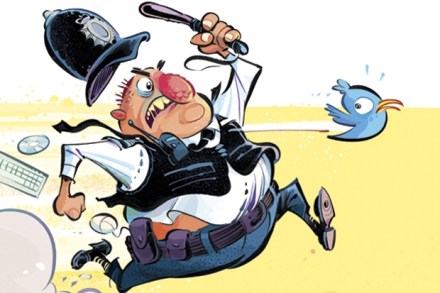
Are the police wasting too much time on Twitter instead of catching criminals? On this week's View from 22 podcast, Nick Cohen looks at what Britain's fall in crime has done to policing methods. Is the fall responsible for the police's heightened in what people say on social media? What does this mean for our civil liberties and freedom of speech? Consultant NHS surgeon J. Meirion Thomas also joins to explain how The Spectator helped blow the whistle on health tourism abuses. Will the government's plans to tackle systematic abuses by migrants work? How much effect will the levy on students and temporary visitors have? Are the figures quoted by the Department of Health on the cost of health tourism accurate?

Bet on Royal Mail, not Twitter

From our UK edition

Royal Mail delivers to 29 million UK addresses; last year it generated £9 billion of revenues, of which £324 million remained as profit before tax; and it is likely to be valued at £3 billion in its privatisation share sale, indicating a price-earnings ratio modestly below ten. Twitter — the microblogging phenomenon beloved of self-admiring celebs, but now so ubiquitous as a mode of communication that it is compulsory for British ambassadors abroad — has 200 million users and is expected to generate revenues of just £365 million this year, maybe twice that next year. Twitter says it’s profitable but has so far kept its accounts private, and is nevertheless likely to be valued at £6 billion-plus in its forthcoming flotation.

Has anything in the recent past had a bigger effect on writers and writing than Twitter?

From our UK edition

I’ve been trying to think of something – anything – in recent years that has had a bigger effect on the working day of the average writer than Twitter. And I can’t. Writing, for just about everyone who does it professionally, is the act of minimising your number of excuses for not writing. Nigel Farndale’s recent piece in the magazine addressed the problem of views; Julian Barnes, for instance, can only work if he’s facing the blank wall of his study. It reminded me of David Niven, who saw a plane flying over as ‘a bonanza – I’ll watch that for hours’. Eventually he had to retreat to a chair facing into the right-angle of a hedge in his garden: ‘I can’t even see the sky.

Boring politicians are a threat to democracy. That means you, Rachel Reeves

From our UK edition

I’ve never met the woman that the Newsnight editor Ian Katz this week accidentally described as ‘boring, snoring Rachel Reeves’, so for all I know, the shadow chief secretary to the Treasury might be an absolute riot. Although actually, writing that, it occurs to me that maybe I have and she was just too boring for me to remember. Perhaps we sat next to each other at some sort of function, and had a fun chat about, ooh, fiscal prudence in a post-OBR paradigm, which involved her talking and me going ‘Mmmm’, and left her thinking, ‘He seems nice, I wonder if we’ll be friends?

The curse of Newsnight strikes again

From our UK edition

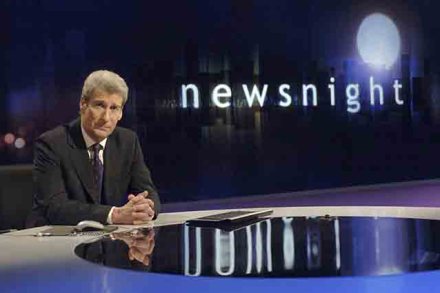
Poor Ian Katz. Just days into his new job as editor of Newsnight and he's already in hot water. Accidentally panning a guest behind their back is hardly the most dignified of starts. Mr Steerpike would love to know who this was really meant to be seen by rather than Katz's thousands of followers: While Rachel Reeves is undoubtedly tedious, it's hardly a good idea to actually say it. Katz's former Guardian colleagues will no doubt be happy to see him enjoying his new outlet. So what are the repercussions of the blunder? Not great if the reaction of Labour's attack dog Michael Dugher is anything to go by: 'Good luck in future to Newsnight in trying to persuade Labour people to go on their frankly rather boring programme at 11 at night,' he quips. I'm not sure he's joking.

Nick Boles meets his doppelganger

From our UK edition

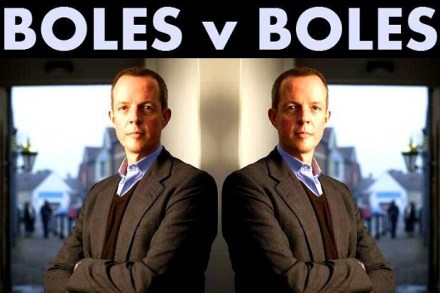
The world of social media often goes through the looking glass, but today has been particularly bizarre. Housing minister Nick Boles has decided to join the fun and games on Twitter, announcing his arrival this afternoon. The problem is the popular parody account, General Boles. The General’s satirical pictures (such as the one above) and funnies enjoy a cult following in the Westminster village.  And he can be a plausible imposter; our friends at the Guardian, for instance, were taken in when he appeared. In fact the General is such a power in the land that the real Boles, a minister of the Crown no less, has prostrated himself before this parody. ‘I will never be as funny or as good at Photoshop... I am but a pale imitation,’ he said earlier.

What if Byron and the Shelleys had live tweeted from the Villa Diodati?

From our UK edition

It’s one of the most famous – indeed infamous – episodes in English literary history. In the summer of 1816 Lord Byron took a villa on the banks of Lake Geneva. He was attended by his doctor, John William Polidori, and another nearby house was rented by Percy Bysshe Shelley, Mary Wollstonecraft Godwin, with whom the married Shelley had eloped two years previously, and Claire Clairmont, Mary’s stepsister and Byron’s mistress. The weather was terrible that year – so bad they called it ‘the ‘year without a summer’ – and the party spent most of their time indoors, gathered about the fireplace in Lord Byron’s drawing-room.

Syria debate: the sensible and profound punditry on Twitter

From our UK edition

At 10.00pm last night, Parliament votes against giving British approval to an American missile strike that was going to happen with or without us. But to the New York Daily News, it's a sign that the British have gone AWOL. And to many in Britain, it's a sign that the world has ended. Here's a selection of the more emotional responses to last night's vote: @paddyashdown In 50 years trying to serve my country I have never felt so depressed/ashamed. Britain's answer to the Syrian horrors? none of our business!

UK government is one of the world’s top pryers into user data on Facebook and Twitter

From our UK edition

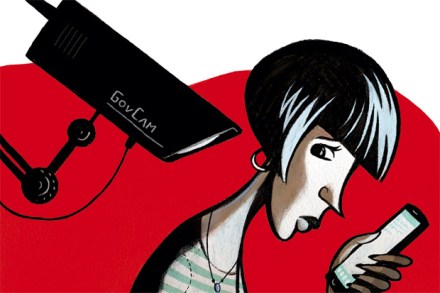
Our government loves to snoop. Nick Cohen explained in the Spectator last year why Britain is becoming a surveillance state, and now we have an indication of how much data they have attempted to extract from social networks. Facebook has released its first figures on government requests for data on its users. As the chart below shows, the UK comes third for the amount of data requested, behind the United States and India: It’s a similar story for Twitter, whose figures from January to June 2013 show that the UK is again third for number of requests, behind the same countries as Facebook: On the internet telephoning service Skype, the UK government even made more requests last year than any other country.

Stephen Fry: the high-priest of juvenile atheism

From our UK edition

Well, well, well. Nick Cohen's excellent column in this week's mag  has caused a stir today. Sadly, though, Nick's astute argument became another excuse for a boring slanging match between atheists and believers. And of course Stephen Fry waded in: Mary had a little lamb It's fleece was white as snow All you religious dicks Just fuck off and go. No more discussion with dickheads. Sorry. — Stephen Fry (@stephenfry) August 22, 2013 Really? Fry's Twitter cronies lapped that up. They always do. He's so clever and civilised, our Stephen, bless his colourful cotton socks. Unlike those credulous maniacs who believe in God. In 2013! Celebrity atheists always claim the rational high ground: we are calm and normal, the God squad is angry and mad.

The sad story of Oprah, the handbag and the shop assistant

From our UK edition

Listen, this story is moving so quickly stuff will almost certainly have happened in between me writing it and you reading it. I hate the idea that you might be left behind the curve, but I just don’t know how to get around that. An outrage occurs and of course we try faithfully to report it, so that you can be outraged vicariously, but time moves on; the outrage spreads out, like a fast-moving conflagration, and begins to affects us all and we all of us feel unclean and traduced. Already, with the outrage I’m about to describe, the Guardian has decided it was not one outrage but two conjoined outrages, Siamese-twin outrages if you like. By the time you read this we could be in United Nations territory. We could.

Kirstie Allsopp’s diary: Why I’m terrified of Woman’s Hour

From our UK edition

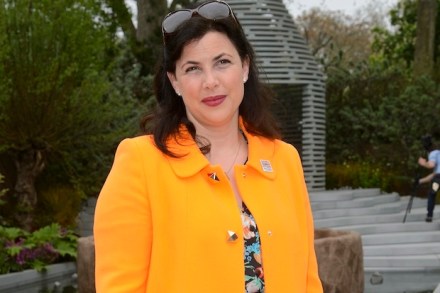
If you haven’t scuffled you haven’t lived, and our local scuffle is the best of the best. A scuffle is a sort of off-road bumper cars in 4x4s, and it’s one of the highlights of the summer. Our car, The Scuffle Pig, was on her third outing this year. We thought she’d been dealt a fatal blow in 2011, when a foolish friend encouraged a fellow scuffler to get her out of a dip by ramming her. The back windscreen was smashed, and I had to leap out and strip my then 12-year-old stepson down to his underpants in front of numerous spectators in order to get rid of the glass. He was remarkably good about it, though. Happily the Pig rode again, sporting four new off-road tyres which cost more than she did.

It’s not hate that Caitlin Moran can’t stand. It’s being disagreed with

From our UK edition

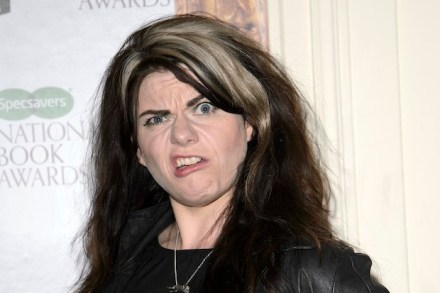
Hell, it’s been tough, but I think I’ve pulled through. I went out this morning to buy some cigarettes and there were plenty of people about, doing stuff — so the world has not changed beyond recognition these last couple of days. Everyone else seems to have made it. I hope you made it OK, too, without the need for counselling. Here we all are, huddled together, clutching at each other for warmth in the post-apocalyptic gloom. But we’re still standing. We managed to survive Caitlin Moran’s 24-hour boycott of Twitter. Moran is a journalist who decided to boycott Twitter because, incredible though it might seem, people keep saying nasty things on this conduit for the vapid, histrionic and self-obsessed.

You’re never really on holiday with a smartphone

From our UK edition

I was sitting on some rocks by the Cornish coast when a teenager swanned by on the sun-warmed boardwalk in front of me. The boy stood on the burning deck, preparing to dash across the sand, dive. Then his phone rang. ‘Luce! Yes, I’m at the sea... Was just going to plunge... Ran back to my mobile... Ha ha!... No, didn’t forget, will share that file on Google Docs... How’s France?... Awesome... Ha ha!’ Rage washed over me. I was angry because the boy had broken the sound of the waves with his silly ringtone and sillier chatter. I was angry because he had spoiled my own picturesque vision of him by doing something as banal as taking a call. But most of all, I was angry because he had distracted me while I was trying to take a scenic photo on my smartphone.

Why do people write abuse on the internet? Because they can

From our UK edition

I was away last week, filled with joy and love following the birth of our child, but just occasionally I’d check the multi-character psychodrama that is Twitter to stop myself getting too soppy. I sort of agree with Caitlin Moran’s stance in principle; if people are behaving appallingly on Twitter, Twitter should kick them out. If I ran a pub and people were driving away women with foul language, I needn’t call the police, but I’d have every right to bar them. What is problematic is that the organisers of Trolliday do not see this as a question of manners, but of misogyny – hate crime, in other words.

The View from 22 — Twitter abuse wars, Theresa vs Boris and Egypt’s Arab winter

From our UK edition

Will online abuse and trolling ever be stopped? On this week's View from 22 podcast, Hugo Rifkind discusses his Spectator column on the subject with Helen Lewis of the New Statesman. They ask if trolling has got better or worse? What, if anything, can or should be done about 'morons' who mindlessly attack people? And should politicians — like Stella Creasy — be influencing the moderation policies of social networks like Twitter? James Forsyth and Toby Young discuss the next Tory leadership battle: Theresa May vs. Boris Johnson. James reports that these two top Tories are jostling to succeed David Cameron, even though the PM is expected to be in situ after 2015: Boris isn’t even going to stand in the 2015 election. Who is most likely to be successful?

Sorry, but internet trolling will be with us forever

From our UK edition

This is not to be a column about Twitter. Can’t abide columns about Twitter. I’ve written a few, I know, but this is not to be another one. I promise. Time was, though, it was actually quite hard to find out what people thought, if they weren’t you. I mean, you could go out and ask them, but the process always ended with you being in a supermarket car park, and them being mental and not knowing what the Working Time Directive even was anyway. Twitter is a pipe of views coming straight to your screen. So explicitly not writing about it can feel like going out into the world with a bucket on your head, simply because you’re a bit bored of people writing about what they’ve seen with their eyes.

Beaten by a Byron Burger

From our UK edition

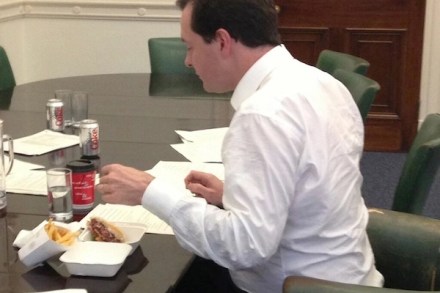
In the battle for the media’s attention Danny Alexander’s infrastructure statement is losing out rather badly to George Osborne’s choice of burger — a more easily digestible subject than the specifics of the government guarantee for a new nuclear power station. When he was asked about it on the Today Programme, Osborne seemed rather baffled by the amount of interest the tweet had generated. But what I was struck by was Osborne’s explanation for why he was on Twitter in the first place. He said that one of the challenges for politicians is that the public only ever see them when they’re on TV or in the Commons. He continued that ‘the point of Twitter is to try and say something about what you’re up to during the day.

The Spectator Archive: what you’ve found so far

From our UK edition

Since our archive went live yesterday, we've had a striking response through email, comments and Twitter. The Spectator Archive has been in the making for a long time, and given the obvious problems with recognising scanned pages (the system is pretty good at recognising 1840s typefaces, but not brilliant) we weren't sure how popular it would be. But the facility to read the page for oneself meant it went down a storm — and the quality of the copy trumps all.