A tale of two images
From our UK edition
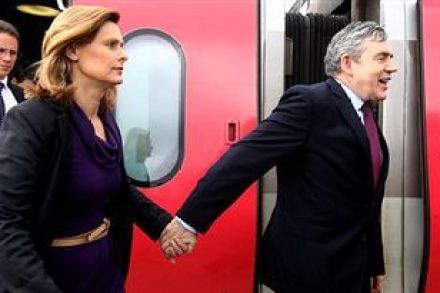
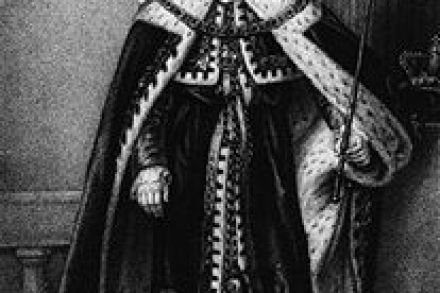
Labour's, erm, "poster" ahead of the TV debate tonight: And Coffee House's take on what Number 10 might look like on May 7th (with thanks to the great Carla Millar for putting the photo-montage together):.

From our UK edition
Labour's, erm, "poster" ahead of the TV debate tonight: And Coffee House's take on what Number 10 might look like on May 7th (with thanks to the great Carla Millar for putting the photo-montage together):.
From our UK edition
Given the timing of Brown's Mega Gaffe, you've got to wonder how it will play out in the TV debate tonight. Will it, for instance, mean that he gets a hostile reception? Will he try to defuse the situation by repeating his apologies, or perhaps by making some sort of light out of it ("Yesterday, I met a woman in Rochdale...")? Will it overwhelm the deeply serious economic questions which need asking and answering? And so on. There's one question, in particular, though, that I'd be keen to hear CoffeeHousers' views on: how much should Cameron and Clegg use Brown's gaffe against him?
From our UK edition
Every politician will be thinking "there but for the grace of God..." today - but the Gillian Duffy incident is not just a gaffe. It is bad for Gordon Brown and Labour on very many levels. Here are ten of them. 1. The image of the Politburo pulling away in the Jag, slagging off the proles. This confirms the idea of an elite, who sneer at voters in private but try to charm them in public. And the idea that politicians (of all parties) say one thing on camera, and another when they think no one is listening. 2. The is not just a gaffe, but the PM on tape insulting the voters. It's the worst thing you can do in an election campaign (ie Obama¹s "cling to guns and religion" remark). Far worse than if Brown were, say, caught swearing, Nixon-style.

From our UK edition
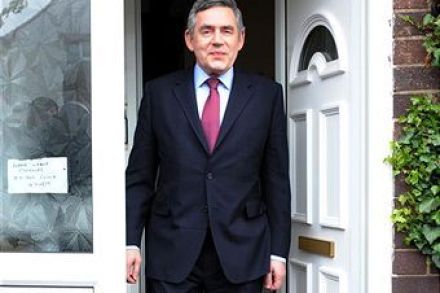
So Brown has now visited Gillian Duffy's home to apologise to her in person. Somehow, I think that's not going to defuse this row. Labour have, in the lingo of the The Thick of It, a major omnishambles on their hands. And he's called Gordon. The worst aspect of this for Labour, though, is the timing. Sure, they wouldn't have chosen this at any point the campaign. But, with only a week left, it threatens to both obliterate eveything that's gone before and overshadow whatever Brown does from now until polling day. And then there's the final TV debate.
From our UK edition
Cleggmania may be in remission. A Populus poll for the Times puts the Tories up 4 at 36 percent, the Lib Dems down 3 at 28 percent and Labour down one at 27 percent. Com Res has Labour and the Lib Dems tied on 29 percent with the Tories up 1 to 33 percent, whilst You Gov has the Tories on 33 percent, Labour on 29 percent and Clegg’s party on 28 percent. A hung parliament remains the probable outcome next Thursday. Anything other than a decisive Tory victory will sustain the Liberal surge, as Clegg would hold the balance of power or a Lib-Lab coalition would seek to inaugurate electoral reform.
From our UK edition
The UK Conservative leader David Cameron says that any Prime Minister not 'directly elected' by the public should be forced to hold a general election within six months. He has in mind his Labour opponent Gordon Brown, who in June 2007 was catapulted into the position by a secret ballot in his own party, rather than by an open election of the people. And if, after the forthcoming general election on May 6, Labour chose to ditch Brown and catapult that gap-year kid...ah, yes, David Miliband...into the top job in order to stitch up a coalition deal with Nick Clegg's Liberal Democrats, well, Cameron would give him only six months to get a public mandate too. On the surface, this looks like a good idea.
From our UK edition
A neat election-time spot from the Guardian's Haroon Siddique, who brings us the above photo of Brown's speaking notes from the TV debate last night. Turns out - surprise, surprise - that the "two boys squabbling" line was prepared in advance. As were a few other clunkers that we thankfully didn't hear. I mean: "You can phone a friend, you can ask the audience, you can go 50-50 with Nick." Really?

From our UK edition
With the exception of the Daily Mirror, the pundits’ concede that David Cameron and Gordon Brown closed the gap on Nick Clegg, but not decisively. That has transferred to the ‘who won the debate’ polls.

From our UK edition
So it’s all down to the next debate. The election will probably be decided in 90 minutes, each segment of 20 seconds for every day of a new five-year mandate. In which case, what is the one thing David Cameron will need to take away from last night’s debate, his “take-home”, as a US analyst might call it, to win decisively and get into the 37, 38, 39 percent range that he needs for the Tories to win a majority? He needs to do a Bill. Clinton, that is. Last night, the Tory leader did far better than in the previous debate. He started a bit slowly, and improved as the debate went one (as opposed to Nick Clegg, who began well and deteriorated as the evening wore on). In the end, I think he won the debate.

From our UK edition
The headlines will be "score draw", but I’d say Cameron won – and comfortably. I write this as someone who could have happily have sunk a few pins into a voodoo doll of David Cameron earlier on this evening – for taking the Conservatives (and Britain) to this appalling point where he may yet lose the election. But he raised his game, substantially. At best, he spoke with passion and authenticity. This time, he looked like he was fighting for his political life, which (of course) he is. Things are looking up. Here’s my participant-by-participant verdict: Brown Brown was his normal automaton self. He does tend to mangle his words, and his attempts at simplification backfire.
From our UK edition
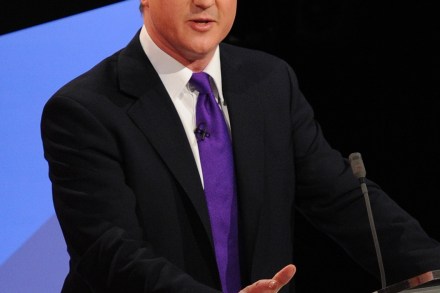
It seems that the general election of 2010 will turn on 90 minutes next Thursday. David Cameron was far better tonight than he was last week. This time he managed to bracket Brown and Clegg together and had the moment of the debate when he called Brown out on Labour’s leaflets claiming the Tories would scrap various things that pensioners currently get free. If there was a YouTube moment in the debate, it was that exchange when Brown said he didn’t authorise the leaflets making these claims. The Tory press team then delighted in pointing to a Labour party political broadcast where they had suggested the Tories would take away these things. Nick Clegg came under far more fire than he did in Manchester.
From our UK edition
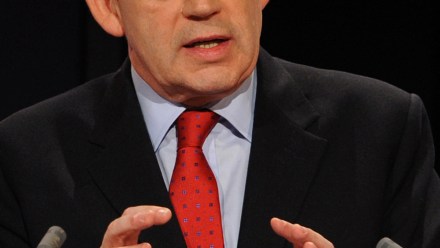
Gordon just can't help himself, can he? There can't be a simple dividing line – oh no. It has to be one built on exaggerations, half-truths and plain lies. So it has always been with his brand of government, and for much of the time – think cuts vs investment – it has worked in his favour. But tonight, despite a surprisingly punchy performance from the PM, it seems to have backfired dreadfully. The Tories are going big on those misleading Labour leaflets – and rightly so. Brown denied that he authorised them. But the fact that a Labour party political broadcast made similar claims about the Tories and old-age benefits makes it impossible for the PM to distance himself from this.

From our UK edition
Well, one thing was clear: Brown and Cameron have both been at the textbooks, staying behind for extra classes, and learning the lessons of last week. They came into this TV debate prepared. Not just for the very fact of Nick Clegg, but with strategies and soundbites to slow his advance. The result was a more passionate and confrontational show than I expected. Brown was the biggest surprise on the night. Sure, you have to apply the usual caveats and parameters: he is Gordon Brown, and being disingenuous and deluded is what he does. But, all that considered, he was uncharacteristically sprightly, I thought.

From our UK edition
Since the last thing David Cameron is likely to do is surf the web for advice for tonight’s debate, Nick Clegg needs no help and Gordon Brown deserves none, I will give my (again, unsolicited but free) advice to Adam Boulton, the moderator of tonight's Sky debate. Ask for details. The leaders have rehearsed top-level answers and can express them confidently and fluently. But we need to know if there is anything underneath the surface, beyond the well-crafted lines. Take Afghanistan. They will all say that the fight is important, that a well-resourced military effort is key but will not be enough and that a politico-economic strategy is needed.

From our UK edition
If seven days ago, anyone had suggested that the first debate would propel Nick Clegg and the Lib Dems to the top of the polls we’d all have thought that their lunch had gone on rather too long. But that’s what happened. Tonight, the questions are whether Gordon Brown reprises his ‘I agree with Nick’ routine or tries to check Clegg’s momentum and whether Cameron can turn in the kind of performance that begins to turn things round for him. Cameron shouldn’t be angry tonight. But he does need to bracket Brown and Clegg together at every opportunity.
From our UK edition
The strange thing about last week's TV debate is that, for all its transformative power, it doesn't seem to have changed Labour's campaign strategy in any fundamental way. Team Brown were hoping for a hung Parliament, and courting the Lib Dems, before last week. And, as Peter Mandelson demonstrated earlier, they're still doing the same now. The only difference is that it's more likely their wishes will come true. But this creates problems for Brown so far as tonight's TV debate and the rest of the election are concerned. His instinct may well be to repeat the "I agree with Nick" positioning of last week. But this has already been heavily lampooned - and was batted away quite comprehensively by Clegg the last time he tried it.
From our UK edition
How valuable was the TV debate to the Lib Dems? Well, we've seen the poll numbers, of course. But the Electoral Commission has just released some figures which shine a different light on proceedings. They show that the Tories received party donations totalling £1.46m in the first week of the campaign. Labour, nearly £800k. And the Lib Dems were way, way behind on £20,000. So, Clegg & Co. are heavily outgunned financially - but they've still had the biggest upsurge in publicity and popularity. True, donations to the Lib Dems have risen dramatically since the TV debate - but it's still unlikely that they'll reach Tory, or even Labour, levels of income.

From our UK edition
These have been a grim few days for the Conservative party. But there is a sense, just a sense mind, that the worst might be behind them. Today’s ICM poll shows the Lib Dems still surging, up 3 to 30, but Tory support is only down one from Sunday’s ICM poll to 33. Labour is in third on 28, down one. Obviously, these polls numbers would have been considered pretty darn awful a week ago and no one would pretend that they are what the Tories would like to see right now. But they are not as bad as some feared they might be and as Julian Glover writes, “the Lib Dems have gained twice as much support from Labour as from the Conservatives. Meanwhile, Labour is losing support in all directions, including to the Conservatives and other smaller parties.

From our UK edition
Ok, this won't be one of my more popular opinions, but here goes ... Nick Clegg is a Good Politician. And I don't mean that in some Machiavellian sense – although, for all I know, that might be true. But, rather, that he's got some decent ideas and ideals, and he presents them convincingly. This is why he deserved his victory in yesterday's TV debate. It wasn't the novelty factor, as Fraser claimed last night. It wasn't even really his plague-on-both-your-houses positioning. No, last night was the culmination of two years in which – politically speaking – Clegg has kneaded and pulled his party into one which can stand, unashamed, on a platform beside the Big Two.
From our UK edition
More concrete information will emerge over the next few days, and it may be sensible to reserve judgement until then. But the polling data we have so far is unanimous: Nick Clegg walked it. Here are some of the polls: YouGov: Who performed best in the TV debates? Clegg: 51 percent Cameron: 29 percent Brown: 19 percent Com Res: Who won the debate? Clegg: 46 percent Cameron: 26 percent Brown 20: percent Populus: Who won the leaders’ debate? Clegg 61: percent Cameron: 22 percent Brown 17: percent Angus Reid: Who came out on top? Clegg: 48 percent Cameron: 20 percent Brown: 18 percent PS: As ever, Anthony Wells's analysis is a must read.