Tudor england

Why did C.J. Sansom approve this moronic Disney+ Shardlake adaptation?

From our UK edition

What would C.J. Sansom have made of the Disney+ version of his novel series about 16th-century crookback lawyer Matthew Shardlake? Sadly, because he died just a few days before its release, we’ll probably never hear the full story. But this comment from the show’s producer offers a hefty clue: ‘Chris [Sansom] has been enormously generous and he wants more people to read the books, and this is such a good way.’ Sounds very much like Sansom accepted this atrocity of an adaptation as a necessary evil: his books had been stuck in development hell for nearly two decades (possibly, because his labyrinthine whodunits about monastic reform and court politics in Henry VIII’s England were considered a bit niche for mass audiences) and, in the end, he simply capitulated to moronitude.

The royal lust of Hampton Court

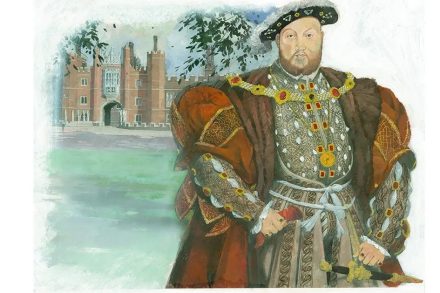
The Dowager Countess of Deloraine, who was governess to the children of George II at Hampton Court and other royal homes, was a notorious bore — so much so that her “every word” made one “sick,” according to the courtier Lord Hervey. When she naively asked him why everyone was avoiding her, he replied with exquisite irony that “envy kept the women at a distance, despair the men.

Hampton

The woman who put the Spencer family on the map

From our UK edition

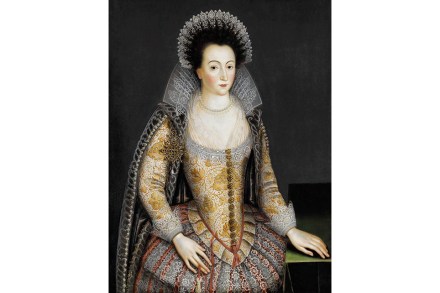
The first woman to put the Spencer family on the map was not Diana, Princess of Wales, the youngest daughter of the 8th Earl Spencer, nor even Georgiana, Duchess of Devonshire, the elder daughter of the 1st. Rather, it was their Tudor forebear Alice, Countess of Derby, the subject of this absorbing biography by Vanessa Wilkie. Born at Althorp – then a modest, two-storey red brick manor house – in May 1559, six months into the reign of Elizabeth I, Alice was the youngest daughter of Sir John Spencer, a prosperous sheep farmer and sometime sheriff of Northamptonshire, and his wife Katherine, née Kytson. At the age of about 20, Alice married Ferdinando Stanley, Lord Strange. It was a brilliant match for her and the Spencers.

Hysterical outbursts: Bewitched, by Jill Dawson, reviewed

From our UK edition

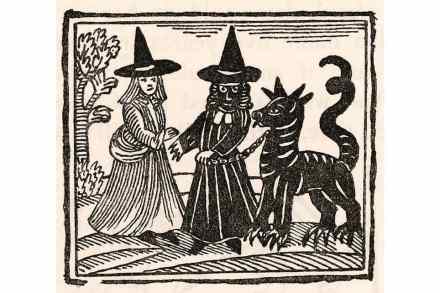
‘Witch-hunt’ has become a handy metaphor for online persecutions, especially of women, though these days it is reputations that go up in flames rather than bodies. The mob mentality behind the phenomenon may not have changed as much as the medium or the mindset. In retelling a celebrated case from Elizabethan England, Jill Dawson enters thoroughly into her characters’ religious world view, while giving a meaningful glance at the issues of today. The fate of the Warboys witches – three members of one family – was recounted in prurient pamphlets of the time, but Dawson colours in the crude woodcut of history with passionate emotions and plausible motivations.

The Tudor roots of wokecraft

In January 2019, I received an email from an administrator at Georgetown University, where I was a graduate student. She and my department chair wanted to meet with me to “discuss concerns that have been raised by some of your peers about classroom comments and behavior.” This meeting, they told me, would “function as the start of a conversation.” They didn’t say where the conversation might lead. I concluded that the next step would be a formal disciplinary hearing. I was terrified. Three-quarters through a two-year program, I was in danger of being forced to leave without a degree. And for what? I scanned my memory for deviant statements. There were a few: I’d alluded in print to certain essential biological differences between men and women.

reformation

It is impossible to imagine Henrician England except through the eyes of Hans Holbein

From our UK edition

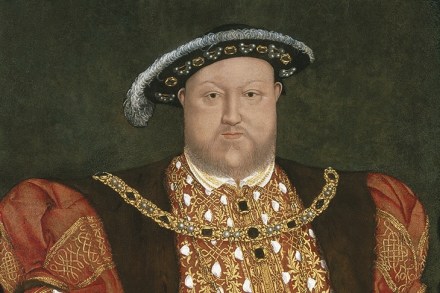
‘Holbein redeemed a whole era for us from oblivion,’ remarks the author of a trilogy of novels set at Henry VIII’s court. ‘He has forced us to believe that his vision of it was the only feasible one.’ This is a bit of a tease. It’s not written by Hilary Mantel, as you might be expecting, but by Ford Madox Ford, who, a century before Wolf Hall, published a sequence of novels about Henry’s fifth queen, Katharine Howard. Nevertheless, Ford’s point is irrefutable. It is impossible to imagine the England of Henry VIII except through the eyes of ‘the King’s Painter’, Hans Holbein.

Time for Tudorbethan

You’ll find them all over the boroughs of New York City. Multiple-dwelling buildings, usually large apartment blocks, slapped with a faux-Tudor façade defined by fake gables hiding a flat roof. They aren’t particularly attractive buildings. Even 100 years after most were built, they come off as self-conscious, a bit tacky, imparting to the viewer a dreaded feeling of secret working-class shame — a befuddling reproduction of a reproduction. They say New Yorkers never look up. But even during short journeys through Queens or parts of Brooklyn, New Yorkers are bound to have noticed examples, even if they don’t give it much thought.

tudorbethan