Tragedy

An explosion of toxic masculinity: The Fathers, by John Niven, reviewed

From our UK edition

‘Fucking men,’ spits a woman towards the end of John Niven’s brilliant tenth novel, The Fathers. ‘Why do they always think it’s about fixing everything?’ It’s a classic hit of deadpan humour from a novelist best known for sending up the most appalling blood, spunk’n’booze-spattered excesses of modern men. A former A&R man with a reputation for partying harder than any rock star, Niven made his name satirising the Britpop scene in his 2008 novel Kill Your Friends. Influenced by Vladimir Nabokov, Martin Amis and Irvine Welsh, he excelled at condensing his characters’ most brutal, misanthropic thoughts into kick-in-the-balls prose.

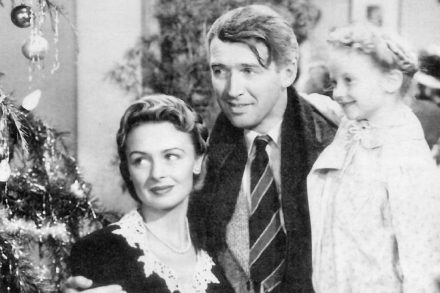
Karolyn Grimes looks back on her role as Zuzu in It’s a Wonderful Life

The title tells it all. It’s a Wonderful Life was first released back in December 1946, in the same week that President Truman was issuing Proclamation 2714, which officially ended hostilities in World War Two, and for that matter prefiguring Donald Trump by proposing that the US buy Greenland. The movie may be seventy-eight years old, but it’s one of those timeless classics, like Casablanca or The Searchers, that actually improve with familiarity. It’s also long since woven its essential message of good cheer into the fabric of our festive season. It’s an unusual plot for a film synonymous with feel-good family entertainment.

it's a wonderful life

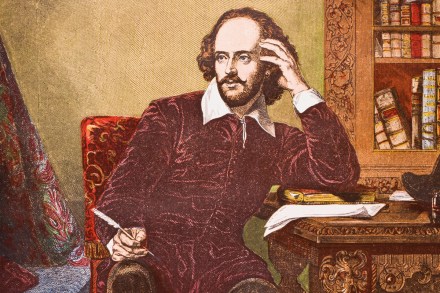
Why Shakespeare remains the great playwright

William Shakespeare’s tragedies stand apart. Their impact is profound and lasting, in cultural, artistic, emotional and psychological terms. Who could forget the ghost’s first appearance in Hamlet, or Lear bearing the dead Cordelia? No other dramatist has achieved what Shakespeare did: in subject matter, emotional heft, innovative usage of source material, character development and startling deployment of language Shakespeare is (and there is no other word for it) extraordinary. He surpasses both his predecessors (sorry, Thomas Kyd!) and those that came after him. He built on the foundations the classical playwrights established, and then, almost casually, bettered them, too.

Shakespeare

Refugee lives: The Singularity, by Balsam Karam, reviewed

From our UK edition

One Friday evening in a half-ruined, half-rebuilt city, where smart tourists dine out in restaurants next to refugees in makeshift shelters, a woman walks the streets. In torn clothes and slippers ‘worn ragged’, she hands out leaflets. On every piece of paper the same words are written: ‘Has anyone seen my daughter?’ On the same evening, in the same coastal city, which is ‘half obscured by skyscrapers’, another woman walks the streets with a different purpose, seeking to spend time away from her co-workers on a business trip. As she cradles her pregnant stomach, she watches as a female figure climbs over a clifftop railing and jumps, leaving behind a bag of leaflets. Later, the second woman has a miscarriage.

The hubris of the great airship designers

From our UK edition

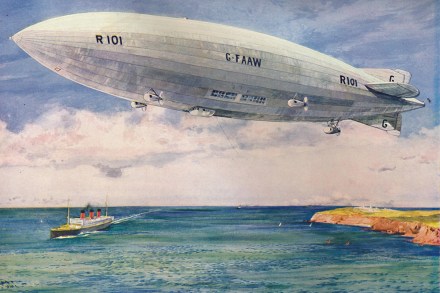
Tribal rivalries have existed from humanity’s beginning and have fuelled the creation of every prestigious monument ever built. By the Age of Science we were building not pyramids but ironclads and submarines fighting for ascendancy at sea, expanding our empires in spite of an ever-growing movement for colonial independence. The Spanish-American war of 1898 added the United States to the list of great nations believing it to be their destiny, even duty, to bring their kind of progress to the world. Many understood that achieving overwhelming technological power as a nation guaranteed that no antagonist would dare attack. Limited by agreements made after the first world war, Britain no longer ruled the waves.

Dumb risks are worth taking

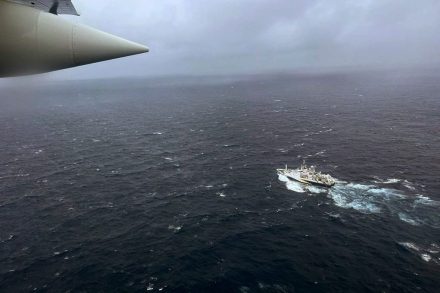
The plight of the Titanic submariners has engulfed the media over the past week and demanded the attention of countless rubberneckers to catastrophe. Parts of that attention are due to morbid curiosity, or the ghoulish nature of social media's animosity toward the super rich; those who Ben Dreyfuss terms "the abnormal people" on his Substack: "They heard the news, read the stories, took in all of the information that made you sad, and their first reaction was: anyone who can afford a $250k tourist trip deserves to die." But another slice of attention is due, at least in part, to the audacious nature of their chosen craft.

titanic adventure

The perfect holiday read: The Bee Sting, by Paul Murray, reviewed

From our UK edition

Hello, summer! This is it. If you have been waiting for your big holiday read, finally here it is: an immersive, brilliantly structured, beautifully written mega-tome that is as laugh-out-loud funny as it is deeply disturbing. It is never a good idea to begin a review (or indeed to end one) with a round of applause unless you want to sound like a complete pushover or a total patsy, but full credit where it’s due: Paul Murray, the undisputed reigning champion of epic Irish tragicomedy, has done it again. He did it first with An Evening of Long Goodbyes (2003), which read as if a young, Irish P.G. Wodehouse were frantically rewriting A Confederacy of Dunces.

The secret life of Thomas Mann: The Magician, by Colm Tóibín, reviewed

From our UK edition

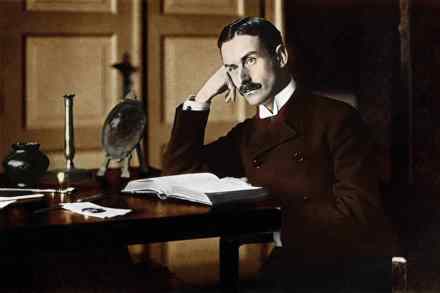
In a letter to Stephen Spender, W.H. Auden, who had married Thomas Mann’s daughter Erika sight unseen in order to provide her with a British passport, wrote: ‘Who’s the most boring German writer? My father-in-law.’ This is clearly not a sentiment shared by Colm Tóibín, who has brought out a fictionalised biography of the Nobel prize-winning novelist. Unlike The Master, Tóibín’s 2004 novel about Henry James, which confined itself to a four-year period when the protagonist was in his mid-fifties, The Magician covers almost the whole of Mann’s life, from his boyhood in Lübeck, which inspired his first and arguably finest novel, Buddenbrooks, to his death in Zurich at the age of 80.