Tories

An ex-fascist or two isn’t the BBC’s problem. Its boss class is

From our UK edition

We live in a recriminatory age, one in which we are only ever a step away from the cringing, self-abnegating apology. Take the case of BBC Newsnight’s latest appointee, as economics editor, a chap called Duncan Weldon. Duncan is doing the tail between the legs thing right now, desperately attempting to excise part of his past in case it puts paid to his promising career in a fusillade of political accusations and an appalled reaction from the general public. The problem is, in his younger days, it seems Duncan worked as an adviser for the deputy leader of the Labour party, Harriet Harperson. ‘It is embarrassing. I was young and naive and didn’t properly understand what a mendacious and potentially dangerous bint she was.
Ruth Davidson gives the Scottish Tories grounds for hope. At last.

From our UK edition

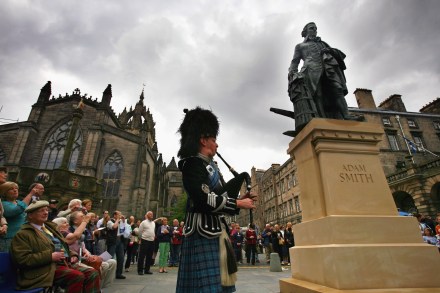
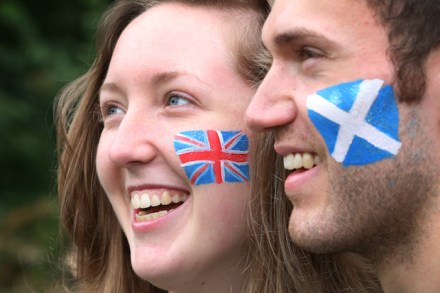
Because I spent the weekend moving house and being depressed by events in Cardiff I did not attend the Scottish Conservative's spring conference in Edinburgh. A dereliction of journalistic duty, perhaps, but also, well, life takes over sometimes. In truth, I didn't worry about missing the conference. Attending these things can be dangerous. Like journalism, politics attracts a grim number of copper-bottomed, ocean-going shits but also, like journalism again, a greater number of decent, public-spirited, optimistic folk than you might imagine. Most politicians, most of the time, are in the game for most of the right reasons. Speaking to these people has its uses but, also, its dangers. Before you know it you end up liking them.

Yes, of course the BBC is biased against you

From our UK edition

And it doesn't matter who you are. Conservative, Labour, Liberal, Nationalist, Green or UKIP it's all the same. The BBC is hopelessly prejudiced against you. As it should be. Why only this morning we see Owen Jones complaining that, contrary to what the Daily Mail would have you believe, the BBC is instinctively biased against the left and Lesley Riddoch suggesting  the corporation is reflexively biased against the very idea, let alone the prospect, of Scottish independence. Well, up to a point. But asking whether the BBC is inclined to the left or right is the wrong question. It is a kind of category error. Adding up the number of (presumed) right-of-centre - or Unionist - journalists or presenters on the BBC and supposing this "proves" anything is a fool's mistake.

Ed Miliband adopts a rope-a-dope strategy on Europe

From our UK edition

Hopi Sen is not alone. There are many people in this country supremely indifferent to the whole and vexatious question of whether or not there should be a referendum on Britain's continued membership of the European Union. Yes, yes, they will tell pollsters that if they must they suppose they might fancy having a referendum some day. But they don't really care. They mumble about a referendum because that seems the done thing to do and because when a pollster asks you if you'd like to have a say on something it sounds better to say Yes than No thanks, I really can't be bothered. And sure, if pressed, they might grumble and chunter about the European Union too and say that it seems to be an unnecessarily invasive institution - or set of institutions, treaties and agreements.

The post-Cameron long-list

From our UK edition

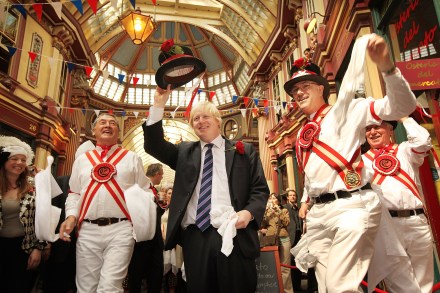
Boris being Boris, he has managed to rule something out without actually ruling anything out at all. As Isabel noted this morning, the Mayor of London has said he will not stand for Parliament before 2015, and will remain in City Hall as promised until 2016. Which is not the same as ruling out standing in the 2015 election. The latest Boris v Osborne twists have allowed speculation about a post-Cameron age to rise to the surface again, and having spoken to Tory MPs over the last few weeks, it is obvious that said speculation is never far from their lips. 2015 is still a white-knuckle fight, but that’s not to say plans are not afoot were it all to go very wrong for the PM.

Welcome to the age of four-party politics

From our UK edition

[audioplayer src="http://traffic.libsyn.com/spectator/TheViewFrom22_27_February_2014_v4.mp3" title="James Forsyth and Isabel Hardman on why the two party political system is dying" startat=1207] Listen [/audioplayer]Two things will make the next general election campaign quite unlike any previous election in this country. The first is that we now have four-party politics right across Britain. In Scotland and Wales, the nationalist parties have been a political force for a generation. But the big change is in England, where Ukip is emerging as a fourth force. Second, the campaign will be haunted by the spectre of another hung parliament. The question of what happens if no party wins an overall majority will be asked time and time again by an impatient media.

The Etonian, the SNP and the Black, Black Oil

From our UK edition

You will recall that, according to the greatest account of England's history, every time the English thought they had solved the Irish Question, the Irish changed the Question.  Something similar afflicts David Cameron's grapplings with the Scottish Question. The poor man is damned if he does and equally damned if he doesn't. The other week he was lambasted for his effrontery in giving a speech about Scotland in, of all places, London. Today he is lambasted for bringing his cabinet to Aberdeen. How dare he lecture us from afar; how dare he venture north like some touring proconsul! The optics, as the pros say, are not very good for the Prime Minister. The cabinet very rarely comes to Scotland. Drawing attention to that fact may not help Mr Cameron's cause.

Tory Europhobia cripples Britain’s attitude to the Ukrainian crisis

From our UK edition

Colin Freeman, the Telegraph's fine chief foreign correspondent, made a remarkable claim the other day that merits wider attention. What, he asked, was Britain's view on the crisis in Ukraine? The answer was revealing for many reasons, not the least of which being the extent to which eurosceptic myopia has, according to Freeman, caused Britain to misjudge the dramatic events unfolding in Kiev and elsewhere. According to Freeman: The depth of Euro-scepticism in Britain meant it cared little either way when Ukraine was gearing up last year to sign an EU trade agreement that would have brought it out of the Russian orbit. In Downing Street, the view was that Europe’s outer borders were already quite extended enough.

The Spectator’s Notes: Quangos – a world of perfect hypocrisy

From our UK edition

The accusation that the Tories have been installing their people in public appointments should evoke only a hollow laugh. They have been comatose on the subject. One of the greatest skills of New Labour was putting its allies in positions of control across the public sector. A great many are still there, and yet the Tories wonder why their efforts at reform are frustrated. Maggie Atkinson, for example, was imposed by Ed Balls, when in office, as Children’s Commissioner, against the recommendation of the relevant selection committee. She lingers on in her useless post. Lord Smith, the former Labour cabinet minister who has been flooding the Somerset levels, is still at the Environment Agency.

Thirsk and Malton Tories boot out Anne McIntosh

From our UK edition

So the Constituent Spring continues. Thirsk and Malton Conservatives have just announced that they have voted to not re-adopt their MP Anne McIntosh. The party has announced that selection for a candidate will open shortly, but McIntosh has vowed to fight on. She said: ‘I’d like to thank all those who supported me throughout, from both Vale of York and Thirsk and Malton. ‘It is my intention to stand for Thirsk, Malton and Filey constituency at the next General Election. ‘Meanwhile I remain committed to the Conservative Party locally and nationally and shall continue with my constituency and parliamentary duties with my customary passion.

The coalition is now an open marriage

From our UK edition

[audioplayer src='http://traffic.libsyn.com/spectator/TheViewFrom22_30_January_2014_v4.mp3' title='James Forsyth and Isabel Hardman discuss the state of the coalition' startat=1275] Listen [/audioplayer]Without any fanfare or formal announcement, the government has moved into a new phase. ‘We’re not in a coalition now. We’re just cohabiting,’ says one Liberal Democrat. ‘We’re a sexless couple. We live in the same house but sleep in separate bedrooms.’ The two parties are governing together but pursuing increasingly separate agendas. As this Lib Dem source puts it, ‘They’re doing what they want and we’re doing what we want.

The right-wing case for Scottish independence

From our UK edition

Chuckle not, it exists. Wealthy Nation, a new grouplet formed by the eminent historian Michael Fry, is making the case that Scotland can be an admirably prosperous little country after independence provided, that is, she casts off the soft-left Caledonian consensus that remains wearily orthodox thinking north of the Tweed and Solway. Fry, whose new history of Scotland from Waterloo to Mons I commend to you without reservation, set out his case in The Scotsman earlier this month. If Scotland is to be free, she must be rich and she will not be rich unless her politics moves to the right.

Osborne backs minimum wage hike as fundamental to a ‘recovery for all’

From our UK edition

George Osborne’s decision to back an above inflation increase in the national minimum wage is his most politically significant decision since his decision to cut the 50p rate. It also makes that decision far less harmful politically. Reducing the top rate of tax might have been the right thing to do economically but it hurt the Tories politically. It enabled Labour to claim that this was a government for the rich and that the recovery was only benefitting the few. By contrast, this decision allows the Tories to emphasise that, in Osborne’s phrase, this is ‘a recovery for all.’ There will be those on the dry right who don’t like this policy. They’ll argue that it’ll cost jobs.

Bernard Jenkin’s letter is just the start – renegotiation will expose every Tory division on Europe

From our UK edition

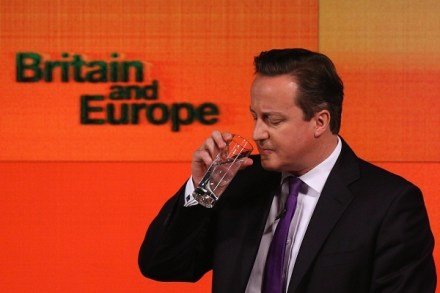
Straight after David Cameron’s speech last January committing himself to renegotiation and a referendum, I asked one Tory minister what he made of it. He chuckled and said that Cameron must be planning to stand down after the next election. The point behind this joke was that renegotiation and the referendum itself would expose every Tory division on Europe there is. Once the renegotiation was under way, he argued, it would no longer be possible to gloss over the fact that Cameron means something different by renegotiation than much of his party. William Hague’s reaction to the Bernard Jenkin letter, which has been doing the rounds of Tory backbenchers since before Christmas, has begun to expose these divisions.

Education reform works. Who knew?

From our UK edition

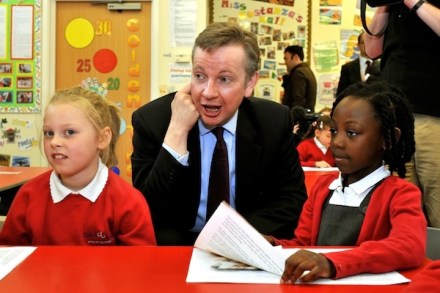
Education reform that actually works is one of the noblest, but most thankless, tasks in politics. Noble because it's necessary, thankless because it doesn't earn much in the way of an electoral dividend. Polling consistently suggests fewer than 15% of people consider education a top priority. This is understandable. If you do not have children you are, often, less interested in education than if you do. If your children attend a good school (or, at least, if you are satisfied with the school they attend) you may not care too much about the schools other kids have to attend.

What is David Cameron for?

From our UK edition

A mischievous question, I know, but one prompted by Janan Ganesh's latest Financial Times column. It is eight years since David Cameron became leader of the Conservative party and three and a half since he became Prime Minister. He may only have 18 months left in either post. We know - or think we know - a lot about Cameron. He is what he seems to be. Decent fellow, capable in a crisis, unruffled. A better-than-average product of his class and background. Thought he should be Prime Minister because he reckoned he'd "be good at it". And yet the thought nags: what is he for? What is Cameron's ministry about? As Ganesh says, the Prime Minister lacks a project. The economy is George Osborne's infant, education belongs to Michael Gove.

The Tories have to fight on their ground, not Labour’s

From our UK edition

At the beginning of the autumn, strategists from all three parties assumed that the theme of the season would be Labour’s poll lead narrowing as the economic recovery picked up pace. But that hasn’t happened. Instead, Labour’s lead has remained and its own poll numbers have actually ticked up. This is, largely, thanks to Ed Miliband’s reframing of the political debate about the economy, making it about living standards But the autumn statement showed that when the political conversation is focused on the broader economy, the Tories have the better of it. Thursday has weakened Ed Balls, strengthened George Osborne and begun to move the political debate off Labour’s turf of living standards and back onto the Tory question of economic competence.

A choice for Tories: Goldman Sachs or UKIP?

From our UK edition

Hats-off to James Kirkup for noticing that Goldman Sachs have suggested they would "drastically" cut their UK workforce (and operations) should Britain decide to leave the European Union. That is the view of Michael Sherwood, the fellow responsible for running Goldman's european operations. I am sure eurosceptics will dismiss this as the usual scaremongering just as Scottish nationalists dismiss warnings that some businesses (RBS?) might shift their operations south in the event Scotland votes for independence next year. This is but one of the many ways in which the european and Scottish questions overlap or dovetail with one another. Perhaps it is only scaremongering! But what if it isn't?

When oh when will we ever be able to talk about immigration (sensibly)?

From our UK edition

I do wish we were never allowed to speak about immigration. That seems the only way to prevent folk from spouting - and writing - rubbish on the subject. But of course there is no conspiracy intent on stifling discussion on immigration. Not even a liberal, metropolitan or elitist conspiracy. Sorry. You can say all the things you think you can't say. And we know this because many, even most, of them are said all the time. So often, in fact, that they lack novelty. And we also know that no-one really wants to have a conversation about immigration. Conversation would require some back and forth. It might even allow the possibility someone might change their mind. Just imagine that.

Is Boris Johnson the Man to Save the Union?

From our UK edition

This is not as obviously a Question to Which the Answer is No as it may initially seem. The Mayor of London is, in fact, well-placed to play a significant part in the campaign to persuade Scots their interests still lie within the United Kingdom. In the first place, as the titular leader of europe's greatest city he has no obvious or immediate dog in the fight. Neither Boris's reputation nor his future will be dented by a Scottish vote for independence. His Prime Ministerial plans - for we all still assume he has such plans - will not suffer if Alex Salmond wins next year's referendum. They might even benefit from such a result, not least because David Cameron's reputation - and legacy - will be crippled by a Yes vote.