Tories

Who’s playing dirty politics on Lord Freud and welfare? Everyone

From our UK edition

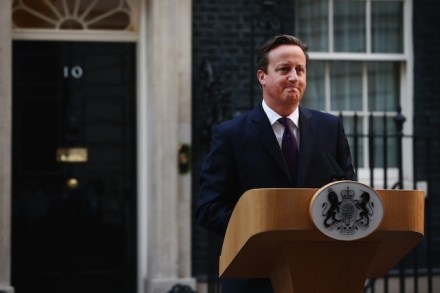
The main business of the day in the House of Commons is Labour's debate on Lord Freud, a row that blew up nearly a fortnight ago. The party's motion, entitled 'Parliamentary Under-Secretary for Welfare Reform and disabled people', finishes with '. . . this House has no confidence in the Parliamentary Under-Secretary of State for Welfare Reform; and calls on the Prime Minister to dismiss him.' It's not a wise move to put any money on David Cameron meeting this demand, given that Freud apologised on the same day his comments about disabled people and the minimum wage were raised at Prime Minister's Questions. Unless you've got a lot of time on your hands, it might not be wise to sit through the entire debate, both sides of which can be summarised in these three points: 1.
The EU’s gift to Nigel Farage – Brussels demands £1.7 billion more from Britain

From our UK edition

With truly dreadful timing, the European Commission has sprung David Cameron with a demand for £1.7 billion in extra British budget payments to the EU. The commission says this amount is due because the British economy has performed better than forecast. But this unexpected demand is for serious money, an almost 20 per cent increase in the British contribution. If Britain pays up, Christmas will have come early for Nigel Farage and Ukip. This explains why all three Westminster parties have been so quick to denounce the demand as unacceptable. There are mutterings of legal challenges and the like. The money is due by December 1. But politically, I don’t think the government can afford to pay.

Ukip 13 points ahead in Rochester & Strood

From our UK edition

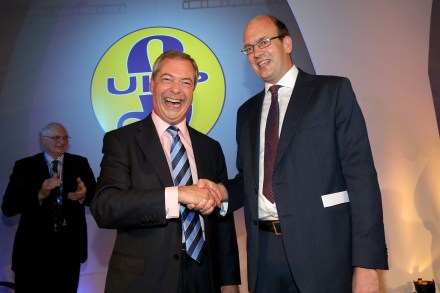
Tonight, we have a second poll from Rochester & Strood and it again shows Ukip ahead. Mark Reckless doesn’t lead by Clacton margins—Ukip are on 43 and the Tories 30 in this ComRes poll—but his advantage is formidable with just four weeks to go. Particularly alarming for the Tories is how many voters there intend to use this by-election to kick the government. 62 percent of those polled agree with the statement that, ‘“This by-election is a good opportunity for me to show David Cameron and the Conservative Party how unhappy I am with their government”   Having already announced that Cameron—and every other Tory member of the Cabinet—will visit five times, the Tories cannot now pull back from the fight.

Tories reveal innovative new election strategy…

From our UK edition

It is a bold approach but, who knows, perhaps it is just crazy enough to work. I mean, what could possibly go wrong with a strategy on immigration best summarised like this: UKIP ARE RIGHT. DON'T VOTE FOR THEM. Thank heavens for Ed Miliband, eh? He's the Tories' last, best, weapon. What a cheery thought that is.

Why it won’t be Ukip’s fault if Cameron loses

From our UK edition

[audioplayer src="http://traffic.libsyn.com/spectator/TheViewFrom22_16_Oct_2014_v4.mp3" title="Lord Pearson and Damian Green discuss Ukip and the Tories" startat=81] Listen [/audioplayer]How odd that David Cameron is still threatening us with ‘Vote Ukip, get Labour’, even after the Heywood and Middleton by-election, which Ukip nearly won with thousands of Labour defections. But if the Conservatives do lose the next election by a Ukip-sized margin then Cameron has only himself to blame — for the second time in a row. I know because I tried to stop it happening in 2010 when I was leading Ukip. Soon after Ukip came second in the 2009 EU elections, David Willoughby de Broke and I went to see Tom Strathclyde, then Tory leader in the Lords.

The Tories can do anti-politics too. Here’s how

From our UK edition

November marks ten years since the North East voted overwhelmingly to reject Government proposals for a Regional Assembly. While there were signs that the electorate was becoming increasingly disillusioned – Hartlepool voting for a man dressed as a monkey as Mayor in 2002 – the 2004 referendum was decisive proof that the electorate was entering a period of anti-politics. The North East Says No Campaign (NESNO) was the ultimate anti-politics campaign, tearing into the establishment and turning around the polls from 3-1 in favour of an Assembly, to 4-1 against. NESNO’s business spokespeople stuck to the message that a yes vote just meant higher taxes and more politicians.

Boris Johnson asks voters to decide if he’s a fool or just a cynic. What a choice!

From our UK edition

Boris is at it again this morning. Revealing, that is, why he cannot be trusted with office. To be charitable, I wouldn't trust many newspaper columnists with the keys to power.  But, of course, most Grub Street residents have no interest in being crowned Emperor. Boris does. Which is why his columns for the Daily Telegraph are so troublesome. You will remember the recent occasion when he suggested the burden of proof in criminal trials be reversed. That was revealing, but in a bad way. So is today's column in which he proposes setting quotas for immigrants from other EU countries. As is so often the case you are left to wonder which is worse: Boris meaning this or Boris not meaning this but writing it anyway. Neither answer is reassuring.

The Conservatives need to win in Cities. Here’s how they can

From our UK edition

The Conservatives do not have a problem in the North. As Policy Exchange’s report, Northern Lights, highlighted if you took the TransPennine Express train from Liverpool to Newcastle you would find that 13 of the stops are in Conservative held seats and 19 in seats held by Labour. The Tories’ real problem is in attracting support from urban voters, especially those living in inner city areas. To put this into context the party does not have a single councillor in Liverpool, Manchester, Newcastle or Sheffield. Twenty out of London’s 32 boroughs are held by Labour. Just nine are Conservative. Yet Boris Johnson has won two consecutive Mayoral contests. So it can be done. The Tories can win over urban voters – and it's vital that they do.

Chris Grayling is an advertisement for a Labour government

From our UK edition

Thank heavens for Ed Miliband, eh? The leader of the opposition remains the single most compelling reason to hope the Conservatives remain in power next May. A shame, then, that cabinet ministers appear determined to promote the idea that a Labour victory would be garlanded with at least some silver promise. Chiefly, Chris Grayling would no longer serve as Justice Secretary. This is a non-trivial consideration that's worth pondering before anyone casts their ballot next May. There is some dispute over whether the Conservative's plans to rewrite Britain's human rights legislation can really deliver all they promise; some disagreement, therefore, over whether they're as dangerous as they initially appear. Is a half-baked nonsense worse than a fully-baked monstrosity?

Cameron’s speech show us why he is still the Tories’ greatest single asset

From our UK edition

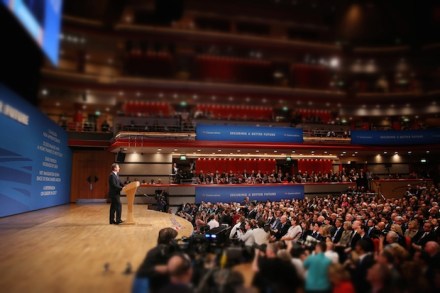
David Cameron has yet again delivered a belter of a party conference speech, peppered with announcements. His performance is a reminder of why, even now, he remains the Tory Party’s greatest single asset. His speech was a powerful invocation of the strengths of Conservatism, perhaps the clearest he has given from a conference stage. It was passionate, eloquent and, overall, the speech of a Prime Minister. What a contrast with the Ed Miliband's attempt last week. There were promises galore. The advantage of holding a party conference before the Liberal Democrats is that you can scoop their policies – in his case, announcing another increase to the tax-free income tax threshold from £10,500 to £12,500.

David Cameron’s message to Britain: winter is here but spring is coming

From our UK edition

Better than Miliband is as fine a demonstration of the soft bigotry of low expectations as you possibly hope to find. Nevertheless, David Cameron's speech to the Tory conference today was better than Miliband's chat in Manchester last week. Quite a lot better, in fact. It was almost, gosh, good. listen to ‘Podcast special: David Cameron's speech’ on audioBoom True, it's not altogether clear how the promised tax cuts - for ordinary and less ordinary hard workers alike - will actually be paid for and, in the context of speech that promised no unfunded tax cuts, this might ordinarily be seen as a small problem. Presumably they will be back-loaded to come into force once the national accounts are balanced in 2018. If they are balanced by 2018, that is.

Once upon a time David Cameron had a story to tell; he needs to remember it and tell it again

From our UK edition

It is easy to inflate the importance of speeches made at party conferences. Particularly when those speeches are the last such set piece events before a general election. But they are still, in the end and at bottom, a distillation of what matters most to a leader. A guide to his priorities; a demonstration of his faith. Somewhere along the line David Cameron has lost that faith. He was elected leader of the Tory party in desperate times and became Prime Minister in dismal times. In both instances he triumphed, at least in part, because he persuaded his audience that though he might look like a traditional Tory he was in fact a rather different type of Tory from those voters had grown fond of despising. Once upon a time, you see, David Cameron had a story to tell.

Don’t trust this woman: Tory whips warn MPs off Brooks Newmark trap

From our UK edition

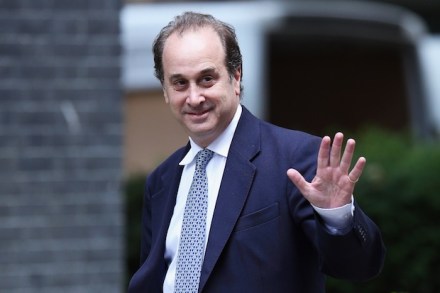
If you're a Tory MP who hasn't been paying much attention to the news and is wearing paisley pyjamas tonight, the Conservative whips are looking out for you. They've sent a message out to their party warning them off the 'woman' who managed to entrap Brooks Newmark into revealing his bedwear and long-term economic plan. The message, passed to Coffee House by an amused Tory, reads: 'Please take care with a "Sophie Witams". You follow her on Twitter. "She" is the person who ensnared Brooks Newmark. Please check you haven't been approached. You should certainly having no contact and take care.' It's nice to know whips are so concerned about protecting their party's honourable members.

Tories ready for tough by-election fight

From our UK edition

When Douglas Carswell defected, many Tory MPs were quick to say that an aggressive campaign against him would be counter-productive. There is none of that talk today. listen to ‘Podcast special: Mark Reckless defects to Ukip’ on audioBoom Listening to Tories this afternoon one is struck by how so many of them view the Reckless defection as different to the Carswell one. They point out Carswell didn’t regularly deny that he was going to defect in the way that Reckless did. Reckless’s timing is also far more clearly designed to hurt the Tory party than Carswell’s was. Judging by the conversations I’ve had this afternoon, the whips won’t find it hard to get Tory MPs down to Rochester to campaign.

Have the Scottish Tories been detoxified?

From our UK edition

The referendum campaign was a mixed experience for the Scottish Tories. On the one hand, it was a reminder of how much they are still hated in Scotland: End Tory rule forever, was one of the more frequently heard Nationalist battle cries. On the other, they had one of the campaign’s most effective advocates, Ruth Davidson and were accepted in as part of the cross party campaign. Indeed, it was telling that the Better Together campaign together rather than hiding Davidson away used her more and more as the campaign went on. In his Scotsman column today, the former Labour spin doctor John McTernan declares that ‘Ruth Davidson’s campaign has detoxified’ the Scottish Conservatives. This is a particularly striking statement coming from a former Labour partisan.

Cameron and Clegg’s last-ditch attempts to save the Union

From our UK edition

After the panic in Westminster over the weekend about the Sunday Times' poll putting 'Yes' in the lead came the something-must-be-dones. David Cameron said he would 'strain every sinew' to fight for a 'No' vote. But today his official spokesman was quizzed on the suggestion that he might have pulled out of a planned visit to Scotland this week (James reported in his Mail on Sunday column yesterday that the Prime Minister would stay down south this week 'to leave the coast clear for Labour'). The spokesman said: 'The Prime Minister will be in Scotland ahead of the election…There has been no change to the plan.

Can the Tory party locate its secret weapon?

From our UK edition

It used to be said that loyalty was the Tory party’s secret weapon. But this supposed strength hasn’t been very apparent in recent years. Indeed, at times, it seems that the Tory party hasn’t quite recovered from the demons unleashed by Margaret Thatcher’s ouster twenty-odd years ago.   Douglas Carswell’s defection means that Westminster, when it is not panicking about the Scottish referendum, is chuntering about whether his move to Ukip is the harbinger of a bigger Tory split to come, one that The Spectator explores this week. Worryingly for the Tory loyalists, there are people on all sides of the party are preparing for this fight.  As one Tory MP tells me, ‘It has that civil war quality to it: people just want to harm the other side.

Justine Greening interview: ‘It’s about understanding what it’s like to start from scratch’

From our UK edition

[audioplayer src="http://traffic.libsyn.com/spectator/TheViewFrom22_4_Sept_2014_v4.mp3" title="Isabel Hardman, Fraser Nelson and James Forsyth discuss the Tory civil war" startat=60] Listen [/audioplayer]Justine Greening wants to talk about social mobility. If it is not immediately obvious why the Secretary of State for International Development wants to talk about this issue, it becomes clear. Growing up the daughter of a steel worker gave her an insight into what it’s like to struggle, she tells me, when we meet in a conference room overlooking Parliament Square. She says she feels that the Tories are not pushing as hard on social mobility as they ought to be. Ms Greening thinks the issue needs a champion.

Justine Greening: the Tory message on social mobility ‘has been diluted’

From our UK edition

This feature is a preview of this week's Spectator, out tomorrow: Justine Greening wants to talk about social mobility. If it is not immediately obvious why the Secretary of State for International Development wants to talk about this issue, it becomes clear. Growing up the daughter of a steel worker gave her an insight into what it’s like to struggle, she tells me, when we meet in a conference room overlooking Parliament Square. She says she feels that the Tories are not pushing as hard on social mobility as they ought to be. Ms Greening thinks the issue needs a champion. She never says so explicitly, but clearly this is her pitch to take on that mantle.

Ukip set for crushing Clacton win

From our UK edition

David Cameron and the Tories’ electoral hopes are about to take a long walk on Clacton’s short pier. A poll in the Mail on Sunday today has Ukip on 64% and the Tories on 20%, a lead that suggests this contest is over before the writ has even been moved. So, Ukip are going to get their first MP. This means that the fracture on the right of British politics is a lot closer to becoming permanent, handing Labour the kind of inherent electoral advantage that the Tories enjoyed in the 1980s. This morning, the next election is Ed Miliband’s to lose. One of the striking things about the poll is that it reveals that not even Boris can save the Tories in Clacton. Cameron had hoped that his ‘star striker’ could get him out of this hole.