Tobacco

What the Quran has to say about slavery

From our UK edition

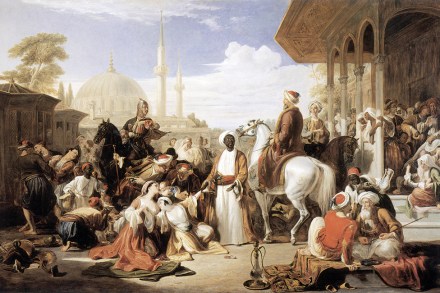
Slavery is one of the oldest and most persistent institutions of humankind. It was already well established four millennia ago when it was mentioned in the Epic of Gilgamesh. Today it has been formally abolished almost everywhere, but there are still reckoned to be some 30 million people living in some form of forced labour. For most of human history slavery was regarded as an economic necessity, one of many relationships of dependence which were accepted as facts of life. The current obsession with British and American involvement has concentrated attention on the Atlantic slave trade. This has masked the involvement of other significant actors. Foremost among them are the Islamic kingdoms of the Middle East. Islamic slavery is poorly documented.
The pipes are calling: confessions of a pipe-smoker

From our UK edition

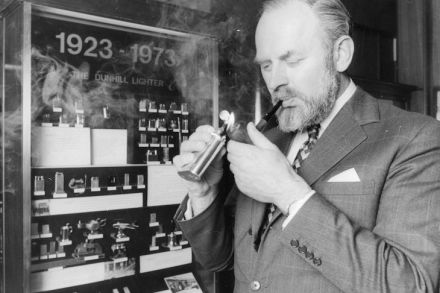
This morning, like so many other mornings, I spent at least half an hour, over coffee, staring at online pictures of pipes. This does not make me an aspiring plumber, or someone with a fetish for u-bends or draining units. I’m talking about briar pipes, tobacco pipes: for though I know I should quit the habit, I’m one of the dwindling band of pipe-smokers in the world. This isn’t an aesthetic choice, nor an activity I undertake outside the house. No one is more attractive with a 150mm briar-wood appendage sticking out of their mouths – apart possibly from Sherlock Holmes, Tony Benn or Gunther Grass, and I don’t want to look like I think I’m any of them. But it remains true that pipe-smoking, of all the vices and addictions I’ve explored, is my favourite.

Tragedy strikes: Americans are smoking more weed than tobacco

An unfortunate milestone has been passed in the United States as it is reported that for the first time ever there are more marijuana smokers than cigarette smokers in our once great nation. To put it bluntly, so to speak, this societal transformation has taken iconic American glamor, the Marlboro Man, Humphrey Bogart, Lauren Bacall, and replaced it with Cheech, Chong and Otto the school bus driver from The Simpsons. Here in New York City, where once men in suits and hats and square dames in heels hustled, cigarette betwixt fingers, plowing ahead to the future, it now just smells like weed. Everywhere. Rockefeller Center? Smells like weed. Subway stations? Smell like weed. Washington Square Park? Well, OK, Washington Square Park always smelled like weed. But you get the point.

Should we blame our ancestors for slavery when we’re equally culpable?

From our UK edition

The premise of White Debt is that the author’s ancestors ran a business selling a product grown by slaves. Therefore he wants to investigate Britain’s role in slavery — which is a rather odd framing, since his family’s tobacco firm wasn’t started until decades after slavery in British colonies was abolished. But Thomas Harding apparently only recently learned that slavery happened in the British Empire. He goes as far as to ask: ‘How could I not have known this?’ Well, truly, I don’t know. I don’t recall the time when I wasn’t aware that slavery was the reason that people of African descent live in the Caribbean today. Some of their ancestors were enslaved in territories that belonged to Britain.