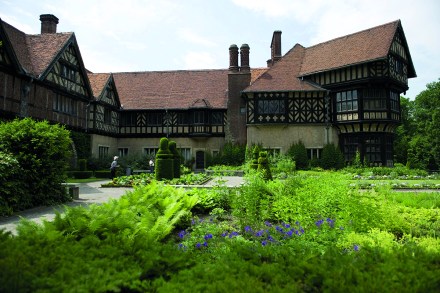
Thomas mann

The potentially catastrophic consequences of reading Kafka

From our UK edition

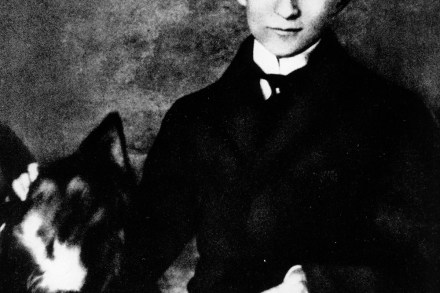
Rainer Maria Rilke’s claim that fame is the ‘sum of all misunderstandings’ is certainly true of Franz Kafka, whose life, work and reception have long been plagued by myriad misunderstandings. Despite publishing comparatively little in his all-too-short lifetime (1883-1924), Kafka gained a reputation as a writer’s writer, whose work was met with keen appreciation by, among others, Rilke, Hermann Hesse and Thomas Mann. In Kafkaesque, which first appeared in French under the title Dix versions de Kafka, Maïa Hruska charts Kafka’s afterlife through the perspective of ten ‘first’ writer-translators.
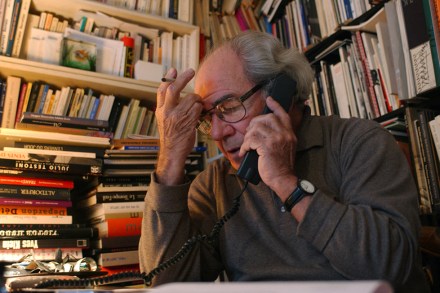
Revelling in illusion: the French sociologist-cum-philosopher who hit peak absurdity back in 1991

From our UK edition

‘What is he talking about?’ Marine Baudrillard would sigh whenever she read her husband’s work. Anyone who has studied for an arts or a social-science degree over the past few decades will know what irked her. A sociologist-cum-philosopher’s prose is to thought what mud is to a windscreen. ‘There is no more hope for meaning,’ Jean Baudrillard wrote with unconscious exactitude in Simulacra and Simulation. ‘This is a good thing: meaning is mortal. Appearances, though, are immortal, invulnerable to nihilism. This is where seduction begins.’ In their admirably brief critical biography, Emmanuelle Fantin and Brian Nicol praise Baudrillard’s writing for its ‘enigmatic verve’. One might as well commend Bruckner’s 8th for its enervating brevity.

Doppelgangers galore: The Novices of Lerna, by Angel Bonomini, reviewed

From our UK edition

Resurrection has become its own literary genre. Though hardly a new phenomenon (Moby-Dick, for example, was out of print at the time of Herman Melville’s death), the success of such ‘forgotten’ classics as Suite Française, Stoner and Alone in Berlin proved that an author’s death and/or obscurity were no barrier for readers. So publishers from Faber to Virago, from the British Library to Penguin Modern Classics are hunting through back catalogues looking for writer recommendations, searching for the next unjustly lost voice. In Angel Bonomini, Peninsula Press has found an ideal candidate. How can such a powerful story have remained un-rediscovered for so long?

Mysteries and misogyny: The Empusium, by Olga Tokarczuk, reviewed

From our UK edition

Nothing is ever quite as it seems in the world of Olga Tokarczuk. Her latest novel starts with an epigraph taken from Fernando Pessoa: ‘The visible world goes on as usual in the broad daylight. Otherness watches us from the shadows.’ Wild deer were murder suspects in her surreal and beautiful 2018 novel Drive Your Plow Over the Bones of the Dead. This time nature itself plays a significant role. A daily glass or three of schwarmerei restores good cheer, sometimes generating hallucinogenic euphoria Though the novel describes itself as ‘a horror story’, it’s more a salutation to the power of the natural world and a celebration of difference.

Love in the shadow of the Nazi threat

From our UK edition

The 1930s saw Walter Benjamin write The Work of Art in the Age of Mechanical Reproduction, Marlene Dietrich rise to fame in The Blue Angel and Pablo Picasso paint ‘Guernica’. If history books mention these events, it’s usually as footnotes to the main European narrative of the pre-war decade. To shift the rise of Nazism, the Spanish Civil War, the Great Terror and other landmarks to the background, one could turn to the cultural history, or the micro-history. In his new book, the German art historian Florian Illies combines both genres to reconstruct the 1930s. Snippets from period documents, including private letters and diaries of notable figures of European and American culture, are distilled into short (between a couple of lines and a few paragraphs) episodes.

The moral courage of P.J. O’Rourke

From our UK edition

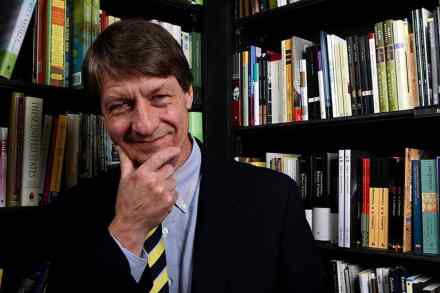
Was it Socrates who said that chaos was the natural state of mankind, and tyranny the usual remedy? Actually it was Santayana, and boy, did he ever get it right. My friend Christopher Mills has given me a terrific book, The Wages of Destruction by Adam Tooze, about the making and breaking of the Nazi economy. I thought I knew everything there is to know about that period, but I hadn’t thought of global economic realities, the ones that actually won the war. Germany’s limited territory and lack of natural resources led to war. Germans had been starving since the end of the Great War, and needed the corn of Ukraine and the oil deposits of Romania in order to feed themselves and keep warm. Once in power, all Hitler needed to do was deal; instead, well, you know the rest.

Yet more death in Venice

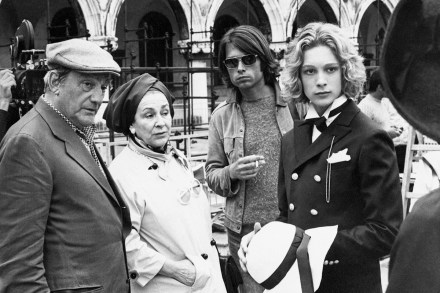
The inspiration for the object of Aschenbach’s infatuation in Thomas Mann’s Death in Venice was acknowledged by the author some years after publication, and the subject of a biography a century later (The Real Tadzio by Gilbert Adair). He was a Polish boy the writer ogled from a distance in 1911 while holidaying with his wife at the Grand Hotel des Bains in Venice. Less is known of the teenager who played the role in Luchino Visconti’s 1971 film of Mann’s novel. For years the director trawled the Continent in pursuit of the right actor for the part. It was a search that had eluded the other major directors who had attempted to bring the book to the screen: John Huston, Joseph Losey, Franco Zeffirelli. Visconti finally found 15-year-old Björn Andrésen in Stockholm.

death venice

Prussian blues

My grandfather Werner von Biel was born in a huge white house on the Baltic coast of eastern Germany, a few years before World War One. I never met him. He died when I was a child. My grandmother didn’t like to talk about him. She’d left him for an English soldier at the end of World War Two. Growing up in England during the Cold War, I often wondered what had become of his Junker family, the Schloss (castle) they lived in and the land they farmed. When the Berlin Wall came down I went east, in search of the fatherland my grandmother had forsaken. Thirty years later, I’m still searching. I’ve found a few curios along the way. The Schloss is still there, though my grandfather’s family no longer owns it (the Communists turned it into a school).

prussia