Theresa may

The growing need for elected police commissioners

From our UK edition

The police are more Thin Blue Line than The Sweeney. Her Majesty’s Inspectorate of Constabulary has found that 15 of 22 police authorities perform ‘adequately’, which is defined as meeting ‘most of the minimum requirements of the specified role…they were most effective at dealing with local short-term policing priorities’. More worrying, with forces facing 20 percent cuts: only 4 authorities were judged to have set clear strategic direction and ensured value of money. Worse still, the report found that: ‘In just over half of the police authorities inspected, there is little or no account made of the delivery of efficiencies or workforce modernisation’.

Balls fires a warning shot at May

From our UK edition

It has taken Ed Balls 24 hours to steam into action. He says: “The government’s deep cuts of twenty per cent to policing could mean up to 20,000 fewer police officers, according to the Police Federation. And I’m particularly worried that specialist policing units, such as those to tackle organised crime, domestic violence or child abuse which the government no longer considers to be part of the frontline, could be the first to be cut.” This comes as the latest crime figures suggest that crime has fallen, thanks in part to the last government’s massive recruitment drive in policing and its increase of the prison population.

What about the Home Office?

From our UK edition

The less we hear from Theresa May, the more I worry about the Home Office budget. I’m hearing rumours of her taking a 30 percent cut, which I first dismissed as a piece of expectations management. But now I’m beginning to wonder. We know that defence is settled - about an 8 percent real-terms cut. The NHS, which absorbs a quarter of government spending, will have real-terms increases (something even the left-leaning IPPR doesn’t back). The schools budget has escaped relatively unscathed, we read. So what’s left? Again, there’s so much deliberate misinformation out there that I hesitate to give a rumour round-up. But here goes.   One major victim is expected to be Transport.

Theresa May the target

From our UK edition

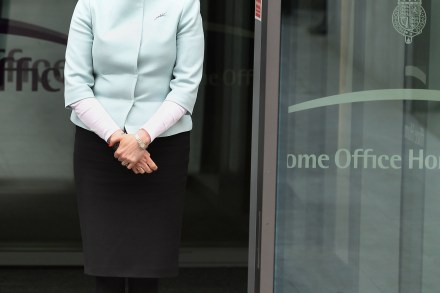
I wonder if Theresa May felt faintly apprehensive this morning. It must bad enough to awake and remember that you’re the Home Secretary, held responsible for every immigrant, every strike and every crime committed in Britain. Northern Ireland is more poisoned ministerial chalice, just. Now, she is being shadowed by Ed Balls, a ravening attack-dog liberated by the opposition. Balls has re-invented himself as a traditional Labour politician, casting himself as the champion of the working class. He says, accurately, that the poor are the victims of crime and the victims of unbridled immigration and social dislocation and his opposition will be ardently authoritarian. May will have to cut police numbers: Balls will attack her.

Clarke ups the ante

From our UK edition

Perceptions count and the coalition are perceived to be vulnerable on crime. Its policy of reducing the number of prisoners on short-term sentences has been caricatured as a reduction in sentencing per se, a liberal assault on the consensus that prison works. I don’t agree with that analysis (which overlooks that excessive sentences in disorganised and overcrowded prison can create habitual criminals, who cost society in perpetuity thereafter) but readily concede that it’s easy to traduce the government as soft on crime, and I was surprised that Ed Miliband didn’t do so last week – as were plenty of Tories. In fact, opposition comes from within the Tory party, even from the government.

Ken Clarke in the firing line

From our UK edition

There’s an intriguing pre-conference story in the Mail on Sunday today. The paper reports that: “Ken Clarke faces a whispering campaign by allies of David Cameron and George Osborne to move him from Justice Minister because of his ‘disastrous’ views on law and order, it was claimed last night. Conservative MPs say Mr Cameron and Mr Osborne are ‘ frustrated’ by Mr Clarke’s refusal to take a tougher line on key issues such as prison sentencing.” Clarke’s liberal views on criminal justice certainly are infuriating his colleagues. Allies of Theresa May have been heard to complain that "Ken is going to send the crime rate soaring and we’re going to get the blame.

Too many policemen chasing paper-clips

From our UK edition

Back in June, I asked how long the public would stomach David Cameron blaming Labour. Not long, was my answer - the government would have to form a narrative that suggested it was the ‘great reforming government’, not a symposium of partisan budget balancers. So far, it has failed to compel of cuts’ and public service reform’s necessity. Crime can now be added to the list. Theresa May has blamed Labour for HMIC’s findings into the police’s failure to arrest anti-social behaviour. ‘Labour achieved nothing,’ she said. Fair enough, but this was an opportunity to husband a narrative for public service reform. HMIC is in no doubt that the police have not done enough to combat anti-social behaviour.

May’s straight-bat technique

From our UK edition

Theresa May channeled Chris Tavaré today, every question on this phone tapping scandal was met with a solid defensive answer. She was helped by the number of Labour MPs who overreached — one compared it to Watergate while Dennis Skinner, who is nowhere near the Commons performer he once was, produced an ill-judged demand that Cameron come to the Commons and sack Coulson. Those MPs who were most effective were the ones who kept their cool. The personal testimony of Chris Bryant was particularly powerful.   Perhaps, the most noteworthy element of the proceedings was how a particularly glum looking Ming Campbell and Simon Hughes kept whispering to each other with concerned expressions on their faces. Neither man appeared to be happy with May’s answers.

The coalition’s vulnerability on crime

From our UK edition

Parliament has that beginning of term feel today, lots of people discussing what they did on their summer holidays. After the holidays, the main topic of conversation is this whole phone tapping business. Everyone is wondering how long the BBC will keep playing it as the top story; it even devoted two thirds of the One O’Clock news to it. Given how reluctant the papers are to touch it, the story will burn out if the BBC stops fanning the flames. But one thing that I feel is being overlooked is Tony Blair’s attack on the coalition as soft on crime. If David Miliband wins the Labour leadership, I expect the Labour party will hammer the coalition on crime. There’s a real danger that the coalition’s policies could create a whole bunch of Willie Hortons.

The equality landmines that Labour have left the coalition

From our UK edition

Oh dear, the Treasury is mired in another controversy about equality after the Guardian published a letter which Theresa May sent to George Osborne before the Budget. In it, she warned that the government could face legal action if it is unable to show that its decisions were made with a consideration to "existing race, disability and gender equality duties." As she puts it: "If there are no processes in place to show that equality issues have been taken into account in relate to particular decisions, there is a real risk of successful legal challenge by, for instance, recipients of public services, Trade Unions or other groups affected by these decisions.

Beating up the ASBO

From our UK edition

Theresa May has taken the truncheon to the previous government’s rather singular anti-social behaviour policy. The ASBO, of which more than half were ignored in 2008, will be a thing of the past; supermarkets will not be able to sell alcohol at less than cost price; and 24 four hour drinking licenses will be subject to local vetoes, even if the residents do not live near or adjacent to pubs and clubs. On confronting anti-social behaviour, May pledges that ultimate political cliché - a coherent and comprehensive strategy. At the moment, there are few details beyond fines for selling drink to underage drinkers. Limiting booze intake is welcome, but alcohol is not the sole problem. Some yobbism is born of lost opportunity; some is simply innate.

System failure aids another EU power-grab

From our UK edition

David Cameron's so-called “referendum lock" is supposed to ensure no more powers are handed to the EU. His thinking, bless him, is that if he just keeps a low profile and doesn't sign any extra treaties then things won't get worse. This fundamentally mistakes the way the EU works. As we say in the leader for this week's magazine, ever-greater integration is hardwired into the system. An example we cite is the coming European Investigatory Order, which Theresa May has naively described to other ministers as a tidying up exercise (Jack Straw said the same about the EU constitution).  As we put it: “Another power grab is looming. Plans are being drawn up for a European order that would mandate British police officers to follow requests lodged from overseas.

All in all, a pretty good day for the government

From our UK edition

I doubt David Cameron will have many better days in government than this. Considering the government cancelled a hospital project yesterday, today has passed as one long photo-op, free of incident. It began with Theresa May banning a radical Islamist cleric, Zakir Naik, displaying a resolve that eluded her immediate predecessors. The papers were full of Cameron’s ‘coup’ in Brussels yesterday; the only major news story that might have unnerved Cameron was the FT’s research into Tory immigration policy, which the FT calculates will hit growth and raise taxes. It was too esoteric to hit the TV screens, so too the cuts in arts funding. It must have been a happy breakfast in No 10 this morning.

May calls for culture change towards LGB&T groups

From our UK edition

Theresa May has called for ‘culture change’ in wider society to ease the equality and acceptance of lesbian, gay, bi-sexual and transgender minorities. Abstractions are the executive’s favoured metier these days. I’ve read and re-read May’s article in Pink News and nowhere does she define ‘culture change’. The end product of a culture change towards LGB&T groups might be envisaged, but how is it initiated? The government cannot answer that question, beyond suggesting that supporting pride marches is positive. True, but society is more than a pride march. It exists in the daily confusion caused by ill-defined laws, such as who B&B owners let into their homes/businesses.

Sacking the nanny

From our UK edition

Theresa May has halted the national database of adults who come into contact with children. The innocent and law abiding majority can now volunteer without having to complete an extensive anti-pervert course – a heavy-handed and expensive bureaucratic requirement, typical of New Labour’s ‘nannying’ days. May acknowledges that acquiring the ‘Not A Known Pervert Badge’ discouraged vital volunteer work, which could effect social dislocation. May pledges to remodel the scheme, which is presumably why the Independent Safeguarding Scheme remains in place. Writing for ConHome, Alex Deane calls for the abolition of this scheme.

Trouble averted or trouble ahead?

From our UK edition

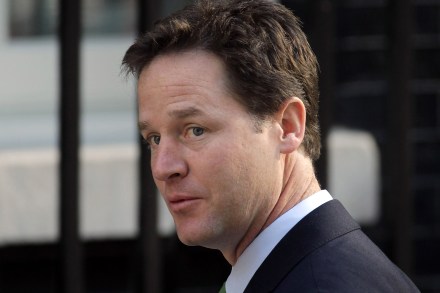
"The biggest shake up of our democracy since 1832."  That's how Nick Clegg is describing the legislative package that he's announcing today.  And, even if that's pure bravado, there's certainly plenty of encouraging stuff in it.  Scrapping ID cards; restricting the storage of innocent people's DNA; and the government is even set to ask the public which laws they'd like to see repealed.  Sign me up. But it's one omission which is really ruffling Tory feathers today.  There will not, it seems, be an immediate move to supplant or even dilute the European Convention on Human Rights with a British Bill of Rights.  Speaking on Radio 4 this morning, Theresa May stressed that this is still a matter for negotiation within the coalition.

The equality dilemma

From our UK edition

Spare a thought for poor Theresa May. Judging by the reaction so far, she now faces the unenviable task of shouldering almost everyone’s preconceptions about Tory women in government – with Caroline Spelman, Baroness Warsi and the lower-profile Cheryl Gillan for back-up. She will no doubt continue to disappoint feminists and irritate reactionaries, and she will do so while responsible for the notoriously unwieldy Home Office, which has rapidly taken over from the Department of Health as the ministry where political careers go to die. Representation in politics does matter. It is not unreasonable to claim, as Katharine Viner did in Thursday’s Guardian, that “democracies simply don't work unless they represent those they govern”.

The worries behind falling unemployment

From our UK edition

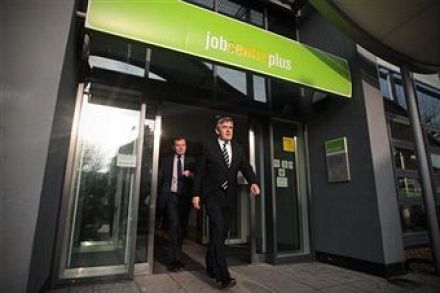
Expect Labour to make much of today's employment figures, which show that unemployment fell by 7,000 in the three months to last November.  Already, Yvette Cooper has claimed it as a success for "government investment".  While Gordon Brown will surely repeat that message in PMQs. But is it really testament to government action?  Or is it a result of a naturally improving economy (which, let's not forget, is taking longer in the UK than most other developed nations)?  Well, a study commissioned by the Spectator from Oxford Economics found that Brown's "investment" would "save" around 35,000 jobs in 2009 – but then destroy considerably more jobs from this year on.

Pre-Freudian slip

From our UK edition

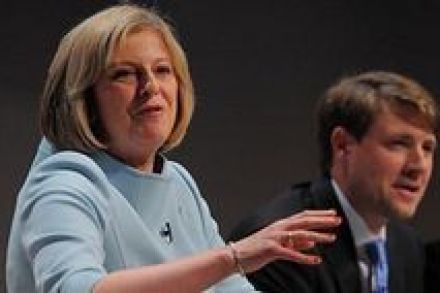
Theresa May is chairing a discussion with a set of Conservative PPCs on 'job clubs', as part of this afternoon's focus on welfare reform.  She kicks off asking one of the Tory PPCs on the panel, Maggie Throup, to talk about job clubs in her area: "So, Maggie, tell us about...". Problem is, May addresses her remarks at the wrong PPC, Suzy Davis. Mistake realised, she wheels round and puts the same question to the actual Maggie Throup.  Not a good start. It's picked up since. The welfare adviser David Freud, who jumped ship from Labour to the Tories, is now on stage. And he gets a cheer when he says "I've always been a Conservative.". This is a significant time for Freud.

Is Theresa May priming a second Freud Review?

From our UK edition

In some respects, Theresa May has delivered an effective speech on unemployment and the benefits system today.  It touches on all the tragic indicators - the 6 million people on out-of-work benefits, the high levels of youth worklessness, the shocking consequences of welfare ghettoes etc. - and re-states, in no uncertain terms, the Tories' commitment to welfare reform.  She even partially responds to those critics who thought she'd been drafted into the shadow welfare role to be "softer" on single mums than Labour, by instead attacking the state for encouraging lone parents "not to bother trying to work until their youngest child was sixteen".