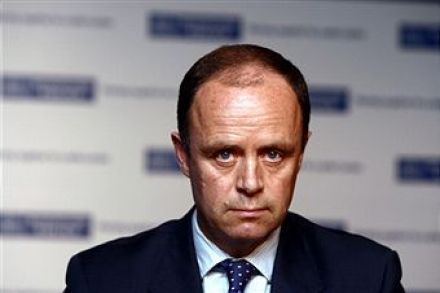
Theresa may

Catflap Latest: Sack Theresa May!

From our UK edition

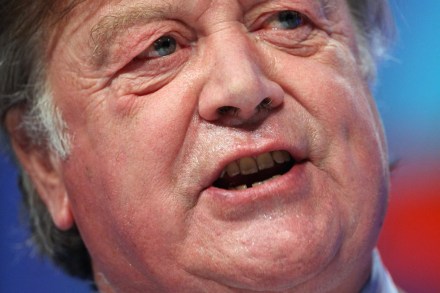
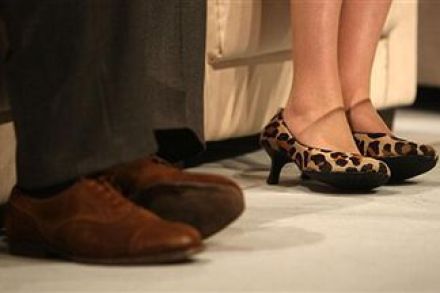
Good god, #Catflap shows no sign of abating. And people are losing their minds over it. Poor old Tim Montgomerie is the latest fellow to see the rumpus as an excuse to get rid of Ken Clarke. Apparently a "Cabinet minister should never publicly attack a colleague" and so Ken must be sacked as soon as possible. Personally, I'd rather Cabinet Ministers ceased behaving like idiots and since May is the idiot in this case, if a head must roll it should be the Home Secretary's. She started the Catflap after all and only in the topsy-turvy political land could Ken carry the can for telling the truth while May escapes without censure despite wilfully (or, if you prefer, carelessly) misleading the public. And what is Ken's crime?

Grieve tucks into May

From our UK edition

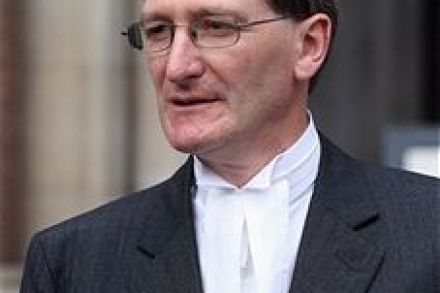
A fringe debate on the Human Rights Act hosted by the Tory Reform Group might not have been a crowd puller. But yesterday’s feline foul-up and the presence of Attorney General Dominic Grieve, a firm advocate of human rights, ensured the event was a sell-out. If Grieve had been advised against deepening internal animosity on the 'cat flap' furore, he ignored the direction. The TRG’s Egremont blog quotes Grieve as saying: "We need to have a rational debate. We must be more productive than just going for the ‘meow’ factor." Then he added: “The judicial interpretation and case workload of the European Court ought to be a concern for the UK and other European countries.

Taking the ‘cat-flap’ seriously

From our UK edition

              Today’s ‘cat-flap’ between Ken Clarke and Theresa May exposes one of the largest divides in the Conservative party today. May, along with most Tory MPs, wants to get rid of the human rights act, while Clarke and the attorney general Dominic Grieve want to keep it. May, to the surprise of her colleagues, used a pre-conference interview with the Sunday Telegraph to make clear her desire to get rid of the act. After this, there was always going to be a reaction from Clarke & Co. One ally of the Justice Secretary tells me that his comments today were spurred, in part, by an irritation that he hadn’t seen the text of the Home Secretary’s speech before she delivered it.

May’s cat story is nonsense

From our UK edition

If Theresa May took Ken Clarke up on his wager that no one has avoided deportation because they had a cat, as May claimed in her speech earlier, she should pay up. According to the Guardian's Andrew Sparrow, a spokesman for the Judicial Office has explained: 'This was a case in which the Home Office conceded that they had mistakenly failed to apply their own policy - applying at that time to that appellant - for dealing with unmarried partners of people settled in the UK. That was the basis for the decision to uphold the original tribunaldecision - the cat had nothing to do with the decision.' This is backed up by the UK Human Rights Blog run by 1 Crown Office Row.

The Tory split over the ECHR

From our UK edition

Ken Clarke is speaking at a Daily Telegraph fringe event and he was quick to play a few of his favourite European games in response to Theresa May’s assault on the Human Rights Act and the European Court of Human Rights. Nick Watt reports that Clarke claims May did not brief of her examples of the HRA being abused. And he cast doubt on their veracity: according to Lucy Manning, Clarke jovially challenged May to substantiate her claim that a criminal was not deported on human rights grounds because they happened to own a cat. This may seem like fun and games, but it reveals the tension over the HRA and the ECHR that exists within the Tory party, in addition to that which dominates the coalition.

The human rights smokescreen

From our UK edition

Today’s papers resound with the news that Theresa May is resisting Liberal Democrat opposition to close the loophole over the “right to family life”, Article 8 of the European Convention on Human Rights. This change, it is argued, will ensure that foreign criminals are deported so that the courts protect, as David Cameron put it, “the United Kingdom”.  The announcement is a carefully choreographed step to differentiate the Tories from the Liberal Democrats.

Wooing women the Tory way

From our UK edition

Back in June, Melanie McDonagh wrote that "the Tories are desperate to regain the female vote". Today's Guardian scoop, a government memo on the need to better appeal to women, proves she's right. In places, the document reads as if it were written by a group of men to whom women are very much from Venus. They are careful to spell out the revelation that "of course women's views differ as much as men's", and their response to discovering their weakness was apparently to find whoever they could in Number 10 without testicles and ask what they were doing wrong. However, it does at least show that the government recognises that it's losing ground with women at the moment, and that it'll take more than footage of Cameron taking his kids to school to recover.

Bernard Hogan-Howe named as new Met commissioner

From our UK edition

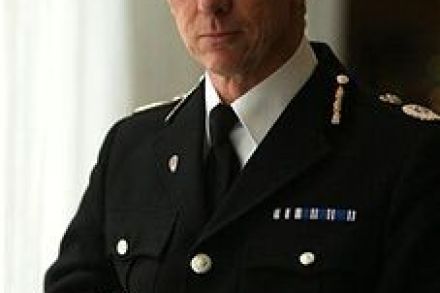
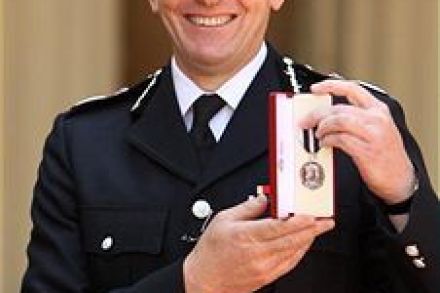
Theresa May has named Bernard Hogan-Howe as the new Metropolitan Police Commissioner. Hogan-Howe was the early front-runner and a finalist for the role last time round. He is apparently highly respected within the police force and has been a successful chief constable in Merseyside. His appointment has come earlier than was expected: the talk at the end of July was of completing the process later in the autumn. This suggests that the government is keen to repair the damage to its relationship with the Met and the reputation of the police caused by the phone hacking scandal and the riots. This will be essential if the coalition is to deliver its ambitious police reforms.

Cameron mustn’t let the police top brass bully him into silence

From our UK edition

The police have been busy defending themselves this weekend against any criticism of their performance. They aim to stop elected politicians from making any comment on their performance. But David Cameron should not—and must not—back down from both his criticism of police tactics and his conviction that the force urgently needs reforming. The truth is that the initial police response to the riots was hopelessly inadequate. If senior police officers really do think that the Met’s performance on Saturday, Sunday and Monday was adequate, then that in and of itself makes the case for reform. Losing control of the streets in sections of the capital is a failure.

May intervenes to restore order

From our UK edition

Theresa May has banned an EDL march in Telford tomorrow, although the organisation will be allowed into the town to conduct a static demonstration. May has been a hive of hyperactivity since she returned from holiday, and this is yet another example of the government making a decisive gesture to amend for its perceived earlier indifference. It also looks like a strategic decision to contain that other unspoken working class resentment: immigration, and the hint of racial tension that it inspires from time to time. David Cameron was at pains yesterday to insist that the riots were a cultural issue, not a racial issue. He’s right.

Justice is being done as relations between Downing Street and Sir Hugh Orde sour, again

From our UK edition

“Busy?” I asked a friend who’s training as a criminal barrister. “You could say that.” Magistrates’ courts have sat through a second straight night. “I finished at five,” said my friend. “Back in court at 8.” The courts are determined to deliver what David Cameron described as “the full force of the law.” These are bail hearings for the 600 people charged so far. Defendants are apparently being arraigned in groups of three in some courts, an indication of the strain caused by these extraordinary circumstances. There will be little respite in the coming days.

The Met is struggling to cope — it needs support

From our UK edition

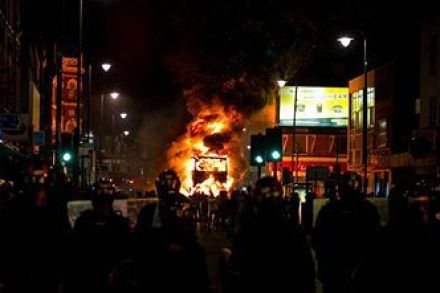
It's a gloomy sort of morning ritual, posting on the riots of the previous night. I'm sure CoffeeHousers have seen and heard the specifics already: further burning and looting in parts of London such as Ealing, Croydon and Hackney, as well as bursts of violence in Birmingham, Liverpool and elsewhere. Businesses and livelihoods have been obliterated, areas set back years. Among the few mercies is that no-one, so far as we know, has yet been killed as a result. One thing that's becoming clearer through the smoke is that the Met Police are overrun, unable to properly deal with criminality at hand. The arrest figures tell a story by themselves.

Cameron to return to London as the riots spread

From our UK edition

There we have it: David Cameron is to return to London tonight, and chair a meeting of Cobra in the morning. There was an inevitability to the decision even earlier today, with the news that both Theresa May and Boris Johnson had curtailed their own holidays. But the fact that the riots have spread — starting in Hackney this evening, and erupting even in Birmingham — served to underline the point. It is the right decision, in any case. Cameron's ability to control the situation may be limited, but his continued absence might only have inflamed things further. There are a lot of people scrabbling around for a grievance to bare and exploit tonight. The Prime Minister's holiday can no longer be one.

Syria and Libya overshadowed by London riots as Boris comes home

From our UK edition

President Assad’s tanks are still doing murder on the streets of Syrian, but the dictator’s isolation grows. After weeks of prevarication, several Gulf States have closed ranks against the Syrian regime. Saudi Arabia, Bahrain, Jordan and Kuwait have all recalled their ambassadors from Damascus, and King Abdullah of Riyadh has led the Arab League’s condemnation of Assad’s ‘death machine’. Better late than never, the international consensus says. Compassion for the oppressed is not a familiar trait among Arabian princelings, but their reticence on this occasion was particularly surprising given that Assad’s Syria is no friend of the Arab League, preferring to side with Iran in most things.

From the archives – Yates had previous

From our UK edition

As Theresa May put it in an impressive statement to the House earlier, “These allegations are not, unfortunately, the only recent example of alleged corruption and nepotism in the police.” She then vowed to open an inquiry into these matters, which will stand in addition to the two already announced by the government. The panel will have plenty to look at, as Michael White explained in the Spectator a few years back. John Yates has previous, by Michael White, 10 March 2007 When I was a young reporter on the London Evening Standard nearly 40 years ago I spent a lot of time in the press room at Scotland Yard, not learning very much.

Policing the Olympics

From our UK edition

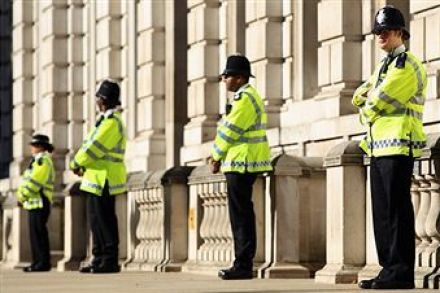
The reputation of the police may be as black as mud at the moment, but the Met has a chance to atone during the Olympics. Security forces have been making their preparations as the Olympic construction site nears completion.  In May, police officers, counter-intelligence officials and the emergency services conducted their first major security exercise. Further stress tests are being undertaken on local transport routes and waterways. And permanent surveillance of Olympic venues is being established; in future, visitors to these sites will be subject to airport-style security and a number of armed officers will patrol the area. Nothing, it seems, is being left to chance. These operations are being delivered amid a background of spending cuts.

Coalition’s crime worries ease, but concerns remain

From our UK edition

The British Crime Survey is published today and the Home Office had prepared for the worst. For months now, figures close to Theresa May have been expressing their fear that the combination of Ken Clarke’s liberal prisons policy and economic hardship would cause a rise in crime for which the Home Office, graveyard for so many political careers, would be blamed. Today’s figures will have eased their disquiet somewhat, insulating them from Labour’s critique that police cuts are endangering society. The headline is that crime in England and Wales has remained stable over the last year, except for a 14 per cent spike in domestic burglaries according to the British Crime Survey and an alarming 35 per cent increase in domestic violence.

Policing the local and the national

From our UK edition

Today’s announcement on a proposed new National Crime Agency (NCA) is a key element in the government’s ambitious police reform agenda.  Recent political attention has focused on changes to police pay and conditions and budget reductions, but the structural reforms that Theresa May and Nick Herbert are pursuing matter more in the long-term.  And before it is dismissed as another attempt to create a “British FBI”, the background and rationale for the NCA is worth exploring. The NCA is much more than a rebranding of the Serious Organised Crime Agency (SOCA) – the troubled organisation set up by Charles Clarke.

The need for a strong man to strong-arm the new counter-terror policy

From our UK edition

If the counter-terrorism strategy the government is announcing today is to succeed, it will have to overcome bureaucratic opposition and institutional inertia. As Dean Godson writes in The Times today (£), senior civil servants in the Office of Security and Counter-Terrorism are highly reluctant to accept the government’s new, more muscular approach to this issue and will go back to the old, failed way of doing things if given the chance. If the Prime Minister’s writ is going to run across government on this issue, he is going to need someone working from the centre with Cameron’s explicit backing whose sole role is to supervise the implementation of the policy — the Home Secretary has too much on her plate to expect her to do this task alone.

Counter-terrorism means stopping dealings with extremists

From our UK edition

The coalition’s counter-terrorism strategy will be published tomorrow. This rather delayed review has been the subject of some semi-public wrangling, Cameron and Clegg have given speeches setting out very different visions for it. But one thing to remember is that the test of the review's robustness isn’t just whether it stops government money going to extremists groups. It also has to lead to government, at all levels, stopping dealings with these groups, denying them the oxygen of recognition. Today’s Telegraph notes that 20 groups will lose their funding because the views they espouse are antithetical to British values. This is to be welcomed.