Theresa may

Theresa May, the thinking woman’s woman

From our UK edition

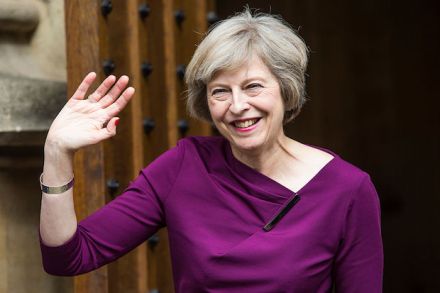
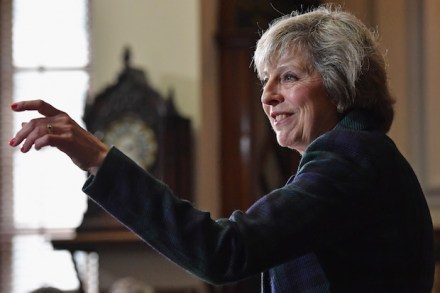
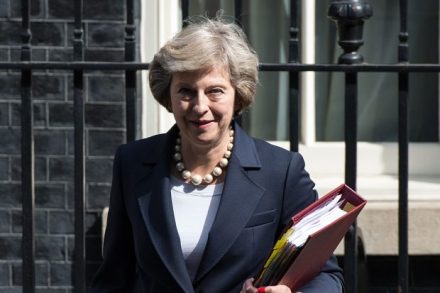
Who is Theresa May? Ken Clarke famously described her in an unguarded moment as a ‘bloody difficult woman’. Her favourite fashion designer, Vivienne Westwood, thinks she’s ‘awful’. And it has variously been said that she is ‘fundamentally unknowable’, ‘aloof’, ’reticent’, ‘self-contained’ and ‘sphinx like’. When she was officially appointed Prime Minister, reporters scrambled to write pen-portraits of this woman suddenly sprung to highest office, an extraordinary elevation which seemed to fluster her no more than the weekly Waitrose shop. Fleet Street's finest were able to reveal surprisingly little.

Theresa May’s Labour land grab starts today

From our UK edition

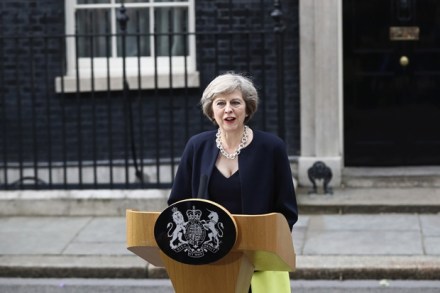
Whilst Labour tangle themselves up in civil war, the Prime Minister is making a move for the party's economic territory. On her first day in Downing Street, Theresa May said her Government would stick up for everyone, not only the 'privileged few'. Today, she'll start work making good on that promise when she chairs the first meeting of her Cabinet committee on the economy and industrial strategy. So what does that all mean? It's obvious the sentiment suggests an attempt to beat Labour at its own game. From the politician who coined the description of the Tories as the 'nasty party', May is doing her best to show the Conservatives are the party of both compassion and competency.

Is Theresa May using Hinkley Point to hold the French hostage over Brexit?

From our UK edition

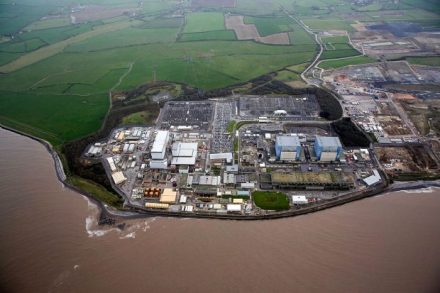
Plans to build a new nuclear power station at Hinkley Point in Somerset suffered a surprise setback on Friday after the Government said it wanted to 'review' the decision before it gave the go-ahead. But what are EDF - the French company which had approved funding for the project - and the French press making of the Hinkley hold-up? With the Brexit vote having tested Franco-British relations somewhat in recent weeks, Theresa May's decision to review the building of Britain's first new nuclear power plant in two decades isn't helping matters - with the French press reacting with consternation to the delay.

Theresa May is right not to mess with David Cameron’s resignation honours

From our UK edition

Downing Street has made clear today that Theresa May will not move to prune down or veto David Cameron’s resignation honours list. This is the right decision. Whatever you think of the list, it wouldn’t be right for a new Prime Minister to seek to amend the resignation honours list of their predecessor. If this started to happen, it would make politics even more bitter and factional than it is today. Imagine if this Downing Street transition was not from one Tory to another but a Labour PM being replaced by a Tory who immediately vetoed all the honours proposed by the outgoing Labour Prime Minister. Now, this doesn’t mean that the Cameron list is wise.

Cameron’s ‘gongs for chums’ list sparks fury. But don’t expect Theresa May to block it

From our UK edition

His time in No.10 might have come to an end last month but it's David Cameron who is on the front pages of several newspapers this morning. The former PM's resignation list of honours has sparked outrage since it was published by the Sunday Times yesterday. And today the fallout shows no sign of dampening down. Many of the usual suspects have attacked Cameron but what's interesting about the criticism is its unanimity. Labour MP Tom Watson said it was 'cronyism, pure and simple'; and many Tory MPs seem to agree. Conservative MP Andrew Bridgen said those who were going to be rewarded were the 'people who brought politics into disrepute'. Whilst Andrew Rosindell said those on the list were being honoured only for doing their jobs.

Is Theresa May’s chief of staff behind the Hinkley Point jitters?

From our UK edition

This week relations between Britain and China were placed under strain after the government delayed approval for the Hinkley Point nuclear plant. Under David Cameron and George Osborne, Britain’s first new nuclear power station -- of which China General Nuclear has a one-third stake -- had been expected to get the green light this month. However now Theresa May is in charge, the government appear to have got cold feet. Announcing that no decision will be made until autumn, Greg Clark -- the business, energy and industrial strategy secretary -- said the government will now 'consider carefully all the component parts of this project'.

Decision time approaches for Theresa May

From our UK edition

Parliament is off for the summer, and the exodus to the beaches has begun. But Theresa May isn’t heading off there. She has serious work to do this summer, she has to work out what she wants out of the UK’s EU exit deal. As I say in The Sun this morning, May is just being honest when she says that she has an ‘open mind’ on what the deal should look like. But she doesn’t have long to decide what she does want. Indeed, I understand, that the Mays have already scrubbed one planned summer break to allow her to work on this. May is right to want the deal that’s best for Britain, rather than simply trying to replicate someone else’s deal with the EU. But a bespoke deal will, inevitably, take time to negotiate.

Osborne’s Hinkley vanity project deserves to be buried alongside his political career

From our UK edition

Yesterday was supposed to be the day the nuclear button was finally pressed – a vote by the board of French energy company EDF to go ahead with Hinkley C power station was assumed to be the moment at which the project would finally spring off the drawing board. Instead, business secretary Greg Clark announced that he needed until September to make a final decision on the government’s behalf. He is to be commended for not being pushed into the go-ahead. Hinkley – along with Heathrow and HS2 – is one of three ‘Hs’ bequeathed by the Cameron-Osborne years: hugely expensive infrastructure projects seemingly frustrated by chronic indecision.

Letters | 28 July 2016

From our UK edition

Better Europeans Sir: There are many reasons why a majority of people in the UK voted to leave the European Union. Among them was certainly not a wish to be inhospitable and uncooperative with our fellow Europeans (Leading article, 23 July). Now it is even more important that EU nationals in Britain should have their status respected and not be used as a bargaining point in future relations with Brussels. Nor should we forget the considerable contribution that so many of them make to our national wellbeing. Furthermore, what about the two million or so UK nationals living and settled in many parts of Europe? Are they to be ignored and their security put at risk for no valid purpose?

Theresa May’s EU migrant stance is a chilling reminder of how nasty the Tories are

From our UK edition

There may be confusion about the role of EU immigrants in Westminster, but there’s none in Scotland. Our message is clear: this is your home, you are welcome here, your contribution is valued. Scotland needs immigration, and we’ve been delighted to welcome EU citizens here over the last few years and decades. They are the new Scots. They are our nurses, teachers, small-business owners and are an important and cherished part of our society. It’s quite understandable that people are aghast at Theresa May using EU immigrants as bargaining chips. But it is a chilling reminder of just how ‘nasty’ the Tory party still is.

Kicking out EU nationals would be an act of unthinkable self-harm. Why is the PM even considering it?

From our UK edition

I am still angry at the exaggerations made by the Leave campaign, but even they did not stoop so low as to question whether EU migrants already in Britain should be somehow deported. It would be an unthinkable act of self-harm not to let EU nationals stay and continue to contribute to our economy — and, just as importantly, contribute to the wonderful cultural richness we value. My own businesses would suffer terribly without the hard work of many EU nationals. I cannot understand why the hideous idea of kicking them out is even being considered. One in five tech businesses in the UK is started by an immigrant. These businesses are the future and we must support them. Martha Lane-Fox London W1 This is an extract from the Spectator’s Letters page.

In defence of EU migrants: a plea to Theresa May

From our UK edition

During the Brexit debate, there was a wide mainstream consensus that EU nationals living in Britain should not be affected. As even Ukip said, it would be unthinkable that someone here legally could later be declared illegal. Labour, the CBI, SNP, Vote Leave, pretty much everyone ruled out the disgusting idea of repatriating a single one of the three million EU nationals living in Britain. Or even putting them under the threat of repatriation. As Sajid Javid put it, they’re here because we need them – to work for the NHS, our other shops and businesses, to make our society stronger. During the referendum campaign this was not an issue because every single mainstream political party stood inside this consensus.

Why won’t Theresa May respect the status of our 3m EU immigrants?

From our UK edition

There are many reasons why a majority of people in the UK voted to leave the European Union. Among them was certainly not a wish to be inhospitable and uncooperative with our fellow Europeans (Leading article, 23 July). Now it is even more important that EU nationals in Britain should have their status respected and not be used as a bargaining point in future relations with Brussels. Nor should we forget the considerable contribution that so many of them make to our national wellbeing. Furthermore, what about the two million or so UK nationals living and settled in many parts of Europe? Are they to be ignored and their security put at risk for no valid purpose?

‘Theresa May is awful,’ says Prime Minister’s favoured designer

From our UK edition

It's a difficult business being Prime Minister. On top of running the country, they are regularly open to criticism from those they admire. Mention a band and there's every chance the lead singer will blast you for austerity policies in the next day's paper. Today Theresa May has felt the heat from one of her favourite designers. When May launched her leadership bid she did so in her favourite Vivienne Westwood tartan suit, which retails at £1,190. Alas in an interview on the Today show, Dame Vivienne Westwood was less than cheery when asked how she felt about May as a politician: 'Do I mind if Theresa May wears my clothes? No, but I certainly don't admire her for anything. I think she's awful.

Jean-Claude Juncker comes out fighting over Brexit

From our UK edition

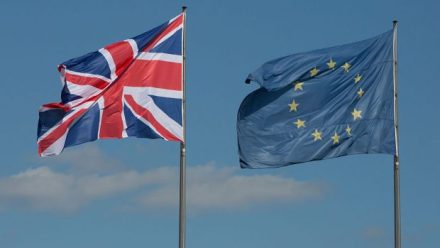
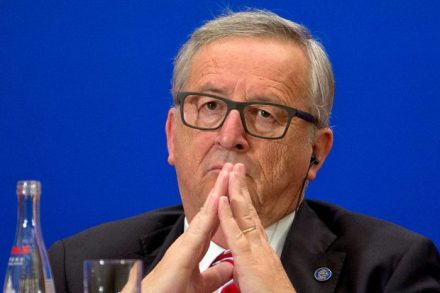
Although Theresa May has repeatedly assured us that 'Brexit means Brexit', we're still no closer to finding out what that actually means. The Prime Minister has done her best to play hardball in talks with other European leaders, having told Angela Merkel that control over free movement was an issue she would deliver on. But the fighting talk doesn't actually mean much in practice. At least not yet anyway. And like it or not, one man who will play a key role in Brexit negotiations, Jean-Claude Juncker, is making it clear he's not going to lie down and accept compromise on free movement.

Nicola Sturgeon’s Brexit test is designed to fail

From our UK edition

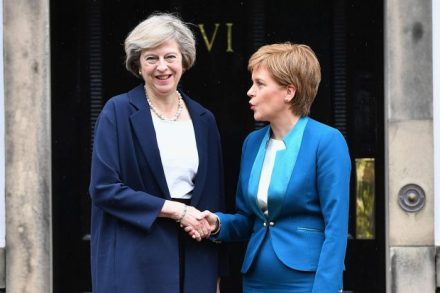
Nicola Sturgeon still believes in Scottish independence. I know, who knew? That's the point of the SNP, a party Ms Sturgeon joined as a teenager back when she felt, or so she has said, that Neil Kinnock was busy leading Labour into the wilderness. That, remember, is when she says it all started going wrong for Labour. This is something worth recalling the next time you see or hear some SNP elected representative concern-trolling the Labour party. The weaker, the more unelectable, Labour is the better that suits the SNP. Anyway, the First Minister gave a speech yesterday in which she spoke about Scotland's five ‘key’ EU interests that ‘must be protected’ if she's to remain a cheerful soul.

Brexit provides the perfect opportunity to crack the immigration question

From our UK edition

The British public are clearly dissatisfied with the way our immigration system currently works. One of the main reasons that motivated people to vote for Brexit in the recent referendum is the hope that Britain could better control immigration by ending the free movement of people from the EU. For years now, immigration has been one of the issues that the public are most concerned about. But there is hope: now, more than ever, the cynicism can be cracked. There is an exciting opportunity, thanks to Brexit and the appointment of a new Cabinet, for the Government to introduce significant reforms to our immigration system to increase public confidence in it. What do the majority of the public want? Sensible stuff, unsurprisingly.

Why Prime Minister May has been a surprise

From our UK edition

As we come to the end of Theresa May’s first full week as Prime Minister, she hasn’t quite been the Prime Minister Westminster was expecting. As I say in The Sun today, even her supporters thought that she would be solid, dependable but a bit dull—as befits someone whose sporting hero is Geoffrey Boycott. But May has shown quite a bit of flair in the last few days. She swept Jeremy Corbyn for six at PMQs on Wednesday; demonstrating a comic timing that we hadn’t seen from her before. On her European tour this week, she confidently showed off her language skills. So, what’s going on? Well, those who have worked with her for a long time says that becoming PM has given her confidence and brought her out of her shell.

Why Theresa May must channel her inner comic

From our UK edition

Going into her first PMQs as Prime Minister on Wednesday, Theresa May faced the same struggles as a female stand-up comic. Taking the reins in an overwhelmingly male world, as only the second ever female PM and the most visible of the 29 per cent of female MPs, it was imperative that she appeared confident and in control. One tremor, pause or sign of uncertainty and, like a comedy club audience, the braying MPs would have taken the opportunity to jeer, laugh or heckle – and that’s before the press got stuck in. Fortunately for May, she looked like a natural, and appeared to have nerves of steel. Though eight years younger and six centimetres shorter than Jeremy Corbyn, she seemed more self-possessed and at ease than the Leader of the Opposition.