Theresa may

How Boris and Britain can help Africa to thrive again

It’s almost 60 years since Ghana became independent from Britain. The world celebrated as the sun began to set on the age of European imperialism. ‘African Nationalism’, in the form of Ghana’s Kwame Nkrumah, entered the stage and all cheered the breaking of a golden dawn as the colonial shackles were broken and ‘liberation’ belatedly arrived. Since then, some 200 coups or attempted coups have taken place, 25 heads of state have been assassinated and roughly 50 wars have been fought in Africa. Despite multiple interventions, Africa remains the most crooked continent with illicit transfers out far exceeding the total value of all foreign aid to the continent (currently estimated

Je suis right-wing libertarian

On Tuesday night, Conservatives for Liberty, which I co-founded in 2013, hosted our annual Freedom Fizz reception.  Jacob Rees-Mogg and Toby Young joined us, along with 400 party delegates, most of whom identify as right-wing libertarians. So like a lot of Conservative Party Conference delegates, I woke up with a hangover on Wednesday morning, with the elation of the night before left somewhere in the bottom of one of several bottles of prosecco. What I didn’t realise at the time was that my day was about to get more painful. Twelve hours after we packed up, the Prime Minister effectively declared the lot of us enemies of the party – and the

Listen: Amber Rudd’s brother attacks her conference speech

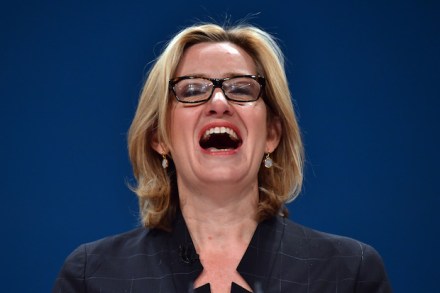
It’s been a difficult week for Amber Rudd. After the Home Secretary used her speech at Conservative conference to call for companies to declare the number of non-British workers they employ, Rudd found herself in the firing line — with one presenter even comparing the speech to Hitler’s Mein Kampf. Now, her brother has joined the chorus of boos. Roland Rudd used an article in the Evening Standard on Thursday to criticise her speech over the ‘denigration’ of foreign workers. The PR supremo argued that ‘those of us who want a sensible Brexit, who want Britain to remain a beacon of tolerance and who find the denigration of non-British workers appalling have a

The Spectator’s Notes | 6 October 2016

 Birmingham Checking in to my hotel room on the 18th floor, for the Conservative party conference here, I opened the door and bumped into a workman on a stepladder. ‘Sorry,’ he said, ‘They shouldn’t have let you in. All the water came through from the room upstairs.’ He was painting over the damage. Then he looked at me, recognised me and asked, ‘Hard or soft Brexit, then?’ I burbled slightly, not being happy with the distinction, but eventually said I thought ‘hard’ better described what was needed. The painter told me he read the Guardian and the Telegraph every day to ‘get both sides’. He reckoned ‘hard’, too: ‘It’s got

The Spectator podcast: Syrian nightmare

The Syrian initiative to retake the last remaining rebel stronghold of Aleppo, following a two week ceasefire, has proved controversial in the international community. Images of children bloodied, bruised and painted with masonry dust have decorated the front pages of British newspapers, but is there anything that can help ease the pain of ‘Syria’s Guernica’? These are the issues raised in Paul Wood’s cover piece this week. Speaking to the podcast from Washington, he said: “This has been going on for five years now and there have been surges from both sides. We happen to be in the middle of a surge by the regime attempting to take the last

Britain for the British: Theresa May leads a new nationalist government

Scottish jobs for Scottish workers. We’re going to stop foreigners from coming here and taking jobs Scottish people can do. We are going to make companies declare the nationality of their employees: those that do not employ a sufficiently high percentage of Scots will be ‘named and shamed’. They have a duty to this country; a duty to our people. If companies wish to employ foreigners they will have to prove they need to and demonstrate that they have tried, but failed, to fill the position with a native-born Scot. We understand the pain felt by those Scots who have lost their jobs to English migrants. We feel your anger

Theresa’s Tory love-in

Theresa May doesn’t use an autocue for her speeches. She feels that reading off a screen at the back of the hall makes it far harder to connect with the audience. But the Prime Minister had no need to worry about her connection with the audience at this conference. Tory activists love her; they regard her as one of their own and are rejoicing at her leadership. ‘The grown ups are back in charge’ was a refrain heard frequently in Birmingham this week. The mood of Tory activists has been further improved by what Mrs May has said about Brexit. Her commitment to trigger Article 50 by the end of

I want my Brexit good and strong

What you really should have done if you were in Birmingham on Monday this week was skip the not notably riveting Philip Hammond speech, and head instead for the fringe event run by the Bruges Group starring me, Professor David Myddelton and Charles Moore. I can’t speak for my performance (modesty forbids me) but my fellow panellists were brilliant: funny, incisive and as optimistic as you’d expect of a pair of ardent Brexiteers addressing the victorious home crowd for probably the first time since that happy day in June. ‘Which of us here could ever have imagined that we’re actually part of the majority: the 52 per cent?’ I asked.

Theresa May’s ‘carpe Brexit’ speech

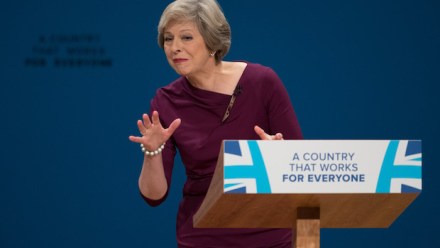
Theresa May’s speech was an attempt to seize the moment created by Brexit and Labour’s lurch to the left. She tried to set out a new centre-ground politics, promising to stand up to elites on behalf of ordinary people.  She attempted to nationalise Clement Attlee, the Labour Prime Minister who presided over the creation of the NHS, hailing him as one of her inspirations and promised government intervention to fix the housing, energy and broadband markets. In political terms, the speech was clever. There are an awful lot of voters who will nod along with her criticism of a ‘sneering’ elite who view themselves as ‘global citizens’ and her demands

Coffee House Shots: The verdict on Theresa May’s conference speech

Theresa May has brought the curtain down on this year’s Tory party conference with a speech in which she made a snatch for the centre ground. The Prime Minister pledged to stick up for the working class and went on the attack against the ‘sneering elite’, who May said looked down on others. But how successful was her speech? And did it tell us anything more about May? On the Spectator’s Coffee House Shots podcast, James Forsyth says: I think she is keener on the state than most Conservatives are. I think there was a lot of aim taken at the liberal elite. There was a lot of vicar’s daughter

Full text: Theresa May’s conference speech

When we came to Birmingham this week, some big questions were hanging in the air. Do we have a plan for Brexit? We do. Are we ready for the effort it will take to see it through? We are. Can Boris Johnson stay on message for a full four days? Just about. But I know there’s another big question people want me to answer. What’s my vision for Britain? My philosophy? My approach? Today I want to answer that question very directly. I want to set out my vision for Britain after Brexit. I want to lay out my approach – the things I believe. I want to explain what

Conference party round-up: Theresa’s kiss is put on hold

After four days of speeches and panels at Tory conference, there is now at least a little consensus over what Brexit means Brexit means and much concern over the quality of Philip Hammond’s jokes. However, while a number of conference speeches proved dry, Mr S is glad to report that the after hours soirees were free-flowing. At the Sun‘s conference party — where guests were offered teetotal May Day cocktails — tributes were paid to two men who were unable to make it to Birmingham this year. The paper’s editor Tony Gallagher recalled what David Cameron and George Osborne had said to him ahead of the paper backing Brexit. ‘David and George took us aside

Full text: Ruth Davidson’s Conservative party conference speech

Friends, five years ago I came to this conference, seeking to win the leadership of our party in Scotland. We’d just had our worst ever Scottish election result on the back of two decades of decline. As career moves went, the omens didn’t look exactly ideal. We were being kicked around by our opponents. And the media was calling us a corpse that wouldn’t twitch. And that was on a good day. But conference, you always kept the faith. When I argued we could win again as Conservatives, you granted me the privilege of allowing me to lead. We weren’t being credited with much in the way of prospects but

Damian Green strikes a softer tone on welfare

Under David Cameron, it was sometimes tricky to tell who was in charge at the DWP. Iain Duncan Smith favoured a softer approach to welfare reform while over at the Treasury, George Osborne’s interventions were more nakedly political. It all came to a head in March when IDS resigned after Osborne announced £4bn of cuts to disability benefits. That was just over six months ago and seems like a distant memory in the pre-referendum haze. Yet it’s rapidly becoming clear that under Damian Green, things will be very different at the DWP. As with other areas of Government, Theresa May’s work and pensions secretary has marked a signal departure with

Justine Greening goes on the offensive over grammar schools

Although Nicky Morgan suggested yesterday that the government could be about to water down its grammar school proposals, Justine Greening showed no such signs in her conference speech. The Education Secretary received a standing ovation as she went on the offensive in defending Theresa May’s plans for a return to selective education. In a sea change from her claim this summer that she was simply ‘open minded’ to the idea, Greening put in a fiery defence of the proposal to lift the grammar school ban. After paying tribute to her own comprehensive roots – as the first ever Education Secretary to attend a non-selective state — Greening explained that education was at the heart of the

The Brexit bounce continues

Just when you thought economists might finally have got the message about their doom-laden predictions for the economy following the vote for Brexit, along comes another statistic showing they are still getting it hopelessly wrong. I wrote here last month about how the Markit/CIPS Purchasing Managers Index – an early indicator of economic growth – had moved into positive territory in August, defying predictions that it would stay below 50, a level which suggests a shrinking economy. There was then, however, still one black cloud – the construction industry element of the index stood at 49.3 in August. That suggested that housebuilders and other construction companies were still suffering from

Full text: Amber Rudd’s conference speech

I succeed one of the most successful Home Secretaries of modern times. You may define success as holding the post for longer than any prior Conservative incumbent since World War Two. You may judge it by introducing the Modern Slavery Act … Which has delivered tough new penalties to put slave masters behind bars. Or, you may judge it by the eventual, hard-won deportation of Abu Qatada – and the message that sent. Well, Theresa May is now Prime Minister, and I am honoured to be Home Secretary in her Conservative-only Government. It’s no secret that earlier this year I campaigned on behalf of the Remain side in the EU