Theresa may

Why Theresa May should say she’ll go once her Brexit deal is passed

From our UK edition

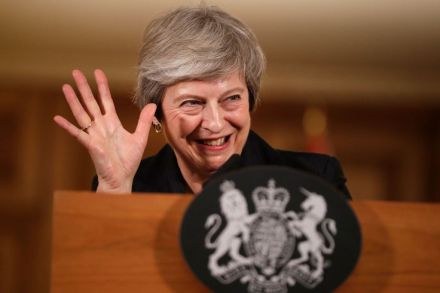
Right now, Theresa May’s Brexit deal isn’t passing the House of Commons. I argue in The Sun this morning, that Theresa May needs something to change the dynamic. What would do that? Well, if May said she would stand down once the withdrawal agreement was through, that would change things. It would separate off the question of how May has handled the Brexit negotiations so far, from the issue of what parliament should do now. If May pre-announced her departure, it would enable MPs to vote for the deal without that being an endorsement of her handling of Brexit or an invitation for her to go and negotiate the next stage of Brexit, the UK/EU trade deal. Interestingly, one Cabinet Minister tells me that May is now an impediment to this deal passing.

The top 40 horrors lurking in the small print of Theresa May’s Brexit deal | 17 November 2018

From our UK edition

This week, Theresa May's government teetered on the point of collapse over her proposed Brexit deal. The withdrawal agreement between the UK and Brussels led to Dominic Raab and Esther McVey resigning in protest. However, May's remaining ministers have since attempted to rally around her at least in the short term. Speaking on Friday, Liam Fox – the International Trade Secretary – gave a speech in which he declared 'a deal is better than no deal'. This is rather different to May's old claim that 'no deal is better than a bad deal'. So, is Fox right? Mr S thought it best to let readers decide for themselves. In theory, Britain is leaving the EU on 29 March 2019. But the legal small print, published by Brussels, shows what this means.

Diary – 15 November 2018

From our UK edition

Jacob Rees-Mogg observed that my resignation last week was ‘the “Emperor’s New Clothes” moment in the Brexit process’. If this is right, that makes me the child, too young to understand the importance of maintaining pretences, who blurts out before the embarrassed townsfolk that the emperor is naked. I’ve been surprised by the noisy reaction to my departure from the middle ranks of the government. The video I made in my office setting out my reasons for going had two million views in two days. Maybe this is an example of Orwell’s dictum that in a time of deceit telling the truth is a revolutionary act. The deceit is that we’re making a success of Brexit.

Watch: Jacob Rees-Mogg’s withering verdict on May’s Brexit deal

From our UK edition

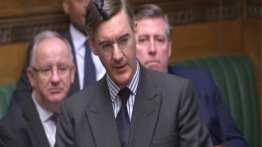
Only a handful of MPs have spoken up in support of Theresa May's Brexit deal in the Commons. But the criticism from a certain Tory backbencher will worry her more than most. Jacob Rees-Mogg took to his feet in the Commons to ask why he shouldn't now hand in a letter of no confidence in the Prime Minister. Here's what he said: 'My right honourable friend – and she is unquestionably honourable – said we would leave the customs union. Annex two says otherwise. My right honourable friend said that she would maintain the integrity of the United Kingdom. A whole protocol says otherwise. My right honourable friend said that we would be out of the jurisdiction of the European Court of Justice. Article 174 says otherwise.

Can Theresa May’s critics unite around an alternative plan?

From our UK edition

Ahead of the crunch Cabinet meeting No. 10 aides privately admitted that the one minister they could not afford to lose was Dominic Raab. It wasn't just that losing a second Brexit Secretary would send a very bad signal about the government's Brexit policy. More importantly, Raab is regarded as a pragmatic Brexiteer and there was a fear that his resignation would have a domino effect. Those fears were correct. So far today we have seen a second Cabinet minister resign as well as a number of junior ministers. What's more, there is a very good chance more will come. So, where does May go from here? Not only does her Brexit deal look dead on arrival, May's premiership is at maximum danger point. There is an expectation that there will be a confidence vote within days.

May’s deal proves one thing: the establishment always wins

From our UK edition

Peasants’ Revolts tend not to work out too well in this country, for the peasants. I suppose that is why we have so comparatively few of them. There is a flurry for a while and then normal service is resumed. It is often said that Wesleyan Methodism helped to quell any uppity tendencies among the working classes during the Industrial Revolution, but I suspect it was more a case of the proles understanding that whatever they did, they would not win. Too much ranged against them, marshalled by people who naturally knew much better about what was good for them.

PMQs: MPs give Theresa May a taste of things to come

From our UK edition

Today's PMQs ought to have been the calm before the storm. With Theresa May unable to reveal details of the proposed Brexit deal to MPs until her Cabinet signs it off – with a crunch meeting at 2pm – the specifics are not known. However, thanks to a series of leaks from the Brussels side and the European Research Group quickly seeing red it proved to be rather tense affair. As ever, Jeremy Corbyn failed to land a killer blow on the Prime Minister despite the rather wide goal posts. The SNP's Westminster leader Ian Blackford had one of his more effective outings – using one question to ask why Scotland won't get the same benefits as Northern Ireland when it comes to single market access.

The only case Mrs May can make for her Brexit deal

From our UK edition

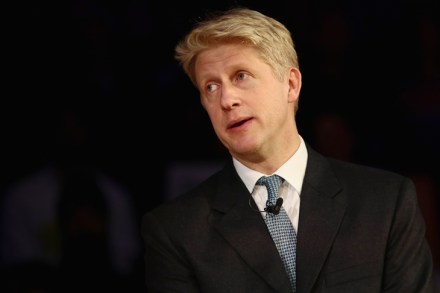
Jo Johnson’s resignation, the DUP kicking off and the European Commission's Article 50 task-force talking about a lack of progress mean that it hasn’t been a good end to the week for Theresa May. As I write in The Sun this morning, one government source says ‘if there’s no November Council, then no deal goes into overdrive’. But given Theresa May’s desire to avoid no deal there probably will be some sort of agreement in the not too distant future. But it will be flawed—and Theresa May should say so. Why would a Prime Minister admit that a deal they’ve negotiated isn’t great?

Brexiteers in government nervous about what’s going on in the negotiations

From our UK edition

It is quiet out there, too quiet in the views of many Brexiteers in government. As I say in The Sun this morning, they fear that right now a deal is being done that they’ll be bounced into supporting. They worry that since last week’s Cabinet meeting, there hasn’t been any new Brexit offer put either to Cabinet or the inner Cabinet yet technical talks have resumed in Brussels. They fear that a deal will be agreed and then they’ll be faced with a choice of rejecting it and having to take the blame for no deal and the chaos that would involve or accepting the agreement with all its flaws. This fear of being bounced has been heightened by Theresa May’s mood.

Hammond’s House of Horrors

From our UK edition

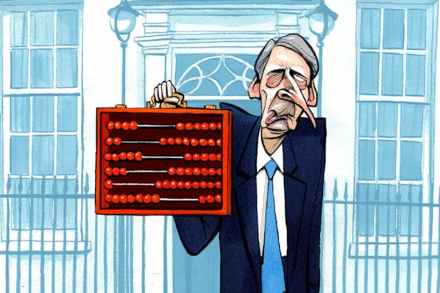
What is the point of Philip Hammond? Most chancellors have an agenda, but it’s hard to discern any purpose or direction from the current one. Gordon Brown’s project was to oversee the largest expansion of government spending in peacetime history — which he achieved, albeit with ruinous results. George Osborne spoke about trying to wind this programme back. The results were decidedly mixed, but at least he had an idea about what he sought to achieve. Mr Hammond, by contrast, has spent his time in the brace position preparing for Brexit. When he delivers his Budget on Monday, he might have to admit that the country does not seem to be quite so worried. Companies have been hiring at a rate never seen before. Youth unemployment is at an all-time low.

Why a no-confidence vote in Theresa May could be closer than she thinks

From our UK edition

The consensus in the Conservative party is that Theresa May's visit to the 1922 Committee last night hasn't materially changed anything. Those who want her gone are still plotting her demise. A larger group of her MPs are very frustrated and unhappy. And there are still a good number of loyalists prepared to make supportive noises about the Prime Minister in the Chamber or 'crunch' meetings like the one last night. What this does suggest is that there won't be another flood of letters calling for a vote of no confidence in the Prime Minister, though the working theory remains that it is more likely that the threshold of 48 is reached by accident rather than as a result of a concerted campaign.

Even ministers don’t understand Brexit

From our UK edition

The Brexit negotiations are becoming so complicated that even the cabinet admits that it doesn’t understand what is going on. The Prime Minister has been told by several of her colleagues that they won’t back any deal she agrees until they have seen written legal advice, setting out what it means. If a Brexit deal is going to be impenetrable even to secretaries of state who have followed every step of the negotiations, what hope does the public have? This extraordinary state of affairs was summed up by the cabinet meeting this week during which ministers discussed where the negotiations stand. Theresa May would agree on the money to pay the EU, but not the full terms of Brexit: those negotiations would be ongoing.

Tories rally round Theresa May, but the difficult decisions remain

From our UK edition

Theresa May should offer to go to the 1922 Committee every week between now and March 2019. Her appearance led to a, predictable, rallying round. There was the usual desk banging and lots of calls for unity. I’m told there were about half a dozen questions on tone and language following the hideous quotes given to the Sunday papers. Tellingly, Steve Baker, the ERG’s lead organiser, tried to turn the tables and present his group as the real loyalists. He asked the Prime Minister if those Tory MPs saying they would vote down no deal were hurting the her negotiating position. She agreed that this was not helpful. As one Cabinet Minister said to me afterwards, if you’re expecting fireworks when the Prime Minister comes to the 1922, you’ll always be disappointed.

Tory MPs give May an easy ride at Prime Minister’s Questions

From our UK edition

Given relations with her own party, Theresa May will have been far more worried about the second half of Prime Minister's Questions than the first. On the basis of the backbench questions that were asked, the session went pretty well. Only one Tory MP raised Brexit at all, and that was Jacob Rees-Mogg, who asked for assurances that the European Court of Justice would not get the final say on cases arising from the Brexit withdrawal agreement. May was able to tell the Chamber that this wasn't true - though the Sun's report this morning on the matter was pretty strong - and that was all for Brexit. Instead, her MPs asked a range of constituency-based questions and didn't cause trouble, which bodes well for tonight's 1922 Committee meeting.

May to face 1922 Committee as rumours of rebel letters swirl

From our UK edition

Theresa May is to face her MPs at the 1922 Committee tomorrow, it has been confirmed. There had been calls for the Prime Minister to do so, after feverish speculation that Tory MPs were plotting to remove her because of her disappointing Brexit performance. She has clearly decided to take on those critics and face her party, rather than hide and hope that this is all going to go away. One of the reasons MPs are increasingly dissatisfied with the Prime Minister is that she isn't offering any sense of progress towards a deal, and there will again be demands for her to show that she will win a concession from Brussels and secure a deal.

Hell month – week III: Theresa May attempts to reset the dial

From our UK edition

Theresa May is entering her third week of Brexit hell. With no resolution in sight on the issue of the Irish border and suspicion growing over No 10's grand plan, the Tory party is looking more fractious than ever. As James notes on Coffee House, although every week there are reports of plotting and an incoming confidence vote, it does seem as though there has been a further deterioration of party morale that could prove the last straw. In a bid to avoid that fate, May has penned an article for today's Sun in which she strikes a more personal tone than usual and promises to press on: 'Turn on the TV most days and you’ll find someone speculating about what the Brexit talks mean for Theresa May. Has it been a good day or a bad day for me? Am I up or down?

What has changed with Tory leadership plotting

From our UK edition

Ever since Chequers there has been almost constant speculation about an attempt to remove Theresa May but with nothing actually happening. So it is tempting to ignore it all, to conclude that those agitating against Mrs May are all hat and no cattle. But this weekend, something does appear to have changed. Whether it leads to anything remains to be seen, but the shift in the mood does seem worth relating. Yesterday, I received a phone call from a former Cabinet Minister who had never told me before that May should go. This time, he was clear not only that she should, but that there was an active effort underway to bring this about. The thing that I was struck most about was this former Secretary of State’s anger, there was much Anglo-Saxon language and talk of national humiliation.

Theresa May tries to de-dramatise the transition period

From our UK edition

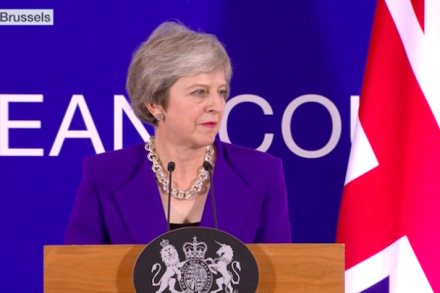
With Conservative MPs across the spectrum seeing red over a mooted extension to the implementation period after the UK leaves the EU, Theresa May attempted to dial down the rhetoric in her EU Council press conference this afternoon. After a disappointing evening which saw the Prime Minister granted neither dinner nor sufficient progress by the EU27, May insisted to hacks that a good Brexit deal was still in sight. On reports that No 10 is planning to extend the transition period by up to a year in a bid to reach a deal, May did not deny the claims – but insisted that this wouldn't really be an implementation period extension per se.

The Irish problem | 18 October 2018

From our UK edition

The story of Britain and Ireland’s relationship has, all too often, been one of mutual incomprehension: 1066 and All That summed up the view on this side of St George’s Channel with the line that ‘Every time the English tried to solve the Irish question, the Irish changed the question.’ But Theresa May’s problem right now is that the Irish — and the European Union — won’t change the question and the only answers they’ll accept are unacceptable to Mrs May and her cabinet. To the astonishment of many, the Irish border has become the defining issue of Brexit.

MPs from across the House turn on Theresa May

From our UK edition

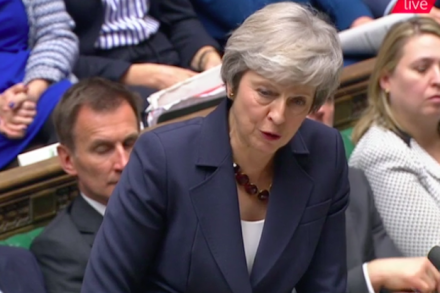
In the Prime Minister's statement to the House, Theresa May did her best to insist that despite an impasse in the Brexit negotiations it was business as normal. However, for all May's claims that the differences between the UK and the EU were solvable, the hostile questions that followed from MPs showed just how hard it would be to get any deal through Parliament. Jeremy Corbyn's attempts to say that the government's 'Groundhog Day' Brexit plans would fail Labour's six Brexit tests were met with laughter and derision. The Leader of the Opposition's shouty performance gave the beleaguered Prime Minister little reason for worry. However, the questions from the backbenchers did.