Theatre

Time out of mind | 17 March 2016

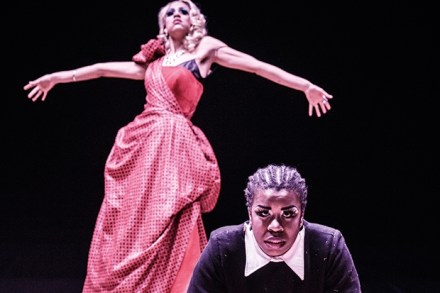
The Maids is a fascinating document. Written in 1947, Jean Genet’s drama portrays a pair of serving girls who enact sexually loaded fantasies while dressed in the clothes of their employer, Madame, whose murder they are secretly plotting. This macabre sketch still resonates because it analyses and presages the key social transition of the 20th century, namely the overthrow of privilege by the underclass. And it boasts extra layers of erotic chic because the sexually inquisitive maids are sisters and because Genet suggested that the girls might be played by men in drag. This delicate, subtle work is as firmly rooted in its historical era as another classic political allegory, Animal Farm, to which it bears some similarities. Jamie Lloyd has based his update on two bold decisions.

Are theatre audiences getting out of hand?

Laurence Fox has this week joined an increasing band of actors hitting back at misbehaving audience members who seem to forget that they are in public rather than their own living room. He ramped up the drama by launching a foul-mouthed attack on a heckler before storming offstage during a live performance at a London theatre. During the play, The Patriotic Traitor at the Park Theatre, he was heard to say: 'I won’t bother telling you the story because this cunt in the front row has ruined it for everybody.' The audience member had been muttering and heckling during the play and apparently became so loud that, for Fox, it was impossible to deal with.

Tragedy trumped by porn

Big fuss about Cleansed at the Dorfman. Talk of nauseous punters rushing for the gangways may have perversely delighted the show’s creators but I’m firmly with the exiteers. This is barely a play and more a thin, vicious pantomime with an Isis-video aesthetic. The minuscule plot follows Grace (Michelle Terry) as she visits a prison hospital to receive news of a tortured relative. She’s immediately roped in as a victim and we’re treated to a sequence of gougings, knifings, electrocutions, rectal penetrations and tongue extractions which are bizarrely interspersed with scenes of lustful romance. Alex Eales’s design stands out.

The rite stuff

Religion remains a surprisingly popular subject for plays. It’s partly because there’s already a core of theatricality there, in the rituals, the dressing-up and the little shibboleths of piety. In one way or another, religion involves performing. And religion plays the role of Hogwarts in Harry Potter — an enclosed world, a game with rules. We know how a priest is meant to behave, so we can more quickly engage with a story about his or her struggles. Also, of course, big issues of moral principle and human frailty are close to the surface. But does theatre treat this subject with respect? Or does it tend to sneer at religion, to reinforce a largely secular audience’s prejudices?

Kit-car Chekhov

Director Robert Icke has this to say of Chekhov’s greatest masterpiece: ‘Let the electricity of now flow into the old thing and make it function.’ He uproots ‘the old thing’ from its natural setting and drops it down in no-man’s land. It all feels modern. Aircraft buzz in the heavy summer air. A thunderstorm sets off a car alarm. English names have displaced their Russian originals. Telegin has turned into Cartwright. The childless but priapic Uncle Vanya has been renamed after a latex prophylactic, Uncle Johnny. Perhaps appropriately. These alterations create huge uncertainties of class, location and era. Who are these Bohemian dropouts swilling vodka in a nameless English shire without even a broadband connection to beguile their titanic boredom?

Could a piece with no singing be the future of opera?

Nowhere are human beings so magnificently self-assertive as in opera.  Everything about operatic characters is outsize; their bodies, their flowing gowns and capacious cloaks, and their desires. No sooner has the hero set his eyes on the leading lady than he trumpets his desire to possess her; when the villain spots his victim, he tells us how he longs to send him to hell. All this fervent emotion is channelled through those great ringing voices, aided and abetted by the orchestra’s surges and swells. It’s exhilarating to behold, partly because we envy these creatures their unbuttoned emotional life. We, by contrast, are held back by a thousand scruples and doubts. The question T.S. Eliot put into the mouth of J. Alfred Prufrock – ‘Do I dare to eat a peach?

Master of psychology

The Master Builder, if done properly, can be one of those theatrical experiences that make you wonder if the Greeks were a teeny bit overrated. Matthew Warchus’s version is four-fifths there. Ralph Fiennes is well equipped to play Halvard Solness, the cold, brilliant autocrat with a troubled past who falls into the arms of a gorgeous young suitor. But he’s the wrong age for the part. So is his opposite number, Sarah Snook, who seems too mature to suggest Hilde’s skittish frivolity. Fiennes, like all film stars, attends carefully to his looks and although he’s over 50 he could easily play ‘late thirties’. But the aged Halvard needs to be like a grizzled alderman ogling a virgin in the choirstall. The affair should seem repellent and sinful.

Being and nothingness

Florian Zeller has been reading Pinter. And Pinter started out in repertory thrillers where suspense was created by delaying revelations until the last minute. He tried an experiment. Suppose you delay the revelations indefinitely. The results were interesting. Pinter’s characters were vague, stark silhouettes lacking background and substance. Audiences found them inscrutably suggestive. Zeller follows suit. He presents us with a bourgeois marriage. The father works. The mother sits at home being stylishly empty-headed. Their grown-up son lives with his girlfriend. No other details are offered. It’s evening. Mother, disported on an all-white sofa, greets her husband and languidly interrogates him about his day’s activities and casts aspersions on his fidelity.

Fine vintage

A beautiful crumbling theatre in Notting Hill is under threat. The Coronet, which bills itself as the Print Room, faces the menace of renovation. The lovely rambling building has the tumbledown air of an abandoned Romanian palace. The raised stage sits opposite the dress circle of a former cinema and the auditorium, steeply raked, is bounded by a parapet decorated with plaster reliefs of scarred mermaids and broken-winged angels. A modern design team is bound to strip out all this ramshackle charm. The ragged, gloomy corridors, scented with damp brick dust, will be rationalised into glistening avenues of spotlit perfection.

Pride and prejudice

Paul Minx ventures boldly into Tennessee Williams country with The Long Road South. It’s 1965 and the Price family are idling about at home in Indiana. In mid-August the air is heavy with frustrated sexuality. Carol Ann Price (Imogen Stubbs) is a kindly, buxom waster slithering decorously into alcoholic dereliction. Her daughter, Ivy, is a perky little menace who cavorts about the lawn in a skimpy bikini trying to elicit male attention. Jake, the patriarch, is a charmless redneck with anger problems and a secret backlog of unpaid debt. Waiting on these white-trash parasites are two black servants, Andre and Grace, who are smart, industrious, even-tempered and limitlessly patient. Andre is a gifted theologian who pines after his severely disabled daughter.

Gallows humour

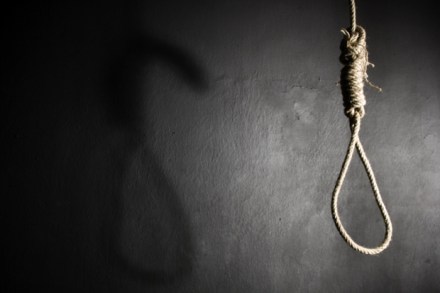
It begins with a sketch. We’re in a prison in 1963 where Harry Wade, the UK’s second most famous hangman, is overseeing the execution of a killer who protests his innocence. The well-built convict effortlessly shrugs aside two burly but incompetent prison officers. ‘I’m being hanged by nincompoops,’ he laments. One of them helpfully points out that if he’d followed his instructions he’d ‘be dead by now’. Do these arch quips make you quiver with mirth? If so you’ll enjoy Hangmen, a slapstick comedy thriller by Martin McDonagh. The scene shifts to Oldham in 1965. Capital punishment has been abolished and the retired Wade has taken over a pub in his hometown where he enjoys the status of a minor celebrity.

Alice in cyberspace

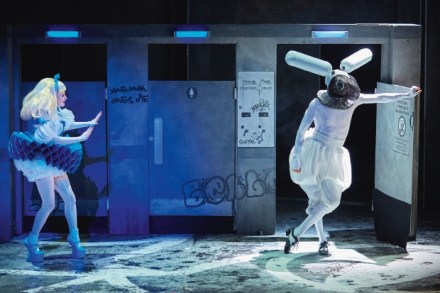
Damon Albarn and Rufus Norris present a musical version of Alice in Wonderland. A challenging enterprise even if they’d stuck to the original but they’ve fast-forwarded everything to the present day. The titular heroine, a trusting and solemn Victorian schoolgirl, has been recast as Aly, a wheedling teenage grump who loathes her mum, her dad, her comp, her teachers and her playmates. ‘I hate being me,’ she announces. And as we learn more about her we’re increasingly struck by the sagacity of this verdict. To escape her distress she downloads a game from www.wonder.land and creates a cyber-self, Alice, who goes on adventures. Hmm. A computer game.

Passion play | 31 December 2015

Illness forced Kim Cattrall to withdraw from Linda, the Royal Court’s new show, and Noma Dumezweni scooped up the debris at the last minute. And what debris. All thoughts of kittenish Cattrall evaporated as Dumezweni strode on to the stage, a luscious blend of high-performance hair and trouser-suited luminosity. Linda is in her prime, at 55, a marketing director at a beauty firm, but she faces problems at home. Her balding husband, in midlife crisis, has joined a rock band. Her older daughter, Alice, is in deep trauma after internet trolls mocked an explicit clip of her posted by a jealous ex. Linda told Alice to pull herself together but Alice has withdrawn from life and exists like a waspish nun concealing her nubile physique in a grey onesie.

Sex acts

Poor Eddie Redmayne. Just because he looks quite like a girl, he finds himself a spokesperson for the burgeoning trans movement. Recently, he was forced to explain to those of us watching BBC News that ‘the notion of gender being binary’ is now considered ‘antiquated’. People are very excited about being trans at the moment. Countless TV shows and films depict it, Mark Zuckerberg has just called his daughter Max, and a man called Hilary has just talked us into another war. Being trans is clearly catching: hermaphrodite whelks on the undersides of fishing boats are growing penises, and vast swaths of young people, unable to buy a home or get a job, now realise they are trapped in the wrong body. Well, great.

Tricycle’s Ben Hur is magnificent in its superficiality – a masterpiece of nothing

It’s the target that makes the satire as well as the satirist. Is the subject powerful, active, relevant and menacing? Patrick Barlow’s new spoof, Ben Hur, must answer ‘No’ on all four counts. The show takes aim at two principal irritants: vain actors and the Hollywood epics of the 1950s, whose titanic scale was offered as bait to audiences besotted with their cosy new TV sets. Old Hollywood is a spent ogre these days and the foibles of the acting trade are hardly a threat to civilised life, so the show can’t embrace our immediate concerns. But the execution is compellingly assured.

New word order | 3 December 2015

In the basement of a busy café in Hockley, Nottingham, which may not have known exactly what it was letting itself in for, a young woman is loudly dissecting an unsatisfactory lunch: ‘Deep in my heart I know I love chips.’ In another basement a few hundred yards away, lit by a single floor lamp, another woman is detailing the process of a man’s decline with tear-jerking, understated tenderness. For today only, both women are going by the name Bryan. They are among 60 volunteer performers in But I Know This City!, a unique adaptation of B.S. Johnson’s strange and sometimes wonderful 1969 novel The Unfortunates.

Men behaving badly | 3 December 2015

Jamie Lloyd’s production of Pinter’s The Homecoming is a pile of terrific and silly ideas. Mostly terrific. The action takes place on a raised, thrusting stage surrounded by a steel canopy of scarlet rods like a boxing-ring. Ideal for a play about damaged men competing for a female trophy. Soutra Gilmour’s design is a model of sparse elegance. Centre stage, a worn green armchair like a waning tyrant’s throne. Stage right, a veneered sideboard that signals mass-produced chic. We’re in the 1960s so these pieces are from the previous decade. Well spotted, Ms Gilmour. Each scene is punctuated by racy music and strobe-y lights to remind us that this is a heightened, paranormal world. A perfect approach.

Why is there no one at the National Theatre preventing these duds getting staged?

Wallace Shawn is a lovely old sausage. A stalwart of American theatre, he’s taken cameo roles in classic movies like Clueless and Manhattan. He’s also a playwright whose new script has received its world première at the National Theatre. Lucky chap. He spent three or four years writing Evening at the Talk House and it reveals a peculiar methodology. A play normally features a central character grappling with a personal dilemma, which leads to suffering, change and self-discovery. Shawn doesn’t bother with any of that, he just lays on a gang of theatre types who spend two hours spouting cascades of circuitous chitchat. The show opens with a speech by a rich and successful American TV producer who tells us how rich and successful he is.

Winter wonderland | 19 November 2015

Kenneth Branagh opens his West End tenancy with Shakespeare’s inexplicably popular The Winter’s Tale. We start in Sicily where Leontes and his queen Hermione are entertaining Polixenes, the king of Bohemia. The design is heavily Germanic. Crimson drapes shroud the grey marble columns. A massive fir tree, twinkling with candlelight, is rooted in an ornamental toboggan. Everyone swishes about in thick, elegant Victorian costumes. The sets, by Christopher Oram, aren’t just lovely to look at, their detailed perfection is almost heartbreaking. And Neil Austin’s lighting would have won gasps of admiration from David Lean. The only fault is that it all seems overcontrived. An orchestral score intensifies the emotional colouring but it makes the play feel like a film.

How did this plotless goon-show wind up at the Royal Court?

One of the challenges of art is to know the difference between innovation and error. I wonder sometimes if the Royal Court realises such a confusion can arise. Its new production, RoosevElvis, has been hailed as a thesaurus of fascinating novelties but to me it looks like a classic case of ineptitude posing as originality. It opens with two costumed women perched on bar stools speaking into microphones. One is dressed as Teddy Roosevelt in a cowboy hat and a handlebar moustache with a three-foot wingspan. The other is an Elvis impersonatrix wearing a lazy smirk and a black wig that sags forlornly over her ears, which seem to have turned pink with embarrassment. Introductions over, they reveal their true identities.