Theatre

Politics at play

David Haig’s play Pressure looks at the Scottish meteorologist, James Stagg, who advised Eisenhower about the weather in the week before D-Day. The play works by detaching us from our foreknowledge of events. We’re aware that the landings went off smoothly on 6 June in fine conditions. However, D-Day was originally scheduled for 5 June, and for the preceding month southern England had basked in a prolonged sunny spell. According to Eisenhower’s American meteorologist, this was set to continue. But Stagg believed a storm was about to engulf the channel. Eisenhower trusted Stagg and postponed D-Day. The storm arrived, albeit tardily, which vindicated Stagg who then foresaw a brief period of clear skies and low winds for the following day. Eisenhower trusted him again.

Quentin Letts isn’t racist – our theatrical culture, which hands out jobs on the basis of racial profiling, is

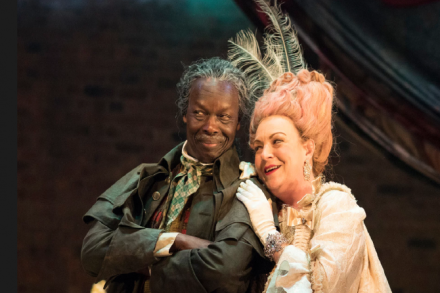
Oh my goodness. Quentin Letts is ‘a racist’ apparently . It says so on Twitter. In his review of the RSC’s The Fantastic Follies of Mrs Rich he referred to the quality of Leo Wringer’s performance and asked, ‘Was Mr Wringer cast because he is black?’ The RSC’s top brass assembled in full muster and denounced Letts for his ‘blatantly racist attitude to a member of the cast.’ I haven’t seen the production, only the reaction to Letts’s reaction to the production, but that’s enough. What’s striking is that the RSC’s accusation is false. Letts did not say the actor was bad because he was black. That would have been racist. Instead he asked if the actor was cast because he was black. Which is different.

The killer instinct

Ruthless! The Musical is a camp extravaganza about ambitious actors stranded in small-town America. Sylvia St Croix, a pushy agent, visits a super-talented 10-year-old, Tina, and persuades her to audition for Pippi Longstocking in a school play. Tina’s mother fears that stardom may spoil her little girl but Tina is finished with childhood. ‘Time to move on.’ The production feels like a zany Spike Milligan sketch with a garish set and over-the-top costumes. Sylvia is played by Justin Gardiner who swaggers about like a cross-dressing cowboy in a clingy frock and false breasts. The dialogue, which takes cheap shots at bourgeois morality, may not suit all tastes. Try this. Tina complains to Sylvia that she never sees her father.

Low life | 28 March 2018

I go to the theatre but rarely because I am overpowered by even mediocre acting and find it exhausting. Theatre has the same effect on me, I imagine, as the Great Exhibition must have had on a Dorset peasant with a cheap-day return on the newly opened Great Western Railway. But by what strange magic does an actor transcend his or her everyday persona and convincingly dissemble an altogether different, fictional one? Is it the training? Or a gene — Romany, perhaps? Or are actors afflicted by a peculiar personality disorder in which part of the brain is either overdeveloped or missing? For a newspaper article, I once rehearsed with a theatre company for a week. I was Second Jailer for the opening night of Puss in Boots.

Rising star

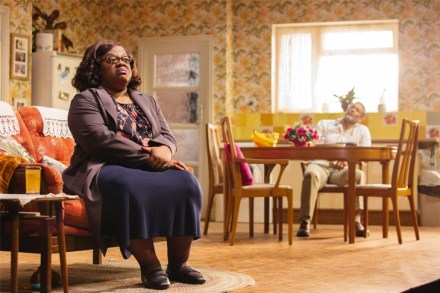
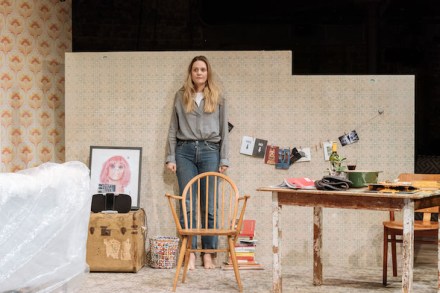
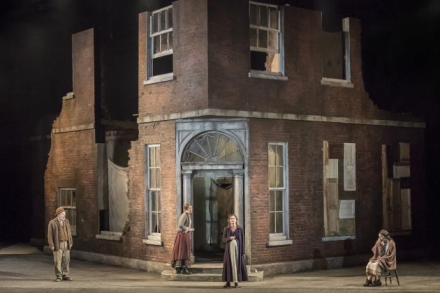
The Plough and the Stars by Sean O’Casey looks at the Irish nationalist movement during the events of Easter 1916. The setting is a Dublin tenement where the residents exchange gossip and insults and sometimes punches. What begins as an elevated soap opera develops into a tragedy of vast and harrowing proportions. Sean Holmes’s production was first seen at Dublin’s Abbey Theatre and it tells the historic tale with contemporary costumes and furnishings. These chronological confusions rarely work but the performers here have so much spirit, energy and truthfulness that the narrative feels immediate and topical. The set is spare, unlovely, brutal.

What’s the big idea?

Summer and Smoke by Tennessee Williams dates from the late 1940s. He hadn’t quite reached the peaks of sentimental delicacy he found in his golden period but he was getting there. As a lesser-known curiosity, the script deserves a production that explains itself openly and plainly. Rebecca Frecknall has directed a beautiful and sometimes bizarre-looking show which is beset by ‘great ideas’. What a great idea to encircle the stage with upright pianos that the actors can cavort on, and whose exposed innards can twinkle with atmospheric lights at poignant moments. The pianos are an ingenious and handsome solo effort but they serve the designer’s ends and not the play’s. Another great idea was to include a booming soundtrack, often irrelevant, sometimes intrusive.

Seeing stars

The Best Man by Gore Vidal is set during a fictional American election in 1960. Two gifted candidates seek their party’s nomination. Secretary Russell is a chilly but experienced political hack whose marriage is a sham. Senator Cantwell, a more attractive character, is an impulsive charmer married to a blonde bombshell who adores him. The show feels dated but the acting, the costumes and the set designs capture the period nicely. The plot is perhaps short of pace and density. Each character has an embarrassing secret to hide. Secretary Russell suffered a mental breakdown a few years ago. Senator Cantwell enjoyed a bisexual fling in the army. The action turns on their ability to keep these details hush-hush.

His dark materials | 8 March 2018

He looks like an absent-minded watchmaker, or a homeless chess champion, or a stray physics genius trying to find his way to the Nobel Prize ceremony. He’s in his early sixties, tall and stooping, a bit thin on top, wearing a greatcoat and a crumpled polo-neck jumper. A blur of whiskers obscures the line of his jaw. He has a bulbous, Larkinesque skull and battleship-grey teeth; and if you wanted to cast someone as Spooner, the literary vagrant in Pinter’s No Man’s Land, you’d struggle to find a closer match. This is Michael Boyd, former director of the RSC, who was knighted in 2012 for services to drama. We meet in a dressing-room in a west London studio where he’s rehearsing the Cherry Orchard for Bristol Old Vic. He has deep roots in the Russian theatre.

Save the children

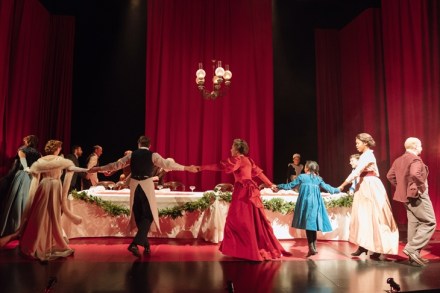
Fanny & Alexander opens like a Chekhov comedy and turns into an Ibsen tragedy. Ingmar Bergman’s movie script, adapted by Stephen Beresford, has been directed for the stage by Max Webster. The children, Fanny and Alexander, belong to the famous Ekdahl acting dynasty who live in Bohemian chaos. Their home is full of jokes and pranks and sophisticated merriment, and the family business is overseen by their grandmother (Penelope Wilton), who runs their theatrical affairs with a benignly imperious eye. Then disaster strikes. The kids’ father dies of a brain haemorrhage while rehearsing the Ghost in Hamlet. Their mother, Emilie, is comforted by the sinister Bishop Edvard who marries her and moves the children into his chilly episcopal palace.

Killer instinct

Frozen starts with a shrink having a panic attack. She hyperventilates into her hand-bag and then gets drunk on an aeroplane where she yells out, ‘We’re all going to die.’ She’s a bit loopy, clearly, which is how lazy playwrights make psychologists interesting. The shrink’s task is to examine Ralph, a serial murderer of children, and to deliver a lecture on the cause of his malignity. We hear bits from the lecture, bits of confession from Ralph, and weepy bits from the mother of one of Ralph’s victims. The subject is punishingly gruesome but its dramatic power is non-existent because the writer Bryony Lavery hasn’t learned how to stimulate the viewer’s imagination.

Lend me your ears | 22 February 2018

Audio description, or AD, as it is fondly called, is coming of age. Once consigned to the utility room of grey voices reading boring cues to inform blind people what was going on on stage or screen, AD is now a dynamic narrative form that is findinga presence in almost all the arts (from opera, theatre and film to art galleries and museums). It is so widespread and well done that many consider it an art form in itself. For the uninitiated, audio description simply provides a listener, through headphones or a TV speaker, with the essential details of the action and events in a film or play during a convenient pause. When done well, it does not intrude on an audience’s experience of the play, the acting or the director’s intention, but instead shapes and enhances it.

House rules | 22 February 2018

The Donmar’s new show, The York Realist, dates from 2001. The programme notes tell us that the playwright, Peter Gill, ‘is one of the most important and influential writers and directors of the past 30 years’. Who wrote that? Not Peter Gill, I hope. The play, directed by Robert Hastie, follows a gay affair between a strapping Yorkshire cowherd and a sensitive London artiste. They meet while rehearsing an am-dram production of a mystery play set in a ruined abbey. Gay men will enjoy this charmingly acted production but it’s apt to bore the general audience because the characters are trite, the gay theme feels antiquated and the storyline is as light as a Post-It note. It doesn’t help that Peter Gill writes like a newcomer at a creative writing weekend.

Close of play | 15 February 2018

‘Mad, wearying and inconsequential gabble,’ sighed the Financial Times in 1958. ‘One quails in slack-jawed dismay.’ Here’s the FT at the same play last month: ‘The best I have seen on-stage.’ How about the Evening Standard? Then: ‘Like trying to solve a crossword puzzle where every vertical clue is designed to put you off the horizontal.’ Now: ‘Pinter’s cruel dialogue has rarely sounded sharper.’ ‘What all this means only Mr Pinter knows,’ mused the Manchester Guardian. On its return to the West End, the playwright’s biographer Michael Billington, writing in the Guardian, judged that ‘The Birthday Party has lost none of its capacity to intrigue’.

Torture in the stalls

It’s considered the great masterpiece of 20th-century American drama. Oh, come off it. Long Day’s Journey into Night is a waffle-festival that descends into a torture session. Who would choose to spend time with the Tyrone family? Dad is a skinflint millionaire. Mum is a wittering smack addict. They’ve produced two layabout sons. One is a dipsomaniac with a moustache; the other has TB and a cough. These doomed narcissists chase each other around the family mansion in a spiral of vicious, self-regarding gossip. It’s like being trapped in a broken cable-car with four prattling drunks who hate each other. And I’m not convinced they drink that much. A bottle and a half of whisky, or a little over, is consumed in the course of a day.

Changing the bard

Nicholas Hytner’s new show is a modern-dress Julius Caesar, heavily cut and played in the round. It runs for two hours, no interval. The action opens with the audience grouped around a central stage where a ramshackle rock gig descends into a riot. The play unfolds like an illegal rave at a warehouse. It’s bold, in its way, and some of it works. A couple of the Roman senators are played by actresses and the text has been bodged to suit the cult of gender neutrality. ‘Romans’ is substituted for ‘men’ in Mark Antony’s famous line, ‘so are they all, all honourable men’. This small change is curiously painful to hear. It turns the ominous finality of Shakespeare’s original into a tuneless clatter.

Drivel time

The NT’s new production, John, is by a youngish American playwright, Annie Baker. We Brits tend to assume that ‘john’ is American for ‘toilet’ so perhaps lavatorial treats are in store. The setting is a provincial hotel run by a blithering old dear whose only guests are two grumbling yuppies with marriage problems. The plot of a play usually starts within ten minutes but not here: nothing happens. That’s the point. Instead of a story there’s a minor predicament and this, oddly enough, suits the show’s personalities. The yuppies, Elias and Jenny, are just about memorable enough to be human beings but they haven’t the substance or grit for dramatic characters. Their personalities lack density or appetite.

The Pinter conundrum

The Birthday Party is among Pinter’s earliest and strangest works. It deconstructs the conventions of a repertory thriller but doesn’t bother to reassemble them. The setting is a derelict seaside town on the south coast. Petey, a thick deckchair attendant, runs a guest-house with his ageing wife, Meg. She’s a zero-IQ cook whose signature dish is a slice of white toast charred in fat. They have one resident, Stanley, a former pianist whom Meg cossets and mothers like a substitute son. Enter two London thugs, Goldberg and McCann, who invite Stanley to a party as a pretext to punish him for unknown misdemeanours. The whisky-soaked celebrations involve a game of blind man’s bluff during which Stanley’s glasses are smashed, rendering him sightless.

The price of success

A pattern emerges. A hot American playwright, dripping with prestigious awards, is honoured in London with a transfer of their best-known work. And it turns out to be all right. Not bad. Nothing special. The latest wunderkind to wow London is Amy Herzog (five plays performed, six awards received), whose marital bust-up drama Belleville is set in a glamorously derelict corner of Paris. Abby and Zack, both 28, are newlywed Americans trying to shore up the wreckage of their European gap year. Abby wanted to learn French but has stopped attending classes. Instead, she’s studying yoga although the lessons are regularly cancelled. And her acting career seems to have stalled.

Lost in space | 11 January 2018

The Twilight Zone, an American TV show from the early 1960s, reinvented the ghost story for the age of space exploration. Director Richard Jones has collaborated with Anne Washburn to turn several TV episodes into a single play. Eight episodes in all. Way too many. The structure is designed to bamboozle us from the start. Some of the storylines have been broken up and are placed episodically throughout the piece, while others are preserved as units and delivered whole. Even the most keen-eyed viewer gets flummoxed by this mystery.

Diary – 4 January 2018

Owing to the spectacular uselessness of Ticketmaster, my son missed out on his birthday treat, seats for Hamilton at the newly refurbished Victoria Palace Theatre. Our show was cancelled — just one of a total of 16 — and our allotted replacement date clashed with an immovable engagement. By the time the rusty wheels of Ticketmaster’s nonexistent customer service had ground into action, the entire run was sold out. I asked the boy’s godfather to accompany him in my place. Turns out even that’s verboten. Such is the hype that tickets are non-transferable — and require you to show a printed email confirmation, your original payment card and a photo ID on arrival at the theatre.