Theatre

Cynthia Erivo’s Dracula is tiresome

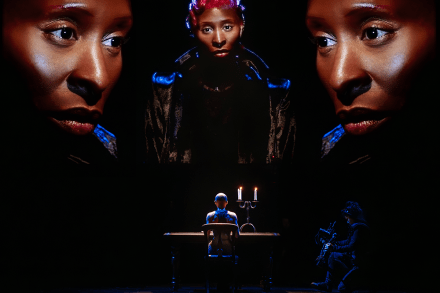
Interest in Dracula seems to go on for ever. Kip Williams has chosen Cynthia Erivo to star in his new version of the yarn about a clique of blood-quaffers who bite their victims’ necks and lick the seepings. The show is staged as a read-through of Bram Stoker’s text supplemented by costumes, wigs and a few orchestral hits recorded on tape. Erivo plays all 23 roles and her performance is simultaneously filmed and broadcast to the audience on TV screens dotted around the theatre. This creates two problems. First, Erivo can’t see or interact with the crowd because she’s encircled by wardrobe assistants and cameramen who swarm around her like

The blandness of Hugh Bonneville

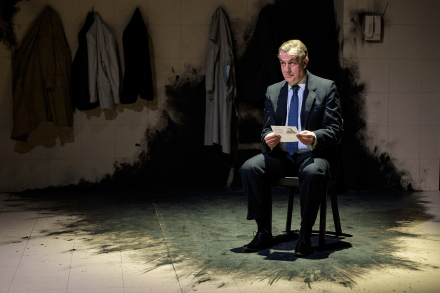
Shadowlands, by William Nicholson, is a solid and unsurprising account of the brief marriage between C.S. Lewis (known as Clive), and the American poet Joy Davidman. Her cancer diagnosis overshadowed their romance but they snatched a few lustful holidays together before she expired in an NHS hospital in 1960. Hugh Bonneville, as Clive, delivers his standard three-note performance – bemused decency, bumbling hesitation, ironic charm – which tells us nothing about the author’s inner life. Bonneville has succeeded in building a huge presence in the movie industry from an almost complete dearth of actorly qualities. He’s not handsome, sexy, tough, athletic, amusing, mysterious, evil or even slightly unpleasant. He’s not

Am I allowed to find Tom Stoppard boring?

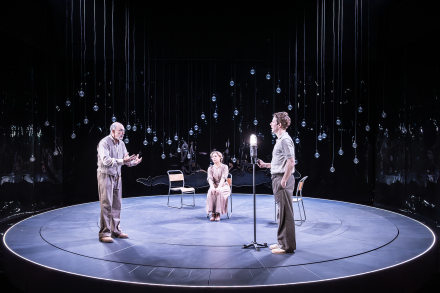
I didn’t breathe a word of my true reaction while filing into the top-floor bar of the Old Vic theatre last week after the three-hour production of Tom Stoppard’s Arcadia was over. It would have been mortifying to be overheard muttering any adverse comments, when swaths of intellectual Stoppard-lovers from all over London and the Home Counties were crowding on to the staircase. Stoppard is a national treasure and to say anything rude about his work, especially in the three months after his death, would be heresy.   It was only on the pavement walking towards Waterloo that I dared to say to my husband: ‘I must say, I wasn’t moved by it. I mean, I didn’t really care about any of the characters. I know we’re meant to be feeling dazzled by his wit and brilliance, but for some reason I just feel tired out.’   A

Marvellously conservative: Cable Street reviewed

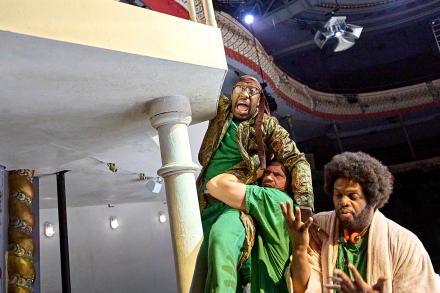
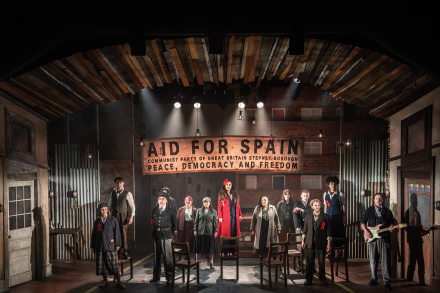
Cable Street is a musical that premièred last year at the Southwark Playhouse and has now migrated to the Marylebone Theatre. Fans of beautiful staging will be instantly smitten by the amazing achievement of the designer, Yoav Segal. The script by Tim Gilvin and Adam Kanefsky tells the story of a violent stand-off in October 1936 between cockney activists and Oswald Mosley’s British Union of Fascists. The authors treat the East End during the depression as a panto or a moral fairy tale. It’s good vs evil. The socialists are hard-working, golden-hearted heroes who rise up against the wicked landlords and their cruel rent hikes. The fascists are angry, misshapen

If this play is correct, the Foreign Office is a joke

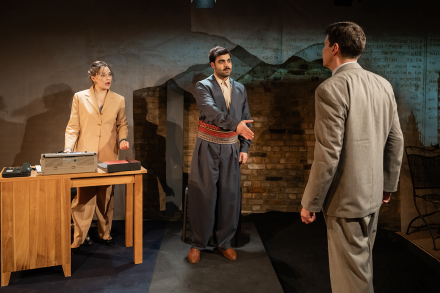
Safe Haven is a history play by Chris Bowers who worked for the Foreign Office and later for the UN as a human-rights activist. The two careers seem to be interchangeable. His drama follows an idealistic and oversensitive Oxford graduate, Catherine, who joins the diplomatic service during the first Gulf War in 1991. Catherine believes that the Foreign Office exists to throw money at basket-case countries that lack the maturity to govern themselves. The entire department acts as a sort of puppy rescue service for dysfunctional nations overseas. All her colleagues accept the wisdom of this approach even though it has the same effect as casting diamonds into quicksand. Catherine

What drama gets right and wrong about science

A few days after Tom Stoppard’s death last month, Michael Baum, a distinguished surgeon, wrote a letter to the Times. He explained how Stoppard’s discussion of chaos theory in Arcadia had inspired him to discover a new and far more effective chemotherapy to treat breast cancer. ‘Stoppard never learnt how many lives he saved by writing Arcadia,’ wrote Baum. I’ve long been fascinated by the relationship between science and drama. I knew Tom Stoppard and when I was professor of history and philosophy of science at UCL, we had several illuminating conversations about art, science and theatre, which he recalled in a 1994 article entitled ‘Playing with Science’ for the

Oh, Mary!’s climax is an inspirational bit of comedy

High Noon, directed by Thea Sharrock, is a perfectly decent version of a trusty western which celebrates its 74th birthday this year. An elderly sheriff, Will Kane, marries a priggish beauty, Amy, on the day of his retirement but his marital plans are overturned by news that a dangerous convict, Frank Miller, has been released from jail and hopes to shoot Will dead. Amy is a devout Quaker and she grumbles bitterly as Will cancels their honeymoon and heads back to town to deal with the evil Frank. But Frank is not the brightest criminal in New Mexico. News of his plans have spread and everyone knows that he’ll show

The art of the transatlantic liner

Some time in the next few weeks, a great ocean liner will be lost at sea. One of the greatest, in fact. When the SS United States made its maiden voyage in July 1952, it was the last word in transatlantic liner design. In an age of ocean-going elegance, the ‘Big U’ was the newest, the sleekest and the swiftest. To this day, it holds the Blue Riband – the all-time record for the fastest transatlantic crossing by a passenger ship. Now, after five decades rusting in dock, and a series of unsuccessful preservation attempts, the United States is about to make its final voyage. Stripped of masts, fittings and

Why has the National got it in for Oirish peasants?

The Playboy of the Western World is like the state opening of parliament. Worth seeing once. Director Caitriona McLaughlin delivers a faithful production of John Millington Synge’s grand satire about dim-witted Oirish peasants and, perhaps unwisely, she spreads the show across the entire length of the vast Lyttelton stage. It looks as if it’s being performed on a railway platform. The drama consists of several broad, daring and improbable steps. A handsome farmer’s boy, Christy, rolls up in a sleepy village in Co. Mayo and claims to have murdered his father. The lustful local girls treat him as a hero rather than an outlaw and compete for his hand in

I walked out of my son’s nativity play

To walk out of a public performance before the end – be it the theatre, a concert or a lecture – is not the done thing. It’s considered an antisocial act that disrupts the performance and thus other people’s pleasure. To walk out provokes tuts of disapproval and scowls of indignation. And yet while it’s something we all disapprove of (at least in theory) it’s also something we all secretly long to do. Who hasn’t sat and squirmed in their seat at some tedious piece of theatre and wondered: how much more of this must I suffer? And who hasn’t been subjected to one of those long, sycophantic interviews with

Shakespeare isn’t difficult

Chloe Zhao may have co-written and directed Hamnet (a film about William Shakespeare’s son), but she claims that she couldn’t understand Shakespeare’s words and had to rely on the actor Paul Mescal to help her. You might have thought that Zhao, who spent her sixth form years at Brighton College (where, one hopes, she at least sniffed at some form of Shakespeare), could have bestirred herself to read one of the many editions with glossaries, or even to bone up on the CliffsNotes, but no. Instead, she is simply contributing to the enduring, frustrating idea that reading Shakespeare is ‘difficult’, as if it were on a par with analytical philosophy or Judith Butler wanging on about hegemonies. 

One for hardcore Stoppard fans: Indian Ink reviewed

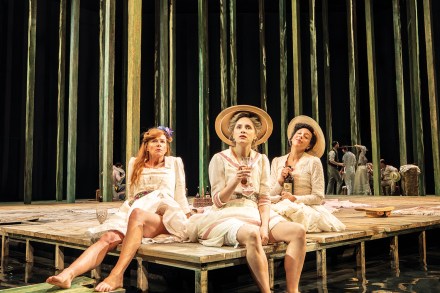
Unusual. After the press night of Indian Ink by Tom Stoppard, no one leapt up and cheered. The crowd applauded politely at the amusing dialogue and the marvellous acting in Jonathan Kent’s handsome three-hour production but there was no standing ovation. The script feels like a literary novel overstuffed with detail. Flora Crewe is a ravishingly beautiful but utterly sexless poet who floats around India in the 1930s provoking the adoration of lustful men. But she doesn’t evolve or change during the action. And she’s maddeningly indifferent to the romantic attention she excites. A maharajah tries to impress her with his fleet of Rolls-Royces. A dashing English captain proposes marriage

Paddington – The Musical is sensational

Who doesn’t love Paddington? The winsome marmalade junkie has arrived at the Savoy Theatre in a musical version of the 2014 movie. First of all, the show is sensational. Absolute box-office gold, full of joy, mirth and spectacle. It’s also quite pricey but never mind. Sceptics who feel indifferent to children’s fiction will be relieved to learn that the dyspraxic Peruvian asylum seeker doesn’t feature much in the story. Paddington’s main attribute is his physical clumsiness and once he succeeds in destroying the crockery and furniture at the Browns’ family home, he runs out of narrative possibilities. His fur is invitingly combustible. Could someone set him on fire? Not quite.

Ivo van Hove tries and fails to destroy Arthur Miller

All My Sons, set in an American suburb in the summer of 1947, examines the downfall of Joe Keller, a wealthy and patriotic arms manufacturer. During the war he was falsely accused of selling wonky parts to the US military which caused the deaths of 21 airmen. He blamed his partner for the blunder but when the truth emerges he also finds out why his eldest son, Larry, went missing in action. The plot is one of the greatest inventions in world drama and it deserves to be presented with candour, simplicity and naturalism. Director Ivo van Hove dislikes Miller’s decision to set the play on Joe’s front lawn where

The wit of Tom Stoppard

The playwright Peter Nichols created a character based on Tom Stoppard. Miles Whittier. On a car journey across London, I once asked Peter why he was so irked by Stoppard. Thelma, his wife, answered for him: ‘He uses all the oxygen.’ But Stoppard was miles wittier. Asked by a punter, after the New York first night of Rosencrantz and Guildenstern are Dead, what his play was about, he replied: ‘It’s about to earn me a great deal of money.’ Think about it: the only person capable of preserving that bon mot was the playwright himself. He knew how funny he was. Later, he was more careful. Asked by Melvyn Bragg

A Spectator poll: What is the greatest artwork of the century so far?

Slavoj Zizek        Hegel thought that, in the movement of history, the world spirit passes from one country to another, from the East to the West. Something similar happened at the beginning of the 21st century: the world spirit passed from cinema, the art of the 20th century, to the TV series. At the top of my list are three sci-fi dystopias: Charlie Brooker’s Black Mirror, which takes place in a world just a little ahead of ours where tendencies we clearly discern today have become reality; Patrick Somerville’s Station Eleven, a uniquely optimistic utopia depicting how performing art can save the human spirit after a global apocalypse; and Three-Body, a

A sack of bilge: End, at the Dorfman Theatre, reviewed

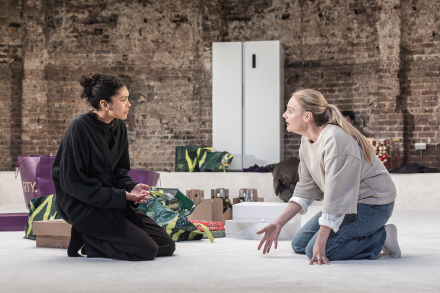
End is the title chosen by David Eldridge for his new relationship drama. Clive Owen and Saskia Reeves star as Alfie and Julie, a pair of wildly successful creative types who live in a mansion near Highgate. Both are 59. Alfie is a retired DJ who made a fortune touring the world at the height of the ecstasy craze and Julie earns a living from crime fiction. But she’s bored with detective stories and wants to publish her memoirs and to write a state-of-the-nation novel set during the 2012 Olympics. Despite their amazing careers, both characters are moaning dimwits who swear constantly and have nothing of value to say about

The theatre isn’t a thinktank

Readers tend not to approve of rows between columnists, but I must take issue with something Lloyd Evans wrote in ‘No life’ last week. Our theatre critic claimed that his companionship ‘is very low calibre’, that he ‘can’t match anyone in conversation’ and that he ‘can barely recall making a witty or worthwhile comment’ in his life. I should like to disagree. Some time ago at a party in The Spectator’s garden I got talking with Lloyd and he said one of the most interesting things I’d heard in years. I had gone over to congratulate him on summing up the general awfulness of most of George Bernard Shaw’s plays

The babyishness of Hunger Games on Stage

The Hunger Games is based on a 2008 novel  about a despotic regime where brainwashed citizens are entertained with televised duels between teenagers. Not a bad idea. We go behind the scenes and watch Katniss (Mia Carragher) being selected to fight Peeta (Euan Garrett) who secretly adores her. As soon as the plot starts, it seizes up. Instead of a gripping tragedy about two lovers forced to kill each other on TV, we’re given a masterclass in the show’s elaborate format. The duellists take part in interviews, coaching sessions, target practice, public parades and a popularity contest which permits them to attract ‘sponsors’ whose role is opaque. At the same

This Othello is almost flawless

Othello directed by Tom Morris opens with a stately display of scarlet costumes and gilded doorways arranged against a backdrop of black nothingness. This is Venice at night with no hint of sea or sunshine. Crimson-robed senators gather to discuss Othello’s alleged abduction of Brabantio’s daughter. And here he comes, David Harewood as the Moor, wearing a gauche two-tone suit like a tasteless guest at a wedding. The scene is stiff, arid and over-ornate but the show opens up when the location shifts to Cyprus. Warmth and light fill the stage and the costumes improve. Othello and his men wear creamy white battle fatigues that look stylishly and subtly masculine.