Theater review

The new Tom Hanks play is a drag

In This World of Tomorrow – the new play starring and cowritten by Tom Hanks, currently on at The Shed in Manhattan – Tom Hanks plays a classic, well, Tom Hanks character.  Bert Allenberry (Hanks) is the nicest guy in the room: he’s the kind of great guy who will escort a lady home in a taxicab, even if it will make him late. And in This World of Tomorrow being late matters a lot. Bert, you see, is a successful but dissatisfied scientist from the future who travels back in time to the 1939 New York World’s Fair in Queens. Once there he has complete free rein, except for one thing. He must return to his hotel at a certain hour to be whisked back to the future – or risk mortal bodily damage.    Love, of course, gets in the way.

Tom Hanks in This World of Tomorrow (Photo: Marc J. Franklin)

It’s a shame that Crooked Cross isn’t better

It’s Christmas Eve in a small German town. In a cozy wood-paneled living room, a brother and sister named Helmy and Lexa are decorating the tree, half chatting and half squabbling, the way siblings do. As they light candles, Lexa’s fiancé, Moritz, pounds on the door, demanding jauntily to be let him. He’s as excited as a small child to see the festivities – and to kiss his bride to be. So opens the off-Broadway production of Crooked Cross.  It's a joyous scene, full of promise. Quickly, though, things begin to go south. Moritz Weissman, a surgeon, is accomplished, smart, and well-liked. But while he was raised Catholic, his name, taken from his professor father, is Jewish.

Crooked Cross

Viola’s Room is beguiling

What is theater? For most people it’s live performance, whether solo or in a troupe. Punchdrunk, the immersive theater company led by Felix Barrett, is not most people. Take its latest iteration now on at the Shed: Viola’s Room features no real-time actors. There is no stage and no seated audience. In this creepy gothic fairy tale, the story is narrated through headphones; the audience moves (sometimes walking, sometimes crawling) through a maze of spaces and the senses – including touch, smell, sight and sound – are as central as the script. Viola’s Room is intimate, small and contained. Every detail, every sound, every object feels intentional. Indeed, much of what makes Viola’s Room so beguiling is the rare sensation of giving up control.

Viola's Room

The problem with Heathers: The Musical

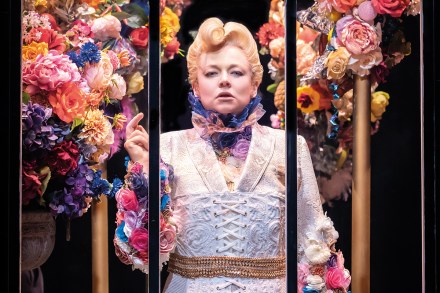
There is a euphoric moment in Heathers: The Musical, based on the cult 1989 film of the same name, when anything seems possible. It happens when 17-year-old Veronica – facing ostracism from the popular clique for barfing on the group’s tyrannical leader, Heather Chandler – climbs through the bedroom window of her crush, J.D. He’s in bed, asleep. As she mounts him, she sings the sassy, come-hither “Dead Girl Walking.” She’ll be toast come Monday morning, she’s “hot and pissed and on the pill,” and J.D. is her “last meal on death row.” Cue the boldest sex scene I’ve ever seen on stage. Veronica straddles J.D. and takes charge, ripping open her shirt to reveal her bra.

Heathers

Dead Outlaw is sharp-witted and irreverent

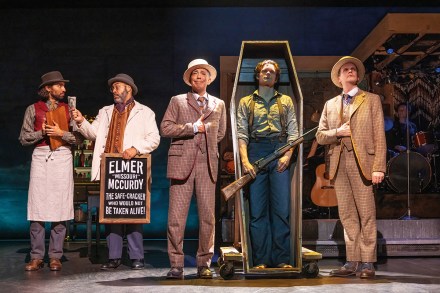
In 1976, the TV series The Six Million Dollar Man arrived to shoot at an amusement park in California. A central attraction was the funhouse ride, where screaming thrillseekers hurtled past a red mannequin hanging garishly from a noose. It was only when a crew member touched the body – and an arm fell off, revealing bone – that they realized the mannequin was, in fact, a corpse. Painted in phosphorus and slathered in wax, it had been suspended, unnoticed, for years. So began a frenzied investigation into who this mystery cadaver was. An autopsy revealed that the man had died from a bullet wound. His jaw was wired shut; inside his mouth were ticket stubs to a crime museum and a penny dating back to 1924. He had been preserved using arsenic.

Dead Outlaw

The Picture of Dorian Gray is headache-inducing

The Picture of Dorian Gray begins on an unadorned note. Sarah Snook sits alone on an otherwise empty stage, facing a camera which projects her image on to a giant vertical screen. Chameleon-like, she switches instantaneously between two characters: the awkward but sincere painter Basil and his more debonair – and dastardly – friend Lord Henry. Snook may be Australian and a woman, but borne on her considerable gifts we are transported to Victorian England. With no props save a paintbrush for Basil and a cigarette for Lord Henry, Snook chops and changes between the two men: she contorts her face into nervy, painful subservience for Basil and her voice into a high, febrile whine.

Dorian