The United States

No, America isn’t fundamentally flawed

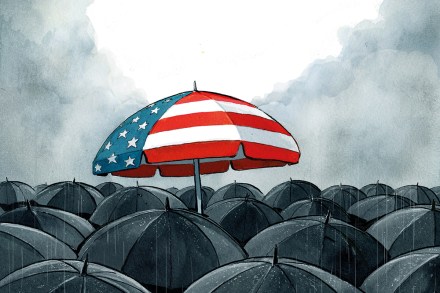
What has gone wrong for Americans? To listen to an increasing number of politicians and pundits on both sides, from Tucker Carlson to Alexandria Ocasio-Cortez, from Nick Fuentes to Zohran Mamdani, the answer seems to be: everything. Americans are unable to get a job; to afford the necessities of life; to get married or have children; to find religious meaning or form friendships. And all of this can be laid at the feet of corrupt institutions and a corrupt system. This conspiracy-tinged, vitriolic take on the American system is a lie. Yet it contains a grain of truth. Our institutions have been led self-servingly by a coterie who disdain American values.
When ordinary men did extraordinary things – D-Day revisited

From our UK edition

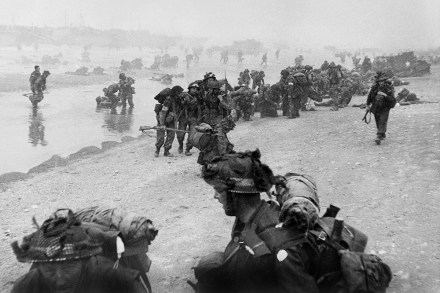
The ferry from Portsmouth to Caen is the most atmospheric way to visit the D-Day battlefields, if not always the most comfortable. As the Normandy coast emerges from the haze, the sand and shingle of Sword beach stretch away to starboard. This was the easternmost of five landing areas assaulted on 6 June 1944 with nearly 30,000 soldiers landed there that day. Over the port bow, on the far side of the River Orne, looms a ridge. Here the British 6th Airborne Division parachuted in by night to neutralise enemy artillery and guard the eastern flank. Out of sight ahead, some eight miles inland past the Pegasus Bridge, lies Caen, the largest city in the area and a strategic road junction.

A war of words: circulating forbidden literature behind the Iron Curtain

From our UK edition

If James Bond, now in American hands, re-emerges refreshed as an agent of the CIA, then it will be a homecoming of sorts, given that his creator played a role in drawing up the blueprint for America’s first foreign intelligence service. In May 1941, Commander Ian Fleming sat down in Washington with Colonel William (‘Wild Bill’) Donovan to sketch out an agency modelled on British naval intelligence. Under Donovan’s stewardship, this became the Office of Strategic Services and, in 1947, the CIA. The two men got on well and were not afraid to try things that had not been tried before.

Time is running out to tackle the dangers posed by AI

From our UK edition

Is this what it felt like in the months before August 1914? Or during the years leading up to September 1939? The discussion around artificial intelligence produces a deep foreboding that we are in the grip of forces largely beyond our control. Are we sleepwalking towards disaster? That is the feeling I have after reading Genesis, a collaboration by Eric Schmidt, the former CEO of Google, Craig Mundie, the former chief research and strategy officer at Microsoft, and Henry Kissinger, who died, aged 100, soon after completing this book. They have crafted a holistic analysis of the social, political, psychological and even spiritual impacts that a superior machine intelligence would have for humanity.  We are broadly familiar with AI’s current and future benefits.

What happened to the Disunited States?

Regionalism and the idea of America’s fracture are having a moment. Recent book releases include many titles focusing on American divisions, including Carrie Gibson’s history of the southwestern El Norte region and Kristin Hoganson’s study of the local, insulated, exceptional, isolationist and provincial ‘Heartland’, and Tony Horwitz’s journey deep into the South to understand how its Antebellum roots impact American divisions today.Perhaps the most widely accepted and popular idea of regional differences comes from Colin Woodard. He carved the country into 11 regional 'nations’, each with unique histories and cultures that he believes have shaped their ideologies and politics.

disunited