The new yorker

John Updike’s letters overflow with lust, ambition, guilt and shame

From our UK edition

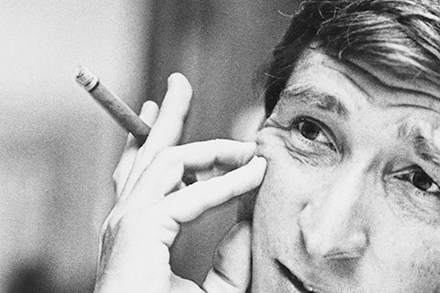
When John Updike died in 2009, aged 76, he left behind the last great paper trail. Novelist, short story writer, poet, essayist and art critic, he published with unstoppable fluidity in every genre. The sheer tonnage of his 60-odd books has now been augmented by A Life in Letters, a comparatively small sampling of the 25,000 or so epistles he sent out over the course of his life. This unwieldy volume serves up about 700 of them. I say he wrote with unstoppable fluidity (it was David Foster Wallace who dangled the question ‘Has the son of a bitch ever had one unpublished thought?’), but I should add that the letters and postcards (Updike loved a postcard) contain more than just pretty phrases.
Remembering Hiroshima 80 years on

From our UK edition

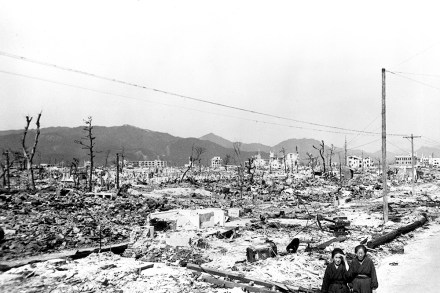
In October 1945, towns and cities across the United States celebrated ‘A Tribute to Victory Day’ in celebration of the United States’s military victory over Nazi Germany and imperial Japan. The biggest event was held in Los Angeles and broadcast live across the country. In scenes ‘reminiscent of the pre-war Nazi rallies at Nuremberg’, Iain MacGregor writes, more than 100,000 people crammed into the Memorial Coliseum to watch the ‘cinematic legend’ Edward G. Robinson lead a massive cast on giant stage sets recreating key moments of the defeat of the Axis powers. For the evening finale, in the glare of searchlights, three Boeing B-29 Superfortresses flew low over the stadium and, as the audience gasped, a huge mushroom cloud rose behind the stage.

A painful homecoming: The Visitor, by Maeve Brennan, reviewed

From our UK edition

Maeve Brennan (1917-93) was a supremely gifted Irish/American writer, whose work is periodically rediscovered, only to vanish again. It’s as if her literary reputation (she has been compared with Joyce, Flaubert and Chekhov among others) won’t stay fixed and is as homeless as she herself became. Arriving home to Dublin, Anastasia expects a warm welcome – only to be steadily spurned by her grandmother Aged 32, she secured a job at the New Yorker, contributing sardonic observations of city life as well as wry, melancholy short stories, part-fiction, part-memoir. The Visitor, her only novella, written in her late twenties when she was working as a journalist in Manhattan, remained unpublished in her lifetime.

The age of consultancy journalism

In a presidential campaign notable for its lack of substantive debate, a serious citizen needs to look far and wide to pierce Donald Trump’s blather and Kamala Harris’s bromides — or to find anything that might resemble real political information. So I quickly reached for my wallet last week when I happened upon the New Yorker’s newsstand edition. The first cover line and subhead caught my eye: “The Democrats’ Left Flank: in the swing state of Michigan, antiwar voters want a commitment from Kamala Harris on Gaza. Are their tactics a gift to Trump?” The Israeli-Palestinian conflict has been top of mind in the campaign press corps all year.

press fake news media consultancy journalism

Reading pulp fiction taught me how to write, said S.J. Perelman

From our UK edition

This volume of short essays – originally written for the New Yorker in the 1940s and 1950s but never before assembled – provides ample evidence that the great S.J. Perelman could misspend his youth with the best of them. It’s also the closest thing to an autobiography he ever completed: a series of comic reflections on the awful, absorbing books and movies which entertained him when he should have been attending his classes at Brown University (from which he eventually dropped out), or keeping a steady job.

Small but perfect: So Late in the Day by Claire Keegan reviewed

From our UK edition

In an email from Claire Keegan’s Fiction Clinic, I learned that she’d be delivering three seminars in Wexford on ‘How Fiction Works’, while down the road, at the Write by the Sea Festival, Faber would be launching her new hardback. I was excited. I’m a Keegan fan. I even considered going to Wexford. Keegan’s method is to take a big issue and then put a small, homely example under the microscope So I was a little miffed when the hardback turned out to be a large-print 47-page story. Faber has been publishing short stories in small pleasing paperbacks, modestly priced (£3.50) for years. It did Keegan’s The Forester’s Daughter in this way. Usually the stories are not new but reprints from larger collections. Well, maybe new equals hardback equals £8.99. Phooey!

It’s Hot Divorced World Leader Summer!

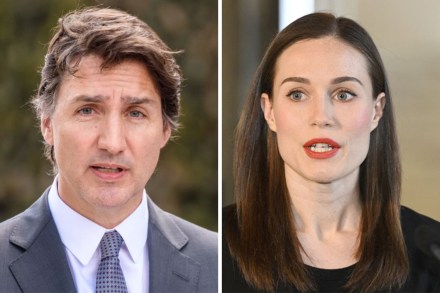
Are you a NATO member, single and ready to mingle? Following former Finnish prime minister Sanna Marin’s split from her husband of nineteen years, Canadian PM Justin Trudeau announced, via a heartbreaking Instagram post, that he and his wife Sophie were set to separate. Rumors that two of the world’s most photogenic leaders could shack up appear to be jumping the gun — but Cockburn is somewhat curious that Sophie, a close pal of Meghan Markle’s from her Suits-taping days in Toronto, is set to ditch her powerful hubby. Needless to say, the leaders of Finland and Canada could have existed in marital bliss had they only considered the very French option of marrying your schoolteacher, as Monsier le President Macron did... Jared Kushner’s uncle donated to... Chris Christie?

hot divorced world leader summer

The New Yorker: Latinos can be white supremacists, too

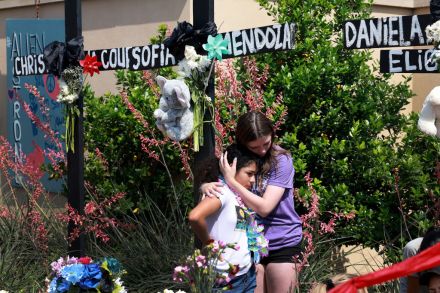
The New Yorker has come to the profound revelation that crazy, evil people who carry out heinous crimes hold crazy, evil beliefs to justify their crimes. Such people, the New Yorker has apparently now realized, can be of different races. But no matter what, the most common motivating cause is white supremacy, regardless of the perp's race — and it’s all America’s fault. In his piece on “the rise of Latino white supremacy,” New Yorker columnist Geraldo Cadava writes about how Mauricio Garcia, the mass shooter who killed eight people at a mall in Allen, Texas, before being killed by an off-duty police officer, expressed white-supremacist views in a diary and online — and because of this, “many were shocked that he was Latino.

latinos white supremacy new yorker

Jeffrey Toobin’s stroke of misfortune

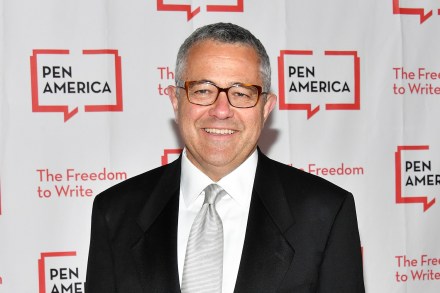
Jeffrey Toobin is a man much wronged. On Monday, the New Yorker writer was suspended by the magazine for which he’s written for two decades, and took a leave of absence from CNN, where’s he served as a legal affairs analyst since 2002. What possible sin could he have committed that forced these pillars of the media establishment to sideline a bonafide star with the presidential election less than two weeks away and Team Joe Biden needing every hand on deck? Toobin masturbated during a Zoom video conference in which he and his colleagues fantasized about forcibly removing Donald Trump from office and throwing him in jail. In other words, Toobin is being punished for having the precise response that the exercise was designed to elicit.

jeffrey toobin

Jeffrey Toobin’s Zoom horror show

It's been a bad couple of years for Jeffreys... Veteran New Yorker reporter Jeffrey Toobin has been suspended from the magazine after he 'exposed himself during a Zoom call last week', according to VICE. Toobin, who also serves as a CNN legal analyst, must have been reaching for the tissues as he described the incident as an 'embarrassingly stupid mistake' and offered an apology to his 'wife, family, friends and co-workers' in a statement. Cockburn is perhaps most surprised that Toobin is the first significant figure to be caught out during a video-conference, seven months into the COVID pandemic. What took us? Naturally, Twitter users have been having a field day with the story: https://twitter.com/rysimmons/status/1318266346610765829 https://twitter.

jeffrey toobin

Fact-checking the New Yorker fact-checkers

The most recent issue of the New Yorker includes a 5,000-word feature on the police (summary: they are racist). In it, staff writer Jill Lepore drops this frightful fact to illustrate the barbarism of America’s uniformed enforcers:'One study suggests that two-thirds of Americans between the ages of 15 and 34 who were treated in emergency rooms suffered from injuries inflicted by police and security guards, about as many people as the number of pedestrians injured by motor vehicles.'Cockburn started writing precisely to avoid ever doing math again, but even to him, this claim sounded like a howler. Two-thirds of all emergency room visits by American young adults were for police injuries?

new yorker

My quest for a universal cartoon

From our UK edition

A cartoon caption is a work of art. It is a sitcom in miniature — but whereas a situation comedy might take half an hour to reach its punchline, a cartoon caption has to do so in seconds. Cartoonists toil endlessly, revising and rephrasing, to perfect a caption. There are rules. The funniest word has to appear at the end. The caption has to be a balance between anticipation and delivery. The line has to be succinct and the rhythm has to be right — clumsy phrasing can ruin an otherwise strong comic idea. In 2006 a blogger called Charles Lavoie wrote that every New Yorker cartoon could be captioned ‘Christ, what an asshole!’ — a concise take on Jean-Paul Sartre’s view that ‘Hell is other people’.

Bill Barr and the ersatz Papal Octopus

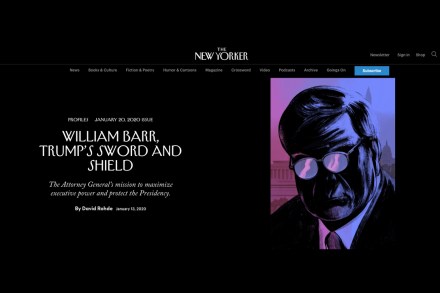
Come on now, The New Yorker. Surely one of Conde Nast’s babies famous for their cartoons should be familiar with the other Nast. Thomas Nast was the father of American cartoon and the progenitor of the conspiratorial renditions of the feared papal insurrection. Nast’s nastiest cartoons were a passionate projection of his virulent anti-Catholic beliefs, hardly unusual in the 19th century among Protestants and ethnocentric nativists, until John F. Kennedy’s era ushered in an amnesia. The American River Ganges, Nast’s 1871 caricature of Catholic bishops as reptiles ominously wading and slithering to the New York shoreline, salivating with ravenous appetites to devour the Protestant schoolteacher and children, was published in Harper’s Weekly not once, but twice!

bill barr new yorker

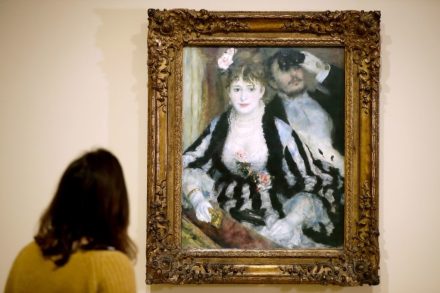
Renoir and the foolishness of chronological snobbery

Peter Schjeldahl’s essay 'Renoir’s Problem Nudes' in The New Yorker has already attracted some portion of the contempt and ridicule it deserves. Here is my modest contribution to that task. According to Schjeldahl, Renoir 'sparks a sense of crisis.' 'Who doesn’t have a problem with Pierre-Auguste Renoir?' he asks in his opening gambit. Can we have a show of hands on that? Pace Schjeldahl, Renoir is such an immensely popular because his painting is essentially celebratory; he looked upon the world with an oeil bienveillant, glorying in its sumptuousness. There is great intensity in some of Renoir’s portraits, but very little melancholy. The dominant mood is festive: a happy, sociable sensuousness.

renoir

Dershowitz: New Yorker illegally published sealed Epstein emails

‘They hate my views on Donald Trump,’ Alan Dershowitz says of the New Yorker. ‘They hate my views on Benjamin Netanyahu, and they hate my views on Israel.’ This week, the New Yorker ran a long-awaited hit piece on Dershowitz by Connie Bruck. Dershowitz wrote an article anticipating the attack here. It’s not clear why Bruck took a year to write her story. Its most damaging claim has circulated for several years: that Dershowitz, the erstwhile friend and lawyer of convicted pedophile Jeffrey Epstein, had sex with Virginia Roberts, a teenager procured by Epstein. This story failed to get to court, despite Roberts, now known as Virginia Giuffre, engaging David Boies as her lawyer.

alan dershowitz

On Jeffrey Epstein and a New Yorker attack on me

The election of Donald Trump has pulled American debate away from objectivity and turned publications into actors in a political battle. After Donald Trump’s election, the New Yorker magazine lost no time nailing its colors to the anti-Trump mast. David Remnick, its editor, lamented that Obama – a 'man of integrity, dignity, and generous spirit' – was being supplanted by 'vulgarity unbounded, a knowledge-free national leader' who would 'set markets tumbling', 'strike fear into the hearts of the vulnerable, the weak' etc. This set the tone for the magazine’s subsequent reporting. Those sympathetic to Trump are treated in the same way – as I have found out.

alan dershowitz