The Kurds

When will the Syria conversation turn to Trump’s ‘betrayal’ of Israel?

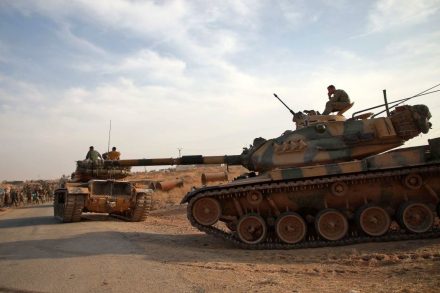
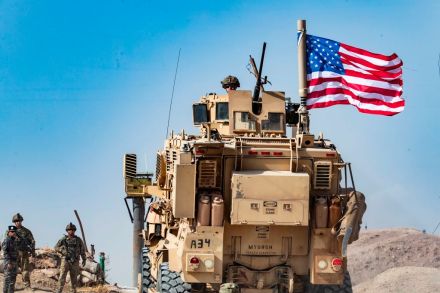
The other evening, Fox News host Tucker Carlson appeared to be on the point of literally tearing out his hair as he railed against the relentless and near-universal negative reaction to President Donald Trump’s decision to relocate a few hundred US troops in northeastern Syria. At first glance, it is indeed baffling, even perhaps hinting at a kind of mass psychosis. On the ground in Syria, after all, the fallout thus far has been anything but catastrophic. The Kurds are now protected by the Syrian and Russian armed forces. These countries’ leaders, on the back of US sanctions against Ankara, are negotiating a ceasefire with Turkey.
israel
endless wars

Does Trump have a better idea than endless wars?

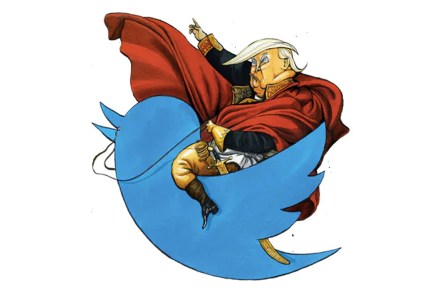
This article is in The Spectator’s November 2019 US edition. Subscribe here. ‘WE WILL FIGHT WHERE IT IS TO OUR BENEFIT, AND ONLY FIGHT TO WIN.’ Thus did America’s Commander-in-Chief at long last enunciate a Trump doctrine, his use of all caps suggesting that this time he really means it. Trump had run out of patience. ‘I held off this fight for almost 3 years,’ he tweeted on October 7, ‘but it is time for us to get out of these ridiculous Endless Wars… and bring our soldiers home.’ Withdrawing US troops from Syria, a decision he first announced last December but then allowed to lapse, marked a first substantive step toward fulfilling one of the central promises of his 2016 presidential campaign.

Pulling US troops out of Syria will prove to be the right decision

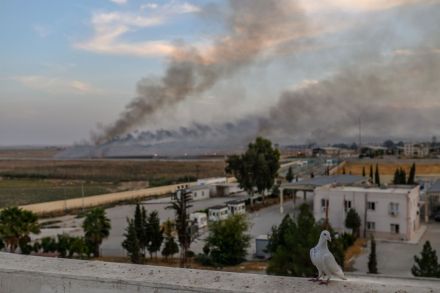
This article is in The Spectator’s November 2019 US edition. Subscribe here. Whenever neoconservatives and liberals chant in unison about American policy in the Middle East — as when they championed the Iraq invasion, for example, or the overthrow of Colonel Gaddafi in Libya, or the thwarted attempt to topple the Assad regime in Syria — it means we are being told a pack of lies. Par for the course is the hysterical response to President Donald Trump’s ‘betrayal’ of the Kurds in the wake of Turkey’s invasion of northern Syria. Turkey’s goal was to repatriate at least two million of 3.6 million Syrian refugees inside Turkey in a border zone controlled, until the invasion began, by the US-allied, Kurdish-led Syrian Democratic Forces.

turkey syria kurds

Syria’s Christians are suffering in silence

The White House’s decision to move aside and allow a Turkish assault in northeast Syria highlighted the morass that is the US’s foreign policy in the Middle East. Criticism of the decision, rebuked as ham-fisted and reckless, was bipartisan. This is the kiss of death for the Kurds (the US’s allies, who are left defenseless),  the largest ethnic minority in Syria, and one of the victims of Turkey’s human rights abuses that have spanned centuries. Lost in the turbulent tangles of the news is another one of Turkey’s victims, a population of Christians who are a distinct ethnic group that has been historically targeted by the Ottoman Empire.

syria christians

Is Trump’s Turkey distraction a miscalculation?

In pronouncing this morning in his 'great and unmatched wisdom' that it is wise for America to abandon the Kurds, Donald Trump has just slightly increased the possibility that the Senate will vote to impeach him. Fooling around in Ukraine is one thing. But dissing the Kurds is another for congressional Republicans. A chorus of Republican hawks has emerged to decry Trump’s move.Mitt Romney called it a 'betrayal'. Susan Collins told Politico, 'This is a terribly unwise decision by the president to abandon our Kurdish allies, who have been our major partner in the fight against the lslamic State.' Terribly unwise? For Collins, who usually confines herself to expressing 'concern', those are fighting words. Still, Romney and Collins have been mildly critical of Trump all along.

syria kurds
kurds

The US will pay for abandoning the Kurds

Credibility used to be an important thing in US foreign policy, a guiding principle: hundreds of thousands of Americans in uniform died to maintain it. In 1969, with half a million American troops in Vietnam, Henry Kissinger wrote this in Foreign Affairs: '[W]hat is involved now is confidence in American promises. However fashionable it is to ridicule the terms “credibility” or “prestige,” they are not empty phrases; other nations can gear their actions to ours only if they can count on our steadiness. The collapse of the American effort in Viet Nam would not mollify many critics; most of them would simply add the charge of unreliability to the accusation of bad judgment. Those whose safety or national goals depend on American commitments could only be dismayed.