The french revolution

A marriage of inconvenience: The Bride Stone, by Sally Gardner, reviewed

From our UK edition

It’s 1796, and an idealistic young English doctor, Duval Harlington, just released from La Force prison in revolutionary Paris, learns that his father is dead. He is now Lord Harlington, heir to a fortune and the idyllic estate of Muchmore. But in order to gain possession of his heritage – and, as importantly, foil the aspirations of his unpleasant cousin Ralph Carson – Duval must marry within two days and seven hours. No suitable partner is available, so he buys a woman in a Norfolk wife sale for ten guineas. Money, its acquisition and loss, is woven through this hugely enjoyable novel.

‘Poor devils’: the hopeful scribblers of the French Revolution

From our UK edition

In 1778, Louis-Sébastien Mercier, dramatist and author of the early science fiction novel L’an 2440, claimed that only a small minority of writers in ancien régime France lived by their pens: ‘One exclaims everywhere that the number of authors is enormous… But in fact, there are not more than 30 writers in France who make writing a career.’ The rest needed patrons, protectors, pensions, privileges and sinecures to scrape a subsistence, or else were reduced to peddling libels and pornography, or spying for the police.

The subversive message of Paradise Lost

From our UK edition

For those of us who have long loved (or hated) Paradise Lost, this is one of those rare and refreshing books that invites us to compare our feelings with other committed readers over the centuries. The poemmay well be the only major work in the western canon that nobody can avoid for long – even if it comes down to making a decision not to read it at all, or just to give up trying. Orlando Reade argues that it may also be the most ‘revolutionary’ text commonly available in modern classrooms – written by a man who, in his time, took extreme positions on everything from divorce (he was all for it) and whether kings have a divine right to keep their heads (they don’t). John Milton read widely and lived during the most conflict-driven period of British history.

The rewards of being the ‘asylum capital of the world’

From our UK edition

They came on a small, crowded, leaky boat from Calais towards Dover in seas that could turn from placid to treacherous in an instant, around 30 people seeking sanctuary from persecution, unsure of the welcome they would receive. ‘We were seized by horrible vomitings and most of the party became so dreadfully ill they thought they were dying,’ one of the group, a young mother accompanied by her two children, wrote later. The year was 1620 and quite possibly among the refugees might have been a forebear of Nigel Farage. This small boat, one of many hundreds that crossed the Channel in the late 16th and early 17th centuries, was full of Huguenot asylum seekers fleeing Catholic France and the Lowlands.

The grievance games of the left

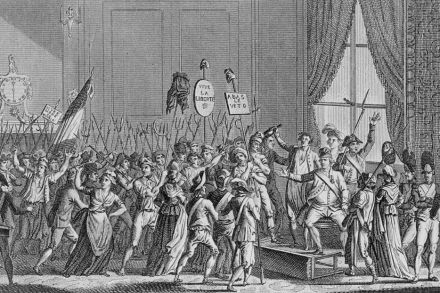
In the first week of October 2022, Jean-Luc Mélenchon, France’s perennial man of the Marxist left, former leader of La France insoumise and present chief of Nupes (Nouvelle Union populaire écologique et social), an alliance of hard-left, left and green parties, invoked the jours d’octobre that commenced on October 5, 1789 with the Women’s March from the Parisian marketplaces to Versailles and ended with the more or less forced departure of the royal family for the capital city in the early morning hours next day after several members of the Palace guard had been decapitated and their heads impaled on pikes. It is unclear what that revolutionary year, and the events of October 5-7, have to do with twenty-first-century France.

revenge

Is it an exaggeration to talk of a ‘gender war’?

From our UK edition

According to Nina Power’s forceful and rather unusual What Do Men Want?, we in the West are currently engaged in a ‘battle over sex’. And while that has been going on, ‘another war is being waged. This one is against men, the whole damn lot of them!’ To back up this ‘war on men’ idea, Power cites, among other examples, I Hate Men, a book by the French writer Pauline Harmange in which she damns men as ‘violent, selfish, lazy and cowardly... men beat, rape and murder us’. Power’s argument is that the all-out assault on men has gone too far. The mistake, she says, is in ‘treating people as mere examples of a negative category, rather than as complex individuals in their own right’.

The men of blood get their comeuppance in Revolutionary France

From our UK edition

Colin Jones’s hour-by-hour reconstruction of the fall of Maximilien Robespierre, the French revolutionary most associated with the Terror, is inspired by Louis-Sébastien Mercier, who believed that only by getting ‘up close’ to the ‘infinitely small’ details would it be possible to understand the truth about a Revolution that was stranger than fiction. Mercier (1740-1815) was an early science fiction novelist, a journalist, politician and Parisian. He was not an eyewitness to the fall of Robespierre because he was in prison in 1794, one of 73 moderate members of the governing Convention who had been arrested and held as ‘Robespierre’s hostages’.

Not so dryasdust: how 18th-century antiquarians proved the first ‘modern’ historians

From our UK edition

Antiquaries have had a bad press. If mentioned at all today, they are often derided as reclusive pedants poring over details of manuscripts and shards with little relevance to the wider world. As recently as 1990, the respected ancient historian Arnaldo Momigliano skewered their pretensions when he described them as ‘interested in historical facts without being interested in history’. Rosemary Hill, the biographer of Augustus Pugin, the architect of Gothic revivalism, which owed much to antiquarianism, has other ideas.

The life and loves of Mary Wollstonecraft

From our UK edition

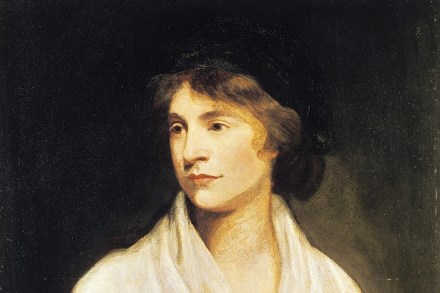
What did Mary Wollstonecraft like and love? This is the question Sylvana Tomaselli, a lecturer at Cambridge University, asks herself at the start of her new book about the writer and philosopher who is often described as ‘the mother of feminism’. After the unveiling of Maggi Hambling’s controversial statue in honour of Wollstonecraft on Newington Green last November, and the vitriolic spats between its detractors and supporters that ensued, a book that refocuses attention on the person at the centre of the storm is a welcome relief. Wollstonecraft, born in 1759, was determined to live independently by her pen.

Thank goodness for Hillsdale College

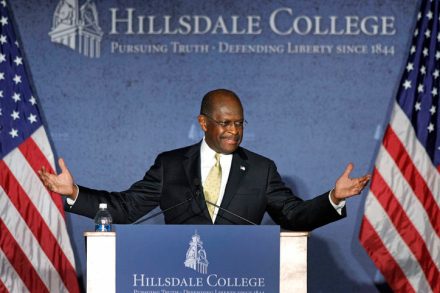
Did you go to college? If so, then it is overwhelmingly likely that you have been the recipient of a nauseating communication like this one from 'Maud' (that would be Maud S. Mandel, President of Williams College) explaining how Williams will 'confront and fight racial and social injustice.’ I hope that you are impressed by both Maud’s bravery and her virtue. In an earlier communication, just as the wave of violent hooliganism began rolling over the country at the end of May, she let us know that she is 'disgusted, saddened and angered by ongoing racism in all forms and places’ (every last one!). What a paragon she is! Maud then went on to 'state unequivocally’ (unequivocally!

insects

William Sitwell’s history of eating out reminds us painfully of what we’re missing

From our UK edition

In the concluding chapter of this book the Daily Telegraph’s restaurant critic and recovering vegan-baiter William Sitwell muses on the collapse of Jamie Oliver’s empire last year: ‘His endeavour, passion and hard work wasn’t enough... it was part of a bursting bubble.’ Since then more mid-range chains have announced their imminent demise. Teetering before lockdown, it’s not just the prospect of months of closure and general uncertainty that’s pushing them over the brink but decades of oversupply and a reliance on a cynical model of successful restaurants selling on and out. This book feels timely: a reminder of what we currently can’t have, and how the sector came to be. Sitwell is upfront about his book.