The cold war

New tactics are needed for the wars of the future

From our UK edition

The strategic bankruptcy of the West has twice so far this century demanded that our brave soldiers risk their bodies and minds to fight unwinnable wars. The lessons to be learnt from Iraq and Afghanistan, and indeed from Libya, Syria and the Sahel, are many; but the original sin was hubris, born of post-Cold War military preponderance and successes in Sierra Leone, Ulster and Kosovo. The consequence of our arrogance, when 9/11 demanded action, was that we failed properly to interrogate, and so to grasp, either the character of the specific conflicts into which we jumped, or the fundamental nature of war itself.

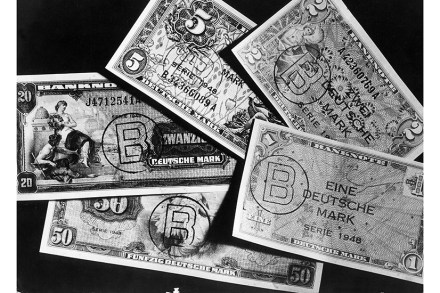
Germany’s post-war recovery was no economic miracle

From our UK edition

Lord Macaulay wrote that ‘during the century and a half which followed the Conquest there is, to speak strictly, no English history’, because everything in England was decided by an elite who spoke French. This, of course, makes it one of the most fascinating and overlooked parts of our national story.By a similar token, the years 1945-1955 have been neglected by German scholars, because their national history, in Macaulay’s terms, also did not properly exist. Germany, prostrate, shorn of its ancient east, its fate as yet undecided, was entirely run by occupying powers. Yet, as Harald Jähner argues, this is the very era which defined modern Germany. His Aftermath is what every reviewer longs for: a scholarly masterpiece which is also a good read.