The arctic

Why would anyone want to rule Greenland?

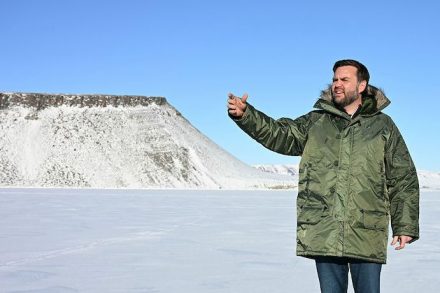
It was the Viking, Erik the Red who, in AD 986, first saw Greenland’s potential. He wanted to colonize his newly-discovered island, and in a blatant piece of tenth-century spin-doctoring hit on a wizard wheeze to encourage other Norse people to come to this bleak, icy and remote corner of the unknown world: "In the summer, Erik left to settle in the country he had found, which he called Greenland, as he said people would be attracted there if it had a favorable name." More than a thousand years later, President Donald Trump is proposing something similar. "It’s a large real estate deal. Owning Greenland is vital for US security... and economic security... It’s an absolute necessity and I cannot assure you that we would not use military or economic coercion.
greenland

Trump, Putin, and the hidden power of the Bering Strait

Ahead of the Trump-Putin summit in Alaska to discuss Ukraine, President Trump said there would be “some land swapping.” He waxed lyrical about “prime real estate.” The summit’s location is a good example of land swaps and prime real estate and is in a region of growing geopolitical importance.   In 1867 Russia "swapped" Alaska for $7.2 million in a deal mocked as Seward’s Folly after Secretary of State William H. Seward who negotiated the exchange. It turned out to be a snip. Commercially viable oil was discovered three decades later and has brought in more than $180 billion in revenue since Alaska became a state in 1959.

Trump Putin Alaska Bering Strait

Whoever imagined that geology was a lifeless subject?

From our UK edition

Rocks are still and lifeless things, and geologists are men with beards whose emotional bandwidth is taken up with an unnatural attachment to cherts and clasts and the chill beauty of the subducted lithosphere. Such is the stereotype. The academic geologist and New Yorker contributor Marcia Bjornerud has managed to go a fair distance towards dispelling it. In her previous book, Timefulness, she wrote for the general reader and with persuasive lyricism about readjusting our focus to thinking in geological time.

The very stable primary

Is Donald Trump unbeatable? That has been the big question hanging over the Republican presidential primary ever since the former president announced his candidacy last November. And, even before the first debate has taken place, it is a question to which “yes” looks like an increasingly plausible answer.  Since the early campaign got underway in earnest, the contest for the Republican nomination has been remarkably stable. Trump has held a commanding lead, Ron DeSantis has lagged behind him in a clear but distant second, failing to breakthrough as many thought he might after declaring his candidacy. Meanwhile, no one else has registered enough of a polling surge to announce themselves as a serious alternative.

donald trump stable primary

The march of the larch: the Treeline is now encroaching on the arctic tundra

From our UK edition

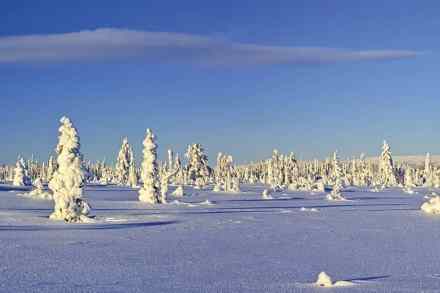
Covering 20 per cent of the Earth’s surface, the boreal forest is the largest living system, or ‘biome’, on land. It contains one third of all the planet’s trees and encircles much of the northern hemisphere in a halo of green. The northernmost extent of this forest, called the treeline, marks the point beyond which it is too cold for trees to grow. This is perhaps not where you’d expect to find Ben Rawlence, an author and journalist whose previous books have focused on humanitarian crises in Africa. But, as he explains in The Treeline, things are changing alarmingly fast in this biome: ‘The trees are on the move. They shouldn’t be. And this sinister fact has enormous consequences for all life on Earth.

Does William Barents deserve to have a sea named after him?

From our UK edition

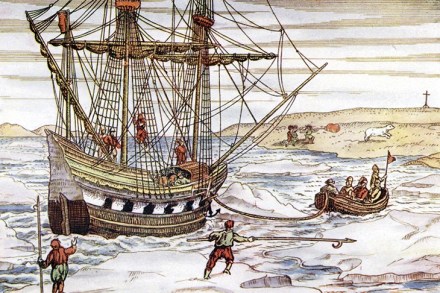
Narratives of frozen beards in polar hinterlands never lose their appeal. Most of the good stories have been told, but in Icebound Andrea Pitzer fills a gap, at least for the popular reader in English, with the story of the 16th-century Dutch mariner William Barents. He sailed further north than any man before him and lives still, on the map, with an eponymous sea off the northern coasts of Norway and Russia. In 1594, during the third decade of his country’s war with Spain, Barents voyaged to the unknown Nova Zembla (‘New Land’ in Dutch), planning to find a route to the fabled riches of Cathay. The notion of a navigable northern ocean had tantalised explorers since the Ancient Greeks, and geographers in Amsterdam thought the North Pole would be warm.

Cold war: Russia’s bid to control the Arctic

From our UK edition

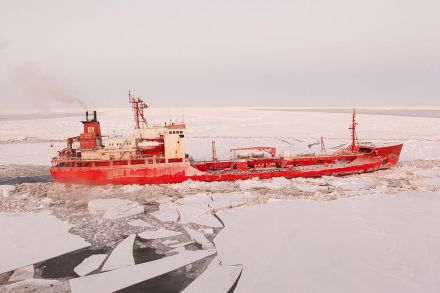
It may be time for Father Christmas to look for a new home, before the Russians kick him out. ‘This is our Arctic,’ declared the Russian explorer Artur Chilingarov when he went to the North Pole in 2003. Four years later, another Russian expedition, again led by Chilingarov, planted a titanium flag on the seabed 2.5 miles below the Pole. It was a symbolic gesture of a geopolitical ambition. The jingoistic Chilingarov proclaimed: ‘Our task is to remind the world that Russia is a great Arctic and scientific power.’ Since 2013, Russia has invested heavily in seven military/naval bases along its Arctic coast to strengthen the country’s power and influence.

Time to crush China’s Arctic influence

Eyes are opening to the evil of the authoritarian Chinese regime that represses its people, genocides entire cultures, and influences investments and policy all over the globe. As most of the world is under coronavirus lockdown, the Chinese Communist party detains hundreds of thousands (if not millions) of Uighur Muslims in concentration camps in east China. Not to mention the brutal occupation of Tibet, where China is also allegedly responsible for the massacre of hundreds of thousands of Tibetans over the last 70 years due to its brutal occupation.The CCP’s mishandling of the viral contagion from Wuhan may have exposed its obsession with power at all costs, but its next, greater threat is still developing in the shadows: imperialism.

arctic