Thailand

Alcohol is the perfect cure for deafness

From our UK edition

New York   A busy ten days, or nights rather, with some heroic drinking thrown in for good measure. Hangovers discriminate against the old nowadays, but no one is doing anything about it — not in Washington, not in New York, not in London. Our former chairman Algy Cluff’s dinner party at a gentleman’s club, followed by an extremely funny speech given by him, started me boozing and things didn’t let up. One drinks to enhance an enjoyable evening, never to relieve boredom. Also one drinks when one can’t hear, as in extremely noisy New York restaurants.

Love, sex, sponges and disability

From our UK edition

Hampstead has become quite a hit-factory since Ed Hall took over. His foreign policy is admirably simple. He scours New York for popular shows and spirits them over to London. His latest effort, Cost of Living, has attracted the film-star talent of Adrian Lester, who plays Eddie, a loquacious white trucker from Utah. (His ethnicity is made clear in the dialogue and the relevant lines have been left unchanged.) Earnest Eddie tells us about himself in a 15-minute monologue at the top of the show. Rather a clunky device. He’s a bookish teetotaller with a strong work ethic who appreciates the landscape of Utah, enjoys listening to Erik Satie’s over-played Gymnopédies, and spends his evenings and weekends caring for his -crippled ex-wife who lost both her legs in an accident.

Rubbish on TV

From our UK edition

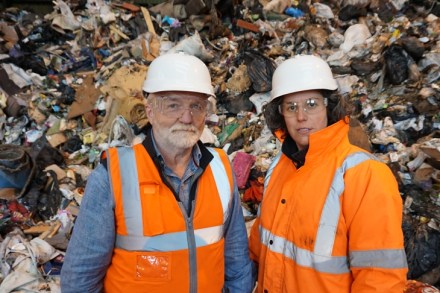
Not the most beguiling of titles, I admit, but The Secret Life of Landfill: A Rubbish History (BBC4, Thursday) was a genuine eye-opener. The programme began with Dr George McGavin proudly announcing that ‘What we’re about to do has never been attempted on television before’: a claim that it’s usually best to treat with some scepticism, but that here seemed hard to deny. Certainly, I can’t remember another TV documentary in which the presenters spent 90 minutes digging through (non-metaphorical) rubbish. At first, the mood was one of rather determined excitement.

Diary – 1 February 2018

From our UK edition

It never occurred to me, when I was interviewed for Desert Island Discs back in November, that I’d actually be on one when it aired last week. The plan had been to laze in a hammock under a palm tree in Ko Yao Noi in the Andaman Sea, with waves lapping against the white coral beach, read books and recharge for the year. These days, however, it’s hard to be totally cut off. I’ve read about ‘digital detoxes’ but never understood how you deal with the avalanche of messages on your return. So I left my phone on and soon it was pinging with notifications from WhatsApp, Twitter et al. Most were lovely. There were messages from people I hadn’t heard from for years, who’d listened to the programme.

Long life | 17 November 2016

From our UK edition

I started watching The Crown, the £100-million television series on the early years of the Queen’s reign, on Netflix but turned it off during the second episode because I couldn’t bear the endless coughing by her father, George VI, as he died of lung cancer. The coughing, performed with eager realism by the actor Jared Harris, who played the king, was made harder to bear by the fact that he kept on smoking at the same time. The link between cancer and smoking may not then have been established, but it is well known now; and exposure to both at the same time is not for the squeamish. For me, however, there was another reason for discomfort — the memory of George VI’s death in 1952 when I was 12 years old, a boarder at a prep school in Berkshire.

The Spectator’s Notes | 13 October 2016

From our UK edition

Given all the outrageous things that Donald Trump has done and said already, why has he got into so much worse trouble for dirty remarks about women taped more than ten years ago? He gets away with dog whistle politics but not, seemingly, with wolf whistle ones. Some might say this is because of political correctness; or because his evangelical supporters, while not necessarily offended by his violent views, disapprove of his lewdness; or both. But my theory about sex scandals in politics is that they are not, strictly speaking, about morality. They are tests of how the accused man (or, much more rarely, woman) behaves when attacked. Does he seem odious or contrite, arrogant or charming? If he lies, does he do it beguilingly?

King Bhumibol’s death stops all the clocks in Thailand

From our UK edition

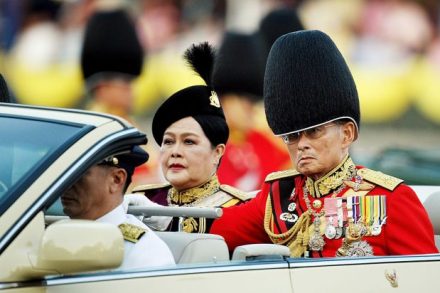
The sad news that King Bhumibol of Thailand is no longer of this world is causing considerable perplexity, because even when it became clear the King was ill, it was not possible for Thais to talk about his death. It seems that this is partly because it is a form of treason in Thailand to encompass the death of the sovereign, but also that, in Thai culture, the personal grief felt at his death will be so great that the thought of it is literally unspeakable. So foreign businesses, visitors, diplomats etc cannot find out what will actually happen when he dies, having reigned since 1946. Rumour suggests that there may be ten days of mourning so total that Bangkok airport will close down and no one will be able to leave the country.

Is there something that the BBC isn’t telling us about these Norwegians?

From our UK edition

A man has set fire to a train in Switzerland and stabbed lots of people. On the BBC News last night the perpetrator was described as 'a Swiss national'. Similarly on the BBC News online today: 'The suspect, described as a Swiss man aged 27, was also taken to hospital after the incident near Salez in St Gallen canton, close to Liechtenstein.' Do you know, I think there is something the BBC – and the Swiss authorities – are not telling us. This attack was quite similar in some respects to one carried out in London recently, in which an elderly American woman was murdered. Then, at least, the BBC and the authorities told the truth – the perpetrator was Norwegian. It seems highly likely to me that the pyromaniac stabber in Switzerland was Norwegian too.

Love for sale

From our UK edition

The premise of Kat Banyard’s Pimp State is a familiar one: sex work — a phrase the author rejects as pure euphemism — is formalised sexual exploitation, synonymous with sexual abuse and therefore both ‘a cause and a consequence of inequality between men and women’. It follows, then, that if you’re in favour of gender equality, or simply a decent human being who disapproves of sexual violence, you must oppose the sale of any and all variations of sex. If you’re not part of the solution — well, you know the rest. You don’t have to be especially interested in feminism to have heard this before.

Bangkok

From our UK edition

Last time I went to Thailand, there’d been something of a misunderstanding about accommodation, and my friend and I ended up in a dive on Khao San Road. In a grim room with stained mattresses and peeling paint, the thud of beats from the disco made everything vibrate gently. Stalls outside offered fake IDs, tatty souvenirs and novelty edible insects. I’m not averse to eating crickets, but these ones needed embalming fluid, not cooking oil. So we took a tuk-tuk across town to the Grand Palace, just seeking a break from sunburned students in short shorts drawling about full-moon parties. Instead, what happened next was one of the highlights of the trip.

The polyphonous Babel of global music

From our UK edition

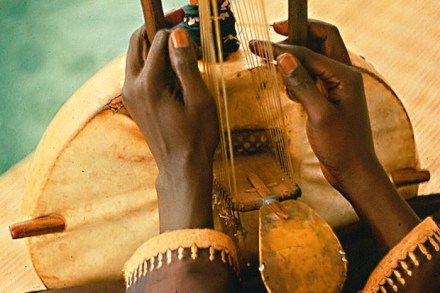
‘Following custom, when the Siamese conquered the Khmer they carried off much of the population, including most of their musicians, to be resettled in what is now Thailand.’ The history of music isn’t a story of chords and scores, instruments or their players. Music’s story is one of wars, invasions and revolutions, religion, monarchy and nationhood. Whether you look at the histories of Africa or Iran, Europe or Uzbekistan, the narratives are the same: colourful, bloody, complicated. Music is not an aesthetic response, an artistic translation of life; music and musicians are society itself. It’s a principle that acts as the guiding thread through the labyrinth of traditions and terminologies that make up The Other Classical Musics.

Peaceful yet violent: the Thai paradox that still baffles the West

From our UK edition

The scene of the recent bombing at the Erawan shrine has swiftly been remodelled to make it seem as though nothing happened. Upbeat slogans - 'Stronger Together' – and a forensically dubious ‘clean-up’ have gone hand in hand with a media campaign to reassure millions of tourists that they are safe in the Land of Smiles. The Chinese, however, have cancelled many of their vacations and the investigation rumbles on inconclusively, as is often the way with Thai investigations, which usually peter out in a vague inconclusiveness. An image is starting to form of Thailand as a uniquely dangerous tourist destination, riven by political violence and unprovoked attacks on hapless tourists.

Will the Bangkok bomb shake Thailand’s ‘Land of Smiles’ reputation?

From our UK edition

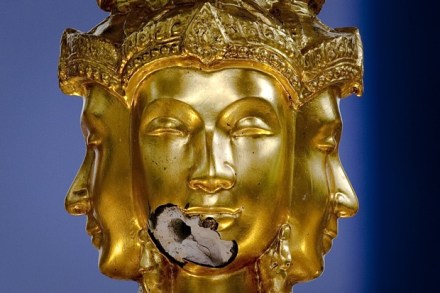
A powerful explosion ripped almost instantaneously through a busy intersection in Bangkok’s downtown shopping area yesterday, killing 22 people and injuring more than 100. Some of the victims were foreign tourists, and representatives of the country’s military government quickly stated that the bombs were indeed aimed at foreigners, and designed to undermine one of the country’s economic mainstays: tourism. The blasts also occurred at one of the city’s most sacred sites, the Erawan Shrine, a Hindu Shrine that houses a statue of Phra Phrom, a Thai representation of the Hindu deity Brahma.

The Down’s syndrome surrogacy story is horrible. But Britain has no right to sneer

From our UK edition

To look on the heartwarming side, Australians have shown that they are rather more humane as a nation than the anonymous couple in the news for allegedly discarding one of the twins borne for them by a Thai surrogate six months ago. Scores of Australians have volunteered to adopt Gammy, the Down’s syndrome baby that was commissioned from Pattaramon Chanbua by an Australian couple only to be abandoned by his parents when they discovered his condition; they took  his healthy twin sister though (and the couple now deny knowledge of Gammy). The fund to pay for the baby’s medical treatment, generously funded by Australians, now stands at more than $180,000.

Portrait of the week | 27 March 2014

From our UK edition

Home David Cameron, the Prime Minister, said that inheritance tax ‘shouldn’t be paid by people who’ve worked hard and saved and who bought a family house’ and that this would be addressed in the Conservative manifesto. Two opinion polls after the Budget, by Survation for the Mail on Sunday and by YouGov for the Sunday Times, had put Labour one percentage point ahead of the Conservatives. Nineteen Labour movement figures wrote to the Guardian warning the party not to hope to win the election on the basis of Tory unpopularity. The rate of inflation fell from 1.9 to 1.7 per cent, as measured by the Consumer Prices Index, or from 2.8 to 2.7 per cent as measured by the Retail Prices Index. The government said it would sell another 7.

Portrait of the week: water, water, everywhere

From our UK edition

Home The Somerset Levels continued to wallow in floods. The Environment Agency was widely blamed for not having dredged channels, and for putting the welfare of water voles before flood prevention. Its chairman, Lord Smith of Finsbury, said there were ‘tricky issues of policy and priority: town or country, front rooms or farmland?’ The Prince of Wales visited the area. At the Radcliffe Observatory in Oxford, 5.78 inches of rain fell in January, the most since its records began in 1767. Cuadrilla said it would drill and frack for shale gas at Roseacre Wood and Little Plumpton in Lancashire. Two men found 300 medieval silver coins in a field near Kirkcudbright. Lloyds Banking Group set aside another £1.