Terrorism

Freedom of expression is Rose’s war

From our UK edition

Last week, Denmark discovered that two US-based men were plotting a terrorist attack against Jyllands-Posten, the Danish newspaper that outraged hard-line Muslims by publishing the infamous Muhammad cartoons in 2005. Allegedly, the two men planned to target cultural editor Flemming Rose and cartoonist Kurt Westergaard.  The mild-mannered Flemming Rose is back in the spotlight. Asked if he regretted publishing the cartoons, Rose insisted that bowing to such pressure would not yield less extremism, but more. He went further - the cartoons have not been re-issued, which amounts to the sort of self-censorship that moved him to commission the cartoons originally. Rose's target was neither Islam nor Muslims.
Evidence relating to the incarceration of Binyam Mohamed will be published

From our UK edition

The High Court has ruled that a summary of US intelligence, relating to Binyam Mohamed’s allegations that he was tortured, will be made public. David Miliband expressed his “deep disappointment” at the ruling and issued the following statement: ‘The Government is deeply disappointed by the judgment handed down today by the High Court which concludes that a summary of US intelligence material should be put into the public domain against their wishes. We will be appealing in the strongest possible terms. The issues at stake are simple, but profound. They go to the heart of the efforts made to defend the security of the citizens of this country.

A glimpse of Home Secretary Grayling?

From our UK edition

Chris Grayling’s reputation as a one-dimensional attack-dog was accentuated by his ill-judged comparison of Britain with Baltimore. The argument laid against Grayling is that he shouts about the government but provides no more than a whisper about policy. However, Grayling shows deep and nuanced consideration of policy when interviewed by Martin Bright in the Jewish Chronicle. Grayling’s subject is extremism and failing multi-culturalism. I apologise for its length, but here is the key section: ‘“I think the government has to make it absolutely clear that anyone in our country who espouses violence is not going to be able to do business with the government of the day and in many circumstances will be putting themselves in danger of prosecution.

Lockerbie & the Scotland Act

From our UK edition

Could government ministers in London have stepped-in to prevent the release of Abdelbaset Ali al-Megrahi? A report in Scotland on Sunday yesterday says yes they could: Scottish Secretary Jim Murphy could have overruled Scottish justice secretary Kenny MacAskill and stopped the release of Abdelbaset Ali Mohmed al-Megrahi if the case was deemed to have breached "international obligations". Senior diplomats have insisted there was a "clear understanding" between the UK and the US that Megrahi would serve out his sentence in Scotland. The US Justice and State departments have also insisted they had been given assurances in the 1990s that Megrahi would remain imprisoned under Scottish jurisdiction. [...

The government needs to get a grip on its CRB craziness

From our UK edition

That the news that the government wants everyone who gives children a lift anywhere to be CRB checked broke on the same day that it emerged that Haringey council had sent a child to live with the ringleader of the airline bomb plotters is beyond satire. How have we got to a state where parents can’t team up to do a run to Cubs together without the state vetting them while simultaneously a council is sending a child off to be fostered by terrorists? As Mary has argued, CRB checks are one of the big obstacles to volunteering. If the Conservatives really do want to roll forward society, then they are going to have to deal with this CRB craziness and instead apply a bit of a common sense.

8 years on

From our UK edition

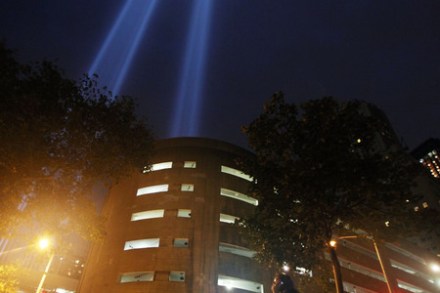
Last night's "tribute in light" for the victims of the World Trade Center attack on September 11th, 2001.

Complacency & Terrorism

From our UK edition

David Aaronovitch's column in the Times today is a curious beast indeed. Some sub-editor has given it the headline Complacency has crept up on us (yet again) which seems curious since the partially-successful prosecution of the men accused  - and guilty - of plotting to use "liquid bombs" to blow up transatlantic airliners would seem to suggest that complacency has not in fact crept up on us and that, quite rightly, the security services are doing the job they're charged with. Now Aaronovitch is not responsible for the headline, nor for the sub-deck arguing that No amount of handwringing about civil liberties should distract us from the very clear and present danger of terrorism.  Nonetheless, this doesn't seem an unfair summary of his column.

The government contradicts itself on Megrahi

From our UK edition

David Miliband on the Today Programme on September 2nd: “We did not want him [Megrahi] to die in prison.” Ed Balls on the Today Programme on September 7th: “None of us wanted to see the release of al-Megrahi” Considering that Megrahi was sentenced to life imprison for his role in the Lockerbie bombing, I cannot see how both of these statements of the government’s view can be correct. If the government did not want him to die in prison, it wanted him to be released.

Gadaffi was the magnet that sent the government’s moral compass awry

From our UK edition

The al-Megrahi story has rolled on for two weeks, and CoffeeHousers have probably had more than their fill; but every morning brings new revelations that undermine the government’s position further. Today, the Sunday Times reports that Gordon Brown, having been in favour of such a deal initially, vetoed the proposal that Libya pay compensation to IRA victims who were killed with arms supplied by Gadaffi. In a letter to the victims’ lawyer, dated 7 October 2008 (around the time Alex Salmond urged Jack Straw to take advantage of the fact that the PTA had stalled by renegotiating the agreement to exclude the Lockerbie bomber), Brown wrote: “The UK government does not consider it appropriate to enter into bilateral discussion with Libya on this matter.

Lockerbie Fallout: A (Fake) American Backlash

From our UK edition

So, via Iain Dale, the News of the World has a story claiming that: Britain was facing the likelihood of an increased terror threat last night — after America’s CIA chiefs threatened to stop sharing vital intelligence with us following the Lockerbie bomber’s release.   The Americans have already warned British intelligence services that sending cancer-stricken Abdelbaset al-Megrahi home to Libya has destroyed our “special relationship”.   But the fallout following the bomber’s release has now worsened with the CIA threat to stop sharing information on terrorists gathered by their agents.   They have also warned they may not pass on vital information picked up by their sophisticated eavesdropping satellites.

A devastating assessment

From our UK edition

This quote from a retired aide to General Petraeus about the British performance in Basra is, as Alex Massie says, devastating: "The British failure in Basra was not due to the conduct of British troops, which was exemplary. It was, rather, a failure by senior British civilian and military leaders to understand the political dynamics ... in Iraq, compounded by arrogance that led to an unwillingness to learn and adapt, along with increasing reluctance to risk blood and treasure to conduct effective counter-insurgency warfare... ...British commanders attempted to cut deals with local Shia leaders to maintain the peace in southern Iraq, an accommodation that was doomed to failure since the British negotiated from a position of weakness.

Why Britain needs to stay in Afghanistan

From our UK edition

With the resignation of Eric Joyce as PPS to the Defence Secretary Bob Ainsworth, the question of why Britain is part of the NATO-led Afghan mission has taken on new force. No doubt the Prime Minister will explain what he sees as the reasons when he speaks at IISS later today. But just because Gordon Brown supports a policy does not make it wrong. Here are the reasons why we should remain engaged: 1. To deny Al Qaeda a safe-haven from which to train and organise attacks on the West. Though terrorism can be organized in Oldham, Hamburg and Marseilles, Al Qaeda still believes it needs safe-havens in places like Afghanistan. 2. To prevent a new generation of terrorists and insurgencies of getting the mother of all propaganda coups by having routed NATO.

Lockerbie: Why Did the SNP Do It?

From our UK edition

Party discipline can be a troublesome thing. Especially when insisting upon it actually works against you. Yesterday's votes in the Scottish parliament criticising Kenny MacAskill and the decision to release the Lockerbie Bomber on compassionate grounds would have had a much greater impact if members had voted their consciences, not the party line. That's why Con Coughlin is wrong to argue that the 73-50 vote against the SNP "heaps yet further humiliation" upon the Nationalists. That a minority administration loses a vote can hardly be thought shocking. But a proper free vote - as, actually, a matter such as this should be - would actually have been of some use since it would, for once, have given a picture of the parliament's true feelings.

Lockerbie: What Would Cameron Have Done Differently?

From our UK edition

In the comments to this post, Iain Dale suggests I'm completely wrong to think that a Conservative government led by David Cameron would have been just as keen as Labour to assuage Libyan concerns and, if necessary, suggest that, yes, it would be a good thing if Abdelbaset Ali al-Megrahi did nto die in a Scottish prison. Well, maybe he's right. My confidence in my own suspicions was, I confess, dented by Roy Hattersley's column in the Times this morning. Any time one finds oneself in the unaccustomed position of thinking that the old blusterer has a point, you know it's time to have another look at the evidence... The luxuries of opposition make it very easy for Cameron to claim to be whiter than whiter on all this. Prime Ministers, of whatever party, tend not to be quite so pure.

What are they smoking?

From our UK edition

In the midst of all the doom and gloom coming from Afghanistan, the UN has published a report saying that there had been a 22 percent decrease in poppy cultivation in the country and a 33 percent reduction in Helmand alone. The number of “poppy free” provinces has also increased from 18 to 20. The UN called this “undeniable progress” and a “dramatic turn. Desperate for good news, the FCO welcomed “this progress” and credited Helmand Governor Gulab Mangal for giving “people a real alternative to drugs and the Taliban.” No doubt Governor Mangal did his best, alongside Gul Agha Sherzai of Nangarhar province, which in the past used to be one of the country’s main opium hubs.

What If Megrahi Didn’t Have Cancer?

From our UK edition

There's still plenty, I'm afraid, that needs to be said about the decision to send the Lockerie bomber back to Libya. But, since many people think that there was a determination, come what may and regardless of circumstances, to free him let's begin by asking how matters might have unfolded if Abdelbaset Ali al-Megrahi had not contracted terminal prostate cancer. Would he now be in Scotland or in Libya? Granted, this is a hypothetical but it may not be unreasonable to hazard that it might have gone like this: 1. The UK government and Libya would still have negotiated a Prisoner Transfer Agreement. 2. The Scottish government would still have sought to exclude Megrahi, or, specifically, anyone connected to the Lockerbie bombing from that agreement. 3.

Lockerbie Letters: No Smoking Gun

From our UK edition

I know this won't satisfy anyone who desperately wants there to have been a shady, grubby conspiracy but a quick perusal of the correspondence on the Lockerbie Affair published by the Justice Department, the Scottish Government and the Foreign and Commonwealth Office today gives no support to the notion that there was any such deal*.  The pattern is quite clear: the Scottish authorities weren't happy with a PTA being signed at all but if there was one they wanted the PTA to contain a provision specifically excluding Abdelbaset Ali al-Megrahi from its terms. London agreed and tried to make a deal with Libya excluding Megrahi. Libya demurred and London relented, permitting Tripoli a "victory" for its own domestic audience.

Megrahi Release Explained: He’s a Rangers Fan

From our UK edition

Roddy Forsyth deserves our congratulations for revealing this: One of the unforeseen consequences of Abdelbaset Ali Al-Megrahi's incarceration in Greenock Prison was that, by his own account, in whiling away the hours by watching live football on the now-defunct Setanta network he became a Rangers supporter. No surprise that a man convicted of the worst terrorist atrocity in British history would forsake his local team - Morton - to support one of the Gruesome Twosome*. He and Rangers deserve one another. This, mind you, could run and run.

Negotiating with the Taliban is fantasy

From our UK edition

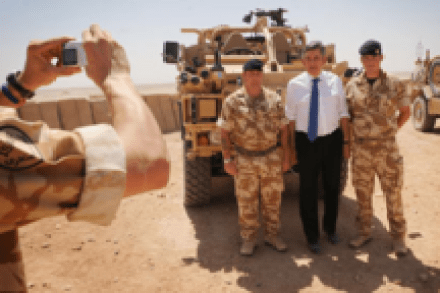
Lots of photo opportunities for the Prime Minister in Afghanistan, looking almost louche in shirt-sleeves and tie, but he’s attempted to provide some much needed direction for the Afghan mission. Last month, David Miliband said that Nato must talk to the Taliban and the Guardian reports that Brown is considering reconciliation also. Here are the details: 'A source close to Brown suggested negotiations with insurgents sympathetic to the Taliban, persuading them to switch sides, now formed a key component of Britain's war effort. He added: "The more reconciliation, the better." Diplomatic sources in Helmand suggested such efforts could be on a large scale: "A large part of the Taliban are not really committed to their agenda.

Lockerbie-for-Oil?

From our UK edition

Pete suggests there's little more to say about the Sunday Times story on the UK government's attitude towards the release of the Abdelbaset ali al-Megrahi. The suggestion given by the paper - and increasingly assumed to be true by everyone else - is that Megrahi was freed for fear that keeping him in prison in Scotland would jeopardise potentially £15bn worth of business for BP in Libya. The implication is that, like the war in Iraq, it's all about the oil. Well, we had to reach this point eventually, I guess. Nonetheless, though it's written by my old friend Jason Allardyce, there's a little less to the Sunday Times's story than first appears. That's because the letters the paper has obtained have nothing to do with the decision to actually release Megrahi.