Teenagers

The lost world of paintball parties

From our UK edition

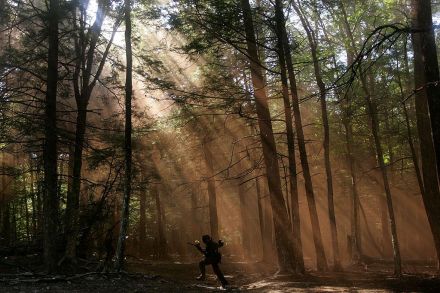
I’m 11 years old, and I’m crouched inside the broken shell of a former London bus. It’s my friend’s birthday party. He turns 12 today, and he has just been shot. Not by a real bullet, of course, but by a paintball. I look over at his father, who is busy reloading his gun’s hopper. ‘This is my paintball gun,’ he murmurs. ‘There are many like it, but this one is mine. My paintball gun is my best friend. It is my life. I must master it…’ Without warning, his father springs up like a sleeper agent given their activation trigger and unleashes a barrage of bullets (paintballs) on a fleeing group of squealing ten-year-olds. ‘Ooh-rah!’ he shouts. ‘Get some!’ Welcome to the strange world of paintball parties.

Make teenage summer jobs compulsory

From our UK edition

I’m of an age where a summer’s evening often means a few gin and tonics on my balcony along with cheese, olives and an Etta James soundtrack. But it wasn’t that long ago that the slow descent of the amber orb meant trekking into Chester city centre to catch a minibus that would take me to a shampoo factory on the outskirts of Flint. There, from 9 p.m. until 7 a.m., my job was to screw the tops on to bottles of shampoo and conditioner to a soundtrack of scatological invective from my workmates, broken only by a 2 a.m. canteen break for cigarettes and a semi-melted KitKat.

A quest for retribution: Fire, by John Boyne, reviewed

From our UK edition

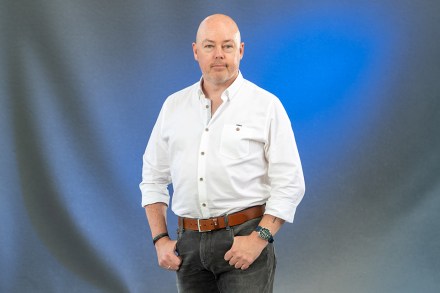
At the end of John Boyne’s novel Earth, Evan Keogh, a conscience-stricken young footballer, hands evidence of his connivance in a rape to the police. Two years earlier, he and his teammate Robbie had been found innocent of the charge by a jury, whose foreperson was Dr Freya Petrus. Freya, a consultant in a hospital burns unit, becomes the protagonist of Fire, the third of Boyne’s Elements quartet. Like its predecessors, the novel is dominated by issues of aberrant sexuality. As a 12-year-old girl on a summer holiday in Cornwall, Freya was first raped and then buried alive in a sadistic ritual by 14-year-old twins, Arthur and Pascoe.

Labour’s China pivot, Yvette Cooper’s extremism crackdown & the ladies who punch

From our UK edition

48 min listen

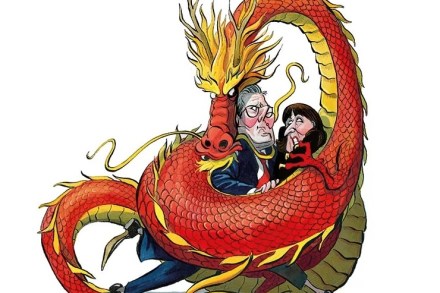
Successive governments have struggled with how to deal with China, balancing them as a geopolitical rival yet necessary trade partner. Recent moves from Labour have sent mixed signals, from the free speech act to the return of the Chagos Islands. Further decisions loom on the horizon. As Rachel Reeves seeks some economic wiggle room, can Labour resist the lure of the Chinese market? The Spectator’s Katy Balls, and visiting fellow at the European Council on Foreign Relations (ECFR) James Crabtree, join the podcast to discuss further (02:05). Plus: as the first issue under The Spectator’s new editor Michael Gove, what are his reflections as he succeeds Fraser Nelson? He reads an excerpt from his diary (19:05).

‘Childhood has been rewired’: Professor Jonathan Haidt on how smartphones are damaging a generation

From our UK edition

Something strange is happening with teenagers’ mental health. In Britain, the US, Australia and beyond, the same trend can be seen: around the middle of the last decade, the number of young people with anxiety, depression and even suicidal tendancies started to rise sharply. Jonathan Haidt, a psychology professor at New York University’s Stern School of Business, noticed a change when students who were brought up with smartphones started to arrive on campus. They were angrier. More fragile. More likely to take offence. Social media, he concluded, was shaping their view that society is in permanent conflict, which in turn led to ideas about microaggressions and competitive victimhood. All this, he found, was damaging young people’s mental health.

Would Richard Wagner have approved of the Wagner Group?

From our UK edition

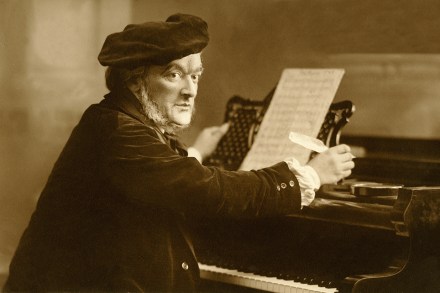
Wagnerian exile Would Richard Wagner have approved of the Wagner Group? While he is believed to have harboured anti-Semitic views and his music later became an inspiration for Adolf Hitler, the young Wagner was a left-wing activist. In 1849, in spite of serving with the Saxon court in Dresden, he joined an uprising against Prussian rule. He is believed to have been involved in making and distributing grenades and to have acted as a lookout. Several of his associates were killed or arrested and sentenced to death after the uprising failed, but Wagner fled to Switzerland. His exile had a happier outcome than that of Yevgeny Prigozhin, and he was able to return to Dresden 13 years later when a ban on him was lifted.

The lost boys of Covid

Millions of American children are about to enter their fourth year of Covid-impacted schooling. In vast swaths of the United States, a child now entering second grade has never had anything resembling a normal school experience. No child entering kindergarten has a memory of life before the pandemic. A rising junior in high school has never had a normal high school experience. Over two years into the pandemic, we know that the effects of “long Covid” are basically nonexistent in kids. Following the release of a study published in the Lancet, Alasdair Munro, a pediatric infectious disease specialist in the United Kingdom, tweeted, “A new, large study on long covid in children using Danish registry data has some very reassuring findings.

school

Will vaccinating teenagers really prevent disruption to schools?

From our UK edition

After the JCVI recommended against offering vaccines to children aged 12 to 15 on health grounds, the government asked the four chief medical officers to consider the broader case, including the impact on schooling. As we know, the government has now accepted the chief medical officers’ recommendation: that all 12 to 15 year olds should be offered one dose of Pfizer on the grounds that doing so will reduce disruption to education. The government has released details of the modelling that underpins that rationale. The approach was first to estimate the number of infections with and without vaccination under different scenarios of infection spread. Next, they used this to model the number of days of lost education that could be prevented by vaccination.

Thank God for the return of the generation gap in pop

In June, a 20-year-old man called Jahseh Onfroy was murdered after leaving a motorcycle dealership in Deerfield Beach, Florida. Onfroy was a rapper, who recorded under the name XXXTentacion, and he had become extraordinarily successful — his two albums had reached No. 2 and No. 1 in the US, despite moderate sales, because of the amount of online plays they had received. The day after he died, my social-media timelines were full of music writers discussing his death, and the tenor — from those with kids, at least — was clear. Post after post noted that XXXTentacion was a nasty piece of work, and few should mourn him, yet the writer’s 13- or 14- or 15-year-old was devastated by his death. XXXTentacion was, it is true, a nasty piece of work.