Ted Sarandos

The fight for the future of Warner Bros.

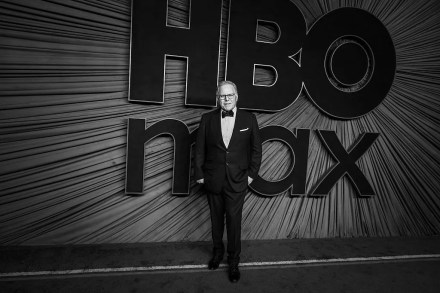
That creaking sound you hear creaking is Jack Warner, the founder of Warner Bros. studio, turning in his grave. Last week, it was announced that Netflix had purchased one of Hollywood’s most respected studios for a staggering, indeed insane $83 billion – which makes Disney’s purchase of Lucasfilm for $4 billion in 2012 seem like the bargain of the century. The sale would create a monopoly the likes of which has never been seen before in the film industry. Most people assumed that such a bid – in this increasingly beleaguered business – is very, very bad news. They might be correct. That’s why it’s even more staggering that Paramount have today, with impeccable timing, announced their own hostile takeover bid for Warner, offering an even more outlandish $108.
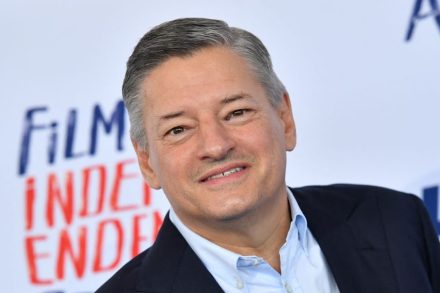
Why Ted Sarandos — and his son — should be disciplined

It must be nice to be Netflix CEO Ted Sarandos. Not only is he paid a truly eye-watering amount of money to be in his job (roughly $50 million a year, according to reports), but because of his company’s pre-eminent position in the streaming market, he is interviewed, largely uncritically, by major news titles, even when he says things that are obviously either wrong or deeply stupid. Thus it has proved in a recent conversation with the New York Times, in which he announced, of last year’s hits Barbie and Oppenheimer, “Both of those movies would be great for Netflix. They definitely would have enjoyed just as big an audience on Netflix.” To add insult to injury, he declared that the size of a screen was all but irrelevant, saying, “My son’s an editor.

ted sarandos netflix

SAG strike resolution: what happens next?

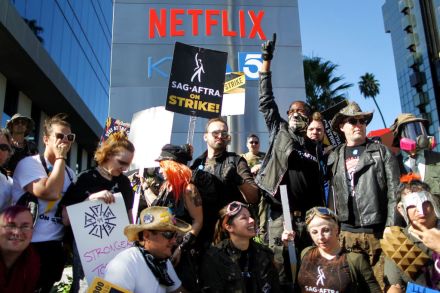
After a paralyzing 118 days, the actors’ strike is now, finally, looking like it’s over, following hard in the footsteps of the similarly resolved WGA strike a couple of weeks ago. The SAG are claiming victory over the studios, who took an exceptionally long time to ratify demands that included everything from increased fees for work appearing on streaming services, to protections regarding the use of AI, to reproduce actors’ images on screen. There were many times during the strike when it looked as if both sides were simply too far apart to achieve a resolution. In the end, money talks: the major Hollywood studios and streaming services realized that without the swift agreement they needed, there would be a drought of product in the marketplace next year, and beyond.

sag-aftra

Why Tiffany Cross got the ax

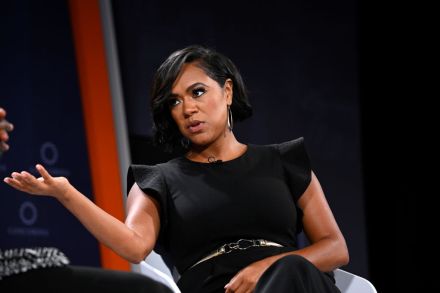
Weekend host Tiffany Cross has been cut from MSNBC. According to Variety, "MSNBC decided not to renew Cross’s contract after two years... and severed ties with her immediately." The trade paper is rather euphemistic in its description of why Cross was shown the door: Executives at the network [were] growing concerned about the anchor’s willingness to address statements made by cable-news hosts on other networks and indulging in commentary executives felt did not meet the standards of MSNBC or NBC News. Allow Cockburn to translate: Cross was becoming burdensome to the network for her regular rash remarks.

tiffany cross

How Netflix saved comedy

Comedy has been absorbed into Twitter’s zeitgeist tornado: a whirling panopticon inhabited by 23 percent of the most humorless and opinionated denizens of the internet (and the top 25 percent of them produce almost all the tweets, according to a study by Pew Research Center). Twitter’s superusers are journalists who have never left the eye of the storm; Twitter has become their “ultimate editor.” It has what the New York Times calls an “outsized role in shaping narratives around the world.” But what kind of comedy clicks for these dopamine-addicted trend chasers?

Netflix

The PR campaign at the heart of the war on Netflix

What remains unsaid about The Closer? In the past two weeks, countless thinkpieces have tackled the controversy around Dave Chappelle’s new special by trying to determine where its content falls on the line between funny and offensive, provocative and hateful, punching up versus punching down. Some analysis has been thoughtful; some has been shallow and reactionary. But virtually all of it centers on the question of whether Netflix should have removed or censored the special for being “harmful” to vulnerable people. That notion is one that Netflix executive Ted Sarandos summarily rejected in a statement sent to employees, writing that “while some employees disagree, we have a strong belief that content on screen doesn’t directly translate to real-world harm.

chappelle netflix