Technology

The real harm in the Online Harms Bill

From our UK edition

Following the killing of Sir David Amess, MPs were quick to point to the ‘corrosive space’ provided by social media, the ‘toxic’ conduct of politics, and the general phenomenon of people being cruel to them online. Of course our parliamentary representatives don’t deserve to face waves of abuse for doing their jobs. They shouldn’t receive racial abuse, or threats of violence, or even simple insults for doing their jobs. This goes without saying for any worker, whether serving customers in a supermarket, helping commuters with their tickets, or indeed governing the country.


New tactics are needed for the wars of the future

From our UK edition

The strategic bankruptcy of the West has twice so far this century demanded that our brave soldiers risk their bodies and minds to fight unwinnable wars. The lessons to be learnt from Iraq and Afghanistan, and indeed from Libya, Syria and the Sahel, are many; but the original sin was hubris, born of post-Cold War military preponderance and successes in Sierra Leone, Ulster and Kosovo. The consequence of our arrogance, when 9/11 demanded action, was that we failed properly to interrogate, and so to grasp, either the character of the specific conflicts into which we jumped, or the fundamental nature of war itself.

Frances Haugen: a very convenient whistleblower

From our UK edition

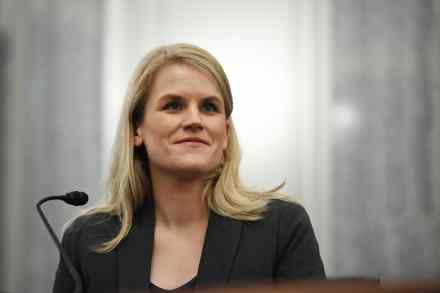
Facebook wants to move its business model towards the metaverse, that virtual future in which we will all hang out online through headsets and pretend it isn’t weird. The trouble is, we already appear to live in an alternate reality created by communications specialists with highly political agendas. Just look at the clearly PR-orchestrated Online Safety vs Facebook story which the media is playing out before our non-digital eyes. This week’s protagonist is Frances Haugen, the former Facebook employee who appeared yesterday in parliament to give evidence to MPs scrutinising the Online Harms Bill. That is the bill through which the government says it intends to regulate social media companies to stop online hate, bullying, terrorist radicalisation and so on.

Banning anonymity creates more problems than it solves

From our UK edition

There are growing calls to end internet anonymity in the wake of Sir David Amess’s death. The Tory MP Mark Francois argued in the Commons this week for a ‘David’s law’ to do this, to try and bring back civility into politics. Today, Matt Hancock and the Labour MP Rupa Huq have stated that the Online Harms Bill should tackle ‘anonymous abuse’. But outlawing internet anonymity would be a mistake. Two members of parliament have been killed in the past five years. This, one long-serving MP laments, is the kind of statistic you would expect in a failing state, as I write in the magazine this week.

Why is it so hard to live without a mobile phone?

From our UK edition

Last week, my mobile phone stopped working. No big deal you might think. If you can get emails on your computer, and you’ve got a landline and that old-fashioned thing, post, why, you’re not cut off, are you? There are, of course, people who wilfully eschew their phones so as to be more in touch with the present moment… birds, clouds, flowers etc. And I’m hardly a junkie. I don’t do social media. I’m a grown-up, so I’m not on Snapchat. Not having a phone should have been fine. But as I discovered, I was quickly cut out of society. First off, you can’t tell the time. Obviously, when you’ve got a phone you don’t need a watch. Or a clock.

The problem with ‘David’s law’

From our UK edition

Two members of parliament have been killed in the past five and a half years. This, one long-serving MP laments, is the kind of statistic you would expect in a failing state. One of the shocking things about Sir David Amess’s murder is that many MPs weren’t surprised by it. Parliamentarians are acutely aware that when they are away from the Palace of Westminster, with its armed guards and security scanners, they are a soft target. Their job requires them to mix with the public and that involves a certain level of risk. One senior Tory MP points to how during the Troubles in Northern Ireland, MPs who were thought to be in particular danger were offered a firearm for personal protection, and argues that an offer like this should be extended to all MPs today.

The problem with online property searches

From our UK edition

In 1966, the legendary adman David Ogilvy set out to buy a home in France. He boarded a transatlantic liner to meet a French estate agent who had a perfect house waiting for him in Paris, but while still in mid-ocean he heard he had been gazumped. There were presumably other houses on sale in Paris at the time, but it seems the agent did not show David any of them. Instead he suggested they board a train to Poitiers, 200 miles away, to an area David later described as ‘the South Dakota of France’. On the banks of the Vienne stood a decaying 13th-century château with around 30 bedrooms and a network of dungeons. David bought that instead. He lived there from the mid-1970s until his death in 1999. Restoring the building and gardens was one of the great joys of his life.

What Prince William gets wrong about space travel

From our UK edition

Time was when 'to boldly go where no man has gone before' was not just a line from Star Trek. It was a national dream. Space exploration transcended political divisions. When Nasa pulled off the first moon landing, the world watched in awe. Last week, the Star Trek actor William Shatner was blasted into space on one of Jeff Bezos’s rockets. Yet there was no shared wonder. Instead, there was criticism. Scientists have more pressing problems to solve, argued detractors. In a rebuke to Bezos, who is pouring his fortune into space travel, Prince William told the BBC: 'We need some of the world’s greatest brains… trying to repair the planet, not trying to find the next place to go and live.' Such arguments miss three key points.

Delivery woes

It’s really quite difficult to keep up with all of the new ways technological ‘advancements’ are ruining things. We’re beginning to live out the 2009 film The Box, in which characters are presented a device with a button that, when pushed, grants them a million dollars — the only catch being that someone they’ll never meet will immediately perish. The dire unseen consequences of smart- phone conveniences aren’t quite as drastic, but they’re there nonetheless, and we rarely consider the moral quandary they present. Enjoying the long lifespan of your lithium-ion battery? A Congolese child might’ve mined the cobalt it contains. You want the new Róisín Murphy LP delivered to your doorstep?

delivery
stagnation

How we can keep innovating

If the history of humanity is the history of big ideas — from the wheel to space flight, cave painting to the multiplayer game, monotheistic religion to special relativity — then the same is true of our future. By the 1960s the developed world had witnessed 200 years of extraordinary activity on every front. This was the era of the moonshot; of political obsession with technological mastery; of experimentation in music, culture, knowledge and relationships. Humanity had undergone a big-ideas revolution and the expectation was that progress would keep accelerating. In 1967, Herman Kahn, the futurist and theorist of nuclear war, and fellow futurist Anthony J. Wiener published The Year 2000: A Framework for Speculation Over the Next Thirty-Three Years.

How tech revolutions happen

From our UK edition

Trends in New York City tend to foretell trends in London, whose fashions in turn set the pace for smaller British cities. After a summer in the Apple, I can therefore provide British urbanites with a glimpse of their future. I get around on what I newly perceive as a dumpy, sluggish pushbike. Mayor Bill de Blasio has invested extensively in the city’s cycling infrastructure — much to the resentment of motorists, and often for good reason. As London drivers will also attest, removing whole lanes from congested thoroughfares is rarely justified by the modest number of car trips that cyclists obviate. Still, given the soaring popularity of two-wheeled transport, when chugging against a headwind alongside the Hudson I ought to have plenty of company. Indeed, I do.

preppers

Two cheers for preppers

Really, the Facebook outage should not have been as entertaining as it was. As Jon Stokes, the founder of Ars Technica, observes, if Facebook, with its hyper-sophisticated software and security practices, is vulnerable to sudden collapse, what does that say about energy infrastructure run on 'old Windows installs'? The potential for far greater carnage is tremendous. But it was entertaining, and I think what it made so was the fact that the damage was so comprehensive that security systems in the Facebook offices crashed and its employees could not enter the building to fix the problem. Here were some of the smartest people in the world and they could not get through a door. You can imagine the coffee cooling in their paper cups.

The forgotten Einstein: how John von Neumann shaped the modern world

From our UK edition

More than anyone else, John von Neumann created the future. He was an unparalleled genius, one of the greatest mathematicians of the 20th century, and he helped invent the world as we now know it. He came up with a blueprint of the modern computer and sparked the beginnings of artificial intelligence. He worked on the atom bomb and led the team that produced the first computerised weather forecast. In the mid-1950s, he proposed the idea that the Earth was warming as a consequence of humans burning coal and oil, and warned that ‘extensive human intervention’ could wreak havoc with the world’s climate.

The stalemate election: can Germany move beyond Merkel?

From our UK edition

Germany’s election campaign has taken many unexpected turns. In January, Angela Merkel’s Christian Democrats (CDU/CSU), were leading by about 20 percentage points. By April, the Greens were ahead. By July, the CDU/CSU had bounced back, and then all of a sudden, the Social Democrats (SPD) came out of nowhere to a solid lead by last weekend. The gap has since closed a little ahead of Sunday’s election — and the joyride is still not over. What is also different about these elections is that, based on current polling, four, five or even six coalitions might be arithmetically possible. So the real battle will likely start only after the election.

How do we calculate the value of a painting?

From our UK edition

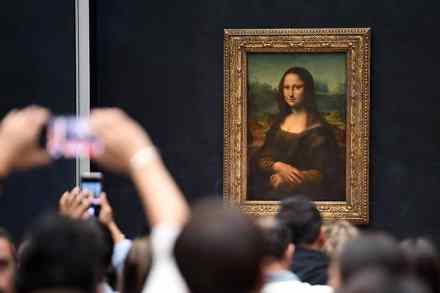
There’s an intriguing conversation on YouTube between Mark Carney, former governor of the Bank of England, and the artist Damien Hirst. It will be easy to find on Google, since these are not names normally found on the same page. Ten minutes in, Hirst makes an engaging observation about the value we attach to art. He explains that art collectors will pay anything for a painting, even though the raw materials cost almost nothing. It’s a hundred quid’s worth of canvas, wood and paint, but you can sell it for millions. ‘The problem happens when you make something like a diamond skull.

Technology is robbing us of the power to forget

From our UK edition

Two years ago, Lauren Goode, a senior writer at Wired magazine, cancelled her wedding and it was awkward. These things always are, but you get over it because the brain slowly learns how to skip over painful memories. Or it did, before social media. Goode has made a career out of wittily stripping away the pretensions of consumer tech, and when her wedding plans blew up consumer tech had its revenge. She ended her eight-year relationship in 2019 — but the internet didn’t get the message and kept confronting her with ‘a cyborg version of me, a digital ghost, that is still getting married’.

Why cocktails are superior to wine

From our UK edition

I often argue that, in theory at least, well-made cocktails are indisputably better than wines costing 20 times more. My argument runs as follows. In making a cocktail, you can mix, in any combination you wish, any of the liquids known to humanity. In making a wine, you are stuck with using grape juice harvested by grumpy Frenchmen from scrubland east of the Gironde. Mathematically, the odds that the best drink you can generate derives only from a few bunches of such grapes is so small as to be infinitesimal. Besides, almost no one drinks grape juice, and nobody has ever seriously tried to sell non-alcoholic wine. If it really tasted all that good, these things would have taken off by now. Yet one reason people like wine is because our judgment is highly relative.

The heist: nobody is safe from Russia’s digital pirates

From our UK edition

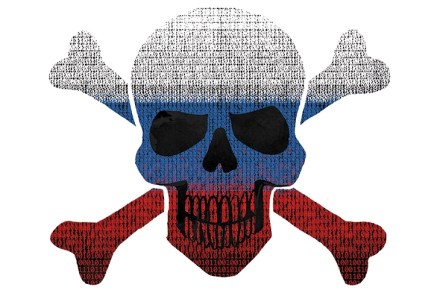
In April, the Harris network of London schools was held to ransom by hackers. ‘The first thing I did was panic,’ said Sir Dan Moynihan, the chief executive. It wasn’t simply that their computers didn’t work; many of the 50 schools couldn’t function. Some couldn’t open because their internet-controlled doors were jammed shut. A demand for £3 million arrived. Moynihan pointed out this was a ‘completely insane’ amount for an educational charity to pay — but his pleas through an intermediary were ignored. The hackers insisted that unless Harris paid up, the schools would continue to be locked out of their networks, and sensitive data would be leaked online too.

How Nextdoor became the new Neighbourhood Watch

From our UK edition

Long before the official numbers began to rise, back in 2014, it was clear that knife crime was on the up. You could tell by the way small boys chased each other through the park with machetes, and by the zombie blades left in flower beds. Now, seven years later, I feel the same way about what goes by the cosy-sounding name of ‘neighbourhood crime’. There’s the fashion for car theft (as poor Sam Leith found out), and the constant predatory circling of iPhone thieves on e-scooters. But worse than that, I think burglary is back, and I think it’s thanks to crack. We know drug use is creeping up: on Tuesday it was announced that drug-related deaths in England are at the highest level they’ve ever been. As for burglary stats, for those I rely on Nextdoor.