Taxation

Spectator letters: VAT and sugar, Boris Johnson and cricket, whisky and bagpipes

From our UK edition

Sugar added tax Sir: Julia Pickles (Letters, 14 June) suggests a sugar tax to combat the obesity epidemic and discourage food manufacturers from adding sugar to everything from bread to baked beans. A more realistic alternative might be to simply adjust the VAT rules: currently, VAT is levied on essentials such as loo paper, toothpaste and washing powder, presumably because they’re considered luxuries. Items such as breakfast cereals, however, are VAT-exempt, even though many are more than 30 per cent sugar and should really be in the confectionery aisles. Levying VAT on products with, say, more than 20 per cent added sugar and removing it from others could form a revenue-neutral policy for better health.

How ancient Athens beat tax avoidance

From our UK edition

The taxman will soon be ordering those planning dodgy tax avoidance schemes to declare them beforehand and pay the full tax on them up front. Only if HMRC finally decides the scheme is legal will the tax rebate be allowed. This is a very Greek principle, which could help with the problem of bankers’ bonuses. The 4th century bc Athenian tax system was very progressive: only the richest paid any at all. In times of war, those with a certain value of declared property were liable for an emergency tax (eisphora), levied at 1 or 2 per cent. These wealthy Athenians — numbered in the thousands — were grouped into ‘tax partnerships’, and the state assessed what each partnership had to contribute.

Danny Alexander on Scottish independence, income tax, Nick Clegg and George Osborne

From our UK edition

Danny Alexander doesn’t suntan well, but he looks more freckly than normal when we meet in HM Treasury.  He’s just back from the seaside town of Nairn in the Highlands, where, as the most senior Scot in the Cabinet, he’s been sent to fight in the front line of the Battle for Britain. People were queuing to sign up to the Better Together campaign, he says, and he has high hopes of defeating Alex Salmond on 18 September. It all added up to something rather rare for a Liberal Democrat: the feeling of being on the winning side in an election. As Chief Secretary to the Treasury, he has been trusted with making various economic arguments for the union.

How the Ancient Greeks did wealth taxes

From our UK edition

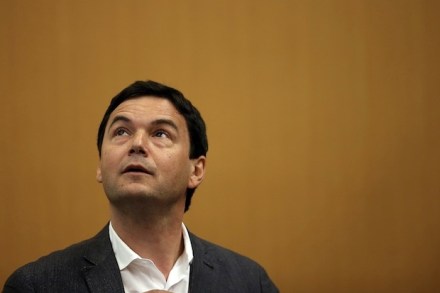
After 685 tightly argued pages, the ‘superstar’ economist Thomas Piketty unfolds his master-plan for closing the gap between the rich and poor: you take money away from the rich. Novel. Ancient Greeks realised you had to try a little harder. The culture of benefaction was deeply rooted in Greek society, even more so when the Romans made Greece a province in the 2nd century BC and removed their direct power of taxation. The quid pro quo lay in the prospect of eternal honour for the donors. The services which the wealthy provided for the city included paying for baths, gymnasia and food supply. Where harbour facilities and commercial districts needed renewal, they would stump up.

Fight Thomas Piketty or face a mansion tax

From our UK edition

The postman at the door is stooped by his burden like an allegorical statue of Labour Oppressed by Capital. His wearisome, low-waged task is to deliver a copy of Thomas Piketty’s Capital in the Twenty-First Century — or perhaps multiple copies all round the town, since this breezeblock of a thesis on the iniquities of accumulated wealth stands second in this week’s bestseller lists, pipped only by the life story of someone called Guy Martin.

Any other business: The friends of Putin taking home gold from the Sochi Olympics

From our UK edition

Imagine if the BBC’s excitable commentators had been asked to cover the building of Sochi’s facilities, rather than the Winter Olympics themselves. ‘Yeesss!!’ Ed Leigh might have yelled, ‘That’s the 21st construction contract for the big lad from St Petersburg, Arkady Rotenberg. Seven point four billion dollars’ worth, a new Olympic record — more than the entire cost of the 2010 Vancouver Games! How cool is that for the 62-year-old who was Vladimir Putin’s boyhood judo partner? Up next, the $9.

How to make money from the Scottish referendum

From our UK edition

The best time to buy an asset is when no one else can stomach it. Great fortunes are made in uncertainty. The self-made rich aren’t the ones who hung around on the edge of an iffy situation thinking about the possible disasters. They’re the ones who calculated the odds and bought before anyone else was sure of the answers. So where is there uncertainty in the UK today? Most English people are utterly uninterested in the prospect of Scottish independence — or in Scotland generally. But if they were actually to look up north they’d see pretty serious turmoil. It is less than a year until every resident of Scotland gets to vote on whether they want to live with the devil they know or the devil they don’t.

How mansion taxes will make us all poorer

From our UK edition

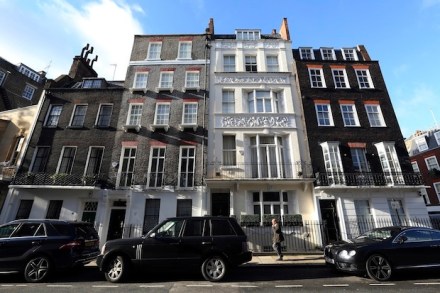
There are few things most of us enjoy more than watching the value of our houses rocket. Every homeowner will have felt the pulse of excitement that comes from a mental calculation of how much has been added to their net worth by the latest bulletin from Rightmove or the Halifax. Yet fast forward two or three years and the same news could make our hearts sink — because by then a mansion tax could well have been introduced, and rising prices will take many middle-class owners over the threshold. The mansion tax bandwagon has been rolling for several years, pushed enthusiastically by business secretary Vince Cable and his Lib Dem colleagues. The idea is that any home worth more than £2 million would be taxed at an annual rate of 1 per cent of its value above the threshold.

Spending isn’t the answer. But how do we explain that?

From our UK edition

One of the things I love about being a classical liberal is that I’m always on the right side of every argument. I’m pro: freedom, jobs, self-determination, cheap energy, higher living standards, academic excellence, property rights, an even better future, Michael Gove MP, wine, women, song. (So long as the song is not by Maroon 5 or Bruno Mars.) And I’m anti: arbitrary authority, nanny-statism, money-printing, tyranny, despair, almost all war, poverty, prohibition, disease, squalor, uncleaned-up dog poo, meddling busybodies, crap capital projects based on massive lies (that means you HS2!), corrupt officials, civil war, totalitarianism, hyperinflation, injustice, Tim Yeo MP.