Taki

The day I ate a royal love letter

Our very own Roger Kimball made it possible. I am referring to The Last Alpha Male, the greatest book ever written except for the Bible, as a Greek critic by the name of Taki put it. It is written by yours truly and owes a lot to Harry Stein, himself a terrific writer, whose father happened to write a musical play by the name of Fiddler on the Roof. My problem was how to justify Don Giovanni behavior while married to a Penelope-like beauty. Roger put me in touch with Harry, who came to my rescue. Presto, the wars in Gaza and the Ukraine stopped overnight. Fighters put down their weapons and read about the last alpha male and his ladies. My spies tell me even the Donald asked for a copy thinking it was about him, but then threw it out as Air Force One took off from Palm Beach.

letter

Biohacking and skiing at the Alpina Gstaad

Biohacking, one of the more bearable buzz words of recent times, refers to the practice of using science, technology and self-experimentation to improve the body’s function and performance. When I was recently invited to experience the Alpina Gstaad’s new three-day wellness program — designed to “biohack your ski trip for improved performance and mood” — I didn’t hesitate. Here was not only a chance to improve my disastrous skiing but also to restore my pitiful liver, which had taken a particularly heavy beating in the festive run up to 2025. What better place to kick off “Dry January” than a five-star spa tucked away in the Bernese Highlands?

gstaad biohacking

Hollywood, fist-fights and getting canceled

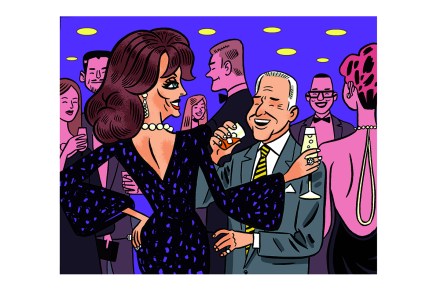
Introductions Scene: a drawing room in London. When the recording starts, Taki is already mid-anecdote... Taki: I was sent out to Monte Carlo to speak to Roger Moore. The Spectator offered to pay all my expenses. I said thank you, I’ll pay my own. I went and had a terrific drunken dinner with Roger who really spilled the beans, cos we were buddies. I came back. The tape was empty because I’d never turned the recorder on. Joan: I’d known Roger since I was fifteen, because my father was a big agent in London and I came back from school — oh, fourteen actually, because I left school at fifteen — and there’s the most gorgeous man I’ve ever seen standing there. He came over and said, “How do you do? You must be Joan, my name is Roger Moore.

Joan Collins

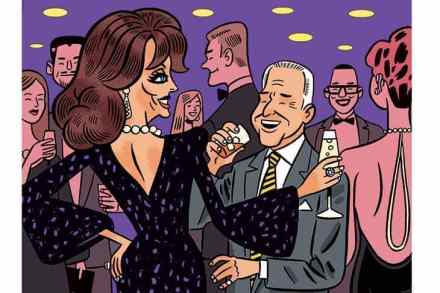
Hollywood, fist-fights and getting cancelled: Joan Collins and Taki in conversation

From our UK edition

Introductions Scene: a drawing room in London. When the recording starts, Taki is already mid-anecdote… Taki: … I was sent out to Monte Carlo to speak to Roger Moore. The Spectator offered to pay all my expenses. I said thank you, I’ll pay my own. I went and had a terrific drunken dinner with Roger who really spilled the beans, cos we were buddies. I came back. The tape was empty because I’d never turned the recorder on. Joan: I’d known Roger since I was 15, because my father was a big agent in London and I came back from school — oh, 14 actually, because I left school at 15 — and there’s the most gorgeous man I’ve ever seen standing there. He came over and said: ‘How do you do?

Michael Avenatti is the latest Spectator contributor to be jailed

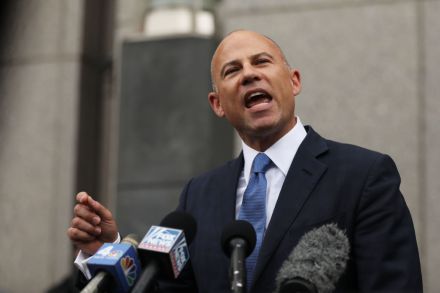
Which Spectator contributor will be jailed next? Taki and Michael Avenatti have both done time after bylining in these august pages — and Roger Stone only swerved his 40-month sentence by the grace of President Trump. It could be argued that The Spectator’s decision to publish Michael Avenatti was not our finest moment. The Creepy Porn Lawyer, as Tucker Carlson insisted on calling him, is not the best egg in the anti-Trump basket. But we believe in free speech, and Avenatti was eager to trash Beto O’Rourke and that’s always good idea.

michael avenatti

Out now: the June edition of The Spectator World

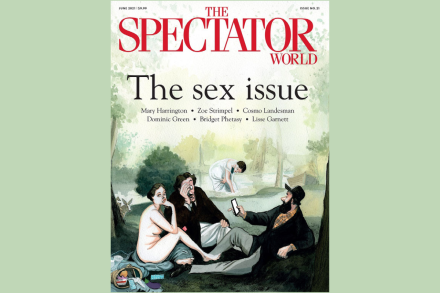
Sex sells, we’ve been told, and so — grubby hacks that we are — we have dedicated the June edition of The Spectator World to the subject. But this ain’t your average smut. On our cover, the brilliant Mary Harrington looks at how America’s young elites are turning against free love. Zoe Strimpel discusses her recent experiences on dating apps and wonders why young men seem to have lost interest in sex. Cosmo Landesman asks if women who claim to love pornography are faking it; Bridget Phetasy wonders why men’s magazines such as Playboy aren’t for men any more and Dominic Green takes a Freudian look at America’s race to the bottom. Beyond all the sex, the June edition features a variety of other subjects to arouse your curiosity.

june

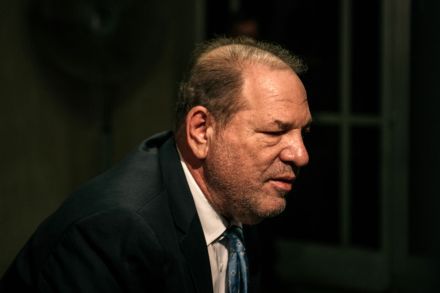
Why Harvey Weinstein cried on the phone to me

Harvey Weinstein was a very sought after dinner guest back in the days before he was a convicted rapist. Mind you, he and I started out as mortal enemies, over a woman, needless to say. I won the first skirmish although I didn’t know it at the time. (The lady went home with me and Harvey badmouthed me to her.) Once I found that out I wrote in my New York Post column of the time that Weinstein was an enemy of good manners and good tailoring. He found it funny and approached me at a party I was giving with Michael Mailer in a downtown New York tavern. As he was known as a brawler, I stood up and got ready to rumble. But it was not to be. He graciously put out his hand and told me in front of witnesses that I had never done him any harm and that he wanted to be friends.

harvey weinstein

Letters | 21 September 2017

From our UK edition

Christians betrayed Sir: Michael Karam’s article (Ya Allah!, 16 September) is timely. Many Westerners seem to be unaware that there is such a person as a Christian Arab (a Christian who speaks Arabic as their first language), yet there are millions. At the time of the Crusades, Christians were a majority in the Near East. In 1914 about 25 per cent of the Near and Middle East was still Christian. The percentage is now much lower because events have forced massive Christian emigration, especially to North America. The serious consequences of this ignorance were not only felt by the Christian Iraqi removed from a flight after another passenger heard him speaking Arabic.

The Spectator’s Notes | 2 February 2017

From our UK edition

As he left the editorship of The Spectator in March 1984, Alexander Chancellor wrote in this space: ‘When I joined the paper as editor in 1975, people were in the habit of asking me what my “policy” was going to be… How desperately uneasy this question made me. If there was a lavatory in the vicinity, I would lock myself inside it. I was sure I ought to have a “policy”… but I most certainly hadn’t got one.’ As his assistant editor, I witnessed the dismay on the faces of proprietors, advertisers and various big shots at Alexander’s answers to this sort of question.

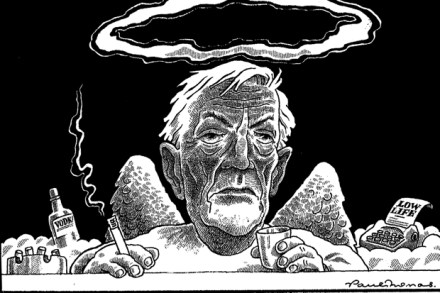
Low life | 29 September 2016

From our UK edition

I stood in front of the mirror in the £61-a-night hotel room in Paddington, buttoned my polyester dinner jacket and straightened my bow tie. The last time I’d worn a dinner jacket was nearly three years earlier, I remembered, at the Cigar Smoker of the Year. What a night that was. I dug through the pockets in case there was any MDMA still hanging about. I found a dog-end and a 100mg tablet of Indian-made Viagra. I took a selfie in the mirror, picked up the gift-wrapped birthday present and card, switched off the studio-quality strip light, and closed the door behind me. As I tripped down the front steps of the hotel into the velvet September evening, headed for Taki’s 80th birthday party at Loulou’s, life felt pretty good. ‘Fancy a nice time, dearie?

The Spectator’s Notes | 29 September 2016

From our UK edition

Mathias Döpfner, the extremely tall, extremely intelligent head of Axel Springer, is unusual in the generally conformist German business elite because he is not an unqualified believer in the German economic model. I have known him slightly for about 20 years and have always been interested by his questing, speculative mind. We have had conversations about the freer, Anglosphere model of economic life which he admires. Although he is not anti-EU — that is still almost against the law in Germany — he is sceptical of its direction. Now he has blasphemed in the EU’s main church in Britain — the Financial Times — by telling the paper that within three to five years he would expect Britain, as a result of Brexit, to be better off than its former EU partners.

The Spectator summer party, in pictures | 6 July 2016

From our UK edition

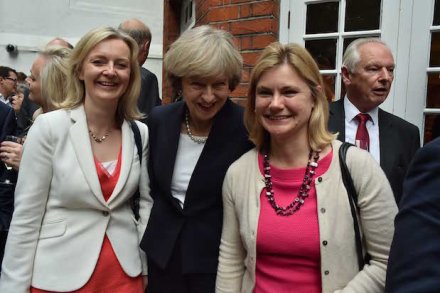
In recent weeks, Westminster politicians have found themselves compared to the characters of House of Cards and Game of Thrones over their post-referendum antics. Happily, parliamentarians were able to put such differences aside on Wednesday night as they took a well-deserved break from work at The Spectator summer party. As Labour's Rachel Reeves and Liz Kendall caught up with Liz Truss, Laurence Fox -- the Lewis actor -- put on a passionate display for the cameras with his male companion for the evening. Meanwhile with a Tory leadership contest underway, Theresa May made sure to do the rounds and rally support for her campaign at the champagne-fuelled bash.

Letters | 12 November 2015

From our UK edition

The C of E should apologise Sir: Peter Hitchens’s article on the allegations against the late Bishop Bell is a welcome intervention in a sorry affair (‘Justice for Bishop Bell’, 7 November). If the best evidence against Bishop Bell was sufficient only to merit his arrest (were he alive), then the recent statements concerning him issued by the church authorities should be withdrawn; if they have better evidence, then that should be published. It should not be forgotten that this is not the first time this year that senior figures in the Church of England have made dubious accusations of child abuse against the dead.

Low life | 17 September 2015

From our UK edition

The staples of my daily alcohol consumption on the cruise were champagne, gin, red wine and Polish vodka. One morning I woke up in my cabin more hungover than usual, also depressed. Turning my head to the side and looking through the gap in the curtains I saw that we were no longer at sea but docked in yet another Mediterranean island port with barren sun-bleached hills above and beyond. Reaching for my daily news-sheet, delivered to the cabin the night before, I read that what I was looking at this morning was Heraklion in Crete. Further reading informed me that if I returned to the ship from the shore excursion early I could go to the ‘Walk-in wrinkle solution’ on deck 9 at 2 p.m. Turning next to the Spectator cruise itinerary pamphlet, I read that, at 3 p.m.

What really happened on the Spectator cruise

From our UK edition

Ok, so first things first. Jeremy Clarke didn’t fall overboard after all. He did, though, dance all night every night (almost), have everyone in stitches and host a rip-roaring High Life vs Low Life pub quiz. He even wore a fez with unexpected aplomb. Taki forwent the delights of his own High Life to join ours. He was exceedingly generous to his dining companions with his wine choices, and had us enthralled with his insider tales of Spectator days gone by and libel actions lost (mainly) and won (occasionally).

Low life | 10 September 2015

From our UK edition

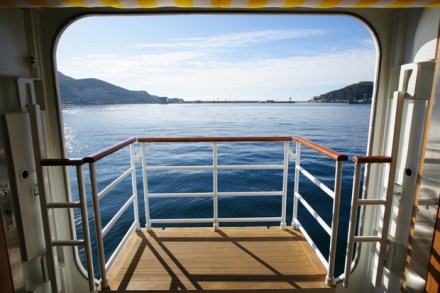
There is something repulsive about the sea, especially when seen from the altitude of the upper decks of a monstrous floating pleasure palace where all intimacy with it, including the sound and the smell, is lost. On the inaugural Spectator Mediterranean cruise I paid attention to the sea but rarely, and usually when speed walking along one of the upper decks in a dinner jacket and bow tie, and late for something, and wondering where the hell I was supposed to be going. Then my stare would stray over the guard rail to the barren wastes of glacial blue flecked with white stretching away as far as the eye could see, like some dreary desert seen from an aeroplane. On some deeper level the sight horrified me, and I’d count the days until I could get off this infernal thing for good.

Low life | 3 September 2015

From our UK edition

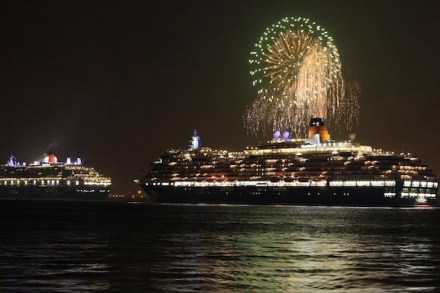
Last Saturday afternoon, in Venice, 31 Spectator readers, plus Martin Vander Weyer, the great Taki and I came aboard the Cunard cruise ship Queen Victoria for the inaugural Spectator Mediterranean cruise. The first chance we had to get to know one another was a pre-dinner drinks party in Hemispheres, the ship’s nightclub. I was late, and apprehensive about how things would go. The ship’s commodore, a lonely, courtly figure encased in a starched white uniform, was there in the Spectator readers’ midst offering his right hand to anyone who wanted it. I removed a flute of champagne from the offered silver tray and plunged in. The first reader I spoke to said, ‘My name is Fanny and I am bisexual so there’s hope for you yet.

Letters | 20 August 2015

From our UK edition

The morality of the A bomb Sir: In questioning whether we should celebrate VJ Day (Diary, 15 August), A.N. Wilson is confusing ‘why’ with ‘how’. The debate on the rights or wrongs of the nuclear attack will continue probably until long after the grandchildren of the last survivors have passed on. What should not be forgotten is the necessity to defeat the cruel, expansionist, militaristic regime that arose in Japan between the wars. Something happened to Japan during that period. The treatment of Allied prisoners of war and the atrocities in China during the second world war are well documented. What is less well known is the Japanese treatment of prisoners of war during the first world war.

Taki on Jeffrey Bernard – ‘Never a nice word about me’

From our UK edition

Some years ago, Taki and Jeffrey Bernard each wrote the other's obituary. When Jeffrey died on 4 September 1997, The Spectator published Taki's version. Radio 4 are today broadcasting Jeffrey Bernard is Unwell, and so it seemed a good time to revisit the piece:  In real life Jeffrey Bernard was much the same as he was in print. He was dyspeptic but almost always lightened the atmosphere with a flash of humour and the de rigueur four-letter word. He had a wintry smile and was a master of the unkind remark. People who are always trying to be funny rarely are. Jeff never gave the impression he was trying, and invariable always was. His so-called cruel streak is well known.

Letters | 23 July 2015

From our UK edition

Don’t write off Assad Sir: Ahmed Rashid refers to our ‘Arab allies’ supporting al-Qaeda (‘The plan to back al-Qaeda against Isis’, 18 July). Clearly they are no allies of ours, so thank you Mr Rashid for pointing this out. Apart from that, his perspective is peculiar. He starts off by accusing Assad of plunging Syria into a bloody civil war. Clearly that is not the case. The civil war was started by Assad’s opponents, encouraged by the ‘success’ of the Arab Spring elsewhere. Of course we now see that the ‘success’ was illusory. He also suggests that Assad is finished. Now that his ally Iran has come in from the cold, I think it is a bit early to write him off.