Taki

Low life | 2 July 2015

From our UK edition

Rachel Johnson, in last week’s Spectator diary, says that her husband says she only writes a book in order to have a launch party. Me too. My thoughts are too disordered to write a book from scratch, but now and then someone offers to publish a collection of these columns and I, fantasising about a party with all my pals there, agree to it. Times must have changed for the publishing industry since Short Books put out the last Low life collection and gave me a terrific launch party, because the publisher of this latest collection stated with finality (once the book was done and dusted) that publishers no longer finance launch parties. I am invited to book launches all the time and was therefore gobsmacked and sceptical on hearing that.

Letters | 2 July 2015

From our UK edition

How to fix Detroit Sir: When I last flew over my native Detroit five years ago, vast tracts of it still resembled Machu Picchu. From the ground, it was little better; in what had been a prosperous Italian-American neighbourhood when I lived there in 1964, there were only five houses left standing. Stephen Bayley (Arts, 27 June) marvels that ‘You could buy an entire house for $10,000’ — but in truth the taxes needed to support Detroit’s notoriously corrupt governments are so high that you can’t give them away unless they are in one of the few islands colonised by the middle classes. Indeed, the city filed for bankruptcy in 2013, with debts estimated at around $20 billion. I have no problem with gentrification, and I’ve done a fair bit of it myself.

Letters | 18 June 2015

From our UK edition

Growing congregations Sir: I would like to take issue with Damian Thompson (‘Crisis of faith’, 13 June) and his assertions that England’s churches are in deep trouble. Last Saturday 250 Christians ranging in age from zero to 80, from two independent and orthodox local churches in Lancaster and Morecambe, met in a school to sing, pray, and hear preaching about Jesus Christ — this as well as our normal Sunday services. We believe we are doing what the Bible tells us to: preaching the good news of Christ from the pages of the Bible — and our churches are growing. Indeed, we can testify to growth in many local churches in the UK (whether independent or within a denomination).

Letters | 7 May 2015

From our UK edition

Bees vs Belgians Sir: To answer Rory Sutherland and Glen Weyl’s question: yes, everyone should vote and no, just because someone is more interested in politics, his opinion should not count more heavily (‘Plan Bee’, 2 May). Belgium has had compulsory voting for over a century. The troubles that follow every general election may seem to make it a strange example to follow, but those troubles are a consequence of the fragmented political landscape and not of the polling system. Compulsory voting motivates people to stay informed and care about what is happening to their country. It is, however, only compulsory to show up at the polling station, not to cast a valid vote, so the happily apathetic can draw a chicken or write a poem on their ballot paper if they’d rather.

Spectator letters: Why rural churches are so important, and the best use for them

From our UK edition

The presence of a church Sir: The challenge for the Church of England and the wider community is to ensure that our village churches are a blessing and not a burden (‘It takes a village’, 21 February). The Church of England has approximately 16,000 churches, three-quarters of which are listed by English Heritage. Most of these church buildings are in rural areas. There are around 2,000 rural churches with weekly attendance lower than ten. It can be a significant responsibility for those small congregations to look after that church, and one has to recognise that this is a burden that falls on thriving parishes.

Toby Young and Taki reveal their strangest date

From our UK edition

Toby Young Status anxiety columnist About 15 years ago, when I was single and living in New York, I acquired what I can only describe as a stalker. A woman took exception to a newspaper article I’d written and started bombarding me with emails. For about a year, she sent me three or four emails a day, demanding a reply. In one of these emails she claimed to be a columnist for a magazine called Chest Monthly, and that piqued my interest. So I invited her on a date. We agreed to meet in a café and she was quite difficult to spot because, contrary to my fevered imaginings, she was completely flat-chested. I asked her how she’d managed to land a job as a columnist for Chest Monthly.

The idiot economy – behind the ‘dark web’ cyber-crime busts

From our UK edition

Spectator Money is out, with ideas on how to make it, spend it and even how to be seen spending it. Freddy Gray looks at the 'social economy' - think tax loopholes for financiers of politically favoured endeavours; while Camilla Swift peruses credit cards such as Kanye West's 'African American Express' and the Dubai First Royale, 'studded with diamonds. Bring it on, Sheikh Sugardaddy.' Spare a thought, though, for the inconspicuous consumers - or at least, the wannabes.

If Brooks Newmark didn’t want these photos leaked, why did he email them?

From our UK edition

So it now seems pretty clear to me that we can no longer send women photographs of our genitals without worrying that we might be the subject of some horrible sting operation and consequently suffer public humiliation and possibly lose our jobs. One by one, the harmless little pleasures in life are being withdrawn from us. It is even being said that we would be wise not to photograph our own genitals at all, let alone send the snaps to anyone, because a third party might somehow acquire them and cause us mischief. If this is true, I am not sure how I am going to pass the long winter evenings ahead, when we become enveloped in darkness. Read a book, I suppose. But that is hardly the same sort of thrill, even if the book is by Will Hutton.

Letters: Lord Lawson is not banned from the BBC, and Wales is wonderful

From our UK edition

No ban on Lawson Sir: You write that the BBC ‘has effectively banned’ Lord Lawson from items on climate change unless introduced with ‘a statement discrediting his views’ (Leading article, 12 July). There’s a lot of muddled reporting of this story. Lord Lawson hasn’t been in any sense ‘banned’, and the Editorial Complaints Unit finding didn’t suggest that he shouldn’t take part in future items.

Spectator letters: Interpreting Islam, and Spectator-reading thieves

From our UK edition

Chapter and verse on Islam Sir: Irshad Manji’s generally very sensible article on ‘Reclaiming Islam’ (29 March) suggests using the Qur’an sura 3:7 as a verse to challenge Islamists who claim a fundamentalist reading. She quotes the verse as saying that ‘God and God alone knows the full truth of how the Qu’ran ought to be interpreted’. I don’t speak Arabic, but unfortunately in my English translation this isn’t quite what the verse says. What it says is ‘only God and insightful people know their true meaning’.

How I became editor of The Spectator (aged 27)

From our UK edition

Thirty years ago this weekend, I became editor of The Spectator. In the same month, the miners’ strike began, Anthony Wedgwood Benn (as the right-wing press still insisted on calling him) won the Chesterfield by-election, the FT index rose above 900 for the first time and the mortgage rate fell to 10.5 per cent. Mark Thatcher was reported to be leaving the country to sell Lotus cars in America for £45,000 a year. Although she now tells me she has no memory of it, Wendy Cope wrote a poem entitled ‘The Editor of The Spectator is 27 Years Old’. Because I was young, the events are vivid in my mind, but in fact a greater gap separates then and now than separated then from the Suez crisis.

Spectator letters: Slavery continues to this day; and why Russia’s re-emergence as a world power is down to Obama’s apathy

From our UK edition

Slavery isn’t over Sir: I was alarmed to read Taki’s piece in this week’s High Life (8 March) which claimed that ‘slavery… has been over since 1865, except in Africa’. The Centre for Social Justice, whose board I chair, last year published its groundbreaking report It Happens Here, exposing the desperate plight of those in modern slavery in the UK.

Spectator letters: Wind and bias, and the Scots at war

From our UK edition

Caution over wind Sir: While the broadcast media have assailed their audiences with simplistic yet blanket coverage of the floods crisis, it behoves Christopher Booker to provide a long overdue critical perspective of the Environmental Agency (‘Sunk!’, 15 February). The two main tenets of his article have been ignored by most, if not all, other journalists. With something approaching delicious irony we are then treated in the same issue to a self-serving missive from the Renewables UK boxwallah Jennifer Weber (Letters, 15 February).

Spectator letters: Fears for Scotland, and John Cornwell answers Melanie McDonagh

From our UK edition

Save our Scotland Sir: Matthew Parris is quite right to praise Lord Lang’s speech in the Lords on Scottish independence 9 (‘The End of Britain’, 8 February) and there were other notable contributions, especially from Lord Kerr, on the European dimension, and Lord Robertson, the former secretary-general of Nato. But is anyone listening? The debate got virtually no coverage in the Scottish editions — and I suspect even less in the English ones. Meanwhile the SNP publicity machine rolls on here and is now promising an annual ‘Indy bonus’ of £600 for every man, woman and child in Scotland, exceeding the £500 threshold at which (as Alex Massie pointed out in the same issue) surveys suggest the average Scotsman will sell his British soul.

Spectator letters: Aid, Arabs and how to spot a gentleman

From our UK edition

The battle over aid Sir: Why Nations Fail, the book rightly lauded in The Spectator (‘Why aid fails’, 25 January), is one of the inspirations for many of the changes this government has made in international development policy. Those changes can best be described as driving value for money through the system, tackling conflict and instability, and building prosperity. Bringing together defence, diplomacy and development — not least through the mechanism of the National Security Council — has made a significant difference to the success of British development policy. Buried in the article is the sentence: ‘We do not argue for its [the aid budget’s] reduction.

Letters: Charles Saatchi’s challenge to Taki, and the battle over Benefits Street

From our UK edition

On Benefits Street Sir: Fraser Nelson asserts that people in charities do not want to talk about what life is like on poverty (‘Britain’s dirty secret’, 18 January). To those of us who have experienced poverty or supported others stuck in it, there is no secret. We didn’t need a sensationalist pseudo-documentary to know that life with no money is grinding, miserable and soul-destroying. However, few answers to the problems of the poor are offered by low-paid workforces combined with flawed markets deciding the value of essential goods and services. The real means to help people out of this poverty trap would be to reduce rents, utilities and childcare costs while creating a much more generous withdrawal rate of benefits when people start work.

Charles Saatchi’s letter to Taki – I’m a cage fighter. Still want to insult me?

From our UK edition

We're putting the new Spectator to press this morning, and we have an interesting reader's letter from Charles Saatchi. It's addressed to Taki, as opposed to the editor, and takes issue with his disobliging references last week. He has this to say: 'Dear Ms Taki [sic], Although the Spectator is a lovely read, I always skip your column, I'm afraid. I am simply not interested in your social life.  I know that you delight in telling readers that your friends of Prussian nobility find you hilariously entertaining company at their swanky Europoncy parties. But it was very hapless of you to spring to Nigella's defence last week, as she always found you toe-curlingly vile, and would have been aghast at having you as her valiant supporter.

Ryan Gosling couldn’t play Taki better than Taki

From our UK edition

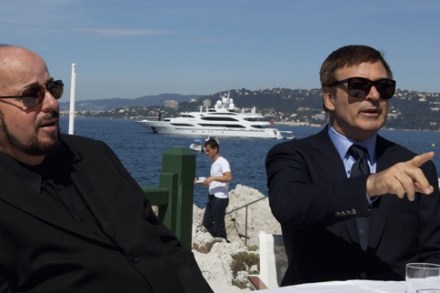
Seduced and Abandoned is both a satire on film-making and a love letter to film-making and a joy. A documentary made by the director and writer James Toback, in cahoots with his friend the actor Alec Baldwin, it follows the two as they work their way round the Cannes Film Festival, trying to raise financial backing for a film inspired by Last Tango in Paris. They schmooze. They lunch. They cajole. They beg. And in the process meet, among others, Martin Scorsese, Francis Ford Coppola, Bernardo Bertolucci and Ryan Gosling as well as the billionaire shipping heir and journalist Taki, who writes the High life column in this magazine, and whom they try to tap up for $20 million. Taki plays himself, but you know what? He’s so great, he may have a future in it.

Another dodgy deal with Gaddafi

From our UK edition

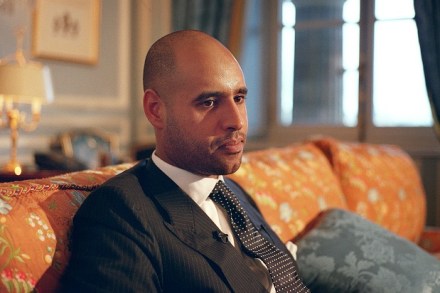
No, not Tony Blair in a big tent in the desert, but our man Taki in the Big Apple. In tomorrow's Spectator, Taki writes, with characteristic tact, on the Middle East. Mr Steerpike particularly liked this snippet: 'My friend Saif Gaddafi... was ‘detained’ while fleeing [Libya] and is held by some nice guys south of Tripoli. I call him my friend because we were introduced in New York four years ago and I mistook him for a coke dealer and politely asked if he had anything good.'  Apparently, he did not. The poor little Greek boy claims that Saif's gear was 'lousy'. Subscribers will enjoy this and more tomorrow. Non-subscribers can mend the error of their ways from just £1 an issue.

Being blind for 48 hours concentrates the mind

From our UK edition

New York Life is definitely beautiful, as long as one can see, that is, which for two miserable days last week I couldn’t. Having had a glaucoma operation two months ago, I needed to use drops for a while but didn’t pay attention — too many girls in their summer dresses, and things like that — and the next thing a pain started in one eye. I ignored it and went out and smoked and drank, and woke up the next day, opened my bleary eyes and felt nothing but extreme pain in both. I quickly shut them and the pain went away. I tried opening them again, and it got worse. It was the weekend and no one was around to help. Despite the pain I tried to telephone Switzerland and the mother of my children but couldn’t see the numbers on the dial.