Sydney

A poignant study of female attachment: Chosen Family, by Madeleine Gray, reviewed

From our UK edition

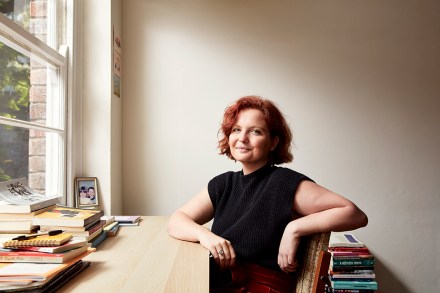
Madeleine Gray’s first novel, Green Dot (2023), was a witty account of a messy office affair, whose fans included Nigella Lawson and Gillian Anderson. Her follow-up, Chosen Family, is an altogether more expansive book. She has described it as the result of years of thinking obsessively about two things for a long time. First, why is it that every queer person I know (including me) has a story about having an intense friendship breakup in high school that years later they realise was probably their queer root? […] Two, why do more people not choose to have children with their platonic best friends? Surely raising a child with someone you trust implicitly and don’t have sex with makes more sense than the other way round?

Bondi Beach and the heroism of Ahmed al-Ahmed

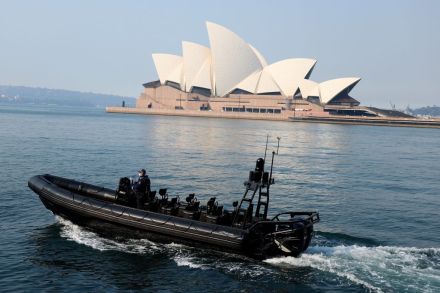
As the appalling story of Sunday’s anti-Jewish mass shooting at Sydney’s Bondi Beach continue to unfold, and 16 people are now dead, there have been few glimmers of light in the darkness. The men identified as the shooters are a father and son, Sajid Akram, 50, and Naveed Akram, 24. The father was shot and killed by police last night, and the son was overpowered and taken into custody. The New South Wales police commissioner says little is yet known about the pair, but Sajid Akram was a licensed gun owner, with six guns in his possession. Old social media posts have also emerged of Naveed Akram being praised for his Islamic studies in 2022.

ahmed

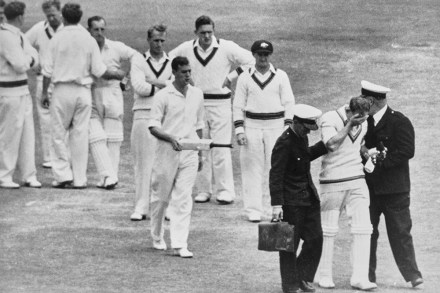
The force of Typhoon Tyson, Sydney, 1954

From our UK edition

Lord Hawke, the grand old man of Yorkshire cricket and stalwart of the MCC, was not one to mince words. A century ago, the administrator rejected calls for the national XI to be led by Jack Hobbs. ‘Pray God no professional shall ever captain England,’ Hawke said. ‘We have always had an amateur skipper and when the day comes when we shall have no more amateurs captaining England it will be a thousand pities.’ It took 27 years. Elizabeth II would be less picky about commoners. She knighted Hobbs in her Coronation honours in 1953, the same year that Len Hutton, England’s first professional captain, led the side to regain the Ashes after 20 years. To defend the urn Down Under, however, as he hoped to do in 1954-55, was a hard task.

Citizens of nowhere: This Strange Eventful History, by Claire Messud, reviewed

From our UK edition

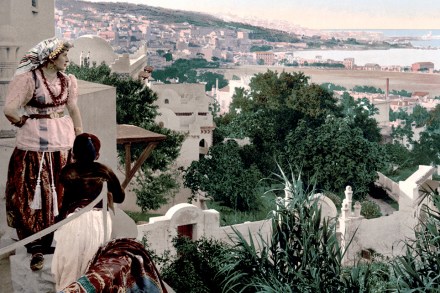
Any personal history is hard to fictionalise, not least because the story needs to be both universal and unique. Claire Messud manages to find the right balance in her latest novel, reconstructing her family’s past in vivid episodes that open a multitude of windows on to the world. Continents and decades chase one another as the narrative traces the movements of the Cassar family. Hailing from Algeria, for much of the book they are citizens of nowhere. Their tribulations begin in 1940, when Lucienne and her children, François and Denise, flee Greece (where their father, Gaston, has been posted as the French naval attaché) to wait out the war in the relative safety of an Algerian hinterland.

Heartbreak in the workplace: Green Dot, by Madeleine Gray, reviewed

From our UK edition

Hera, the heroine of Madeleine Gray’s first novel, is 24, which, as she says, ‘seems young to most people but not to people in their mid-twenties’. She lives in Sydney with her father and their dog and works as an online community moderator, but the contents of her work bag reveal her to be Bridget Jones’s edgier little sister: ‘My wallet, three pairs of underpants, headphones, nine tampons, a travel vibrator, two novels, a notebook, two beer caps, a bottle of sake and a fountain pen.’ She will also inevitably be compared to Hannah from Lena Dunham’s Girls and to Phoebe Waller-Bridge’s Fleabag. Gray’s writing style is droll but if Hera’s internal monologue sounds gauche and affected, it is useful to remember what the average 24-year-old sounds like.

Shame on the Cardinal Pell funeral protesters

From our UK edition

In Sydney today, the LGBT movement had its Westboro Baptist Church moment. It protested at someone’s funeral. Like that cranky religious sect in the US that noisily demonstrates at the funerals of soldiers, LGBT activists waved placards calling the deceased a ‘monster’ and ‘scum’. They chanted for him to ‘go to hell’. ‘Burn in hell’, said one banner. ‘Nonce’, said another. It was a truly disturbing spectacle. A new low in identity politics. It was Cardinal Pell’s funeral. Pell was Australia’s most important Catholic leader. He served as Archbishop of Melbourne and later as Archbishop of Sydney. He then went to Rome where he was Secretariat for the Economy in the Vatican.

Aussie’s rules: COVID is becoming Australia’s state religion

Sydney Social media is depressing at the best of times, but when you are on Day 60 of a lockdown that doesn’t let you stray more than five kilometers from your house, it’s a nightmare. Open up Facebook, and there’s an old high school mate smugly plopped down in a business class seat heading for Hawaii, toasting you with a glass of second-rate fizz. Flick over to Instagram, and your favorite little hotel in Tuscany has got the long table set for a 'celebration of love’ and the union of a couple who live someplace that doesn’t require exit visas of its citizens.

sydney australia

Salami of the sea

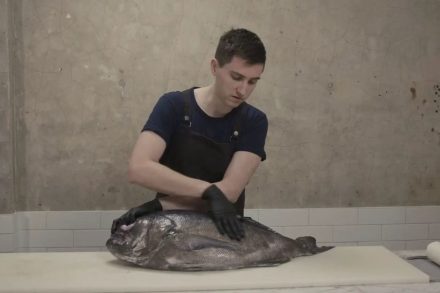
‘Seacuterie’ is a crime of a word. It looks OK in writing, if you don’t think about it too much, or if you’re the kind of person who approaches words like a scientist observing a new strain of bacillus. A linguistics student would point out that seacuterie is a portmanteau word, in which segments of multiple words are cut loose from their motherships and roped together into rafts of new meaning, producing such fantabulous and indispensable neologisms as ‘sheeple’ and ‘frenemies’. ‘Seacuterie,’ he’d tell you, is a portmanteau of ‘sea’ and ‘charcuterie.’ That’s all very well, but portmanteau or no portmanteau, ‘seacuterie’ sounds silly when you say it aloud.

seacuterie