Supreme court

Abortion and the culture war to come

I'm not ready to celebrate the death of Roe v. Wade just yet. The reason has more to do with baseball than it does with the Supreme Court. I'm a lifelong Boston Red Sox fan, which means I know what it's like to think you're about to win only to be crushed yet again. I remember well game seven of the 2003 ALCS when the Sox battled the Yankees 11 innings deep only for Aaron Boone to finish it with a walk-off home run. The next year, when Boston won the World Series for the first time since 1918, I didn't breathe until Keith Foulke threw to first for the final out. So it is now with Dobbs v. Jackson, the most important Supreme Court case of my life.

Alito

What happens after Roe?

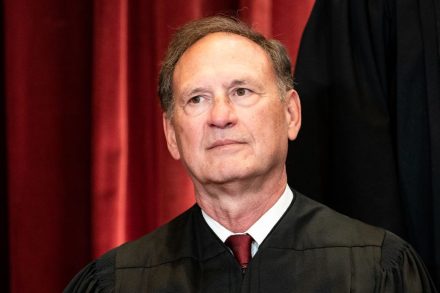
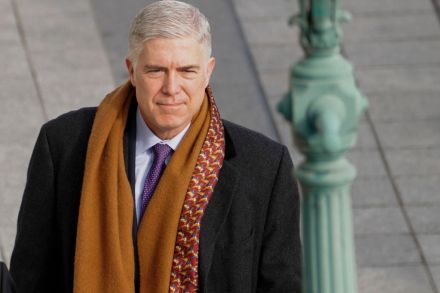
Earlier this week, Politico published a leaked Supreme Court majority opinion overturning Roe v. Wade by ruling in favor of Mississippi’s ban on abortions after 15 weeks. The leak is “unprecedented,” as Politico notes, and whoever provided the draft of the opinion should be fired or (if it was a justice) impeached. The court has not yet ruled on the case, and opinions can change. But it seems unlikely that Samuel Alito, Clarence Thomas, Neil Gorsuch, Brett Kavanaugh or Amy Coney Barrett, who are reported as favoring the ruling, will change their position. So what happens after Roe is struck down — if it is struck down? Abortions will continue to be available in states where they are legal. Roe provided federal protection for abortions.

A night of pro-life jubilation

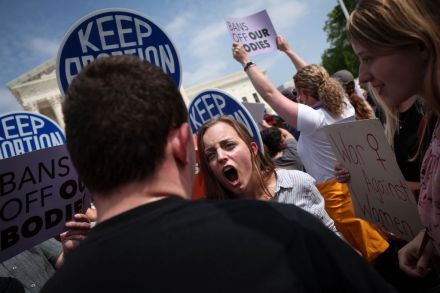
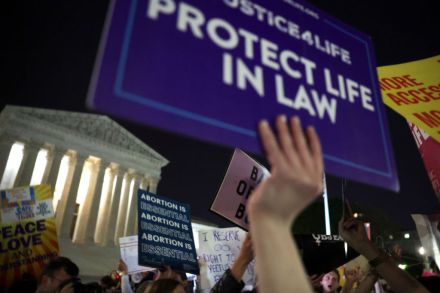
“Everybody want to know what I would do if I didn’t win,” said Kanye West, the only 2020 presidential candidate to truly grapple with the horrors of abortion, as he accepted his award for Best Rap Album at the Grammys in 2005. He paused. The room was silent. Then Ye dropped the bomb: “I guess we’ll never know.” The crowd erupted in applause. That’s the energy I felt Monday night at the Supreme Court as the world learned a majority of justices was prepared to strike down Roe v. Wade. You’ll find no nuance here. The pro-choicers lost, and I’m going to inject 500ccs of their tears straight into my veins. Cope and seethe. At around 9:30 on Monday, I was already in my pajamas, settling in for a quiet night with my wife. Then she showed me her phone.

The conservative legal movement sputters

In the four decades since the founding of the Federalist Society in 1982, the conservative legal movement has made great strides in recasting the federal and state judiciaries in its image. The Society is enormously popular on leading law-school campuses and has sent many of its leading lights into the federal judiciary. Numerous sitting Republican senators, some of them former Supreme Court clerks, came up through the Society’s ranks. Perhaps most remarkable, given the Society’s humble origins, five justices, the majority of the sitting Supreme Court, would identify as some sort of constitutional “originalist.

conservative legal movement

Breaking news: Clarence Thomas’s wife has opinions

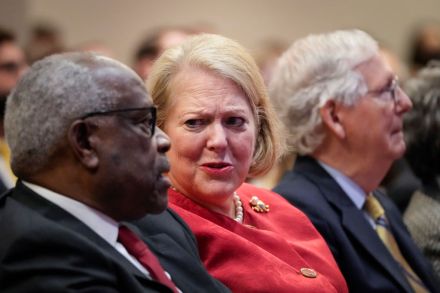
In one of its most desperate moves yet, the Select Committee to Investigate the January 6th Attack on the United States Capitol is considering subpoenaing Ginni Thomas, wife of Clarence Thomas. The Committee wants to review a handful of texts Ginni sent about the Capitol riot, which they feel may influence her husband’s decisions from the bench. The connection is weak, along the lines of Trump being the one who actually slapped Chris Rock. But the need to come up with a new crisis to return attention to the events of January 6 post-Ukraine is real. The genesis of this "crisis" begins with the Hail Mary plans to use the January 6 Committee to rescue Democrats from near-certain midterm electoral defeat.

Ben Sasse is right: no cameras in the Supreme Court

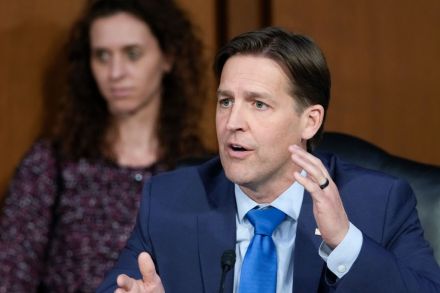
Senate carpool dad Ben Sasse recently made headlines when he went on a rant against installing TV cameras inside the Supreme Court. "A huge part of why this institution doesn’t work well is because we have cameras everywhere," Sasse said of Congress. He warned that televising the Supreme Court might cause it to go the same way, that it might incentivize, as he delicately characterized Congress's conduct, "jackassery." There's an entire anthology waiting to be written on Sasse's use of creative swearing in the Senate (after the January 6 riot, he waxed poetic about "kicking Hitler's ass and going to the moon"). Yet the senator from Nebraska is absolutely right.

Judge Jackson’s refusal to define a woman was disqualifying

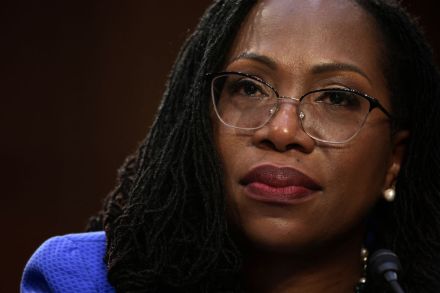
Asked by Senator Marsha Blackburn during the Senate Judiciary Committee’s recent hearings whether she could define the word “woman,” Judge Katanji Brown Jackson replied, “Can I provide a definition? No, I can’t. I’m not a biologist.” That's an interesting standard. Can Judge Jackson define a human being? Can she affirm that she is one? Apparently not. Only a biologist could do that — or a woke progressive liberal, and zie would be wrong. The Judge may possess certain credentials that would make her a worthy addition to the Court. Yet intellectual honesty, common sense, independence, and moral courage do not seem to be among them. A few members of the press took notice of her idiotic response, as did a sizable number of the Twitterati.

When Clarence Thomas mocked Cory Booker

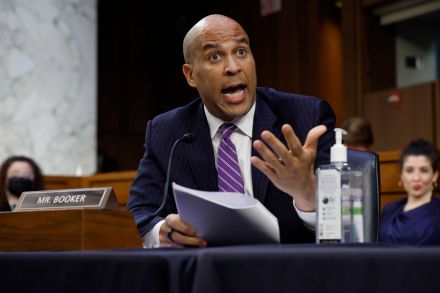
Cockburn has never thought much of Senator Cory Booker. At a time when Republicans are forever being accused of demagoguery and playing to the cheap seats, Booker does the same thing, only from the other side and with a smile firmly in place. That practiced enthusiasm was on full display Wednesday when Booker "questioned" Supreme Court nominee Judge Ketanji Brown Jackson. And by "questioned," Cockburn means "tossed flower petals on the ground before her while weeping uncontrollably." This clip, in which Booker praises Jackson's record and lauds her for being the first black woman nominee to the Supreme Court, went viral: https://www.youtube.com/watch?v=wk-0eryw1u0 Certainly Cockburn can understand why Jackson's nomination struck a personal chord with Booker.

lgbtq

If you must be white, try to be LGBTQ

Poor Colin Kahl. The Stanford professor is qualified, experienced, and shares President Biden’s views on defense and foreign policy. Ordinarily, that would be enough to get confirmed to a job like undersecretary of defense for policy. But no more! Three and a half years after #MeToo, the casting couch has migrated from Hollywood to Capitol Hill, thanks to Sen. Tammy Duckworth. On Tuesday, Sen. Duckworth announced that, since President Biden’s political appointees were insufficiently diverse, she would be voting against any Biden nominees with white skin color, starting with Kahl. The only exception, Duckworth said, would be for LGBTQ nominees. Well, Kahl will have a hard time pulling off a racial rebranding this late.

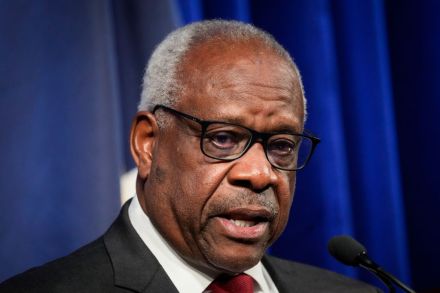
The latest smear campaign against Clarence Thomas

Justice Clarence Thomas and his wife Virginia (Ginni) made the cover of the New York Times Magazine on February 27 amid an eleven-page article titled “The Long Crusade of Clarence and Ginni Thomas.” The authors are Danny Hakim and Jo Becker. It is in essence a hit piece, and the latest of several in the left-wing media aimed at undermining the legitimacy of Justice Thomas’s jurisprudence. The first salvo came in late January from Thomas’s long-time antagonist Jane Mayer in The New Yorker, but other eager journalists have stepped through Mayer’s muddy footprints. Three of their publications — the New Yorker, the Guardian, and CNN — contacted me because Ginni Thomas serves on the advisory board of my organization, The National Association of Scholars (NAS).

How the Supreme Court lost its real diversity

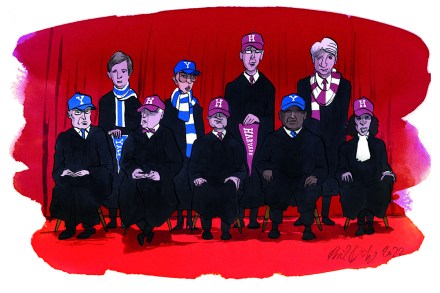
If you followed the nominations of Brett Kavanaugh and Merrick Garland, or the news after Stephen Breyer announced his retirement, you might have concluded that the country has never been more divided on what makes a good Supreme Court justice. Kavanaugh’s hearings were among the most divisive and brutal in history, but he at least had a hearing: Garland’s nomination was dead on arrival in the Senate. The selection of justices has become a preeminent political issue.

court

A law school excommunicates a heretic

In Christianity, it’s referred to as “excommunication.” In Judaism, it’s known as “Herem.” On today’s law school campuses, where one misconstrued tweet can land you an ecclesiastical censure, it’s called “administrative leave.” Ilya Shapiro, senior lecturer and the executive director of the Georgetown Center for the Constitution at the university’s Law Center (GULC), is the latest casualty of the puritanical terror currently bedeviling higher education.

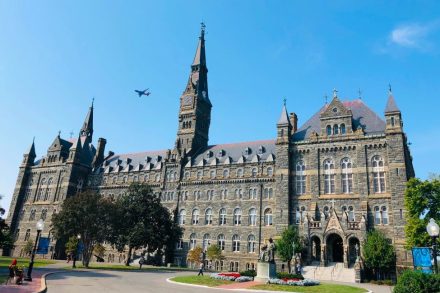
georgetown

‘Kamala for SCOTUS’ is a distraction Biden wants

No, Kamala Harris will not be Joe Biden’s nominee to replace Justice Steven Breyer when he retires from the Supreme Court later this year. “Imminent Supreme Court retirement?” ejaculated CNN legal analyst Jeffrey Toobin earlier this month. “Longshot: VP Kamala Harris,” he suggested. NBC scooped on Wednesday that Breyer would step down at the end of this term — and more cranks joined the Kamala chorus. “Kamala Harris for the Supreme Court. #KHive She cannot win election with these numbers (yes it’s unfair, but Kamala is a pragmatist) she’s young, she’d be a great justice — and she’d spend a lifetime on the bench,” tweeted Louise Mensch. “@amyklobuchar for Vice President.” “Straightforward from here,” wrote Bill Kristol.

scotus kamala

Get ready for a brutal Supreme Court fight

During the recent Supreme Court arguments in the school choice case Carson v. Makin, Justice Stephen Breyer asked the following concise question: I -- I might ask this because it's related to what Justice Kavanaugh said and -- and what you're saying. I mean, it is discriminatory against religion, but I think the Establishment Clause problem or interest underlying it forever has been beware if the government gets too involved. One, people will think the government favors some things as opposed to others, and that that will cause strife. Two, the Vietnamese boat people will have no problem in Los Angeles, but they sure will in Maine because there aren't enough of them.

Abortion has poisoned American politics. Good

In the months before and after the 2020 presidential election, I was ready to take the blackpill. I had become convinced that our culture was on an irreversible decline into ever greater depths of progressive depravity and that reactionary politics would only make things worse. Trump had poured fuel on the fires he was supposed to be extinguishing. Every institution that had been neutral in 2016 was overtly woke by 2020. Even as he was emboldening the left, Trump was also corrupting the right. People I love were becoming crude, cruel, and cultish. The Christian right had utterly beclowned itself at the Jericho March.

The Supreme Court case that could end Roe v. Wade

Nearly 50 years after Roe v. Wade unleashed a constitutional right to abortion and redefined modern American politics, Dobbs v. Jackson Women’s Health Organization has arrived as its foil. In a term already packed with high-profile cases ranging from gun rights to religious liberty to the death penalty, the Supreme Court has announced it will hear arguments in Dobbs on December 1. In doing so, the Court has opened the door to overturning Roe and its sister case, Casey v. Planned Parenthood, sending the question of legal abortion back to the states. The case itself centers on a 2018 Mississippi law that, with limited exceptions, bars abortions after the 15th week of pregnancy.

roe

Narcing and shaming: beware the Texas abortion law

For a people supposedly united by their great and abiding love of freedom, the pandemic year has been an interesting test of Americans' commitment to their country's founding principles. Sure, life, liberty and the pursuit of happiness are great — but have you tried surveilling, spying and snitching on your neighbors amid an endless state of emergency? Turns out, many folks in the US are quite willing to sacrifice various freedoms if it means they get to scold and punish others, particularly their ideological opponents, for breaking the rules. The past two years have seen many Americans embrace their inner authoritarians, treating shamings like a spectator sport and excoriating the noncompliant with evangelical zeal.

texas

The battle over abortion has only just begun

The battle to overturn Roe v. Wade is nearly over. The battle to end abortion is about to begin. When the Supreme Court declined to block a Texas law banning abortion after six weeks, the pro-life movement won its first significant victory in decades. Next year, SCOTUS will rule on a Mississippi law that directly challenges Roe v. Wade. If Roe survives, the fight to overturn it is over, at least for our lifetimes. Abortion as a constitutional right will become truly settled law. If Roe falls, or is narrowed, the fight will turn to the states. Either way, the war is about to enter a new phase, and to that end pro-lifers should keep three things in mind. 1.

abortion

Supreme Court rules big for election integrity

The Supreme Court upheld two Arizona voting laws on Thursday in a case that could have major implications for election integrity across the country. The two Arizona laws at stake in Brnovich v. Democratic National Committee prohibited ballot harvesting — which most commonly refers to political operatives collecting voters's ballots en masse and turning them in to polling places on their behalf — and tossed ballots that were cast in the wrong precinct. The DNC argued in its initial lawsuit that the laws violated the Voting Rights Act because they were discriminatory against minorities and did not appear to prevent voter fraud.

supreme court

The battle of the Bible thumpers

The Supreme Court yesterday administered a well-aimed slap in the face to a liberal arts college in Georgia that employed grotesquely authoritarian methods in order to silence Christian students attempting to witness to their faith. Georgia Gwinnett College prides itself on being the most 'diverse' college in the South. But when, in 2016, a student called Chike Uzuegbunam tried to evangelize and hand out pamphlets, the campus police decided to give him a taste of what life was like for Christians behind the Iron Curtain. Wrong sort of diversity, you see. Now, I'm the first to agree that Evangelical Christians — or any other religious radicals — can make a bloody nuisance of themselves on campus.

supreme court bible gwinnett