Supreme court

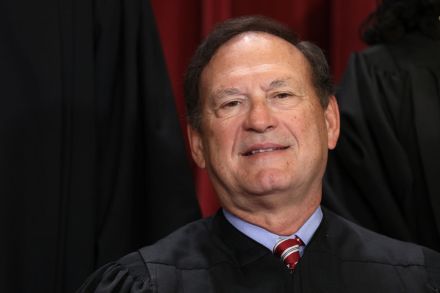
Justice Alito stirs the pot

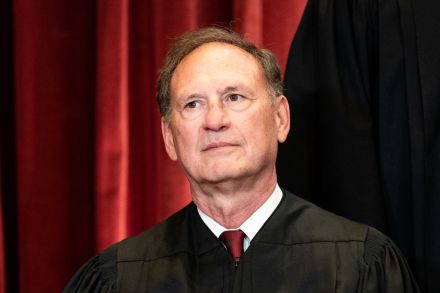
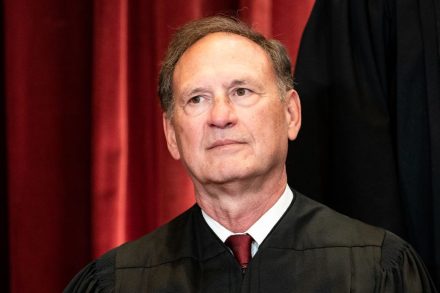
Fool me once, shame on you; fool me twice, shame on me. This old adage has taken on a new meaning for the left as Supreme Court Justice Samuel Alito is developing a bit of a habit for displaying allegedly "far-right" flags. In under a week, the New York Times has unearthed images of dissident flags waving proudly at the justice’s house on two separate occasions, leaving Democrats clamoring about judicial ethics.   The smoking gun in the controversy is an “Appeal to Heaven” flag that was seen flying at Alito’s summer home on Long Beach Island in New Jersey last summer. The flag, which depicts a pine tree, was first used during the American Revolution but has since become associated with the “Stop the Steal” movement after being brandished by January 6 protesters.

samuel alito

The return of Christine Blasey Ford

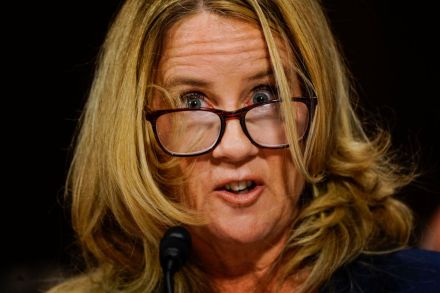
Christine Blasey Ford, the professor who accused Supreme Court justice Brett Kavanaugh of sexually assaulting her in high school, is back in the spotlight. Five-and-a-half years on from her public testimony about her allegations, Ford has released a memoir titled One Way Back. Amazingly, Ford has once again conquered her crippling fear of flying — which delayed the Senate’s investigation into her claims back in 2018 — to promote her book on major television programs. Blasey Ford first accused then-Supreme Court nominee Brett Kavanaugh of assaulting her in a confidential letter to the late Senator Dianne Feinstein’s office. Feinstein kept the letter to herself for weeks until revealing the letter to Democratic colleagues, who urged her to act on the information.

Biden’s absurd student loan ‘solution’

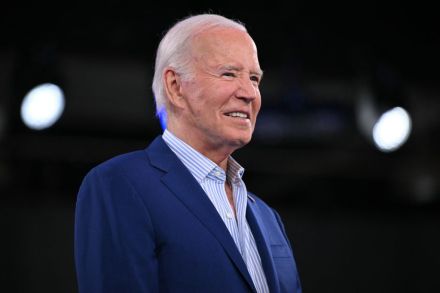
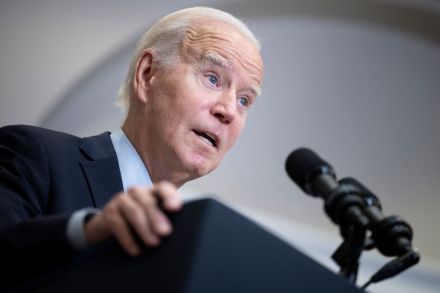
You’ve got to hand it to President Biden — when he puts his mind to something he doesn’t let mere semantics like the rule of law stop him. Despite an earlier Supreme Court slap down, “Middle Class Joe” provided an upper-class gift to some 150,000 college graduates in the form of $1.2 billion in student loan forgiveness. That brings total educational loan forgiveness under this White House to $137 billion effectuated by nothing more than a stroke of Biden’s pen via executive order. Biden openly boasted of his defiance, all but inviting the justices to try to stop his patronage gambit. It’s not that anyone can blame him, because it’s a political win-win for the White House.

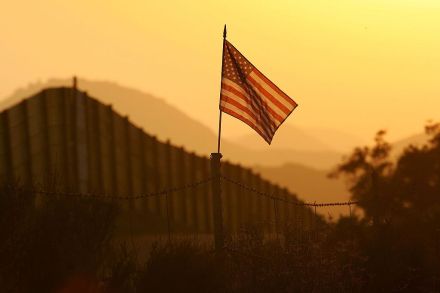
2024 and the invasion at the southern border

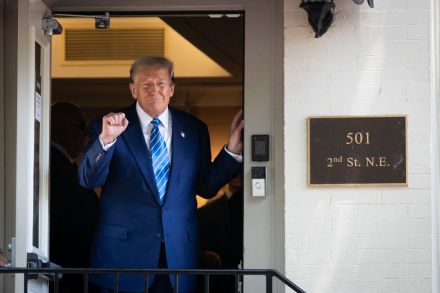
Donald Trump crushed the New Hampshire primary, as every poll in Alpha Centauri predicted he would. Nevertheless, his sole remaining opponent for the GOP nomination, Nikki Haley, “vowed to fight on.” Why? A cynical person might suggest the interaction of two volatile liquids: cash, on the one hand, and consultants, on the other. Haley is swimming in both. The cash is coming from two sources: brittle, establishment faux conservatives like the Kochs and wily Dem operatives like the billionaire Reid Hoffman who, in addition to shoveling gobs of money to Nikki Haley, is also funding such entrepreneurial activities as E. Jean Carroll’s bizarre lawsuit against Donald Trump. In a sane world, the support of a malignant figure like Hoffman would be disqualifying for Haley.

border
Supreme Court

The Supreme Court takes on the administrative state

After consecutive Supreme Court terms with major rulings on abortion, guns and affirmative action, the justices don’t have anything on the docket now that will roil the culture wars. (The Trump ballot case to be argued as this goes to press will be a small blip.) Instead, this year our black-robed philosopher-kings are doing battle with the administrative state — which Steve Bannon promised to “deconstruct” when Donald Trump took office last go-round. That shouldn’t be surprising; notwithstanding the media trope that Trump “stacked the court” to overrule Roe v. Wade, it was instead potential nominees’ commitments to reining in the bureaucracy that was White House counsel Don McGahn’s focus.

The effort to keep Trump off the ballot has been a century in the making

What happens now that the Colorado Supreme Court has kicked Donald Trump off the primary ballot? The first thing, apparently, is similar lawsuits in other “blue” states. Those will continue despite the Wednesday decision by the Michigan Supreme Court that Trump’s name can remain.   Nearly all the commentary has been devoted to the legal reasons for these rulings and their political implications. But it is important to consider the effort to exclude Trump in a wider context, one that goes beyond his personality, polarizing candidacy and events of January 6.  That wider frame is a century-long progressive effort to reframe the way America is governed and to loosen the constitutional barriers to those changes.

trump ballot

Trump off the ballot?

You don’t have to be a Trump supporter (I am not) to be deeply troubled by Colorado court decision to keep Donald Trump off the primary ballot. Let me count the ways. First, the reason Trump is being excluded is new, untested, and profoundly controversial in its application here. Basically, the court is saying Trump cannot appear on the primary ballot because of a subsection of the Fourteenth Amendment meant to exclude Confederate officials who waged a civil war against the United States. Using that provision to exclude Trump is utterly novel. Its unprecedented use here invites the conclusion that it is being wielded as a political sledgehammer by Trump’s opponents and that some of those opponents wear judicial robes.

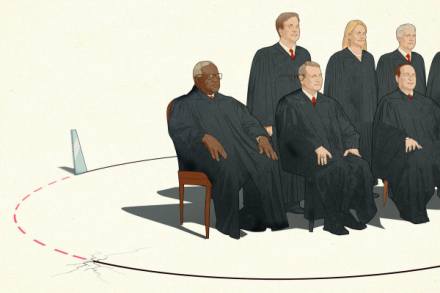
Inside the progressive war on the Supreme Court

In the basement of a Washington, DC restaurant, 200 ticket-purchasing fans have gathered to witness the live recording of a multifaceted conversation about the villainy and corruption of the Supreme Court, and one justice in particular. It only seems appropriate to order the shrimp and grits: it costs $19.99 and comes with a white-wine tomato sauce. This may seem rather hifalutin, but it also comes in a glass mason jar that references tired hipster kitsch — perfectly suitable for a live podcast hosted by Slate.

Supreme Court

Why legacy students aren’t a civil rights issue

I just caught the news that four pages in a notebook dated 2014 and stuffed into a couch cushion have been accepted as a valid will for the late singer Aretha Franklin. The jury that decided this enriched two of her sons and disappointed a third son, who was favored in an earlier will. This is what I call a legacy. But America is all worked up about another kind of legacy. I refer, of course, to the endearing habit of colleges and universities to give a leg up to the kinder of their alumni. Why do they do this? And why are so many people worked up over it?  These aren’t hard questions. Colleges have two reasons for their legacy programs.

legacy

Is the age of the legacy student over?

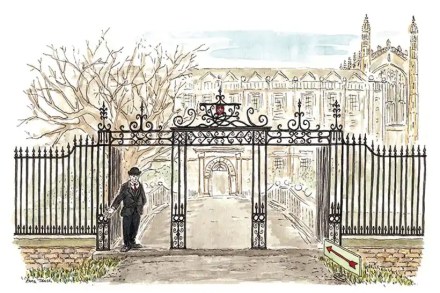
Johnston’s Gate isn’t the only entrance to Harvard Yard. For years, money, status and secret lists have opened back doors into Harvard University for a select group of privileged students. And the easiest way to open these doors? The right parents. According to the Harvard Crimson, over a third of the class of 2022 had a parent or other relative who attended Harvard. In the wake of the Supreme Court’s ruling against affirmative action, the admission policy that has created America's aristocrats is starting to take some heat. Could legacy admission be the next to go? Three Boston-based advocacy groups say yes.

small colleges legacy

Meritocracy now!

Last Friday, a day after the Supreme Court’s decision on affirmative action, I noted the gap between the Democratic Party’s leaders and its voters on race-based admissions. Polls find a majority of Democrats opposed to using race as a factor in admissions. The party’s elite, however, is almost universally in favor of affirmative action — as hysterical reactions from the president and others made clear.  But that was last week. Now that the dust has settled, and everyone has had a chance to cool down over July 4, have the Democrats gained some Independence-Day perspective on the end of race-based decisions? Not really.

The new battleground for abortion

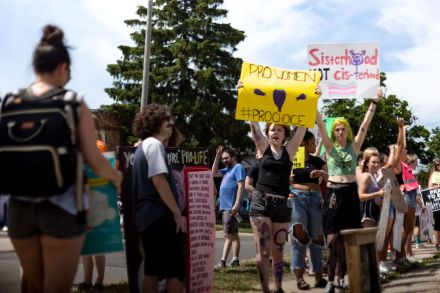
It’s been just over a year since the Supreme Court decided in the Dobbs case to overturn Roe v. Wade — and pro-life activists were right when they predicted that the fight against abortion was just getting started.  Of course there was plenty for them to celebrate in the aftermath of Roe, which essentially kicked the issue of abortion back to individual states. Thirteen states had “trigger laws” in place that would almost immediately enact near-total bans on abortion, with some exceptions, in the event Roe were overturned. Other states reacted to the Supreme Court’s ruling by passing gestational bans on abortions ranging between six weeks after conception and fetal viability outside the womb.  The new bans are already saving unborn lives.

abortion

NPR says Asian Americans should love affirmative action

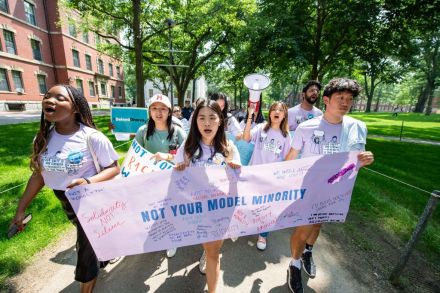
NPR thinks Asian Americans should stand against the Supreme Court’s ruling on affirmative action whether they like it or not. In an article published Sunday, NPR’s race and identity correspondent Sandhya Dirks argued that white conservative activists have used affirmative action to divide Asians from other communities of color for far too long. In fact, Asian students have nothing to lose by embracing the practice.  Per the article, Asian Americans became proxies for white privilege when affirmative action lawsuits brought by white students failed in 2013. To beat the legal system, Edward Blum, the head of Students for Fair Admissions, approached Asian students who he claimed had been hurt by biased college admissions.

harvard npr

The president versus the court

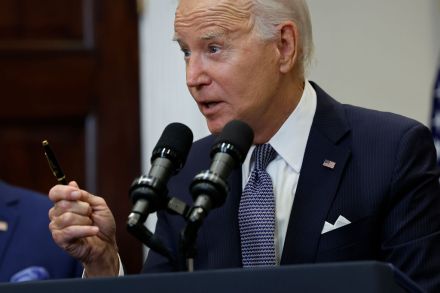
Joe Biden’s best days may be behind him, but the president’s talent for feigning moral outrage is undiminished. That much was clear from the president’s reaction to Supreme Court decisions in the last few days, in particular his remarks in response to the court’s rulings on affirmative action and his administration’s student debt forgiveness program.  This week has served as a reminder that Biden is a president who knows his survival depends on drawing the most demagogic caricature of his opponents he can get away with.

college student debt mike hilgers student loan forgiveness

SCOTUS has made the right call on student debt forgiveness

The Supreme Court correctly overruled President Joe Biden's attempt to use executive power to forgive student loan debt on Friday. As the court explained, while the HEROES Act gives the president the emergency authority to "waive or modify any statutory or regulatory provision applicable to" student loans, the intention of the legislation was for modest, mostly procedural, changes. It was never meant to confer the power to cancel debt entirely, and certainly not to the tune of over $400 billion on the taxpayer dime. Further, Biden justified forgiving student debt under the HEROES Act by defining the Covid-19 pandemic as a "national emergency." Unfortunately for his legal chances, he declared the pandemic "over" just weeks after announcing the forgiveness plan.

singapore

Singapore should serve as a model for how to fix racial disparities

In theory, the SCOTUS decision to strike down affirmative action in higher education should be considered as part of the post-George Floyd racial reckoning to “dismantle systematic racism.” But judging by the hysteria going on over at MSNBC and condemnations from President Biden, it’s clear that the activist class and American intelligentsia have a very different conception of what exactly constitutes racial justice. Two and a half years on, this racial reckoning has instead produced higher murder rates, generational declines in basic literacy among students — with the sharpest declines among black and Latino kids — and a massive transfer of wealth to an ever-growing DEI bureaucracy, BLM grifters and gurus like Ibram X.

softball

Trans women take over DC softball

It’s not just women’s high school and college sports that need to be protected from biological men, apparently. The DC intramural softball circuit has become another battleground for “trans rights.” Cockburn has learned that Democratic and progressive co-ed teams are skirting league rules regarding how many women must play in each game by filling their spots with trans women — i.e. those born as males. The Center for American Progress, a left-wing think tank, fielded an over-six-foot trans woman in a recent game against a conservative media outlet. Some players on the team said that it didn’t matter much because the person was not very good at softball, while others got the impression that he/she was intentionally playing poorly to avoid criticism.

harvard supreme court

Why the Supreme Court’s Harvard decision matters

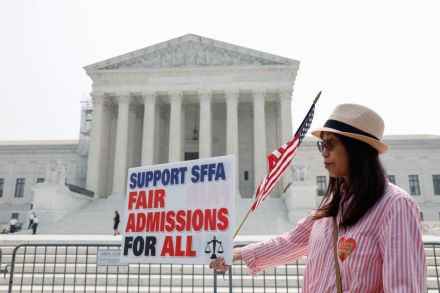
The decision is all anybody can talk about. Well, that’s not exactly true. It’s the banner headline in the New York Times, but if you scroll down or turn the pages, you will find something on “Smoke From Canada Fires Stretches From Midwest to East Coast,” and ‘Dangerous High Temperatures Stretch Across the South.” The world hasn’t stopped spinning and Mr. Putin is still causing trouble. A French police officer killed a seventeen-year-old French citizen of Algerian and Moroccan descent, touching off riots in several cities.  But the story that has riveted the attention of America is the Supreme Court’s decision in Students For Fair Admissions, Inc. v. President and Fellows of Harvard College. And for good reason.

Clarence Thomas is no hypocrite

Anyone looking for a villain in the Supreme Court’s decision to strike down decades of affirmative action precedent will find one in Clarence Thomas. Critics have long found Thomas’s politics vexing in light of his race, a frustration that has only grown more pronounced as the affirmative action decision drew near. To hear his detractors tell it, Thomas was himself the beneficiary of affirmative action policies, both as an undergraduate at the College of the Holy Cross and later at Yale Law School. That Thomas could have such an experience and still strike down race-based admissions policies seems to make him a hypocrite — and an ungrateful one at that.