Suffragettes

They felt they could achieve anything together: two brave women in war-torn Serbia

From our UK edition

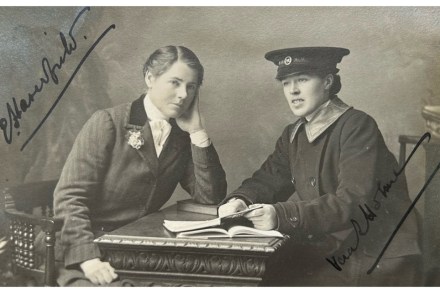
Lesbian military fiction is a popular genre, featuring titles such as Silver Wings and An Army of One, but Jack and Eve is a true story. Written by the journalist Wendy Moore, whose previous books tackled medical and social history, it tells of two suffragettes who caused havoc in the first world war and exposed the absurdity of Edwardian homophobes. Before the war, the jobbing actor Vera Holme, who liked to be known as Jack, changed careers to become Emmeline Pankhurst’s mechanic and chauffeur. In 1908 she met Evelina Haverfield, the conventionally beautiful, wealthy daughter of a Scottish baron. The two fell in love, began living together and soon became the public faces of the suffragette movement. Brave and out-spoken, they fought their corner fearlessly and went to prison.
After Queen Victoria, the flood

From our UK edition

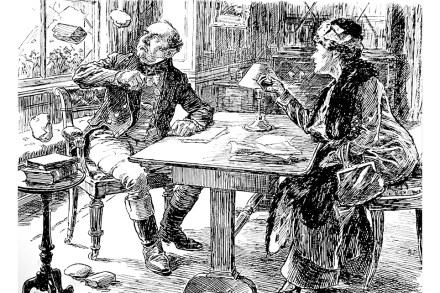
Alwyn Turner writes early on that Little Englanders is ‘an attempt to take the temperature of the nation as it emerged from a century that had dominated the world and was beginning – whether it knew it or not – a long process of decline’. Perhaps for that reason, or perhaps because the high (and low) politics of the years from 1901 to 1914 – the Edwardian era continues for four years after the death of the eponymous sovereign, up to the lights going out all over Europe in August 1914 – have been so exhaustively covered in recent years, he tells his readers that he will draw heavily on popular literature, on the songs of the music hall and on the newspapers.

Democrats revise their own party history

The political left isn’t content to secretly smelt statues of Robert E. Lee or remove a plaque honoring the Confederate general’s horse, Traveller. Apparently, the Democratic Party’s own history is too problematic to bear.  Over the years, the Democratic Party’s official website has undergone some curious changes. The Spectator previously reported on the Democrat logo changing from sky blue to royal blue after President Joe Biden took office. It seems the “Our History” page is also getting whitewashed.  Since 2019, the history page has neglected to mention anything about the Democratic Party prior to the 1920s.

democratic party

Where to start with the music of Ethel Smyth

From our UK edition

I’m reminded of an old Irish joke. A tourist approaches a local for directions to Dublin. The local, after much teeth-sucking and head-scratching, eventually replies: ‘Well, I wouldn’t start from here…’. The news that, 75 years after her death, English composer Ethel Smyth has won a Grammy Award for her last large-scale work The Prison is as excellent as it is unexpected. But it’s also frustrating because, well, if I were setting out into Smyth for the first time, I really wouldn’t start from there.

Are we still prejudiced against professional women?

From our UK edition

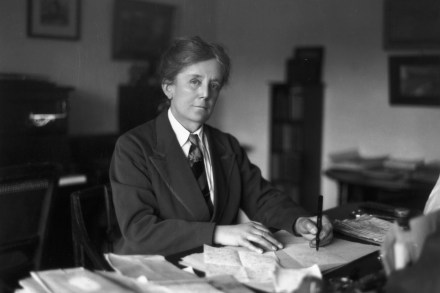
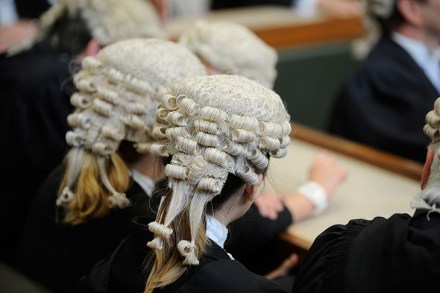
In Ladies Can’t Climb Ladders, the social historian Jane Robinson — whose previous books include histories of suffragettes and bluestockings — champions British women who were ‘first-footers’ in the elite fields of academia, architecture, the Church, engineering, law and medicine.One and a half million women joined the workforce during the first world war (at half the pay of their male counterparts). After the war, however, they were expected to cede their jobs to returning servicemen and resume the role of ‘angel in the house’. The 1919 Sex Disqualification (Removal) Act allowed women to qualify for professions, but it was limited in scope.