Sport

Car crash in the desert?

From our UK edition

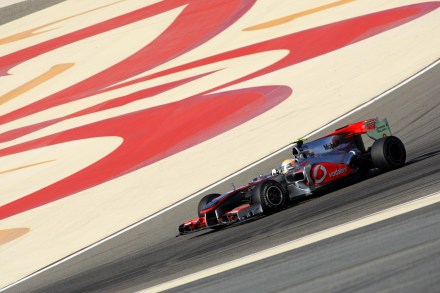
In 2004, when the Formula One circus first travelled to the Middle East for the inaugural Bahrain Grand Prix, there was little sign of the storm to come. The first event was hailed as a success — and not just for Michael Schumacher, who notched up his 73rd victory in the Sakhir desert. The FIA — the sport's governing body — even declared it that year's ‘Best Organised Grand Prix’. Few would have guessed then that, eight years later, so many would want to see the race cancelled. But when the calls came — first from Nabeel Rajab, the Vice President of the Bahrain Centre for Human Rights, two days after Bahraini police were accused of beating him — it wasn’t such a surprise.

All to play for | 4 February 2012

From our UK edition

There was a time when sportsmen fretted about the morality of being paid to play. Now the question is whether you are taking money to win, or taking money to lose. Mervyn Westfield, the Essex fast bowler, was only 20 when he accepted £6,000 to bowl deliberately badly in a county match. Three Pakistani cricketers, of course, are in prison for the same offence. How quaint the old distinction between the amateur who plays for love and the pro who toils to make ends meet now appears. How did sport become so morally complicated? It was the Victorians, as Mihir Bose explores in The Spirit of the Game, who decided that sport had to be good for you. The Georgians, in contrast, had been content with sport’s more obvious pleasures of gambling, blood-letting and licentiousness.

Let’s remember McDonald Bailey in 2012

From our UK edition

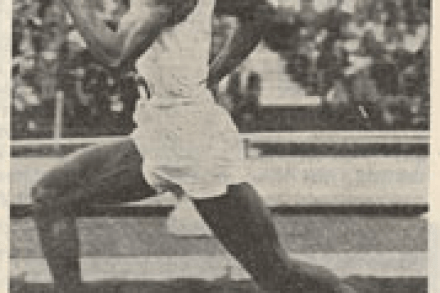
McDonald Bailey was certainly among the most famous names in British sport when Britain last hosted the Olympics, in 1948. Yet today he has almost been forgotten. It's not how it should have been. He should have been our Jesse Owens. Look at a photo of the British Olympic team of 1948 and Bailey stands out as the only black face in a monochrome sea. He was, you see, from Trinidad. He could have run for them in the Games had they decided earlier whether or not to send a team. But instead he took up the British offer, and became a crowd favourite and the face of British athletics at the time. This fame, however, had little to do with his race, but more because he was among the fastest men on earth, jointly holding the 100m world record (of 10.2 seconds) with Owens himself.

Bookends: The year of living dangerously

From our UK edition

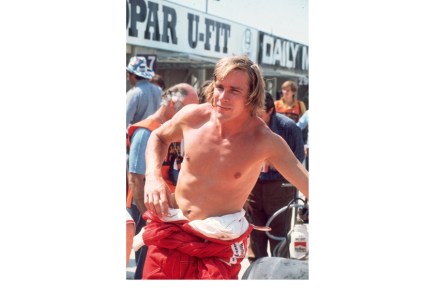
Most people who recall 1976 do so for its appallingly hot summer, when parks turned brown and roads melted. Some will also remember that the celebrity culture throve then as now and that none was more celebrated than James Hunt, Formula One world champion. He was even more celebrated than that most famous soap opera, the marriages of Richard Burton and Elizabeth Taylor; Hunt, who had a natural gift for celebrity, contrived to yoke theirs to his by handing his wife to Burton, who divorced Taylor to marry her. The two men remained good friends. A few others will remember 1976 for the nature of Hunt’s triumph that year, his dual with the reigning world champion, Niki Lauda, and his last second victory by one point.

Lake Michigan days

From our UK edition

It is probably hard to enjoy this new big novel from America without some understanding of the shortstop’s position on the baseball field. But that is easily remedied, thanks to YouTube, where searching for ‘shortstop, fielding’ arouses multiple videos that compete for attention, with stars of the game in their infield position between second and third base, taking ground balls hit at, near, or even away from them, scooping them up, throwing to first base for the out: something the shortstop does six or more times in a game.

The great game

From our UK edition

Some of the best writing about sport in recent years has been done by journalists who tend their soil, so to speak, in another parish. Peter Oborne’s biography of the Cape Town-born England cricketer Basil D’Oliveira was a deserved prize-winner, and another political scribe, Leo McKinstry, has done justice to Geoffrey Boycott, the Charlton brothers and Sir Alf Ramsey. Now he has turned his attention to a batsman whose career, measured in statistics, goes a long way to justifying the subtitle of this latest book, ‘England’s Greatest Cricketer’. Born in a modest Cambridge home, admired by all who played with him for his decency as well as his skill at the crease, Hobbs was the first professional cricketer to be knighted.

Does the trouble at FIFA really matter?

From our UK edition

The news that the votes which ended up with Russia and Qatar winning the rights to host the 2018 and 2022 World Cups might not have been model, clean elections is about as surprising as the news that the faeces discovered in the woods are believed to be of ursine origin. In the Independent today, Dominic Lawson cuts through the seemingly continuous media coverage of the matter to the question of whether it actually matters: “More to the point, given that there are no objective economic benefits to the nations holding such competitions (whatever the kudos to local political dignitaries such as Boris Johnson) shouldn't we as taxpayers feel grateful if other countries managed to offer more successful bribes? They, and not us, are the ones who've been Blattered.

Developments in the Middle East are beginning to affect Europe

From our UK edition

After yesterday’s spontaneous clean-up operation on the streets of Cairo, protestors gathered at Freedom Square today to maintain the revolution’s momentum. There have been minor developments, with the army and its interim civilian administration dissolving President Mubarak’s gerrymandered parliament, preparing the way for an election in the future. The timetable for that election remains a mystery – something about which the international community, led by President Obama and assorted European leaders, is questioning without yet expressing concern.

Sexism is a red-herring; it’s family that matters

From our UK edition

I'm afraid that women have been faking it, having us men on. You see they understand the offside rule and always have done. How could they not? It’s so simple that even a brace of abject football pundits know that an actively involved player is offside when he is closer to the opponent's goal line than both the ball and the second-to-last defender, but only if he is in his opponent's half of the pitch. Messrs Keys and Gray may not be too sharp on interpretation – unlike the ‘young lady’ (£) they berated - but they’re smoking hot on the theory. So do me a favour love and drop the act. We’ve busted your ditzily saccharine ruse and now you must live Saturday’s trials and tribulations with me.

Spectator Sport: Tweaking the Formula

From our UK edition

The annual Ferrari junket to Madonna di Campiglio in the Italian Alps last week is, understandably, regarded by motor-racing journalists as the king of freebies. Expect a whole slew of sports stories about the new Formula One season, which roars off in a few weeks in Bahrain. But, in truth, 2011 has a fair bit to live up to. There was an excellent narrative last year as the championship battle went to the wire in Abu Dhabi with four drivers still in the hunt. The season might have been a thriller but it was still very apparent that modern grand prix racing cars aren’t very good at their core purpose: racing. So this year, a lot of very rich men will be crossing their fingers that the on-track show will have improved.

Spectator Sport: Does anyone care about the cricket world cup?

From our UK edition

It seems churlish to be having a bitch just when two enthralling Test series are being played out in Australia and South Africa. And how enthralling they are too, by the way, the SA-India series being if anything even better than the Ashes. The sight of South African bowlers really having a go at Indian batsmen is the most pulsating drama in world cricket. And as for the Ashes, wasn’t England’s 517-1 declared one of the most astounding stats from last year? And that was scored not in Chittagong or Bulawayo, but in Brisbane against the Aussies. It’s a score that properly belongs in a battered Wisden from the 1930s.

From the archives: Cricketing over Christmas

From our UK edition

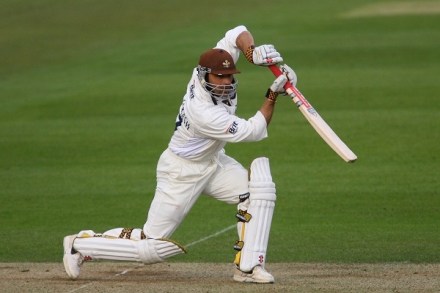
How do cricket players get on with touring abroad over Christmas? Mike Atherton, the former England captain, penned an article on the matter for our Christmas issue in 2004. With England currently taking it to the Aussies in Melbourne, I thought it would be a good time to excavate it from the archives:  Some like it hot, Michael Atherton, The Spectator, 18 December 2004 ‘It is no more a place for them than a trench on the Somme’ was the withering verdict of John Woodcock, the Times’s cricket correspondent, on the presence of wives on an England tour three decades ago. Woodcock, it must be said, was and is single, but he is no misogynist.

Spectator Sport: The prizes they’re all waiting for

From our UK edition

It’s time for the traditional, much-coveted Spectator Sports Awards, and this year your judges have been busier than Mitchell Johnson’s tattooist as we look back over a memorable 12 months. It’s time for the traditional, much-coveted Spectator Sports Awards, and this year your judges have been busier than Mitchell Johnson’s tattooist as we look back over a memorable 12 months.

From the Archives: 1966 and all that

From our UK edition

Yesterday, Coffee House recommended that disappointed English football fans take solace, as always, in memories of 1966. To that end, here's The Spectator's review of England's World Cup victory at the time. These were clearly more innocent times, as evidenced by the closing observation: "whether we win or not is not a matter for negotiation between heads of states or men in striped pants." Their cup runneth over, D.N. Chester, The Spectator, 5 August 1966 Let it be for ever recorded. At 5.15 pm on Saturday July 30 1966, the Swiss referee blew his whistle and England had won the World Cup for the first time, having just beaten West Germany 4-2. Winning deservedly, in my opinion, for they were the best all-round team in the competition.

Cameron can be proud of his World Cup fight

From our UK edition

It’s not often that I disagree with James, but I don’t think that David Cameron returns from Zurich with egg on his face. Of course, we Scots learn to see the upside in sporting defeat, but I really do believe the World Cup bid was a credit to England – and to the Prime Minister. That video which Pete blogged yesterday spoke with incredible elegance: England is already the home of world football. People get up at 4am in Singapore to watch Manchester United and Chelsea play, and I suspect most Man Utd fans have never visited Britain, let alone Old Trafford. It’s an extraordinary national asset, an area where Britain punches above its weight time and time again.

BREAKING: England lose their 2018 World Cup bid

From our UK edition

Bad news, I'm afraid: Russia has won the contest to host the World Cup in 2018. According to some sources, England didn't even make it beyond the first round of voting. So, not the fairytale result that David Cameron, or most English football fans, would have wanted – nor, indeed, the one that was expected earlier today.

A winning bid?

From our UK edition

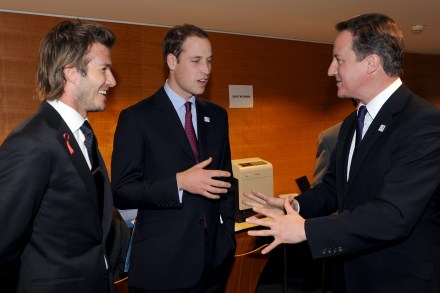
Football and Coffee House rarely mix, except of course when Manchester United win the European Cup. Yet I'm sure plenty of CoffeeHousers want to see England come out on top when the winning nation of the 2018 World Cup bid is announced later today. This morning saw the English delegation – including Davids Cameron and Beckham, and Prince William – make their final presentation to FIFA dignitaries. To my eyes, it was schmaltzily effective stuff, but you can judge for yourself from the video above. All that remains to do is echo Iain Dale's call of "Come on England!" And if we don't win, then it was obviously fixed. P.S. There's even some World Cup-related embarrassment for Ed Miliband.

The World Cup we just might win

From our UK edition

Quite how much tawdrier the plotting and deal-making for the 2018 football World Cup could become it is hard to imagine, and how appropriate that not just Sepp Blatter but officials at England’s campaign are so keen to denounce the devastating Sunday Times investigation into Fifa corruption. Quite how much tawdrier the plotting and deal-making for the 2018 football World Cup could become it is hard to imagine, and how appropriate that not just Sepp Blatter but officials at England’s campaign are so keen to denounce the devastating Sunday Times investigation into Fifa corruption. No, the only World Cup that matters for England is the 15-man game due to kick off in ten months in Auckland. And eight years after Sydney, English hearts should be pumping that bit harder.

Lionel Messi’s Greatest Talent: Joy

From our UK edition

Goals don't come much better than this. Part of Lionel Messi's charm - and his football really is charming - comes from the impish glee that runs through his performances. There's an almost childlike joy to Messi's game that leaves you smiling and feeling just a little better about the world. Some of that, no doubt, comes from the fact that he still looks as though he's a 12 year old playing amongst men, but there's a purity about Messi too that raises his football far above his erstwhile rivals for the title of Greatest Footballer of His Time. Aesthetics are not the only fruit, but they matter. Is there anyone who actually dislikes Lionel Messi? Even when he does something spectacular you don't, somehow, get the sense of a player who enjoys showing off.

Spectator Sport: Spare us the 2018 World Cup!

From our UK edition

Andy Anson and Simon Greenberg are two splendid, clubbable chaps. Their current gig is running England’s bid to host the 2018 World Cup, and forgive me for sounding disloyal but I hope these two delightful fellows find themselves disappointed when Fifa votes on the 2018 and 2022 bids in early December. Andy Anson and Simon Greenberg are two splendid, clubbable chaps. Their current gig is running England’s bid to host the 2018 World Cup, and forgive me for sounding disloyal but I hope these two delightful fellows find themselves disappointed when Fifa votes on the 2018 and 2022 bids in early December. Because one thing England certainly doesn’t need is the World Cup in 2018. What is this bid all about?