Sport

The Premier League is never so easily decided as people think

From our UK edition

Away from politics for a few moments. Football. What about Manchester City? The pundits and experts were euphuistic in their praise for City’s late-achieved win over the vermin, West Ham. And we were told that winning late is the mark of a good team and that it engenders positivity and confidence among the squad. Maybe so. At the same time we were told that West Ham had been 'gritty' to hold on for so long, and this might give them a foundation from which to escape the relegation trapdoor. I doubt that a little more. City have been running away with the title this season – I tipped them to win the league back in August, and there they are, a sackful of points clear at the top. But look through their results going back to early October.

Man City’s ‘cosmic’ football isn’t matched by the rest of the Premier League

From our UK edition

What a privilege it is to watch Manchester City in the age of Pep Guardiola. I can’t recall a club side so lauded so early in the season, but the lavish praise seems justified. Could his Midas touch be young England’s best hope in Russia? Noel Gallagher, yes him, has been speaking about the ‘cosmic’ football City are playing under Pep, and who are we to argue? Guardiola seems to be getting the best out of Stones, Walker and Sterling. These three plus the Tottenham backbone of Kane, Dele Alli and Dier bringing their club form to the national team, along with the young England talent that did so well in the international age-group tournaments, could add up to a thrilling new team. But we have been here before… As for the rest of the Premier League?

The straight dope

From our UK edition

It’s not easy to get hold of Ángel Hernández, the legendary Mexican chemist who for a decade provided illicit performance-enhancing drugs to numerous athletes, including, he claims, all eight 100 metres finalists at the Beijing Olympics. It took me just over a year of trying. The FBI also struggled. The story goes that when they eventually caught up with him in 2005 he had been holed up in a hotel room in Texas, living under an assumed name for two years. Presented with numerous incriminating wire-tapped telephone conversations and bank statements as part of the investigation that eventually sent three-time Olympic gold medallist Marion Jones to prison, Hernández became a state witness in return for avoiding chokey.

Our big fat problem

From our UK edition

The good news is that Theresa May has dropped the threat to withdraw universal free school meals. Thank God (and the PM) for that. School lunches are the biggest weapon we have to fight obesity. The UK is sixth in the supersize race of OECD countries, with a quarter of the population obese. The fact that six of the fattest nations (the US, Australia, New Zealand, Canada, Ireland and the UK) are English-speaking should tell us something about our food culture. But sadly even Japan and South Korea, the slimmest nations, are fattening up fast on burgers and chips. What is to be done? No country is going to have the courage to ban junk food, as they have drugs. Maybe we’ll come to that one day.

A sorry state of play

From our UK edition

The link between a healthy mind and a healthy body was understood by Juvenal — but he didn’t have to raise two kids in our brave new world of social media and fast food. We’ve all seen the stats, so there’s no need to repeat them. But as snacks replace square meals and the virtual world replaces the real one, our children are becoming increasingly sedentary and unhealthy. For parents of school-age children, sport has never been more important. But making sure kids get a good sporting education is no easy matter — and I should know. In my experience as a parent (and briefly as a teacher), sport in the state sector is usually pretty patchy.

Letters | 17 August 2017

From our UK edition

The education gap Sir: It is disappointing that Toby Young (‘Parents, not schools, are key to the knowledge gap’, 5 August) conforms to the ‘Close the gap’ mentality that obsesses Ofsted and leftish thinking in state schools. Young deplores ‘the attainment gap between disadvantaged and non-disadvantaged 16-year-olds in England’. I prefer to get away from the tendentious terms ‘disadvantaged’ and ‘non-disadvantaged’ pupils and stick to the idea of high- and low-attaining pupils. Left-inclined schools have various ways of closing this gap in attainment. One is to impose limits on how abler pupils can be challenged.

Girl power: give women’s sport the credit it deserves

From our UK edition

England won the cricket World Cup for the fourth time. Huzzah! England reached the semi-finals of the European football championship. Huzzah again! Or you can, as some have preferred, say well, it’s not really England, is it? It’s England women — and that’s not the same thing at all. Ten points for observation, eh? I remember when I first noticed. But there’s less power, less speed and it’s altogether less thrilling a spectacle than the men’s versions, they say. Anya Shrubsole, the demon fast bowler who secured the win for England by taking six wickets in the final, only bowls at 70 mph; she’d be cannon fodder in a men’s game.

Letters | 20 July 2017

From our UK edition

Yes to Boris Sir: Get Boris (15 July)! Get Boris to be prime minister, in fact. He is the only possible candidate for the Conservatives who has the flair, the experience, the ideas and the sense of humour to rescue the party and the country from its current malaise. That he has opposition there is no doubt — but then so did Winston Churchill when he was recalled by Lloyd George in 1917 to be minister of munitions, and again in 1940 when he became prime minister. To sideline him at this time would be foolish in the extreme and a further example of the party’s ineptitude.

Is Johanna Konta British?

From our UK edition

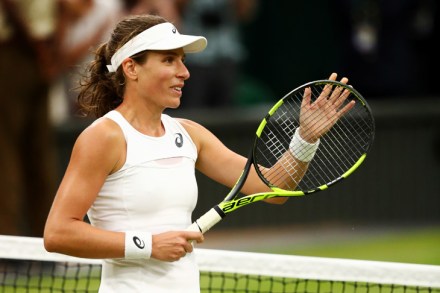
Have you been cheering for the excellent Johanna Konta at Wimbledon? Go, Jo! Or should that be Go, Yo? Johanna (pronounced Yo-harner) was born to Hungarian parents in Sydney and came to Britain when she was 14; her parents moved to Eastbourne while she went to train in Barcelona. She became a British citizen in 2012. Is she really British, then? Or is she a Plastic Brit, exploiting our great nation for what she can get? Greg Rusedski came from Canada to represent Britain at tennis in 1995, aged 22, even wearing an ill-advised Union Jack bandana. The Lawn Tennis Association (Britain’s national federation) later tried to persuade Novak Djokovic to become British; there were agitated talks during the Davis Cup tie between Britain and Serbia and Montenegro in 2006.

Match made in heaven | 6 July 2017

From our UK edition

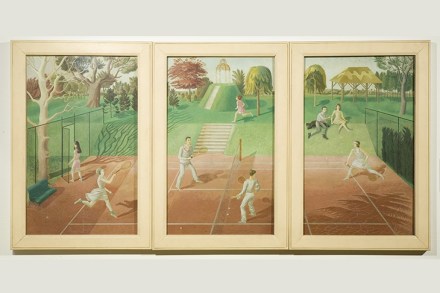
Tennis is best played with a wooden racket on a shady lawn somewhere close to Dorking. There is no need for trainers, an umpire, or a scoreboard. No need for rules at all. After Wimbledon, the tea-and-jam, grass-stained, Sunday-afternoon scenario from A Room with a View is the only one to emulate. In 1908, when E.M. Forster published his novel, lawn tennis was not yet 50 years old. Although the origins of the game reach back to the 12th century, the version played by Miss Honeychurch and Reverend Beebe and most of us today was said to have been pioneered on a croquet lawn in Edgbaston in 1859.

Metal fatigue in the golden generation

From our UK edition

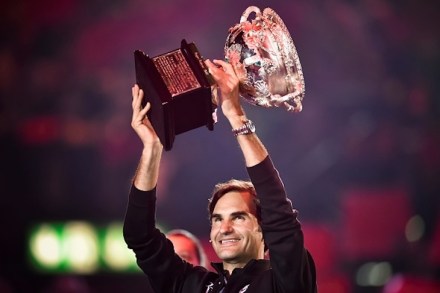
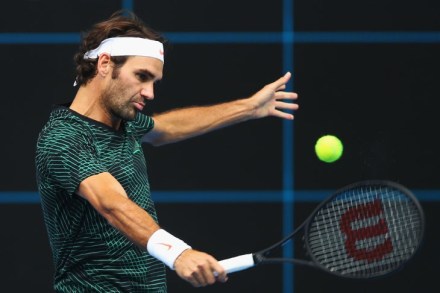
Not a bad week for Roger Federer then: first pootling along being cool and rich in a morning suit at the Philippa Middleton wedding, then being named in the world’s tennis top five again, with his increasingly elderly chums. It’s the first time all five (Murray, Djokovic, Federer, Nadal and ‘Stan the Man’ Wawrinka) have been over 30. Indeed, the only player born in the 1990s to reach a grand slam final is Milos Raonic; no spring chicken at 27. This is an astonishing time in tennis; a golden generation indeed. We have come a long way since Lleyton Hewitt beat David Nalbandian 3-0 to win Wimbledon. Nalbandian won just six games. That was in 2002; not so long ago, though it feels like a lifetime.

Barometer | 18 May 2017

From our UK edition

Veggie skills Forest Green Rovers, described as the world’s first vegan football club, was promoted to the Football League. Some sportsmen who have become vegan: Neil Robinson turned vegan at 23 while playing football for Everton in 1980. Dustin Watton played in the US National Volleyball team in 2015. Peter Siddle, a bowler in the Australian cricket team, turned vegan in 2013. Griff Whalen plays American football for Miami Dolphins. Only vegan food is served at the Forest Green Rovers ground, but some players were filmed scoffing meat pizzas in 2016. Who’s on board? Theresa May wants worker representatives on company boards, if not actual workers. Who were the 1,546 people on the boards of Britain’s largest 150 companies in 2015?

Liverpool’s press mess

From our UK edition

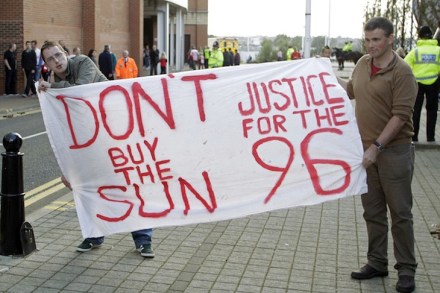
The comedian Jimmy Carr is not necessarily a guy you would trust on much, but he was spot on the other day when he said that the Hillsborough disaster was something you would never joke about. Of course not, but it seems you can’t have even a sliver of a divergent view. Now, thanks to the timorousness of one of the world’s major football clubs, and the pusillanimity of the Premier League, a bitter little drama is being played out that could have savage implications for freedom of the press. Early in February this year Liverpool FC announced that the Sun would be banned from all home facilities, Anfield and the club’s Melwood training ground; the paper would not be allowed into home games and its Liverpool reporter would be given no access to players or the manager.

Fighting chance

From our UK edition

Middle age is OK by me. National Trust membership, a Waitrose loyalty card, lying on the sofa drinking red wine and yelling at the telly — since I turned 40, this stuff all just feels right. But by a mile, the best consolation of middle age I’ve found is the cagefighter Conor McGregor and living vicariously through his kicks, punches and verbal smackdowns. How dull my previous enthusiasms for cricket, tennis and football now seem by comparison with the heroic derring-do of this 28-year-old killing machine, a former plumber from Crumlin in Dublin.

Barometer | 23 February 2017

From our UK edition

Big league Lincoln City became the first non-league club since Queens Park Rangers in 1914 to win a place in the FA Cup quarter-finals. But what happened in 1914? — There were only 40 league clubs and QPR won a bye through the early rounds. — They drew 2-2 with Bristol City before winning 2-0 in a replay. — They beat Swansea and Birmingham (2-1 each) to reach the quarter-finals, where Liverpool beat them 2-1. — Liverpool lost the final 1-0 to Burnley, the team Lincoln beat last weekend. — That final was the last held at the Crystal Palace, which had been its venue since 1895. Mega mergers Unilever rejected a £115 billion takeover offer from Kraft Heinz. What happened after huge mergers that did go through?

UK Sport’s brutal funding cuts show that winning is now all that matters

From our UK edition

Is sport really so great? Or is it only winning that’s great? UK Sport says a loud yes to question two: and as a result, they won’t be funding half a dozen perfectly decent sports because they’re unlikely to win Olympics medals for Britain – or for Team GB, as they like to be called. Badminton goes from £5.7m a year to zero. Other sports suffering cutbacks are archery, fencing, table tennis, weightlifting, goalball and wheelchair rugby. Rod Carr, chair of UK Sport, said: 'Would it be more brutal to come back from Tokyo (venue for the 2020 Olympics) with a heavily reduced medal haul because we took some softer decisions now?' What’s not in question is that heavy and well-aimed financial backing to the right sports buys - sorry, I mean wins - medals.

Low life | 26 January 2017

From our UK edition

‘If life is a race, I feel that I’m not even at the starting line,’ I said to the doctor in French. (I’d composed, polished and rehearsed the sentence in the waiting room beforehand.) She was a sexy piece in her early fifties with a husky voice. She listened to my halting effort to describe my depression with a smile playing lightly over her scarlet lips as though I were relating an amusing anecdote with a witty punchline lurking just around the corner. I further explained in French that I had been properly but briefly depressed once before, about 15 years ago.

Spot the ball

From our UK edition

The purest form of radio is probably sports commentating, creating pictures in the mind purely through language so that by some magic the listener believes that they were there, too, when Geoff Hurst scored that final goal, Shergar ran out the field at Epsom, Mo Farah sped ahead on Super Saturday. As Mike Costello said last Thursday on Radio Five Live’s celebration of 90 years since the first outside broadcast from a rugby match on 15 January 1927, ‘We’re all blind when we listen now, just as we were back in the 1930s.’ The technology has changed radically but radio still relies on the skill of an inspired individual to communicate the atmosphere, the tension, the thrill of seeing something extraordinary happening in a sports arena.

Letters | 12 January 2017

From our UK edition

Freudian slap Sir: In his Notes (7 January), Charles Moore explores the uncharacteristic reaction of Matthew Parris to the referendum result. What is most puzzling about Parris and so many others like him is that their present outrage has so little in common with their rather tepid support for the EU in the run-up to the vote. Such a mismatch of cause and effect suggests a Freudian explanation may be appropriate. When an impulse is felt to be so dire that it cannot be expressed, a new object is substituted and the feelings are thus ventilated. Yet what original threat could be so catastrophic as to provoke such end-of-our-world hysteria in the first place?

A stroke of genius

From our UK edition

The picture had been chosen for its utterly gratuitous depiction of female beauty. It showed Justine Henin, the Belgian tennis player who won seven grand-slam singles titles between 2003 and 2007. She was fully dressed for tennis. The gratuitous beauty came from the shot she was playing. It was a single-handed backhand. Henin was five foot six and so slim she had to run round and round in the shower to get wet. She didn’t look capable of hitting the top off a dandelion. But that backhand regularly devastated opponents, fizzing down the line with astonishing power — where did that come from? — or howling across court at a quite preposterous angle.