Sport

From the wrestling ring to Plato’s Cave in one easy throw

From our UK edition

One of the delights of going to stay with my grandparents in the 1970s was that my grandmother was a fan of the wrestling on ITV’s World of Sport. My parents wouldn’t ever watch it. It was fixed — a pantomime. But my grandmother seemed oblivious. It was the only sport she followed, apart from Wimbledon. I don’t think she realised it was scripted.I was transfixed by the exaggerated antics of the ‘Dulwich Destroyer’, ‘The Man You Love to Hate’, Mick McManus, who played it for the boos and whose vulnerability (as everyone knew) was his ears (‘Not the ears, not the ears’), and by the sheer bulk of Giant Haystacks — 6ft 11 and allegedly weighing in at 45 stone — a real giant from a Grimms fairy tale it seemed.
Croquet is the perfect sport for social distancing

From our UK edition

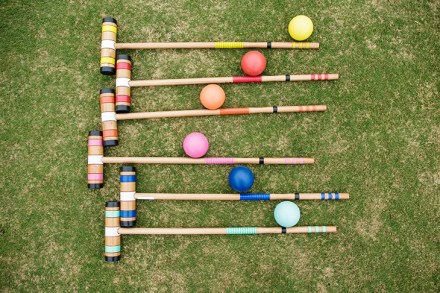
In Mr Alton’s absence, I thought readers might want a column about sport. The problem is that I’m largely indifferent to most sports. But I will berate the All England Club for cancelling the Wimbledon Championship. Fair enough, I can see that tennis might be a problem what with all the loud, virus-spreading grunting, but I think it’s time we reminded them they are the All England Lawn Tennis and Croquet Club. Shockingly, last time I went there on a corporate jag, I could see no evidence of the superior game being played. Yet croquet is a game where social distancing poses no problems.

What Joanna Lumley and two cobras taught me about fist-fighting

From our UK edition

Why do we box? It’s an almost ludicrously inefficient form of combat. The last thing the SAS suggests its soldiers to do is put their dooks up. But boxing is nonetheless the world’s leading combat sport — millions watch boxing in lockdown, and when we’re all allowed out, thousands will head first to the pub, then out into the streets and carparks, to throw punches at each other’s heads. Why? I have the answer. It came to me by a combination of Joanna Lumley and a fight I once witnessed between cobras. Boxing is not a great form of combat — not if your aim is to put your opponent out of action fast.

The Amazon Prime doc that will convert anyone to cricket

From our UK edition

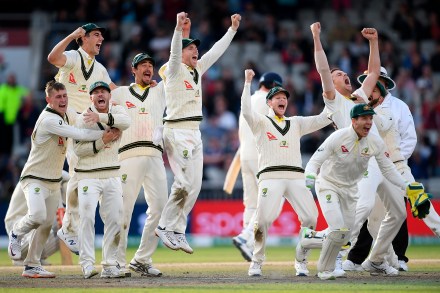
Imagine rooting for the Australian cricket team. If you’re Scottish, Welsh or Irish — or Australian obviously — it might not be such a stretch. But for an Englishman, I suspect, it’s nigh on impossible. It would be like supporting Germany in the (football) World Cup. Or yearning for the All Blacks to win the rugby. We invented cricket, after all. And in that particular sphere, Australia is our natural enemy. They burned our bails in 1882 — ‘the Ashes of English cricket’ — and quite properly we have never forgiven them. But if that’s how you feel — and I really don’t blame you — then you should treat yourself to the marvellous Amazon Prime series The Test: A New Era for Australia’s Team.

A Formula 1 doc for people who hate Formula 1

From our UK edition

Some years ago I was invited to the British Grand Prix at Silverstone courtesy of a watch manufacturer. As freebies go it was one of the best: endless champagne, overnight in a posh hotel near the track (wife invited too), then a trip by helicopter so as to avoid all the frightful traffic jams. All was going swimmingly until the actual race… God, it was boring. Noisy too. You’re stuck in an elegant marquee with endless booze and as many gold-plated, jewel-encrusted lobsters as you can force down your gullet, but it’s impossible to relax or chat or enjoy yourself because screaming endlessly in your lughole is the ‘neeaaawwww’ noise of those stupid bloody racing cars.

Ganging up on Israel

This article is in The Spectator’s March 2020 US edition. Subscribe here. At the end of January, the owner of Hull Kingston Rovers — an English rugby club that plays in the multinational Super League — wrote to the Catalans Dragons, a French club in the same competition. He explained that he would sue for damages if Hull experienced any financial loss as a result of the Dragons’ decision to sign the Australian player Israel Folau: ‘For example, if a title sponsor withdraws, or external investment is not secured, or quantifiable reputational damage is caused to the brand of Super League and its members.’ According to one source, ‘nearly all’ the Super League clubs felt the same way.

israel folau

The joy of a day spent bagging almost no birds

From our UK edition

The highlight of my country calendar is when I’m lucky enough to be invited to what even the host describes as ‘the world’s best worst shoot’. It’s the worst shoot because the bag is often truly atrocious. This year, for example, in the course of six or possibly seven drives — the details are hazy — we managed a total of nine birds between us. That works out at an average of one and one eighth of a bird per gun over an entire day. But still, disappointingly, we were well short of the all-time record low of three. I’d love to be able to blame this shaming tally on poor gamekeeping: ‘Of course, I’d have bagged loads more if a single bloody pheasant had flown anywhere near my peg the entire day.

Letters: How to squash a Speaker

From our UK edition

No special protection Sir: Rod Liddle’s joke that the election might be held on a date when Muslims cannot vote, thereby reducing support for Labour, has apparently led to outrage. There has been no similar outrage over your front cover (‘A vote is born’), which satirises the Christian nativity by portraying Johnson, Corbyn and Swinson visiting the stable in Bethlehem. It should be a principle of free speech in any free society that all religions are equally subject to satire, criticism and even gentle mockery; there should be no special protection for one set of beliefs over another. In allowing satire about two mainstream religions in the same issue, you have shown admirable balance.

Labour thinks that its trump card is Trump

From our UK edition

On Wednesday morning, I was hoisted into the air of Whitehall on a cherry-picker. A century ago the proto-Cenotaph appeared in time for the London Peace Parade in July 1919, which followed the signing of the Treaty of Versailles. In that first year, the Cenotaph was only a timber and canvas structure, built to last a week; but Edwin Lutyens’s design seemed so right that the present structure, more precisely designed, was built in Portland stone for Remembrance Day 1920. English Heritage, now a charity rather than a government body, cares for the monument — as it does for 400 monuments in England, including 46 in London. The chairman, Vice-Admiral Sir Tim Laurence, husband of the Princess Royal, wanted me to see its annual clean before this Sunday’s Remembrance Day parade.

Seven things we’ve learned from the rugby World Cup

From our UK edition

New Zealanders can teach the world a lot about sportsmanship. Steve Hansen after last Saturday’s All Blacks defeat by England in the World Cup semi-final showed the uncomplaining loser can be just as impressive as the triumphant winner. As he put it: ‘Winning’s easy…[but] when you lose… you have to show humility, do it gracefully and be honest about it. Sometimes you have to bite down on your gumshield and suck it up.’ The Springboks have put rugby back several decades. Big, beastly, and brutal, they made the first half of their semi-final with Wales almost unwatchable. Afterwards the Wales hierarchy talked about losing the ‘arm-wrestle’: but why are Wales trying to arm-wrestle?

It’s not just hooligans – hipsters also love a football shirt

From our UK edition

When I was young, from about the age of nine to 13, I went through what my parents recall with a shudder as ‘the football shirt phase’. Where some children rebel by smoking, and others take to eyeliner, my vice was polyester. My first shirt was a quirky one — an early Noughties AS Bari white and red home shirt with an itchy collar. The thing smelled of washing powder no matter how much I wore it — which was daily for the best part of three months one very hot Italian summer. I’d wear football shirts everywhere, from family meals to drinks parties, trips into town and to Mass. It got to a point where my father would explode with rage if I appeared at the door wearing a baggy AC Milan kit.

Are childhood vaccination rates dropping?

From our UK edition

Who speaks what The Chancellor, Sajid Javid, included a little Punjabi in his speech to the Tory conference. How many people in Britain would have understood him? In the 2011 census the ONS counted 273,000 Punjabi speakers in Britain. The other most common languages, besides English and Welsh, were: Polish 546,000 Urdu 269,000 Bengali 221,000 Gujarati 213,000 Arabic 159,000 French 147,000 Portuguese 133,000 Spanish 120,000   Death by gender The British Heart Foundation claimed women were needlessly dying of heart disease because they were receiving less good treatment than men. How do the causes of death differ between the sexes?

How many people have swum the Channel?

From our UK edition

Journey’s end Holidaymakers are being flown home after travel company Thomas Cook failed. The idea might have horrified the company’s eponymous founder, whose first excursion was a temperance outing from Leicester to Loughborough on 5 July 1841, on a charter train from the Midland Railway Company. All 500 tickets were swiftly sold. A holiday from Leicester to Liverpool and North Wales followed in 1845, including several nights in temperance hotels and a night-time ascent of Snowdon. Thomas Cook went on to organise trips to the 1851 Great Exhibition for 150,000 from the Midlands. Financial health A Labour activist and parent of a patient accused the Prime Minister on a visit to a London hospital of ‘destroying’ the NHS.

Cricket’s guilty men: my list of who deserves to be sacked for the Ashes debacle

From our UK edition

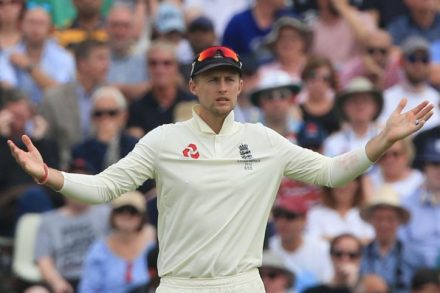
I suppose the question is who we sack first. For like many, if not most England fans, I am at a stage beyond rage, beyond reasonable doubt, beyond all good sense. I want blood. As a friend of mine who supports Everton posted on Facebook this morning, ‘Name two seven-letter sports teams beginning with E who will always let you down.’ The candidates for the chop are as follows: 1. Jason Roy as opening batsman. Dear god, I could do better. My old friend Simon, who used to open for the team I play for, could do better. He played 252 games for us and averages just over seven. He has just one shot, a smear down to third man. That’s one shot more than Jason Roy, unless you count the firm-footed edge to the wicketkeeper. 2. Trevor Baylis as coach.

Bring out the biltong for Labuschagne, an Ashes hero

From our UK edition

Funny, the things cricketers put on their bats. England’s Jos Buttler has ‘Fuck it’ written at the top of his blade to remind him it’s only a game (or something like that). Australian Marnus Labuschagne, who for my money was one of the great heroes of the Ashes Test at Lord’s, has the image of an eagle drawn on the bottom of his bat. It’s to remind young Marnus of one of his favourite Bible passages, Isaiah 40:31: ‘For those who hope in the Lord, He shall renew their strength. They shall soar on wings like eagles; they shall run and not grow weary, they shall walk and not be faint.’ It has the edge over ‘Fuck it’, but each to his own.

Test match

From our UK edition

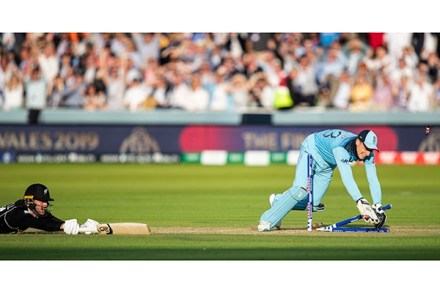
Why do we need tie-breaks and photo finishes? If competitors have been nip-and-tuck all the way, why can’t they just share victory? England supporters who watched the ICC Cricket World Cup final might have been febrile with joy when the extra-time ‘super over’ ended in another tie, giving England the margin on boundaries, but New Zealand’s Black Caps lost by less than a whisker. Why shouldn’t they have halved the triumph? Why shouldn’t Roger Federer, who went toe-to-toe with Novak Djokovic in the longest-ever Wimbledon final, have lifted one side of that famous trophy? The answer is that human beings need resolution. Spectators need to know the thing has been finally settled. Professional sport is a test of nerve; it is not simply a physical contest.

Save us from the civil service and the BBC

From our UK edition

I was asked on to the BBC Today programme — my old manor — last week to talk about the Women’s World Cup. The producers had noticed that I’d changed my mind about the event and now thought it all rather good fun, having hitherto been derisively misogynistic. ‘This is the thing,’ I said to them. ‘You only invite social conservatives on when they’ve come around to your way of thinking and stopped being social conservatives. Why don’t you ask me on to talk about banning abortion, deporting all foreigners and sectioning the trannies?’ I agreed to the football chat, a little reluctantly, but told the chap that the item would be dropped approximately 11 minutes before it was due on air.

A very aggressive tackle

From our UK edition

Forty years ago the football transfer market went crazy: the British record was broken four times in 1979, more than in any other year before or since. A lot of this was down to Malcolm Allison at Manchester City, who shelled out a record amount for a teenager (£250,000 for Steve MacKenzie, an apprentice at Palace) and £1.45 million to bring Steve Daley from Wolves. That was later, unkindly but not inaccurately, described as ‘the biggest waste of money in football history’. Allison continued to spend money like a drunk in a bar; something the club never recovered from until it became part of the sovereign wealth portfolio of one of the richest countries in the world.

Croquet

From our UK edition

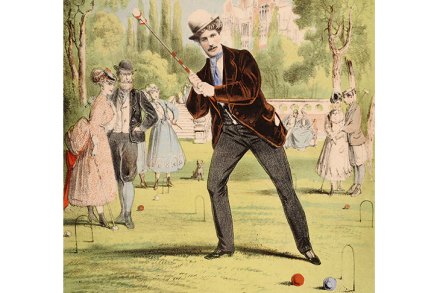
People say cricket is the quintessential English game. Those people are wrong. Cricket may have a longer pedigree, but it’s too boring, too democratic and too honourable to qualify: croquet is the game that truly captures what it is to be English. As any pub quizzer will tell you, Wimbledon started its life in 1868 as the All England Croquet Club, only developing its vulgar sideline in lawn tennis late in the following decade. Its reputation has yet to recover.   Just like cricket, where the game as played on the village green differs from the international game, the echt English croquet is the one played, ideally slightly drunk, in the echt Englishman’s garden. Its idiosyncrasies are what makes it special.

Get your kit off

From our UK edition

After its new costume drama You Go, Girl! (Sundays) about how amazing, empowered and better-than-men women are, especially if they are lesbians, the BBC ran its first ever Nike ad. At least that’s what I thought initially: rap music, moody shots of athletes, very high production values. Then I saw they were all grim-faced women and the word ‘RISE’ in flames and I thought: ‘Big new drama series? About girls who’ve been sucked into this very strict Christian cult, a bit like the Handmaid’s Tale, maybe?’ Then I noticed they were all wearing football kit and kicking balls around, and went back to my original Nike idea. Finally came the big reveal. It said: ‘#CHANGE THE GAME. FIFA WOMEN’S WORLD CUP 2019.