Spies

Letters: Keep AI out of the Church

From our UK edition

I Spy Sir: Overt political allegiance and class snobbery may indeed have thwarted Toby Young’s undergraduate ambition to be ‘tapped on the shoulder’ by the security services (No sacred cows, 13 June), but I wonder if he underestimates the importance of persistence. We were almost exact Oxford contemporaries and ‘out’ right-wingers to boot. During my first term I recall vividly a long conversation into the early hours with a fellow St Edmund Hall freshman, who confided that he had set his heart on joining MI6. He also insisted that one of the fabled dons responsible for recruiting spies was none other than the senior English fellow at our college, who after distinguished service in the second world war was now close to retirement.

My lasting friendship with a disgraced MI6 officer

From our UK edition

After a stellar career in the Secret Intelligence Service (SIS), better known as MI6, an unassuming man with a passion for bridge and a taste for malt whisky was in line to become head of that service, or ‘C’. The year was 1990. Roger Horrell was the favoured candidate to assume control of Britain’s foreign intelligence service. Roger had been a friend since we met in Africa some 20 years earlier. I knew him as an MI6 officer but had no idea that he was destined to become Britain’s master spy. Looking back at our regular club dinners in London, he may have hinted at his likely promotion but that is easy to say now. As befits his calling, Roger was a very secret man.

Still the best thing on TV: Apple TV+’s Slow Horses reviewed

From our UK edition

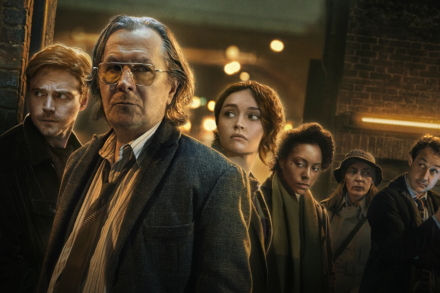
Slow Horses is the best thing on television. And it’s now so successful and popular it can afford to launch series three with a sequence worthy of James Bond: Istanbul location budget; spectacular chase sequences involving cars and speedboats with some thrillingly dangerous manoeuvres round a huge container vessel; a beautiful, immaculately dressed female agent meeting (spoiler alert, though to be fair you can see this one coming a mile off) a tragically sticky end. Except it’s better than Bond – not that difficult these days, it must be said – because it is missing all that grim portentousness, over-earnestness and pomposity. The cars are beaten up and gadget-free; the stunts look plausible; and the agents behave like real human beings.

A skillful retelling of one of World War Two’s most dramatic stories

Around lunchtime on a late September day in 1944, a young woman stepped into one of the most fashionable cafés on the Champs-Élysées. Her eyes still scanned the room for threats, even though her war had been over for many months. Known variously as Suzanne, Madeleine, Blanche, Ginnette or Tony, she had “amassed names and personas just as other women of her years and beauty amassed admirers. And she had amassed those too” in the service of her country. Two such admirers now sat opposite her in the café, and she had to decide which one she was going to spend the rest of her life with, and which she would never see again. Such is the climax of the epic story of love and betrayal that Nahlah Ayed tells, using unpublished interviews and archival and personal documents.

Ayed

Too in thrall to today’s dogmas: ITV1’s A Spy Among Friends reviewed

From our UK edition

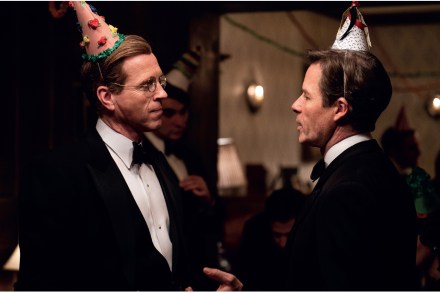
In 2014, Ben Macintyre presented a BBC2 documentary based on his book A Spy Among Friends: Kim Philby and the Great Betrayal. The programme managed to shed new light on a familiar but still irresistible story by concentrating on Philby’s relationship with his old chum – and fellow Cambridge man – Nicholas Elliott. Elliott was sent in 1963 by the Secret Intelligence Service (SIS) to question Philby in Beirut where Philby had become the Observer’s foreign correspondent after a long and successful career betraying his countrymen to the Soviets. Elliott did elicit some sort of confession, but a few days later, Philby absconded to Moscow.

Can we brainwash our enemies?

From our UK edition

Disinformation is on the rise, and Britain’s spies are on the back foot. Our intelligence leaders warn about election meddling, and our enemies are trying to undermine public trust in our national institutions. The United Kingdom needs to use covert means to disrupt anti-British activities at their source. That’s what Harold Macmillan said in the 1950s, shortly before becoming prime minister. Over half a century later, in 2017, the Chief of MI6 made the same point: adversaries should be ‘playing in their half of the pitch not ours.’ And half a decade on from that, here we are again. This week’s intriguing peek into the secretive work of the National Cyber Force conjures the old saying: the more things change, the more they stay the same.

‘Slow Horses’ is thriller television at its best

It may come as a surprise to anyone who has read Mick Herron’s peerless Slough House novels, but Slow Horses, Apple TV’s high-profile adaptation of the first book in the series, is not funny. Instead, it takes Herron’s uproariously comic premise — that a group of misfit British spies, cast out of MI5 for misdemeanors exaggerated and accurate alike, have been reduced to grubbing about in a grim office on the periphery of the City of London — and plays it almost entirely straight. Gone are the laugh-out-loud one-liners and endearingly witty pieces of throwaway badinage. Instead, we have a big-budget spy thriller, polished and scripted to within an inch of its life. It’s a bit like seeing the Fresh Prince of Bel-Air reinvented as a gritty urban drama.

horses

Russian spies and the return of the Cold War

From our UK edition

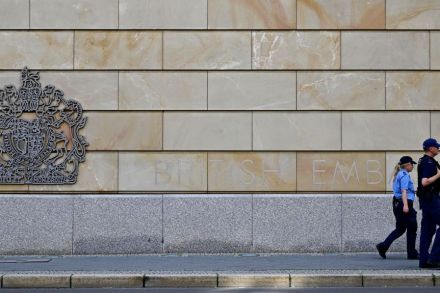
Last week’s arrest of a security guard employed at the British embassy in Berlin, on suspicion of spying for Russia, serves as a stark reminder that the UK and its allies are in the thick of a new Cold War. With the fall of the Berlin Wall in 1989 and the subsequent collapse of communist regimes, it appeared that the East-West stand-off had come to an end. Nato allies breathed a collective sigh of relief and looked to new horizons, believing their principal objective had been achieved and that Russia’s days as a superpower were consigned to the history books.

The best Cold War thriller I’ve seen that I fully understand: The Courier reviewed

From our UK edition

The Courier is a Cold War spy thriller and the prospect of a Cold War spy thriller always makes my heart sink. There will be agents. There will be double agents and triple agents and maybe even quadruple agents. Is he working for our side while pretending to work for the Soviets as someone pretending to be working for us? After any Le Carré adaptation, for example, I also need debriefing in a wood-panelled room filled with cigarette smoke and there is still no saying I’ll emerge any the wiser. But The Courier isn’t like that. This is a damn good, explosively tense story that focuses on the friendship that develops between two men on opposite sides. And it is plainly wonderful.

John le Carré’s London of exiles is alive and well

From our UK edition

‘I’m an Englishman born and bred, almost.’ So says Karim Amir, protagonist of Hanif Kureishi’s The Buddha of Suburbia. If Karim, and by proxy Kureishi, is a funny sort of Englishman – ‘born and bred’ but not quite – then so was John le Carré, albeit in a slightly different way. Le Carré, or to give him his real name David Cornwell, died a week ago and the obits have been flowing ever since. They generally, and correctly, observe that his true subject was never spies but England (and it was always England rather than Britain).