Special relationship

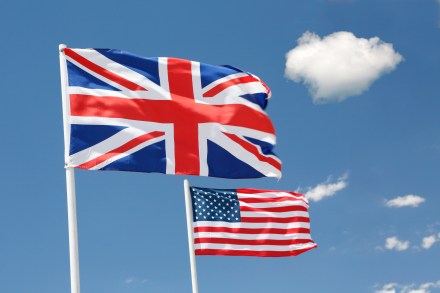
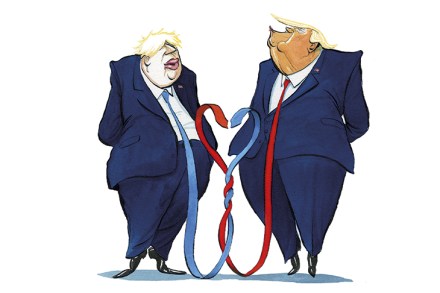
When will we admit that the special relationship does not exist?

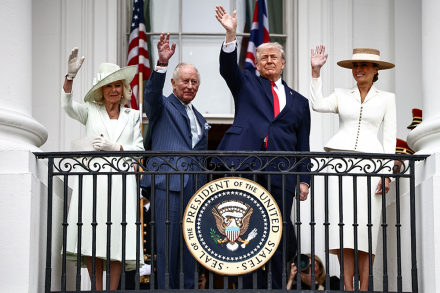
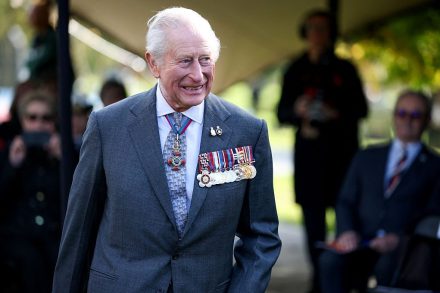
It was to King Charles’s great credit that he refused to fall for the Trump power handshake thing and instead retracted his own hand so that the orange psychotic was left, for a nanosecond, flailing and unsure of what to do with his right arm. It is always good to call the bluff of a bully, because they usually are bluffing. I would have preferred it if Chaz had executed a swift jujitsu move and thrown the President over his shoulder and onto the ground. But one cannot have everything – and of course the King was there to be emollient and to remind Trump of the things he quite likes about the UK: golf and class distinction, basically. He doesn’t seem to like us for any other reason – which is, in fairness, the mindset of almost every previous US president.

Can the special relationship survive Trump?

Since this calamitous Iran war began, there’s been endless talk in Britain about our ‘special relationship’ (often capitalised) with the United States. People who declare this relationship to be important are almost always those who also believe that, come what may in the war, we British should stand shoulder to shoulder with Donald Trump. Those, on the other hand, who think we should distance ourselves from him, tend to disparage the special relationship as unimportant. This column therefore breaks new ground. I think the special relationship is very important. But I don’t believe we should stand shoulder to shoulder with this president. Our special relationship is with America. Mr Trump is not America.

The death of the special relationship – and was Jenrick right to leave the Tories?

45 min listen

This week: Michael and Maddie ask whether the so-called special relationship between Britain and the United States has finally reached breaking point. As Donald Trump’s threats over Greenland and his reversal on the Chagos Islands unsettle allies, has the British right begun to turn decisively against him? Was the special relationship ever more than a comforting myth – and what does a more erratic, transactional America mean for Britain’s security, sovereignty and strategic future? Then: Robert Jenrick’s dramatic defection to Reform UK. Was his exit from the Conservatives a naked career move, or a genuine ideological break forged by failure on migration and borders?

Thatcher & Reagan’s special relationship

40 min listen

To mark the centenary of Thatcher’s birth, Michael Gove is joined by Charles Moore, her biographer, and Peggy Noonan, speechwriter to Ronald Reagan, to reflect on the chemistry that bound the two conservative leaders. Both outsiders turned reformers, they shared not only ideology but temperament – ‘They were partners in crime,’ says Peggy. Yet it wasn’t all harmony. As Charles notes, the pair weathered serious rifts – over nuclear weapons, Grenada and the Falklands. Even in disagreement, they ‘wanted the same thing … to defeat the Soviet Union without fighting’. How did they navigate their differences? And what lessons can we learn from their special relationship? Produced by Natasha Feroze and Oscar Edmondson.

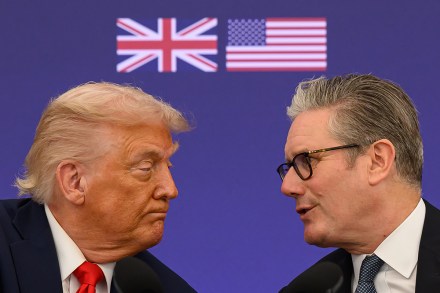
Trump and Starmer dance around their differences

14 min listen

Donald Trump has been in the UK this week on an unprecedented second state visit – an honour that he said last night at a state dinner he ‘hopes’ is reserved only for him, to much amusement in the room. Humility doesn’t come naturally to the President, but he does seem genuinely humbled by the pomp and pageantry that comes with a state visit. Meanwhile, Trump-management and grandstanding on the world stage seem (bizarrely) to come naturally to the Prime Minister. Trump's visit – which threatened to be derailed by the sacking of the US ambassador Peter Mandelson over his association with convicted paedophile Jeffrey Epstein – has been a welcome reprieve from the tumult of domestic politics for Keir Starmer’s Labour party.

Does America own Britain?

45 min listen

Freddy speaks to Angus Hanton, entrepreneur and author of Vassal State: How America Runs Britain, and William Clouston, leader of the Social Democratic Party. They discuss the ‘Special Relationship’ between the US and the UK, and ask whether it might be detrimental to British business.

The Ukraine crisis has united the West

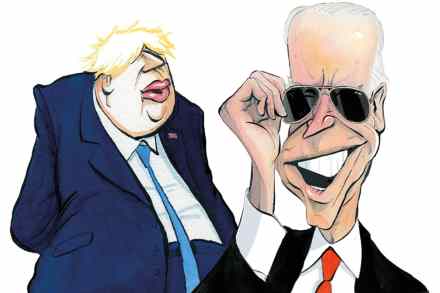
There has been a subtle change of tone from Joe Biden and Boris Johnson about the likelihood of a Russian invasion of Ukraine. It has gone from 'highly likely' to 'there may be a diplomatic solution' — or from 'almost all hope lost' to 'chink of hope'. So from where does that hope emanate? Largely, I am told, from noises out of Ukraine that its government is moving towards a public statement that although it retains the right to join the Nato western defence alliance, it will commit to not consider applying for at least ten years. The US president and UK prime minister are keen to encourage, through diplomatic channels, such a statement from Ukraine’s President Volodymyr Zelensky.

Joe Biden has treated Britain with disdain over Afghanistan

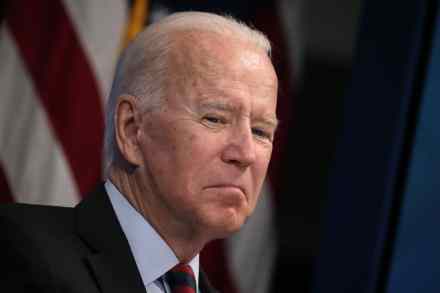
Congratulations, Joe. No US President has simultaneously alienated (and abandoned) so many of his compatriots or exacerbated threats to the West with such efficiency as Biden this past week. Biden defiantly sees ‘an extraordinary success’ in the chaotic and deadly withdrawal from Afghanistan, but disaster currently flows in the President’s wake. And one of the consequences is the mortal danger to America’s most important diplomatic and military alliance: the UK-US Special Relationship. Biden’s speech on Tuesday was a deranged, dramatic tragedy. He lashed out at critics of his calamity which saw the Taliban reinstalled in power and strengthened with new deadly capabilities.