Spain

The latest act in Europe’s comic opera

From our UK edition

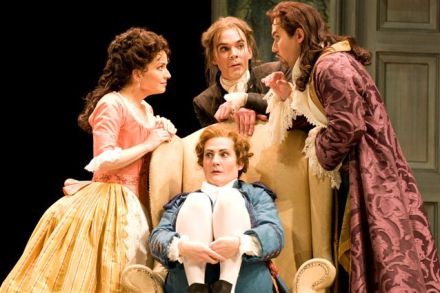
If it was not all so serious, the efforts to save the single currency would be worthy of a comic opera: the Germans could compose the score, the Italians could write the libretto, and the French could take care of the stage directions. The latest IMF-related effort is, perhaps, best described by the website ZeroHedge, which is required reading during these troubled times: “Germany will be responsible for €41.5 bn, France at €31.4 billion, and Italy will need to provide €23.5 billion and Spain another €15 billion.
The dangers of ever-closer union

From our UK edition

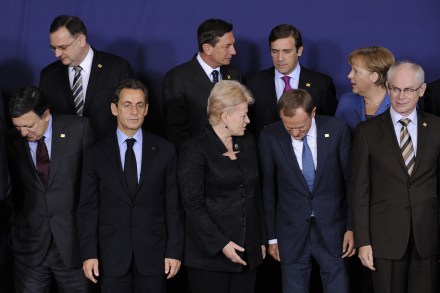
Yesterday, Fraser wrote that 'reporting of European issues tends to ignore public opinion'. Today, Philip Stephens has neatly illustrated Fraser's point in his Financial Times column. Musing on Britain's possible exit from the European Union, Stephens writes: 'I am not sure this is what the prime minister intends; nor, when it comes to it, that British voters will accept such an outcome.' Stephens' conjecture ignores the European Union's own polling, which, as Fraser says, shows most Britons to be hostile to the EU. That said, Stephens' article is substantial. He argues that 'fiscal union carries its own remorseless logic: the progressive exclusion of Britain from Europe’s economic decision-making'.

The vote in Spain

From our UK edition

The expected triumph of the centre-right Popular Party in today’s Spanish elections promises to have some interesting consequences for British politics. The PP have been in close touch with the Tories here and plan to introduce an emergency budget based on the Osborne model: a clear deficit reduction plan combined with an increase in the retirement age. They hope that this will reduce the ever-upwards pressure on Spanish bond yields. Certainly, if the PP approach does succeed in gaining Spain credibility with the bond markets, it will bolster the coalition’s arguments about the importance of sticking to Plan A.

The debate over Europe’s future

From our UK edition

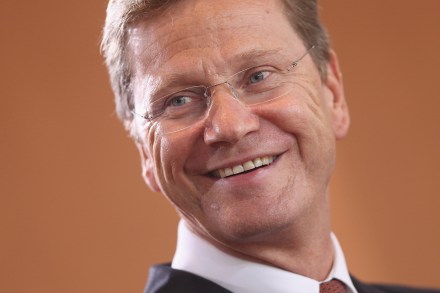
We've got two interventions by high-profile European politicians in the British papers this morning. In the FT, German foreign minister Guido Westerwelle lays out Germany's stance, providing a taste of what David Cameron can expect when he meets Angela Merkel in Berlin today. He begins by underscoring the importance of keeping the eurozone together: 'The eurozone is the economic backbone of the European Union. Its stability directly affects non-euro states and global financial markets. An erosion of the eurozone would jeopardise Europe as a political project, and with it the chance to make our values and interests be heard in the new power set-up of the 21st century.

The spectre of populism

From our UK edition

Across Europe, the bien pensant are worried. They fear that the Eurocrisis could lead to the rise of populism — whatever that means — and even extremism. The spectre of the 1930s stalks a lot of discussions, as the FT's Gideon Rachman found out at a lunch with a hedge fund manager who thought the break-up of the Euro would lead to “the next Great Depression and a resurgence of Nazism”. But is there real cause for fear or is this a matter of people projecting a particular history onto the future? Economic dislocation has in the past led to populism but not uniformly, or at least not in numbers that have made a historical difference. It was not the case in the United States in the 1930s or, more recently, during Japan's ‘Lost Decade’.

The Italian domino effect

From our UK edition

For all the debate about Theresa May and border security, the big news has not been at Westminster today. Instead, people have been watching what is happening in Italy. For it is far from certain that Europe, or the Western world for that matter, has a bucket bigger enough to bail out a country that owes more than Greece, Ireland, Portugal and Spain do combined. As the New York Times reports, the European Central Bank is reluctant to step in and start buying Italian bonds because it fears that its previous bond buying efforts have simply enabled the Italians to avoid necessary reforms. It feels that only market pressure will make the Italians actually act. But this is a dangerous game to play because if Italy falls, France will be left teetering on the brink. BNP Paribas has 12.

Leadership at last?

From our UK edition

Most of today’s papers carry reports of a deal to relieve the European sovereign debt crisis. The details are varied, but it seems that 50 per cent of Greek debt will written off and the currency will be allowed to remain within the single currency. This means that banks that are exposed to Greek debt will incur potentially ruinous losses. The EFSF mechanism will probably be extended to cover those losses and guard against contagion. Estimates vary, but it seems the fund will have to increase to somewhere around 2 trillion euros if the mounting crises in Italy and Spain are to be contained. Britain's exposure remains unclear at this stage.

Desperate times

From our UK edition

You have to hand it to the Eurocracy: it is nothing if not determined. The recent horrors on the stock market have concentrated minds in Brussels and across continental capitals. The headline news is that France, Italy, Spain and Belgium have placed a temporary ban on short-selling, but that’s just one counter-measure that has been introduced in the last 24 hours. And you’ll notice that these schemes are piecemeal; there is no grand plan as yet to calm the markets. First, Spain has bent a suppliant knee before the European Commission to secure restrictions on Romanians seeking work. This is momentous: the first time that border restrictions have been re-imposed within the EU.

Euro crisis enters a new phase

From our UK edition

It was a problem that would be fixed with a snap of the Commissioners' manicured fingers, but now fresh euro-storms are louring in the near distance. As predicted over the weekend, the markets reacted to the European Banking Authority’s deeply flawed stress tests with fevered concern and a clear note of contempt. The FTSE shed 90 points yesterday, with banks among the day’s biggest losers. The performance in Frankfurt and Paris was equally baleful, as investors fled for safe commodity stocks. As Fraser has noted, Allister Heath argues that the Eurozone crisis is responsible for the booming price of gold.

Art and the raging bull

From our UK edition

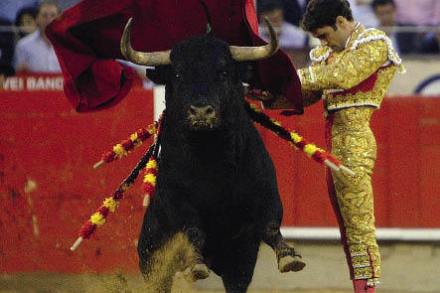
In these days of growing concern at the methods of factory farming and the welfare of the animals which are raised and killed for our consumption, it is instructive to compare the life of domestic beef cattle with that of a Spanish fighting bull. The cattle may have less than two years of life in cramped conditions, while the toro bravo roams free and unmolested on pasture for five years. Alexander Fiske- Harrison makes the comparison succinctly: ‘Five years on free-release and then the arena, or 18 months in prison and then the electric chair’. He maintains (there is some evidence for this, to do with beta-endorphins) that the fighting bull’s suffering is reduced because, once in the ring, it feels no fear, only aggressive anger.

Relics of old Castile

From our UK edition

Christopher Howse describes Spain as ‘the strangest place with which Westerners can easily identify’. Christopher Howse describes Spain as ‘the strangest place with which Westerners can easily identify’. He has certainly written one of the strangest books on the country in recent years. His approach is gloriously and provocatively unfashionable. Whereas other authors on Spain today might dwell on its innovative new chefs, the modernity of Barcelona and Bilbao, the tawdry Costa del Sol, and such persistent Andalucían-based stereotypes as duende, bullfighting and Moorish sensuality, Howse has concentrated on an aspect of the country that was once no less integral to its image — its austere and spiritual side.

The Portuguese fallout

From our UK edition

How much are we in for? That is the question that springs most readily to mind after Portugal's request for fiscal aid from the EU. And, sadly, the answer is difficult to work out. The figures being spread around range from £3 billion to £6 billion, with valuations in between. But, really, it depends on how much of the €80 billion package is agreed to by European finance ministers, and which lending mechanisms are used. The European Stability Fund, the EU's emergency fund and the IMF's pot of gold all have differing levels of UK involvement. If our country does end up making a significant contribution to any bailout package, then the government will certainly have some explaining to do.

Libya has shown the government the virtue of a multilateral approach

From our UK edition

The Libya intervention has already turned the international kaleidoscope, showing new and remarkable patterns. It has seen China acquiesce to a no-fly zone, and the West in alliance with the Arab League. Nobody thought that was likely 6 months ago. It has also changed reputations. Nicolas Sarkozy may win re-election on the back of the war. William Hague, who had a bad revolution, is having a good war.   The government has become more multilateralist, as opposed to the kind of bilateralism it espoused when it took office. Nearly a year ago, it sent a clear message to the FCO — bilateral ties would matter, multilateral ties less so.

Cameron’s €4 billion Portuguese challenge

From our UK edition

As if the budget and Libya weren’t enough, the UK Government woke up today with another major challenge on its hands – yet another flare-up in the eurozone debt crisis, which has been continuing to bubble away under the radar.   Yesterday, Portugal’s Prime Minister José Sócrates literally walked out of Parliament, during a debate on EU-backed austerity measures. The austerity package was subsequently voted down and shortly afterwards Sócrates announced his resignation. Portugal is now facing the prospect of being without a government for months, as its electoral rules require a 55 day break between the dissolution of Parliament and new elections.

Oliver Goldsmith Refashioned for the 21st Century

From our UK edition

A stunt on Spanish TV goes horribly wrong and ends in tragedy as the innocent party here bites off more than it can chew and perishes in short order. The snake makes the mistake of feasting upon one of Israeli model Orit Fox's improbable breasts only to discover that where once lurked flesh there's now a super-sized bag of silicone. Silicone is not good for snakes.Not good at all. End of snake. It is, as Kieran Healy says, yet another example of Everything New Being Very Old. Recall, as you will, Oliver Goldsmith's* Elegy on the Death of a Mad Dog: Good people all, of every sort, Give ear unto my song; And if you find it wondrous short, It cannot hold you long. In Islington there was a man, Of whom the world might say That still a godly race he ran, Whene'er he went to pray.

Iberian blues

From our UK edition

I’m finishing a two-day trip to Spain and am about to board a plane, just as the bond markets turn their attention to the Iberian Peninsula. As James wrote yesterday, the gap between Spanish 10-year government bonds and those of Germany has widened to as much as 2.59 percentage points - the biggest gap since the introduction of the euro. For its part, the Portuguese government said it was under no pressure from the European Central Bank or other Eurozone member-states to accept financial aid to ease its debt and deficit problems. That sounds like the noise before the defeat. Portugal was brought to a halt yesterday by a strike in protest at the government’s spending cuts and tax rises, which aims to reduce the budget deficit from 9.

Why Spain matters to Britain

From our UK edition

So far Ireland and Greece have been bailed out with relative ease. If Portugal required external assistance, Europe could run to that too. But bailing out Spain would be another matter entirely. As The New York Times points out today, the Spanish economy is twice as big as the Irish, Greek and Portuguese ones combined. Spain’s situation is not yet critical. But as the NYT piece sets out very clearly, there are some extremely worrying signs. The gap between Spanish and German gilt yields is now at the biggest point it has been since the introduction of the euro. Spanish banks are also heavily exposed to Portuguese debt.

The death knell for the Euro?

From our UK edition

Are we witnessing the start of a very long death scene for the Euro? Asked if the Euro will survive, William Hague replied simply: “who knows?”. The new president, Herman Von Rompuy, has said that the Euro faces an “existential test”. We are looking at the very real prospect of the Euro’s collapse. And that “if we don't survive with the eurozone, we will not survive with the European Union”. This would, by necessity, require a new treaty - and give Britain an unprecedented opportunity to renegotiate its membership on terms the public regard as acceptable. In my News of the World column today, I say (£) that this presents Cameron with what would be the greatest foreign policy opportunity of his premiership.

Built for eternity

From our UK edition

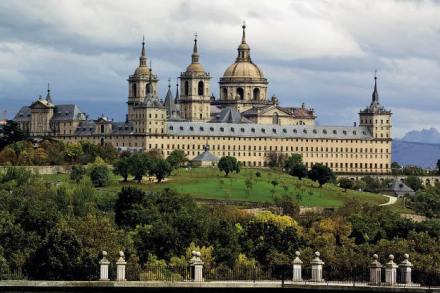
The Escorial, as a monastery and a royal palace, was the brain child of Philip II of Spain. Built in the latter half of the 16th century, about 30 miles north-west of Madrid, the huge granite complex with 4,000 rooms, 16 courtyards, a basilica, a library and picture gallery as well as the king’s private apartments, came to be regarded as the creation of a cold-hearted despot cut off from the outside world. For Richard Ford, whose 1850 Handbook for Travellers in Spain is the most learned guidebook ever written, the Escorial ‘was as cold as the grey eye and granite heart of its founder’.

Great Moments in Sub-Editing

From our UK edition

Am cricketing today, so talk amongst yourselves. Or stay silent if you prefer. Meanwhile, here's a reminder that the Murdoch press reaches parts their competitors can't...