Space race

The space race gets serious

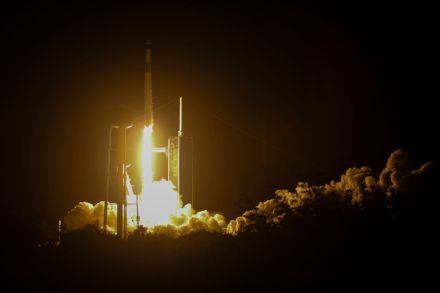
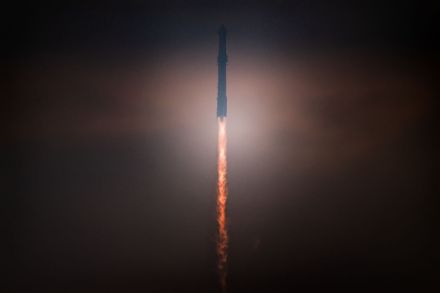
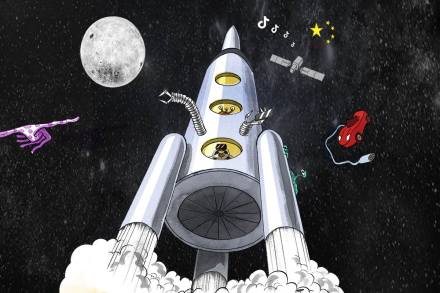
We are shifting from the early era of space exploration to a more serious phase extending ever further from Earth’s orbit, focused on key opportunities such as mining and manufacturing as well as military purposes. This newly expanded playing field will determine not only who rules in space, but who ends up dominating Earth. The protagonists include some familiar faces — the US, Russia and the European Union — but much competition will come from emerging powers, notably India and China, both of which look upon the “final frontier” as critical to their economic and military futures. Yet the rise of non-state space entrepreneurs, notably SpaceX, has introduced a fresh and potentially decisive factor to the new space race.
space

Is the West ready to face the challenges of advancing technology?

The theme of this month’s edition is technology. The advancement of space exploration, defense technologies, artificial intelligence and the like should excite us. Yet the geopolitical issues they present are great and Western governments seem ill-prepared to grapple with them. Watch any congressional hearing where a crusty congressman tries to keep pace with Silicon Valley’s top autists if you need further evidence — and read Spencer A. Klavan’s analysis of the high-skill but low-status rejects uniting into a formidable social class on p.12. The Silent Generation and boomers simply cannot keep up. The Space Race is back on, as tycoons seek to cash in on the final frontier.

space technology
space

Scientists’ strange offering to the final frontier

Dr. Jonathan Jiang dreams of beaming an easy-to-read message into space before civilization collapses. He’s run the simulations to test humanity’s self-destruction rate. According to his computers, there’s a 0.1 percent chance that humanity destroys itself in the not-so-distant future. He’s even more pessimistic than Stephen Hawking, who bowed out of public life saying, “I don’t think we will survive another 1,000 years without escaping beyond our fragile planet.” Jiang, who works for NASA’s Jet Propulsion Laboratory, co-authored the 2022 paper “A Beacon in the Galaxy,” which argues for the importance of streamlining the communications we send into space hoping they might be intercepted by an interplanetary species.

What exactly is the new space race all about?

The recent spate of articles about attempts by different countries to land vehicles on the Moon make it clear that a new space race is on. Just last month, Russia launched its first mission there in forty-seven years. And although the automated Luna-25 spacecraft spun out of control and crashed at the last minute, India’s heavily-instrumented Chandrayaan-3 landed successfully just four days later. NASA itself aims to return humans to the lunar surface in 2025 with its Artemis program. Remarkably, more than eighty countries, including Israel and the United Arab Emirates, have thus far established some kind of presence in space.

space

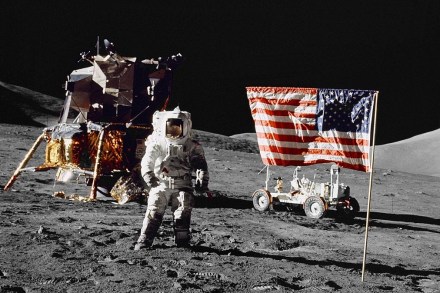
When the moon brought America together

The Artemis rocket is back from the moon. Within a couple of years, if all goes to plan, it will bring men to the moon’s surface. It is a great loss that a bigger deal hasn’t been made of this expedition. I was only three when John F. Kennedy died, and his famous 1962 pronouncement that we would go to the moon not because it was easy but because it was hard was already history. The picture books I got on birthdays always included him in the history of space exploration. Those books made sure every kid knew how “we” were going to get to the moon. They changed us, and with us, America. We started with Mercury, baby steps mostly proving we could launch men into space. Then Gemini, a long proof-of-concept program to try out the technology of docking.

Forget Zoom college: it’s time for America’s youth to embrace entrepreneurship

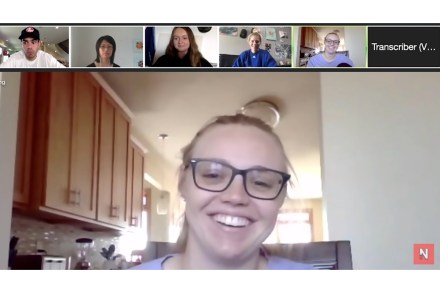
In the fall, thousands of college campuses across the country could be set to move online. Students will find themselves paying amounts in excess of $40,000 a year for glorified Zoom sessions. Even more young professionals will be considering grad school as a way to ride out the biggest recession we’ve seen in a generation. It will be grad school with all the cost and hardly any of the networking benefits. But there’s another option: we can build. We can use the crisis and the move online as a reason to take risks, risks that once seemed crazy or impractical are suddenly worthwhile. Whether it’s making leaps in genetic engineering or learning how to practically homestead, building is acceptable again.

zoom class