Is Putin getting ready for space war?
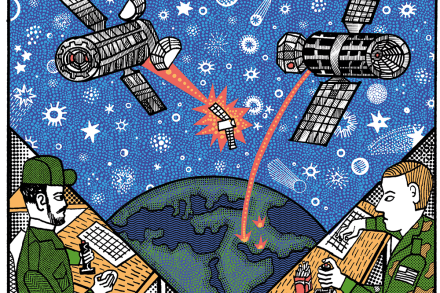
In a provocative and unprecedented act over the past two days a Russian military “inspector” satellite has been maneuvering closer and closer to a US-registered, European-built, all-weather earth observation satellite that provides data vital for Ukraine's war effort. It is the first time non-consensual close proximity action has been carried out in low-Earth orbit between two satellites. It has alarmed western space war fighters who see it as a hostile demonstration of future orbital conflict. Russia is a declining space power and watches the growing military space prowess of China and the US with alarm There can be no doubt of the intent of the mission which must have been planned for some time.